avg —
How to Salt Red Fish Deliciously

Instructions
I prepare a good-quality salmon fillet or other red fish (300 g). I buy a chilled carcass from a trusted seller, with the catch area stated – Norwegian or Murmansk salmon is safest. A frozen fillet I thaw fully in the fridge for 8–12 hours on the bottom shelf.
CRITICALLY IMPORTANT: a fresh fillet must be frozen for 24–72 hours at -18°C before salting. This destroys parasites (anisakis) that can live in raw sea fish. After freezing, thaw it fully in the fridge for 8–12 hours on the bottom shelf. Shop-bought "frozen" fillet has already gone through this stage and can be salted straight after thawing.
Pat the thawed fillet thoroughly dry with paper towel – a wet surface will not let the salt cling evenly. Remove any small bones with tweezers, checking with a finger along the centre line of the fillet. Leave the skin on – it holds the shape during salting and is easy to remove afterwards.
With a fine grater, take the zest off the lemon and orange (½ tsp each) – ONLY the brightly coloured outer layer, without the bitter white pith. The zest gives gravlax its characteristic "Scandinavian" aroma. You can use only lemon zest (for the classic version) or add lime for freshness.
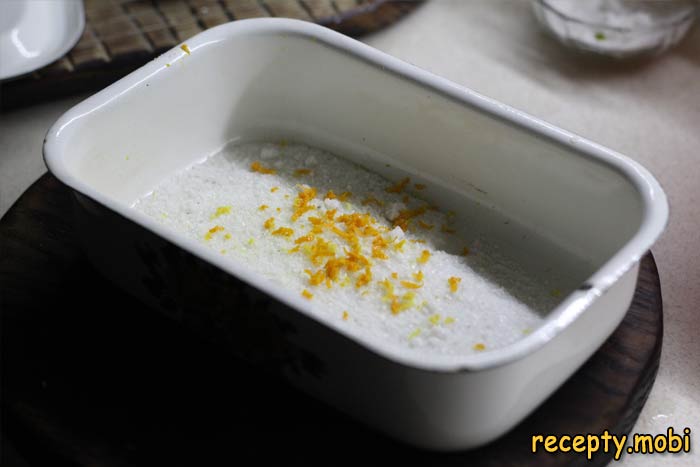
In a small bowl I combine the sea salt (2 tsp), sugar (1 tsp) and lemon and orange zest (½ tsp each). Mix thoroughly until even. Salt and sugar in a 2:1 ratio is the "golden" formula of gravlax. The sugar does not make the fish sweet; it softens the salty hit and gives a tender, mellow flavour.
Add the brandy or vodka (1 tsp) to the mix and stir again to a moist "crumb". Alcohol is the "secret" ingredient of gravlax, giving a distinctive refined flavour and helping draw excess moisture out of the fish. Brandy gives a noble aroma, vodka a neutral one.
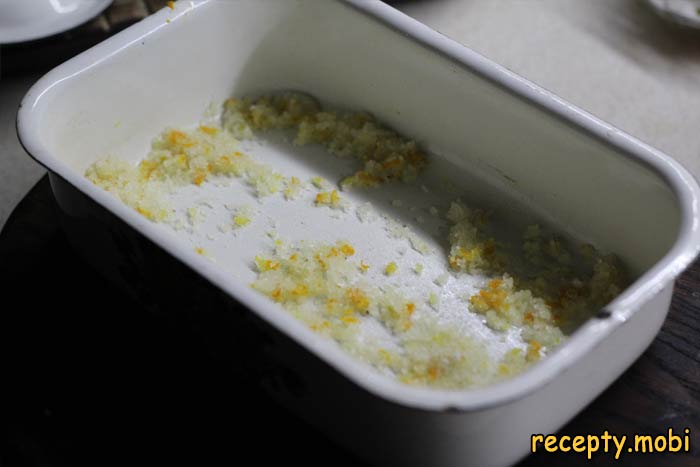
Wash the dill (a small bunch) thoroughly and pat it dry with paper towel. Chop it finely with a knife, stems included – the stems give the most intense dill aroma. Prepare the peppercorns: crush the black (5) and pink (3, optional) in a mortar, or split them into quarters by pressing with the flat side of a knife.
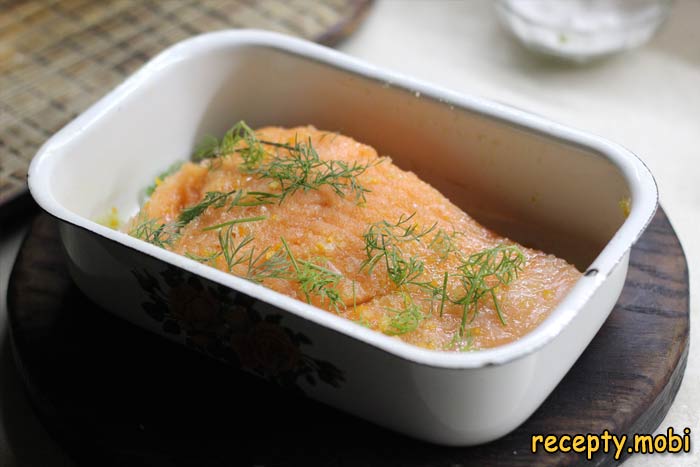
Roll the dried fillet in the salt, sugar and zest mixture – coat every millimetre of the fish (including the sides). Straight away, sprinkle generously with the chopped dill and crushed peppercorns on all sides. Press lightly with your hands so the spices cling to the fish.
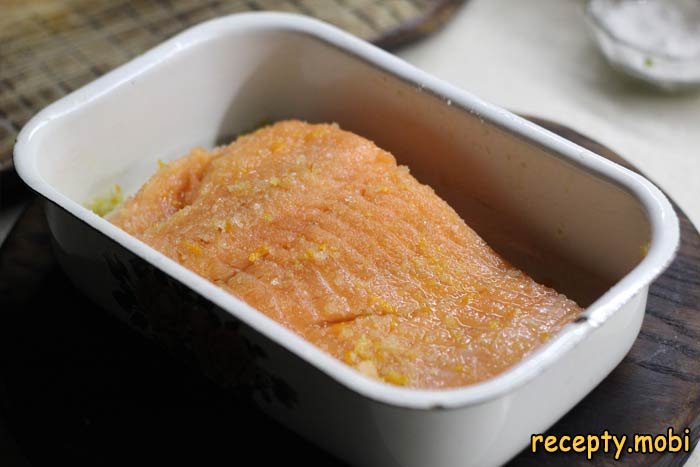
Transfer the coated fillet to a glass or ceramic dish with a lid (metal can "oxidise" the flavour of the fish because of the salt). Cover with the lid or wrap tightly in cling film. Place a small weight on top (a jar with 200 ml of water) – it helps the fish salt evenly.
Put it in the fridge for 12–24 hours, depending on the result you want: 12 hours = lightly salted "carpaccio" salmon, 18 hours = classic Norwegian gravlax, 24 hours = a firm, well-salted appetiser for sandwiches. The longer it sits, the firmer the texture.
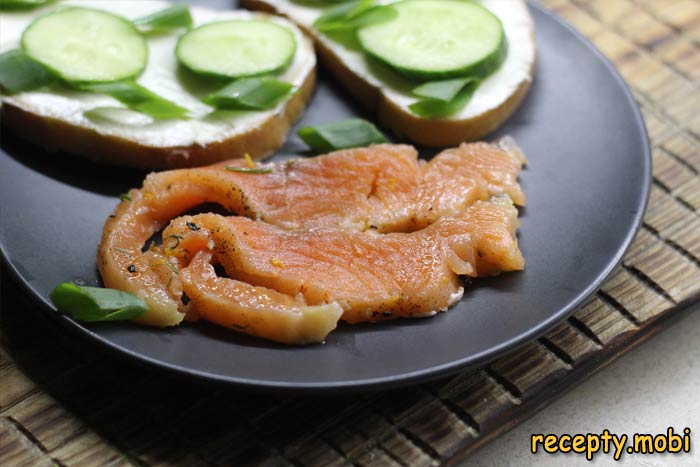
After 12–24 hours, take out the finished salmon. Gently scrape off the remaining salt and dill with a knife, or simply rinse under cold running water for 5 seconds (if it has come out too salty). Pat dry with paper towel. The fish has taken on a rich amber-pink colour and the characteristic gravlax aroma of dill and zest.
With a sharp thin knife, slice the finished salmon "on the diagonal" against the grain into thin 2–3 mm pieces. Remove the skin in a separate movement of the knife from tail to head. Your Norwegian-style "how to salt red fish deliciously" dish is ready! Serve on a plate with a slice of lemon, fresh dill and a drop of olive oil. Perfect on buttered toast or with cream cheese, as an appetiser with champagne, or on sandwiches for breakfast.


Tips
- 1
ALWAYS freeze fresh fish for 24–72 hours at -18°C – it destroys parasites. Without this it is dangerous to eat raw red fish.
- 2
Keep to the salt:sugar ratio of 2:1 – this is the "golden" formula of Norwegian gravlax. The sugar offsets the salty hit.
- 3
Use fine sea salt – ordinary table salt gives a less "delicate" flavour. By a similar method I also salt salmon with dill and honey.
- 4
Adjust the salting time: 12 h for "carpaccio", 18 h for the classic, 24 h for a firm, salty version for sandwiches.
FAQ
Which red fish should I choose for salting? +
All fatty kinds of red fish work: Atlantic salmon (the classic, the most expensive, with a rich fatty flavour), rainbow or lake trout (more affordable but no less tasty), chum salmon (firm flesh with a bright flavour), pink salmon (a budget alternative, leaner), coho and sockeye (more "diet-friendly", less fatty), char and Arctic omul (for a "gourmet" option). NOT suitable: lean river fish (pike, perch – not "red"), pangasius and tilapia (the wrong texture). Choose a fillet with even colour and firm structure, without yellow or brown spots. A fat content of 10–15% gives the most delicate flavour.
Can I salt the fish with the skin on or off? +
Better with the skin – it holds the shape of the fillet during salting, protects the flesh from drying out and makes the finished product easier to slice (easier to cut into thin pieces). After salting, the skin comes off easily with a single movement of a sharp knife from tail to head. Without skin the fish "spreads" in the salt, becomes soft and slices unevenly. If you have bought a skinless fillet, wrap it in cheesecloth or a firm piece of parchment, otherwise the flesh will "fall apart" during salting. When buying a whole fillet with skin, ask the seller to remove the scales (or do it yourself with a scraper).
How long does the finished salted fish keep? +
Finished Norwegian gravlax keeps in the fridge for up to 5 days in a tightly sealed dish with its own juices. On the 2nd or 3rd day the flavour becomes richer and firmer. For longer storage, brush the fish with vegetable oil and wrap it in parchment – this extends it to 7 days. You can freeze the finished salted product for 1 month in airtight containers – before eating, thaw it fully in the fridge for 8 hours and serve. Signs of spoilage: greyish colour, a sour or "fishy" smell (freshly salted fish smells of the sea and dill), a slimy surface – throw such fish away.
What to serve with lightly salted salmon? +
Perfect on rye toast with butter and a drop of lemon (the classic gravlax), on wheat toast with Philadelphia cream cheese and red onion, in rolls and sushi (instead of sushi salmon), in a Caesar salad instead of chicken, with boiled potatoes and sour cream, in Scandinavian open sandwiches with pickled onion and capers, or for breakfast with eggs Benedict. To drink – ice-cold vodka (Russian style), dry white sparkling wine (Prosecco, brut champagne), dry Riesling or Sauvignon Blanc, light beer or wheat beer. On a festive table it is the "star" of the appetiser menu.
- Comment
or post as a guest
Be the first to comment.