avg —
How to salt mackerel at home

Instructions
I start by preparing the ingredients. The fish does not need to thaw completely – half-thawed is actually easier to work with, since the frozen flesh stays firm and does not fall apart under the knife. The salting mix is made at a ratio of 2 heaping tbsp of rock salt and 1 tbsp of sugar per medium fish. The salt must never be iodised – iodine makes the fish bitter and gives the flesh a greenish tint.

In a separate bowl I combine the salt and sugar – it is the sugar that balances the salty taste and gives the flesh a pleasant texture; without it the fish turns out tough and purely salty.

Using kitchen scissors, I trim all the fins and the tail from the fish – they get in the way when packing the pieces tightly and are not edible in the finished fish anyway.
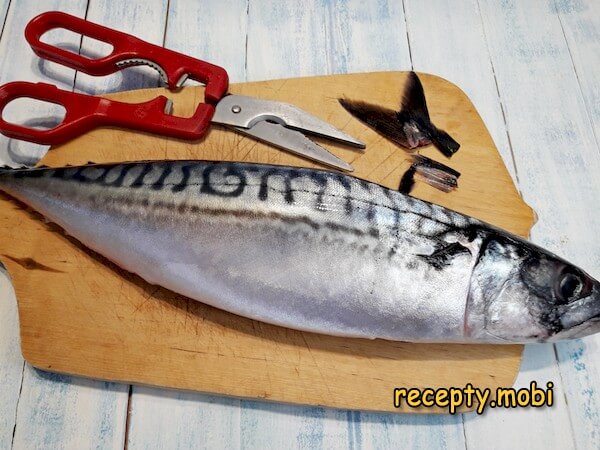
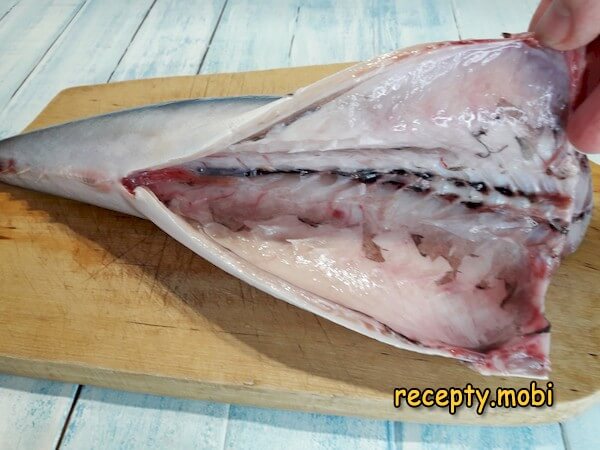
I cut off the head and slit the belly with a sharp knife. I remove the entrails and thoroughly wash the inside walls, cleaning off the black membrane – it is exactly this membrane that makes the finished product strongly bitter, so removing it is essential for a pleasant taste.
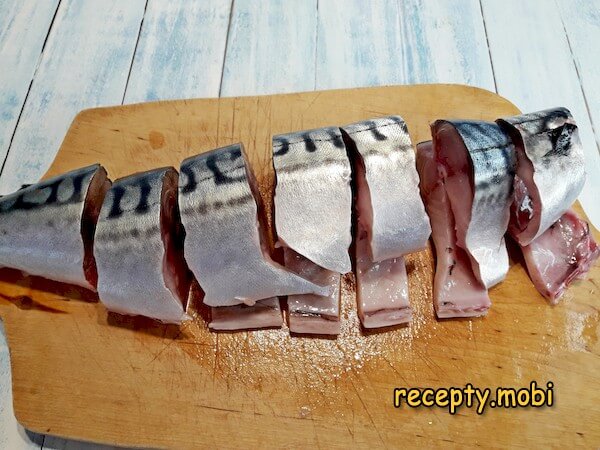
I cut the carcass into pieces about 2–2.5 centimetres thick – pieces this size salt evenly in 2 hours. Thinner ones over-salt, while thicker ones stay raw in the middle.
I roll each piece in the salting mixture on all sides – it is important that every surface comes into contact with the salt, otherwise the curing will be uneven.

I place the pieces in a glass, porcelain or enamel container. Aluminium or untinned iron must not be used – the metal gives the fish a foreign taste and can be oxidised by the salt.

I pack all the pieces this way, pressing them tightly against one another – as little free space as possible should remain, so that the fish provides its own contact with the salty marinade that it releases.

I cover the container with a lid or film and leave it on the counter for 2 hours. The salting time depends on the size of the pieces – the larger they are, the more time is needed. This recipe gives a lightly salted mackerel; if you want a saltier fish, the curing time in the salting mixture should be increased to 3–4 hours.

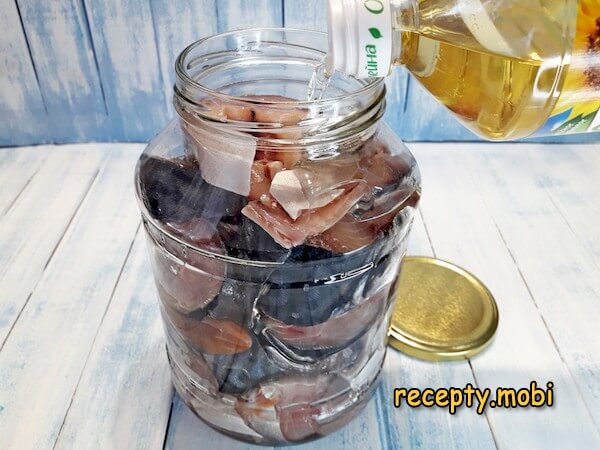
Once the mackerel reaches the saltiness I want, I rinse the pieces under running water – this washes off the excess surface salt and stops the curing process. I pack them tightly into a glass jar or another container with a lid. I pour over vegetable oil – with no access to air, storage is ideal, and the fish neither dries out nor oxidises.Now that you know how to salt mackerel at home, you can use this simple recipe without any worries. Meaty, lightly salted and fatty mackerel with a natural flavour can keep in oil in the fridge for two weeks. But experience says it will not last there longer than a couple of days – it gets eaten in one sitting.


Tips
- 1
Rock salt only – the "secret" to the right flavour. Iodised salt makes the fish bitter and gives the flesh a greenish tint. Fine "extra" salt cures too quickly, and the fish over-salts even in 1.5 hours. Coarse rock salt gives an even, slow cure and a natural sea flavour.
- 2
Remove the black membrane – the "secret" to avoiding bitterness. The thin black membrane inside the belly is the main source of bitterness in the finished fish. Wash it out thoroughly after gutting and the taste stays clean and pleasant. The same trick works for homemade canned capelin.
- 3
Sugar paired with salt – the "secret" to a tender texture. Plain salt makes the fish tough and purely salty in taste. Salt and sugar in a 2:1 ratio keep the flesh soft and add a pleasant sweetness that balances the saltiness.
- 4
The oil topping – the "secret" to storage. Without oil, salted fish dries out in the fridge within a couple of days and loses its juiciness. Under a layer of oil, it keeps for two weeks with no loss of quality, and the flesh stays firm and tender. The same principle is used for lightly salted trout at home.
FAQ
Which mackerel should I choose for home salting? +
The "classic" choice is frozen Atlantic mackerel weighing 400–700 g each, with intact silvery-blue skin, no yellow spots and no kinks. Alternatives: Pacific mackerel (a little larger and slightly fattier – a premium pick for an oily flavour), San Jose mackerel (smaller but more tender), and grenadier (a budget option, though the flesh is drier). Do not use carcasses with sunken eyes, grey gills or signs of re-freezing (cracks of ice inside the bag). Freshly caught or frozen just once is the "star" option – safe and at its tastiest.
Can I salt mackerel whole, without cutting it up? +
You can, but it will take 2–3 times longer. A whole carcass weighing 500–700 g salts in 24–36 hours in the fridge, you need to increase the amount of salt by 1.5 times, and you have to turn the fish regularly. The downside of this method: the fish salts unevenly, the thick back stays lightly salted while the thin belly over-salts. Pieces of 2–2.5 cm are the most predictable and quickest way. For whole mackerel it is better to use other methods – marinade, smoking or baking.
How long does salted mackerel keep in oil? +
In the fridge, in a glass jar under oil, it keeps for up to 2 weeks with no loss of quality. After 2 weeks the flesh starts to become firmer and the salty taste grows stronger. It is not worth moving it to the freezer: after thawing the fish loses its firmness and becomes watery. Signs of spoilage: the oil turning cloudy with white flakes, a sour or rotten smell, darkening of the flesh, a slippery surface on the pieces – I throw such fish out without a second thought. It is ideal to make enough for 3–5 days and eat it fresh – the flavour is brightest in the first week.
What should I serve lightly salted mackerel with? +
The classic pairing is boiled potatoes with dill, sprinkled with green or red onion. On a sandwich with black bread and butter – perfect for breakfast. With drinks: chilled vodka, dark beer, semi-sweet white wine. For a festive table – with lemon, olives and herbs on a nice plate, or in tartlets with egg and caviar. In salads: with apples and red onion, or with boiled egg and green peas. With grains: boiled buckwheat or rice. It works universally – as a standalone appetiser or part of a fish platter.
- Comment
or post as a guest
Be the first to comment.