avg —
Homemade Rolls

Instructions
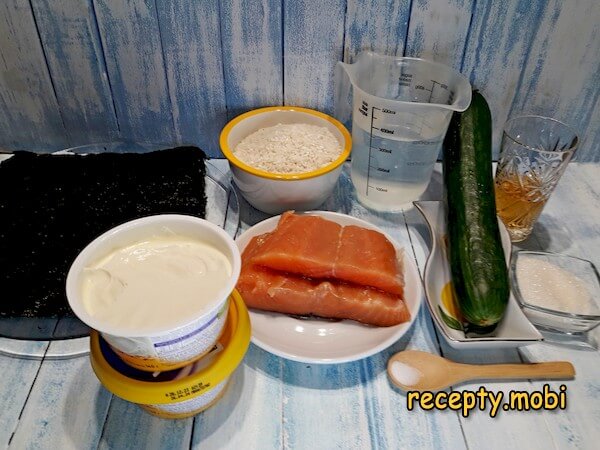
I prepare the ingredients for making homemade rolls. If a special sushi rice is hard to find, it can be replaced with ordinary round-grain rice, but it must be of good quality. Trout is often used instead of lightly salted salmon.
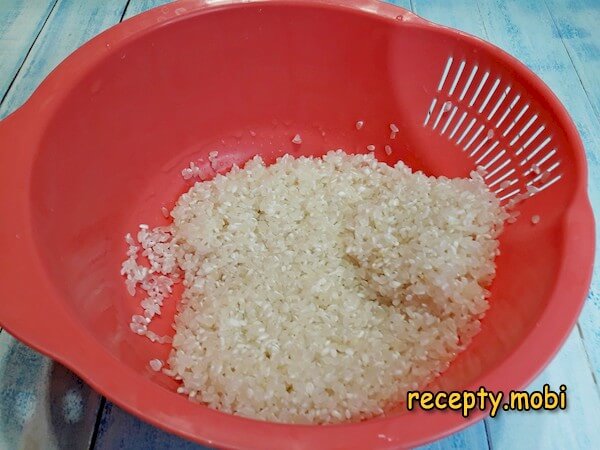
The rice needs to be rinsed several times until the water running off becomes clear. This removes the surface starch, which would otherwise stop the rice from "sticking together" into the right texture for sushi.
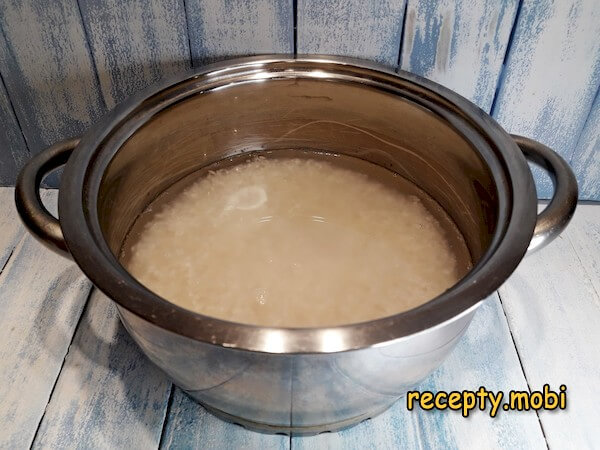
For cooking, every 100 grams of rice needs 120 millilitres of water. I transfer the rinsed rice to a heavy-bottomed pot and add 360 millilitres of cool water. I cook it covered over low heat for exactly 15 minutes from the moment it boils – it is the low heat that gives the rice the correct "steamed" sushi texture.
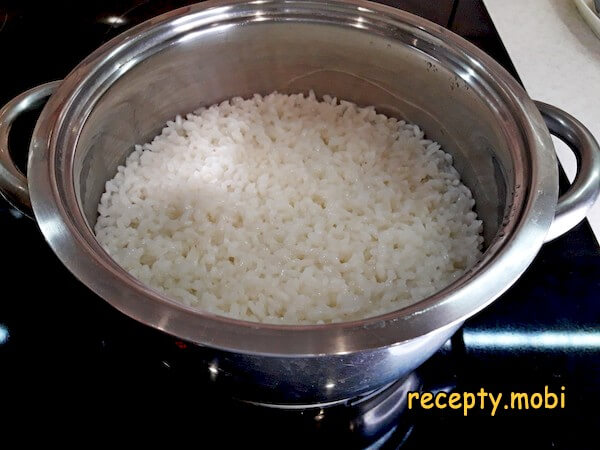
After this time the water will have either evaporated or been absorbed into the grains – if any liquid is left in the pot, the cooking should be extended by another 2-3 minutes.
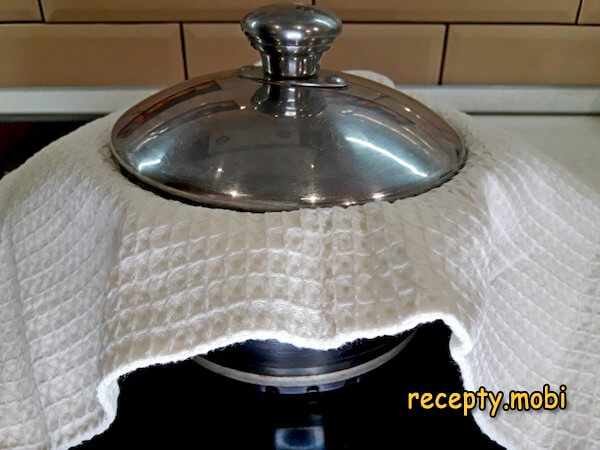
I remove the lid, cover the pot with a cotton towel (to soak up the condensing steam) and press the lid back on top. I leave it set up like this for another 15 minutes – this is the "secret" to the right sushi-rice texture.
Meanwhile, I prepare the dressing. For this I combine the vinegar, salt and sugar in a small bowl – this is the classic "sushi-su" (sushi vinegar) for the rice.
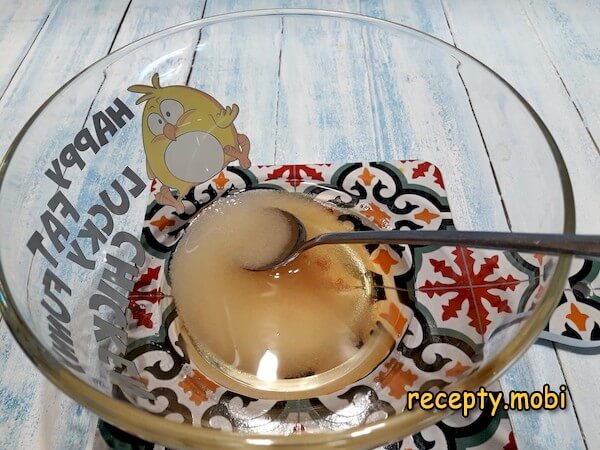
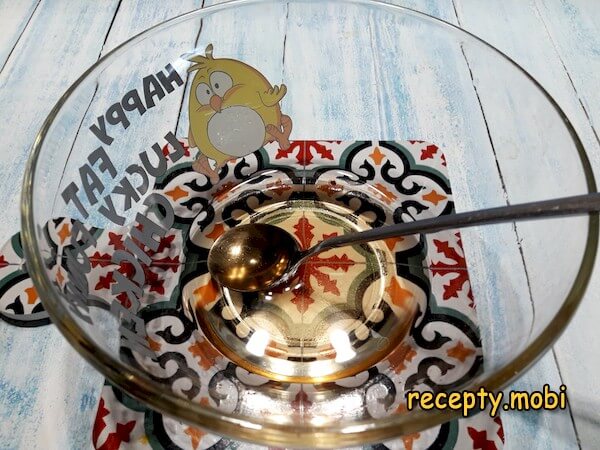
I stir everything thoroughly until the liquid turns clear and no granules are left in it – the salt and sugar should dissolve completely.
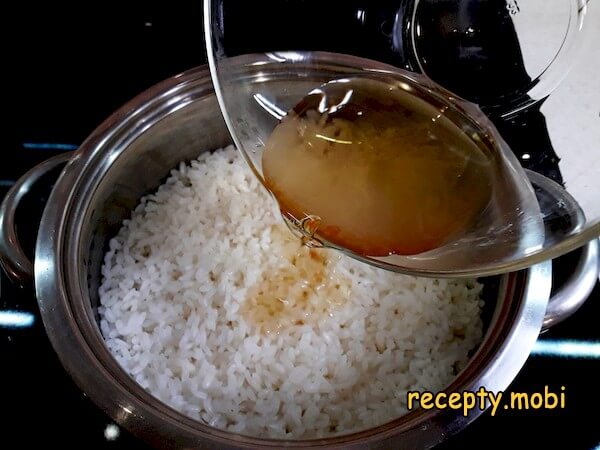
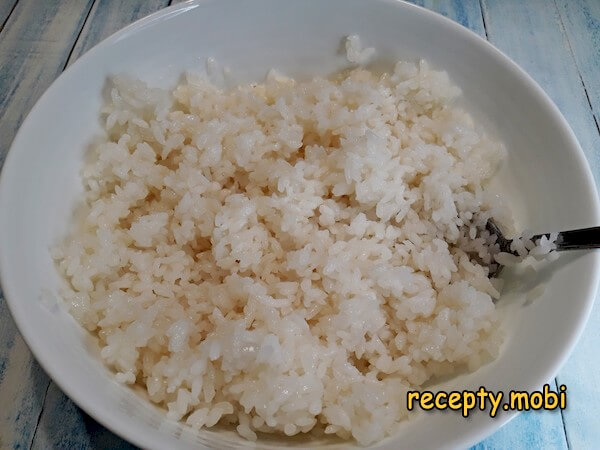
Once the resting time is up, I pour the dressing over the rice and mix it in – it is the warm rice that absorbs the dressing best and takes on the right "sushi flavour".
To cool it down faster, I spread the contents of the pot out onto a plate – a thin layer of rice cools more quickly.
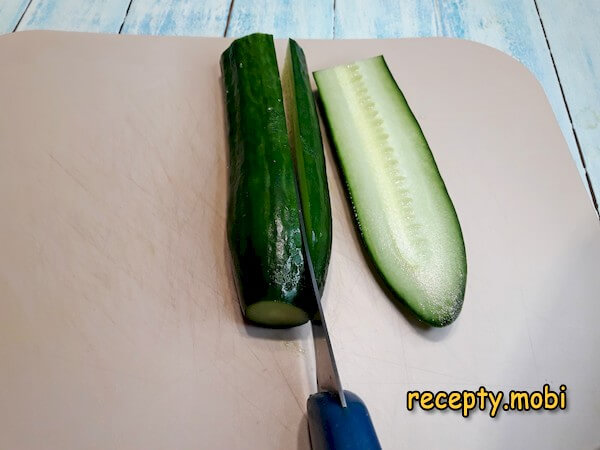
I cut the long cucumber crosswise, then trim the outer sides off all the way round, stopping before the seeded centre – it is not needed in the rolls because it would give off too much moisture.
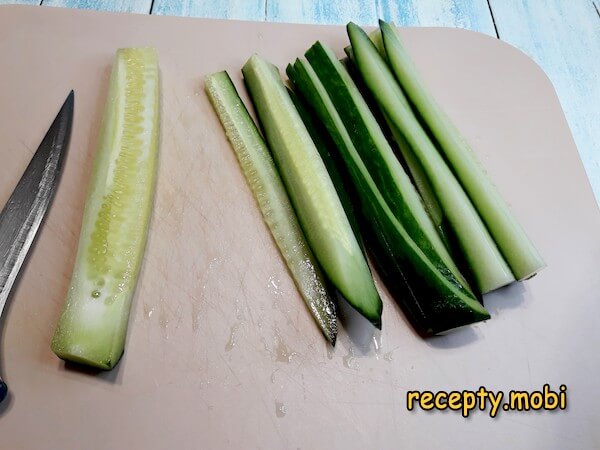
I cut the outer pieces into thin strips – it is the thin strips that sit neatly in the roll and look attractive in the slices of the finished sushi.
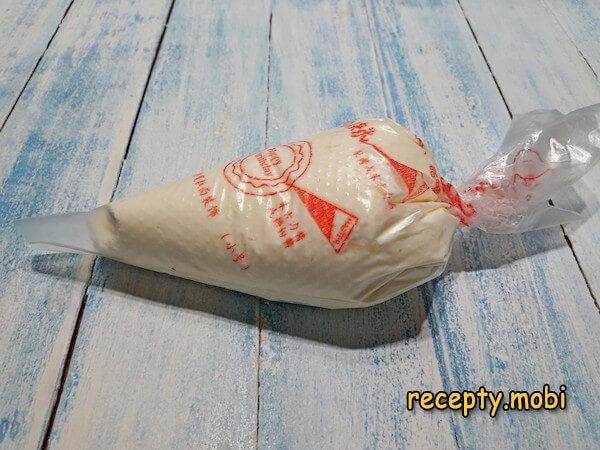
For convenience, I transfer the cream cheese into a piping bag with the tip cut off – this makes it easier to spread the cheese evenly over the whole nori sheet.
I cut the fish into long pieces with a square cross-section – this cut lies perfectly along the roll and looks attractive in the slices of the finished sushi.
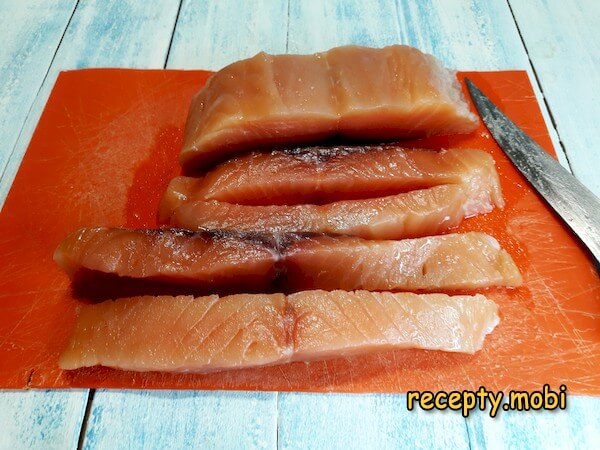
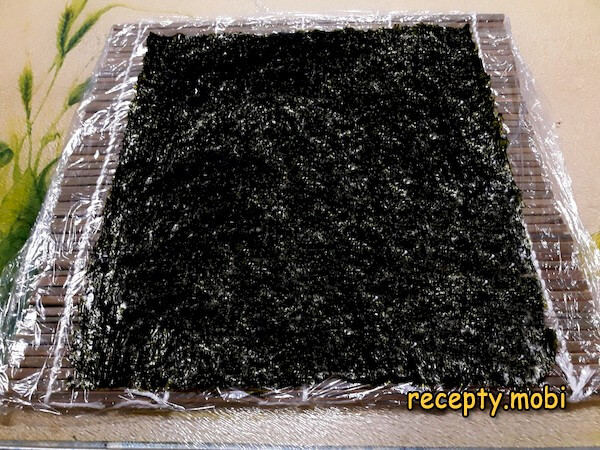
I wrap the bamboo mat in cling film and secure it with tape. I lay a sheet of Nori on it glossy side down and rough side up. The rough side "grips" the rice better.
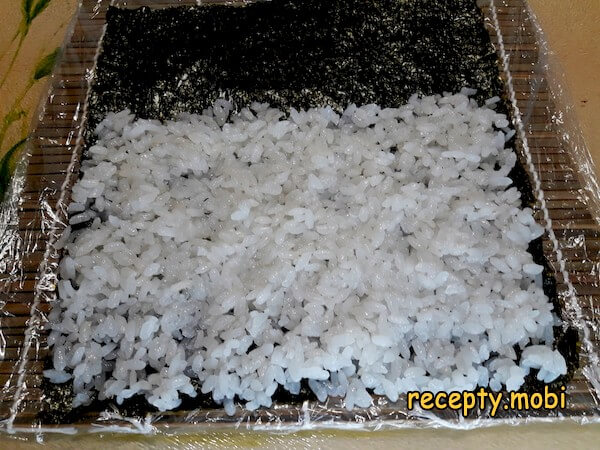
Each sheet of dried seaweed needs about 100 grams of prepared rice. I spread this portion over the Nori, going a little past the middle of the rectangle and stretching the rice evenly to the edges.
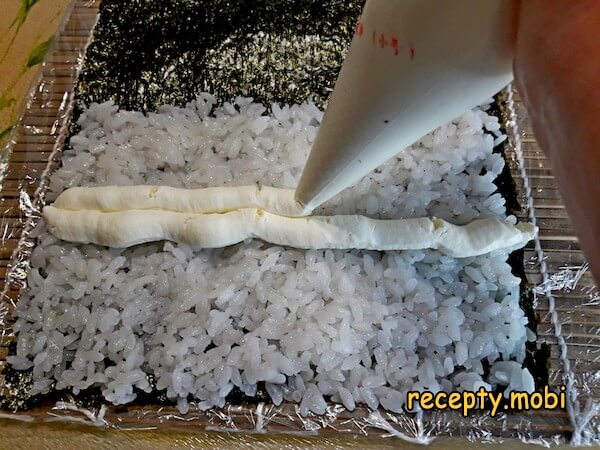
Down the centre of the rice layer I lay 2 strips of cream cheese – right in the centre, so that when cut the cheese ends up in the middle of each piece of sushi.
On one side of these strips I place the lightly salted salmon, and on the other – a few pieces of cucumber – so that every ingredient has its own place in the finished roll.
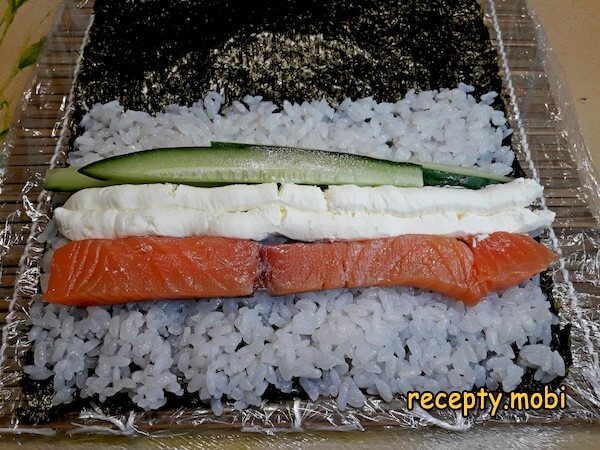
Now comes the important moment – the roll needs to be rolled up so that the edges of rice meet and stick to each other. This is the "secret" to a neat finished roll.
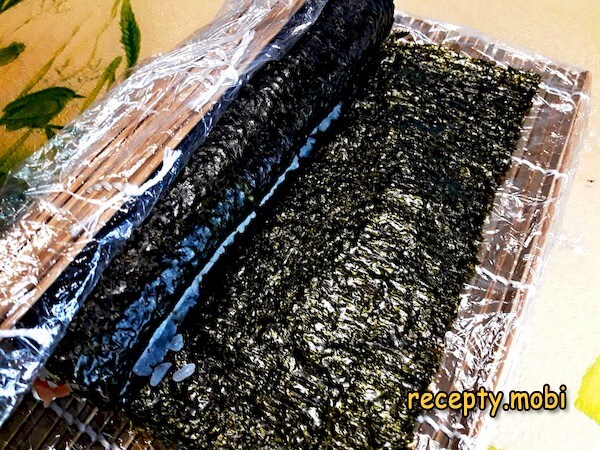
I lightly moisten the free section of the roll with water and continue rolling – the water acts as "glue" for the free edge of the Nori.
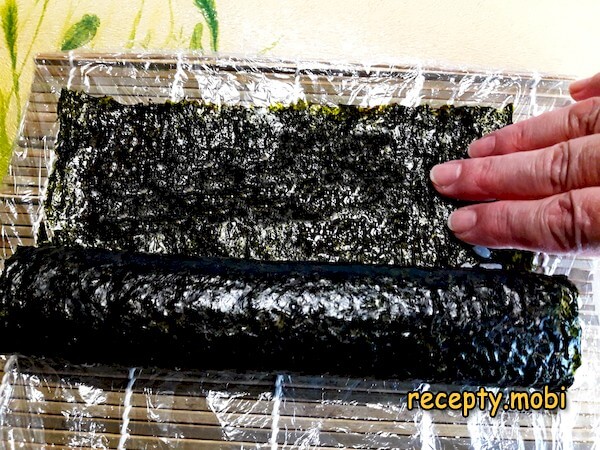
I press the finished roll firmly with the mat once more and roll it back and forth, so that all the components become a single whole and the outer surface takes on an even, rounded shape.
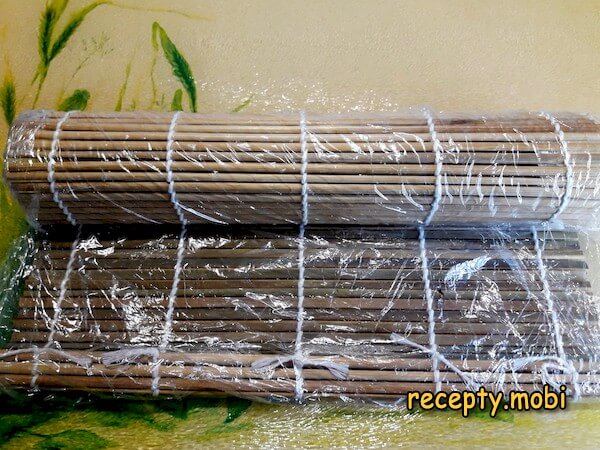
I do the same with all the pieces (5 in total) – the same technique gives even, "factory-quality" rolls.
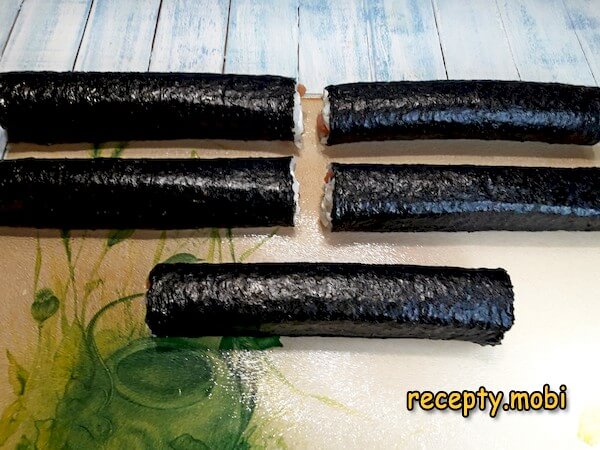
I cut the resulting rolls down the middle. The knife must be very sharp, and I always wipe the blade with a napkin after each cut – this is the "secret" to a tidy slice.
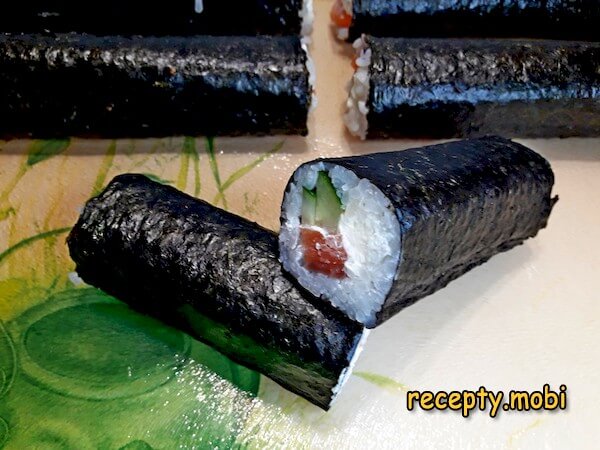
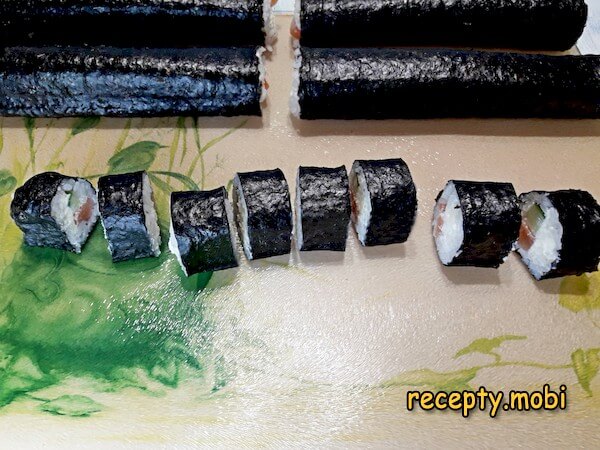
Then I divide each roll in half and in half again – each roll yields 8 pieces of sushi in total. I do the same with all the pieces.I arrange the homemade rolls on a serving dish. Next to them I set soy sauce diluted half and half with water – each piece should be dipped into it before eating. You can also buy special sauces for sushi and rolls. In taste, this homemade dish is no different from a shop-bought one.


Tips
- 1
RINSING THE RICE IS A MUST – the "secret" to the right stickiness. The surface starch on unwashed rice makes it too gluey, and the sushi turns out as a "boiled mass" instead of recognisable separate grains. Rinsing until the water is clear removes the excess starch, and the rice cooks to that characteristic "sushi consistency" – distinct grains that hold firmly together.
- 2
A COTTON TOWEL UNDER THE LID – the "secret" to the right texture. Without this step the cooked rice "sweats" under the lid: the top layer turns wet while the bottom stays dry. The towel absorbs the condensing steam, the rice "matures" evenly throughout the pot and takes on the dense yet "breathing" texture that is ideal for sushi.
- 3
VARIATIONS WITH CHEESE AND ROE – the "secret" to "premium" rolls. Using the same basic technique you can make Philadelphia rolls at home – with the cheese on the outside and salmon on top. This is the "premium" version of the same technique with a more elaborate composition – master the ordinary rolls first and then move on to Philadelphia.
- 4
FRESH FISH – the "secret" to safety and flavour. The lightly salted salmon should be of good quality – choose a trusted producer or salt it yourself at home. Following the same principle as How to salt mackerel at home, you can make your own lightly salted salmon the day before – that way you are sure of the quality and the flavour is brighter than shop-bought.
FAQ
Which rice is suitable for rolls? +
Ideally a special "sushi rice" (sumeshi, nihonmai, gohan) – it is short-grain, high in starch, and becomes perfectly sticky when cooked. Alternatives: round-grain rice such as "Krasnodar" or "Kuban" (these local varieties are similar in character), or Italian risotto rice (Arborio, Carnaroli). Not suitable: long-grain basmati, jasmine or wild rice – they fall apart and do not "stick together" into the mass needed for sushi. The main sign of suitable rice is short, rounded grains with a high amylopectin content.
Can the salmon be replaced with another fish? +
Yes, the classic alternatives are lightly salted trout, Atlantic salmon, king salmon or sockeye salmon. Among "non-red" fish: tuna (for "tuna" rolls), smoked eel (for "unagi" rolls), boiled shrimp, or boiled crab (for "crab" rolls). You can use imitation crab (crab sticks) – the "budget" option. Not suitable: oily herring, sprat or sardines (their distinctive taste does not go with the rice). For a vegan version: thinly sliced avocado, marinated tofu, or sweet pepper.
How long do homemade rolls keep? +
Rolls are best eaten freshly made, within 4-6 hours. In the fridge under cling film – 24 hours at most, after which the rice "hardens" and becomes less pleasant. Sushi and rolls must absolutely not be frozen – after thawing the whole structure breaks down and the salmon turns soft and watery. If a lot is left over, it is better to slice it straight away and portion it into airtight containers. Before serving, let them stand for 10-15 minutes at room temperature – straight from the fridge the rolls taste "muted".
What to serve with rolls? +
The authentic Japanese presentation is on a flat wooden board or a ceramic plate. Essential: soy sauce (classic "shoyu", or a less salty one for rolls), wasabi (the green hot paste made from Japanese horseradish), and pickled ginger "gari" (eaten between different kinds of rolls as a flavour "neutraliser"). For drinks: green tea (the classic), chilled sake, Japanese beer (Asahi, Kirin, Sapporo) or homemade lemonade. For a large table: an assortment of different rolls, nigiri sushi, tempura and miso soup. That makes a full Japanese dinner for guests.
- Comment
or post as a guest
Be the first to comment.