avg —
Flounder in the Oven in Foil

Instructions
I prepare the ingredients for the flounder baked in the oven in foil. Flounder is usually sold already gutted, but if you get a whole fish, first remove the head and then gut it through the resulting opening. The lemon juice can be store-bought or squeezed from a third of a lemon.
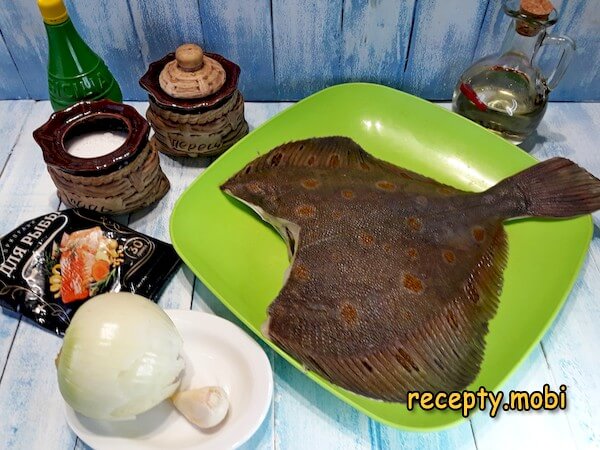
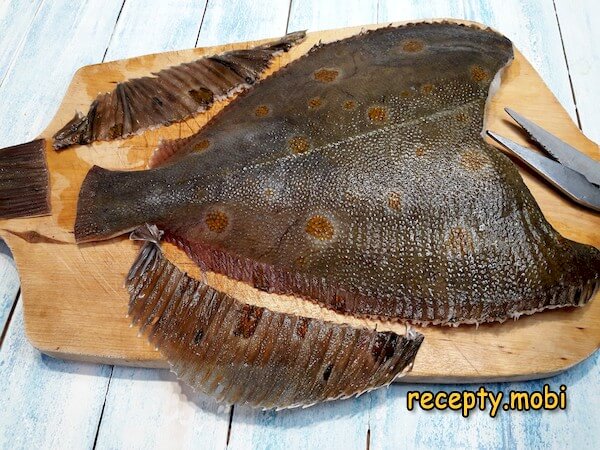
Next I trim off the fins, including the tail, with kitchen scissors. I scrape the dark side of the fish gently with a sharp knife and wipe it down with a paper towel – it is the dark side that has the little spines, which are best removed.
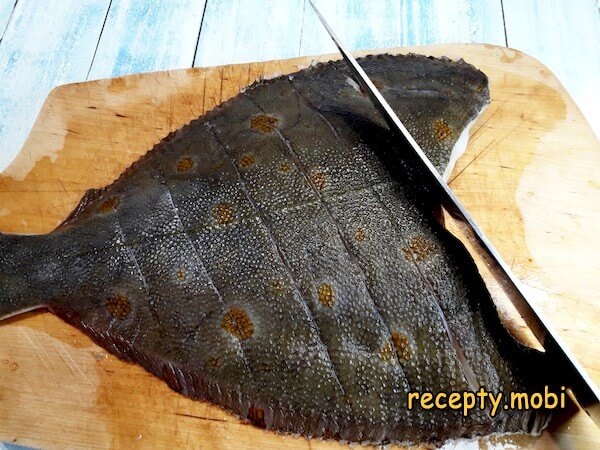
The skin on this side is fairly tough, so I make diagonal incisions in it, spaced 2.5 to 3 cm apart, so the fish marinates faster. This is the "secret" against bland flesh.
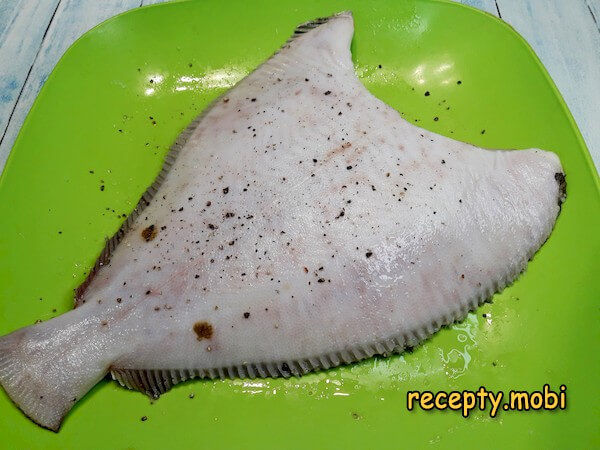
Now I salt the fish on both sides and sprinkle it with pepper – the salt and pepper get into the cuts and season the flesh from the inside.
I make the marinade – I pour the vegetable oil into a small bowl and add the fish seasoning. This is the base of the aromatic dressing.
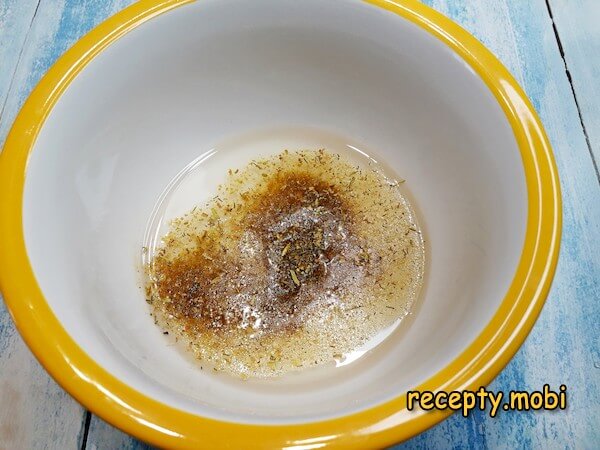
I pour in the lemon juice as well – it is the lemon juice that "neutralises" the fishy smell and makes the flesh taste fresher.
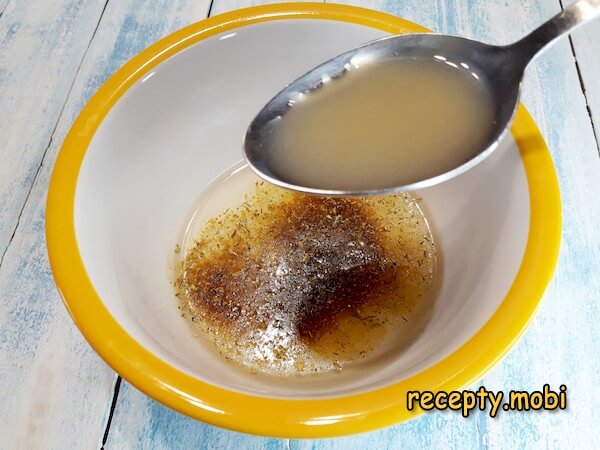
And I press in the garlic through a press – using a press is preferable for spreading the garlic aroma evenly.

I mix everything thoroughly – the marinade is ready to use.

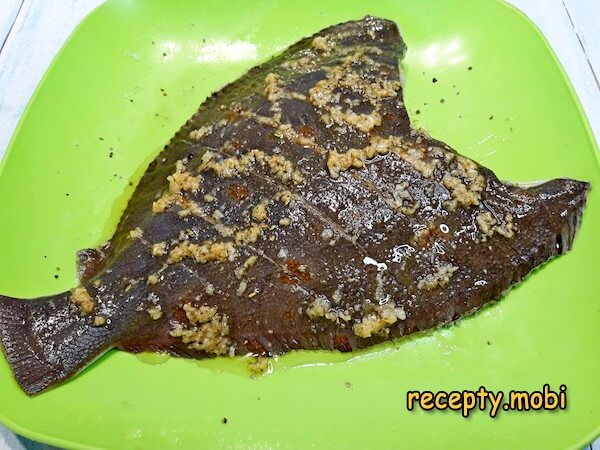
I coat the flounder with the marinade on all sides, including inside the small body cavity. Then I set it aside for about 15 minutes – 15 minutes is enough to soak the thin flounder fillet.
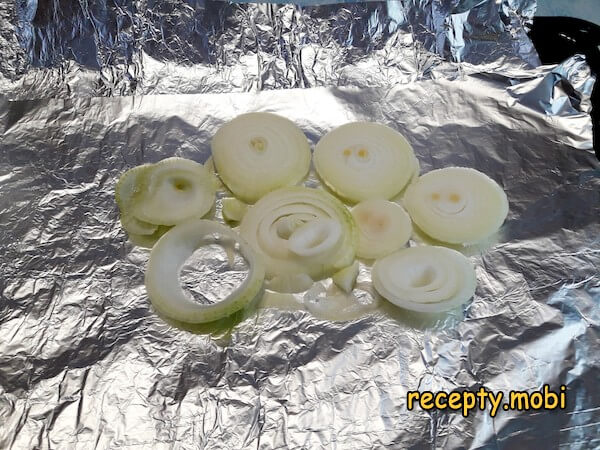
I cut the onion into wide rings (roughly 5 to 7 mm thick). I turn the oven on to heat up to 200 degrees without convection.
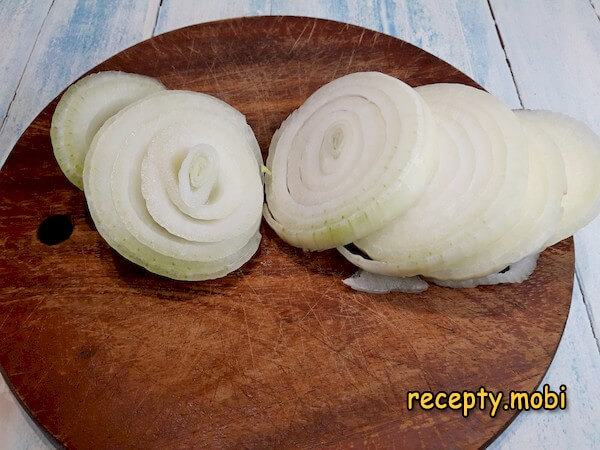
I lay two layers of foil on the baking sheet. There is no need to oil it, because the fish marinade has enough fat to keep the bottom skin from burning, and the onion bed will also protect the flounder from that. I arrange the onion rings to match the shape of the fish.
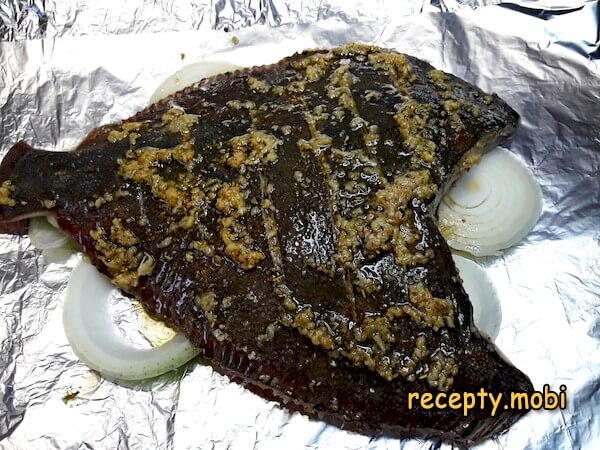
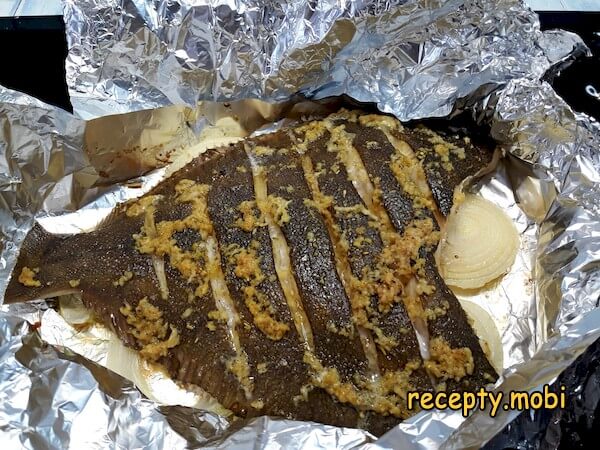
I place the flounder on top of the onion – dark side up, for attractive browning.
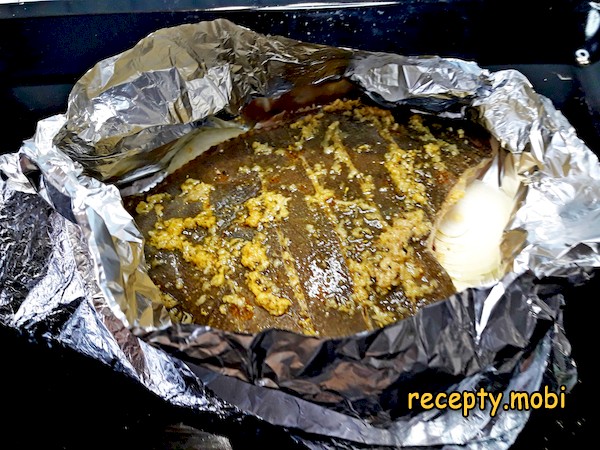
I fold the edges of the foil upward to form a bowl with sides – this is the "secret" to holding the juices and steam inside the parcel.
From a separate piece of foil I make a lid – there should be an air space left between it and the flounder. I put the baking sheet on the middle level of the preheated oven.
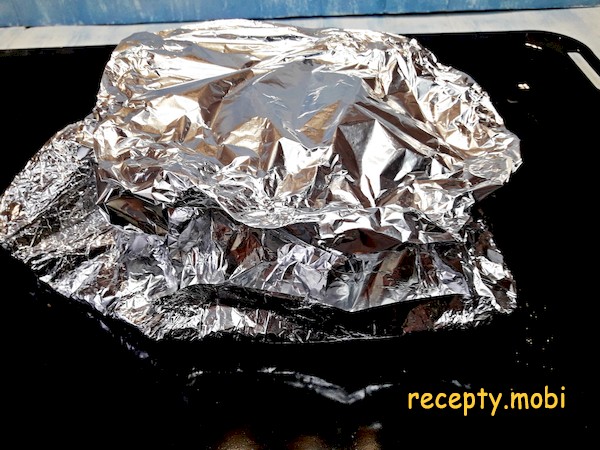
After 20 minutes I turn off the oven, remove the foil lid and leave the fish in the oven for another 5 minutes, so it dries out a little and browns on top.The flounder in the oven in foil turned out juicy, the flesh simply melts in the mouth, and the onion soaked up the aromatic liquid and took on an interesting, unusual flavour. And there was no unpleasant smell during baking at all – on the contrary, the kitchen was filled with a pleasant lemon and garlic aroma. I serve the flounder hot, garnished with lemon wedges.


Tips
- 1
LEMON JUICE IS A MUST – the "secret" against the fishy smell. Flounder has a distinctive "sea" aroma that not everyone likes. The lemon juice in the marinade "neutralises" this smell thanks to the acidic reaction with the fish proteins. Without lemon, the fishy smell will be noticeable even through the foil.
- 2
THE ONION BED – a 2-in-1 "secret". The onion under the fish does two jobs: it absorbs the dripping fish juices and at the same time serves as a ready-made side dish. By the time the fish is done, the onion has softened and taken on a fish-and-garlic aroma. The same trick is used in whole flounder in the oven – a related recipe without foil.
- 3
THE AIR POCKET UNDER THE FOIL – the "secret" of the steam effect. If you wrap the fish tightly in foil with no air gap, the foil "sticks" to the crust and tears it off when removed. The air pocket on top creates a mini steam oven in which the flounder heats through evenly. The same principle works in sea bass in the oven in foil.
- 4
5 MINUTES WITHOUT THE LID AT THE END – the "secret" to browning. Under the lid the fish "cooks in steam" and stays pale-looking. 5 minutes without the lid in the switched-off (but still hot) oven give an appetising light crust without drying out the flesh.
FAQ
Why does flounder have a distinctive smell? +
This is a feature of all flat bottom-dwelling fish – flounder, halibut, sole. They live on the seabed and feed on small bottom creatures, hence the characteristic "sea-bottom" aroma. The smell gets stronger with improper storage or when the fish is not fresh. Good, fresh flounder has a light "iodine" aroma – that is normal. A strong "rotting" smell is a sign that the fish is off, and such fish must not be eaten. The lemon juice in the marinade neutralises the natural smell, and correct storage in the refrigerator keeps the quality for 2 to 3 days.
Can it be baked without foil? +
It can, but the technique changes fundamentally – without foil the fish loses moisture to the hot air and comes out noticeably drier. If you have no foil, you can put the flounder on parchment in a dish and cover it on top with damp parchment paper – a version of "en papillote". You can also use a roasting bag or a ceramic dish with a lid. Baking flounder without any protection works only if you lower the temperature to 160 degrees and coat the fish with a thick layer of olive oil.
How long does cooked flounder keep? +
In the refrigerator in an airtight container – up to 2 days with no loss of flavour. Before serving, I reheat it in the oven at 150 °C under foil for 7 to 10 minutes, or in the microwave for 1 to 2 minutes. I do not recommend freezing cooked flounder – the delicate flesh becomes "stringy" after thawing and loses its signature tenderness. Raw gutted flounder keeps in the freezer for up to 6 months – thaw it in the refrigerator for 12 to 24 hours before cooking. It is best to cook it "right before serving" – that is the tastiest option.
What to serve flounder in foil with? +
The onion bed from this very dish is already a ready side. Other options: boiled new potatoes with dill, basmati rice, quinoa, mashed potatoes, steamed vegetables. Fresh vegetables: leaf salad, cherry tomatoes, cucumbers, avocado. For sauces: tartare, sour-cream-and-garlic, or a lemon-and-dill sauce. To drink: dry white wine (Riesling, Chardonnay, Sauvignon Blanc), or for everyday serving a fruit drink or fresh juice. For starters: a light green salad, Korean-style carrots, marinated mushrooms.
- Comment
or post as a guest
Be the first to comment.