avg —
Fish under Marinade of Carrots and Onions

Instructions
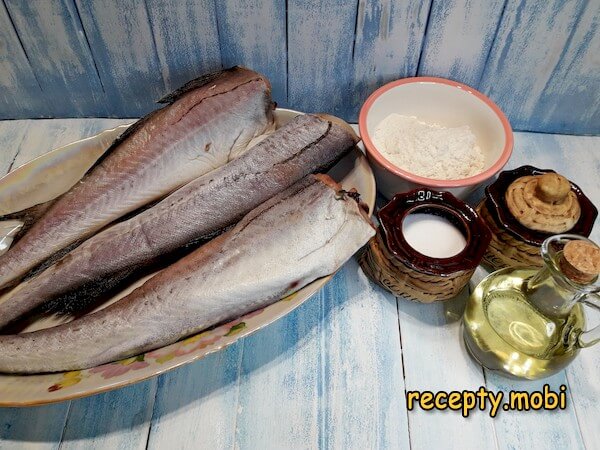
I prepare the ingredients in advance – any white fish works for this recipe, but pollock is the classic choice. I rinse the thawed fish under cold water and pat it dry with paper towel – excess moisture causes spitting during frying and spoils the crust. Dry fish takes on a golden crust twice as fast and does not fall apart when you turn it.
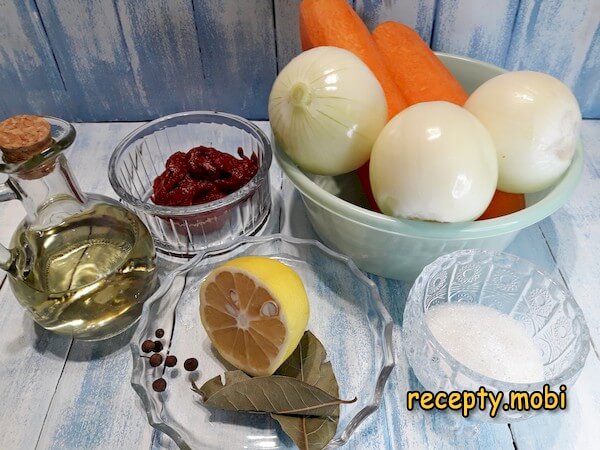
I gather the products for the marinade: onion, carrot, tomato paste, spices and lemon. Instead of tomato paste and water you can use 600 ml of natural tomato juice – the flavour will be milder and less concentrated. Tomato paste works better in this recipe, though – it gives a rich ruby colour and a thick sauce.
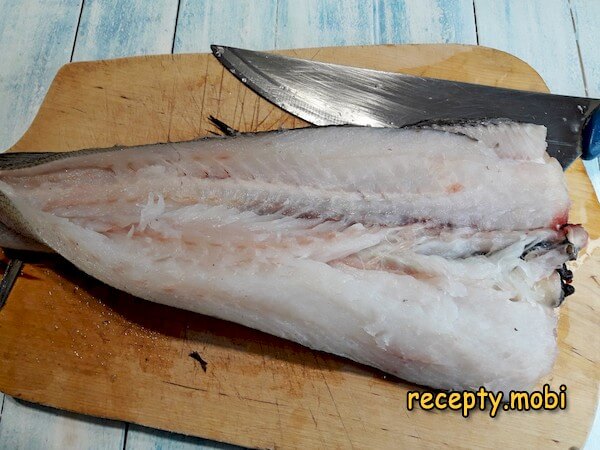
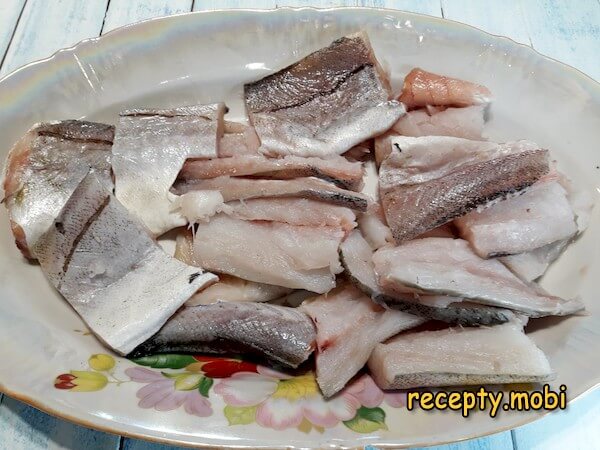
I cut the fish along the belly with a sharp knife, gut it and rinse the inner cavity. I make an incision along the spine and slide the fillet off the ribs on both sides – this gives a clean fillet with no small bones. If you would rather not bother with butchering, use ready pollock fillet, but a whole fish gives a more intense flavour.
I remove the fins with kitchen scissors and divide the fillet into portion-sized pieces 5–6 cm across. Equal pieces fry evenly, while pieces that are too small can fall apart when dusted in flour. If I come across any large bones, I pull them out straight away with tweezers.
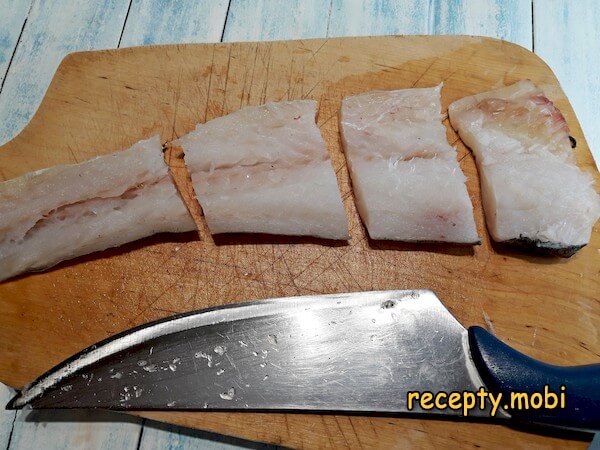
I prepare all the pollock this way – 3 fish yield about 15–18 portion-sized pieces. I lay them out on a board in a single layer so the fillet does not stick together. If I am not frying right away, I cover them with cling film and put them in the fridge for 30 minutes – cold fillet holds its shape better.
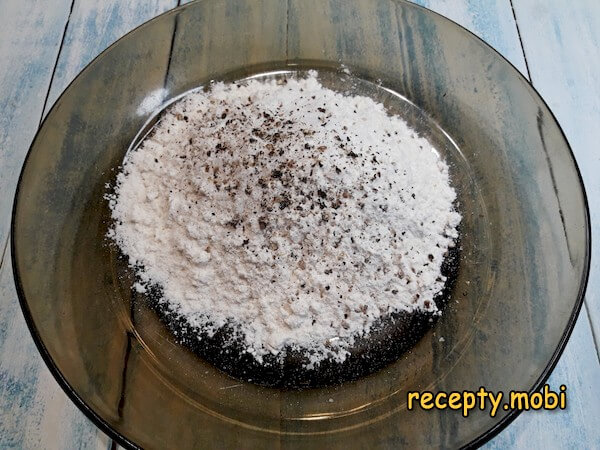
I mix salt with the flour (75 g) and add a little ground pepper for a touch of spice – seasoned flour gives a fragrant, crisp crust. The proportion is 1 tsp of salt per 75 g of flour, with pepper to taste. The flour should coat every piece completely, otherwise the fish will not brown evenly.
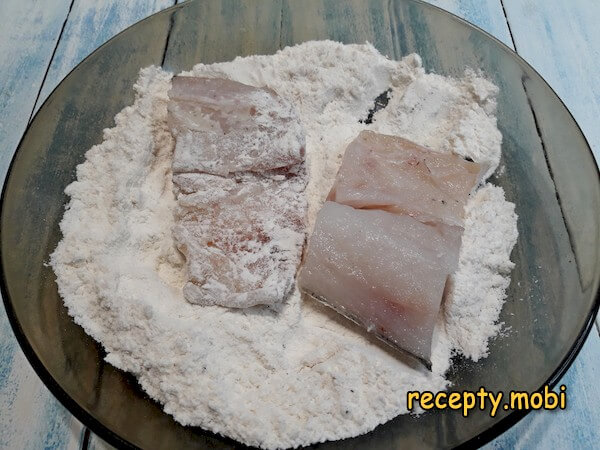
I dust the pieces of fish in the flour mixture, shaking off the excess – surplus flour burns in the pan and gives a bitter taste. Each piece should be covered with a thin, even layer. I dust them right before frying, otherwise the flour goes damp and slides off the fish.
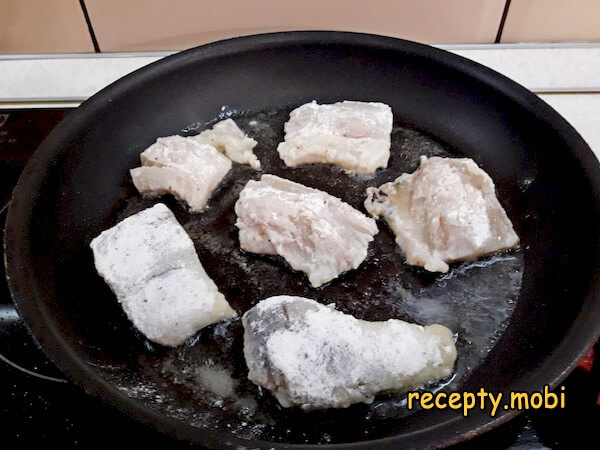
I place the fillet into vegetable oil (40 g) heated to 170 °C, without overcrowding the pan – there should be 1–2 cm between the pieces. The heat is just above medium, otherwise the fish will not cook through inside while the outside burns. The pollock must be fully cooked – fresh fish comes away from the bone easily and turns opaque.
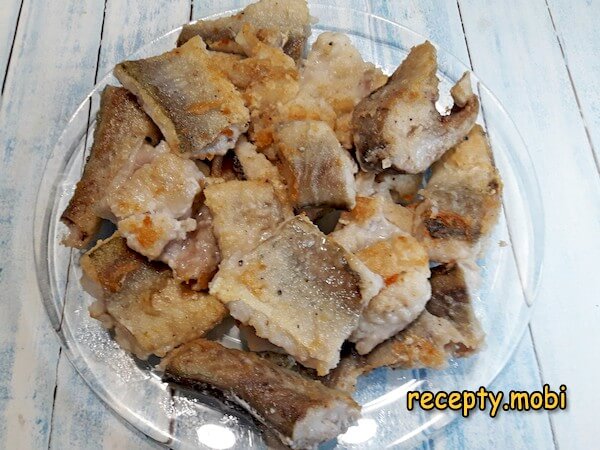
I fry it on both sides for 3–4 minutes until golden, then transfer it to a plate lined with paper towel – it will soak up the excess fat. I do not turn the fish often – once is enough, otherwise the flour comes off and the fillet falls apart.
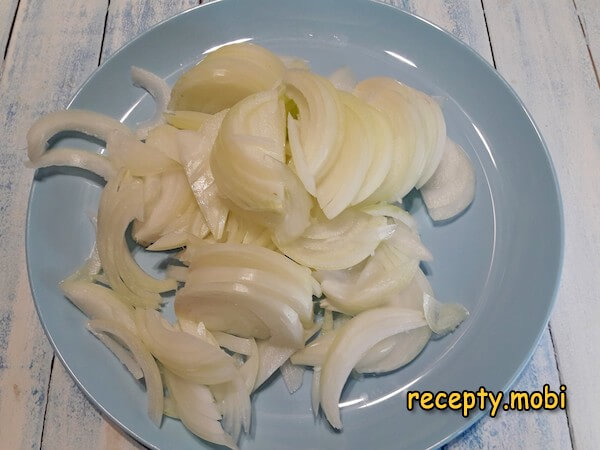
I peel the onion for the marinade (350 g) and cut it into strips 2–3 mm thick – this shape looks attractive in the sauce and cooks quickly. There is no need to cut it finely – during simmering it would cook down to mush and lose its texture.
I grate the carrot (450 g) on a coarse grater – this way it releases juice and sweetness into the marinade. A Korean-style grater works well too, but the texture will be denser and chewier. A coarse grater is enough for this recipe.

In a deep skillet I heat 50 g of vegetable oil and sauté the onion over medium heat for 3–4 minutes until soft and translucent – there is no need to let it turn golden, otherwise the marinade will be bitter. The onion should become glassy and sweet.
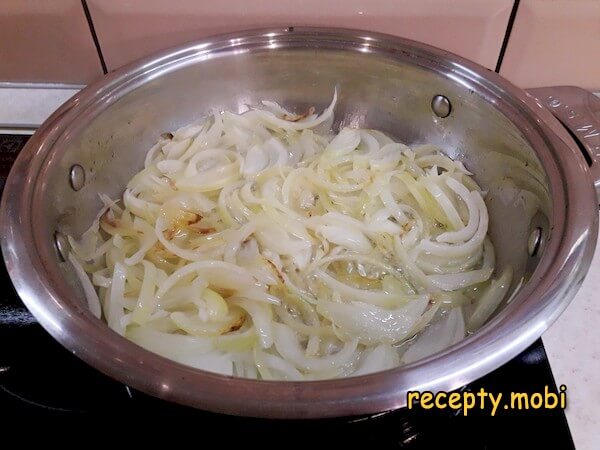
I add the grated carrot and sauté for 3–4 minutes, stirring now and then – the vegetables should turn soft but keep their shape. The carrot releases its sweet juice and the oil turns orange – this is normal and correct.
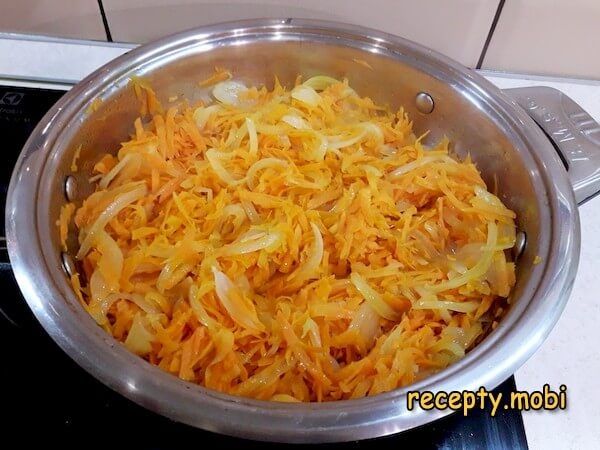
I combine the vegetables with the tomato paste (100 g), mix well and heat through for 2 minutes – this removes the raw, sour note of the paste and brings out its flavour. If the paste is very concentrated, you can reduce the amount to 80 g, otherwise the marinade will be sharp.

I dilute the mixture with warm water (600 ml), stirring thoroughly until smooth – the water should not be cold, otherwise the paste will set into lumps. Hot water speeds up the simmering and starts taking on the vegetable flavour straight away.

I add salt to taste, the bay leaves (2), the allspice (5–6 peppercorns) and balance the acidity with sugar (25 g) – a touch of sweetness is essential for a classic marinade. The spices immediately give a rich aroma and that characteristic Soviet flavour.

I squeeze in the juice of half a lemon (about 2 tbsp) for tartness – it is lemon, not vinegar, that gives the right fresh note. Vinegar would make the marinade sharp and flat, whereas lemon makes it rounded and fragrant.

I put the lemon peel into the marinade – let the citrus infuse the sauce with the aroma of its zest. I simmer it for 10 minutes over low heat and taste – it should be sweet and sour and moderately salty. I remove the zest at the end so it does not turn bitter during longer storage.

I spread a thin layer of the vegetable base (about a third of the marinade) over the bottom of a deep dish – it stops the fish sticking to the bottom and infuses the underside of the fillet with aroma.

I arrange half of the fried fillet snugly, but not in a stack – each piece should be in contact with the marinade for even soaking.
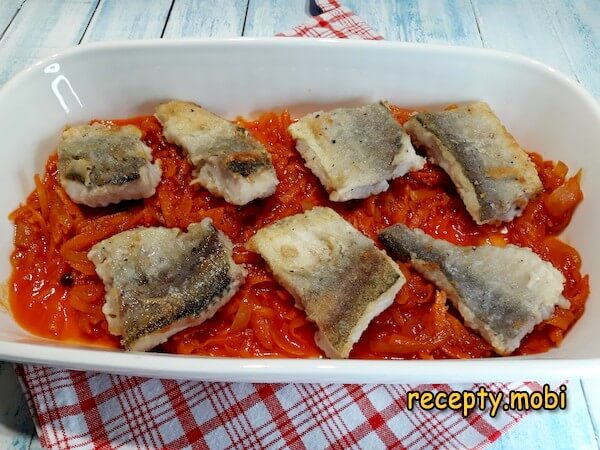
I cover it with the carrot-and-onion marinade, leaving a third for the final layer. On top I lay the remaining pollock – this makes a lovely layered pie of fish and vegetables.
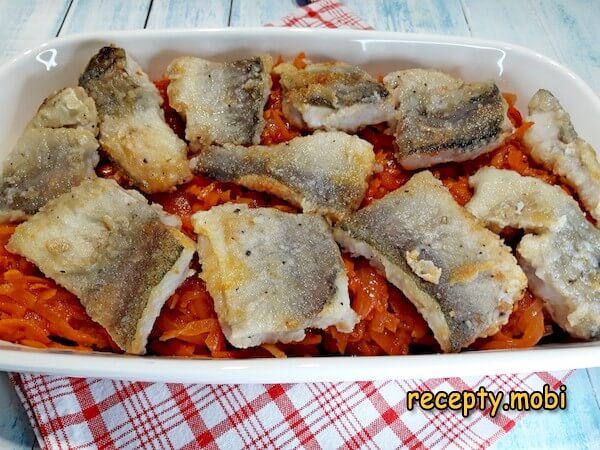
I cover everything completely with the vegetable sauce – the fish should be submerged in the marinade. I seal the dish with cling film and put it in the fridge for at least 30 minutes, and preferably for 4–6 hours or overnight – the longer it stands, the richer the flavour.



Tips
- 1
The longer the fish stands in the marinade, the richer the flavour – 4–6 hours is ideal, and overnight is better still. In that time the vegetable juices soak into the fillet and the dish becomes twice as fragrant.
- 2
For a lighter version, do not fry the fish but bake it in the oven at 180 °C for 15 minutes without flour. The calorie count drops to 60 kcal per 100 g and the flavour stays rich.
- 3
The marinade should be sweet and sour with a light hint of spice – adjust it with sugar (from 20 to 30 g) and lemon juice (from 1.5 to 3 tbsp) to taste. Balance is the key to that classic Soviet flavour.
- 4
Serve with fresh herbs – parsley, dill or spring onion. The best side for homemade fish under marinade is boiled potatoes or mashed potato.
FAQ
Which fish is best for fish under marinade? +
Any white fish with firm, tender flesh will do: pollock, hake, cod, blue whiting or haddock. Pollock is the most budget-friendly and widely available, hake is a little more tender and pricier, and cod is the premium option with a rich flavour. Do not use red fish (salmon, trout) – its strong flavour clashes with the tomato marinade. The main thing is that the fish should be fresh or properly frozen, with no ice or odour.
How long does fish under marinade keep in the fridge? +
In a sealed container in the fridge the dish keeps for up to 4 days. Its flavour grows richer by the day – the aroma peaks on the second day. By the third or fourth day the fish may turn slightly tart because of the lemon, but this is normal. I do not recommend freezing the finished dish – once thawed, the marinade separates and the texture suffers.
Can fish under marinade be made without frying? +
Yes, for a lighter version the fish can be baked in the oven at 180 °C for 15 minutes or steamed for 10 minutes. The flavour will be lighter and less rich, but healthier – minus 20 kcal per 100 g and with no fried crust. Another option is stewing: place the raw fillet straight into the ready marinade and simmer under a lid for 20 minutes.
Why did the marinade turn out bitter or too sour? +
Bitterness comes from lemon zest left in too long – remove it after 10 minutes of simmering. Over-salting and sharp acidity are a sign of poor balance: add another 10 g of sugar or 50 ml of water and heat through for 2–3 minutes. If the tomato paste is very concentrated and you used more than 100 g, dilute the marinade with a further 100 ml of water. A proper Soviet marinade is always mild, sweet and sour, and lightly spiced.
- Comment
or post as a guest
Be the first to comment.