avg —
Fish under Marinade (Classic Recipe)

Instructions
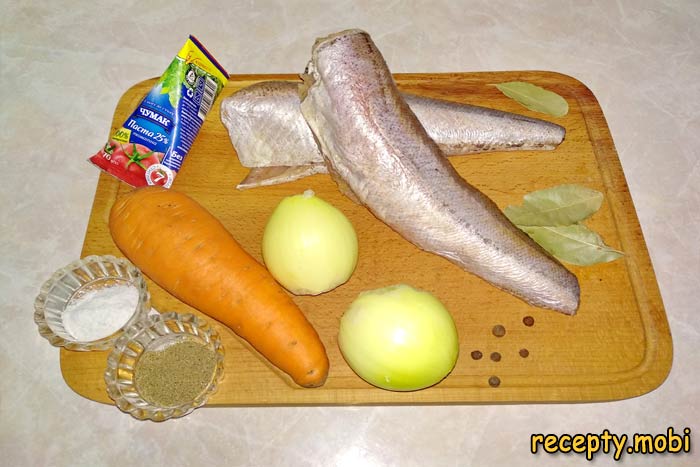
I prepare all the products – fresh hake, pollock, pelengas or any sea fish with firm white flesh will do. I wash and peel the vegetables (onion, carrot) thoroughly. If needed, I defrost the fish in the fridge for 8 hours – quick thawing in water or the microwave spoils the texture of the flesh.
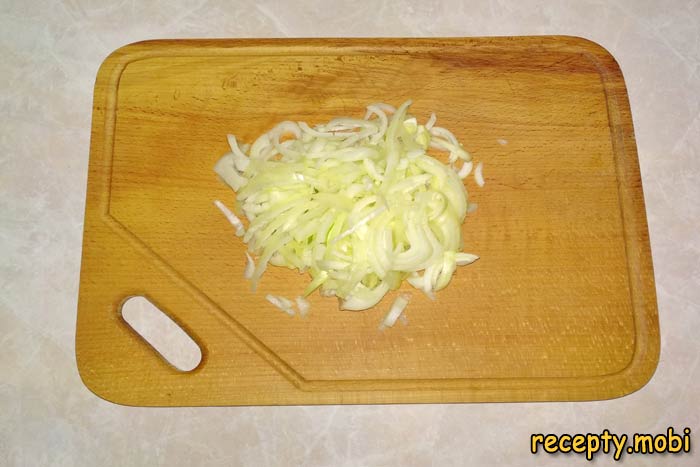
I peel the onion (2 pcs.) and cut it into quarter rings 3–5 mm thick. This cut works better in the vegetable dressing than small dice – it gives texture and a nice look to the finished dish. A very fine cut of onion simply disappears during stewing.
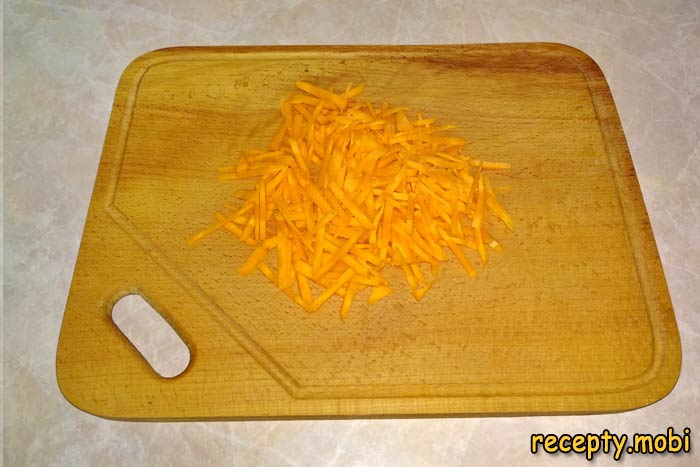
I peel the carrot (1 large or 2 medium) and cut it into thin strips 3–5 mm. You can shred it on a coarse grater or use a Korean-carrot grater, but in that case the texture and taste of the vegetable dressing will be different. Hand-cut strips are the classic grandmother’s way.
I pour a little vegetable oil (2 tbsp.) into a sauté pan or a thick-bottomed frying pan and fry the onion over medium heat for 5–7 minutes until golden (without drying it out). I add the prepared carrot and stew it for 5 minutes until slightly translucent. Then I add the tomato paste (70 g) and pour in half a glass of water (100 ml). I lower the heat and stew the vegetable dressing for 10–15 minutes until the carrot is fully cooked. As it stews, I add salt and pepper, the allspice (5 pcs.) and bay leaves (2 pcs.). I top up with water if needed. To balance the flavour (the acidity of the tomatoes), I add 1 tsp. of sugar. I judge the vegetables by taste – soft or al dente, as you prefer.
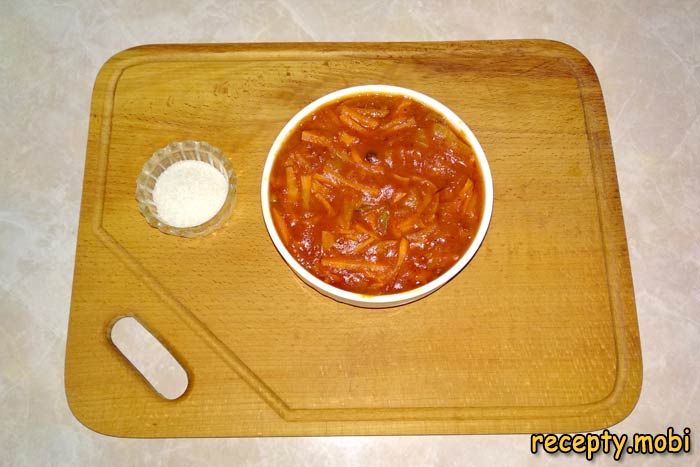
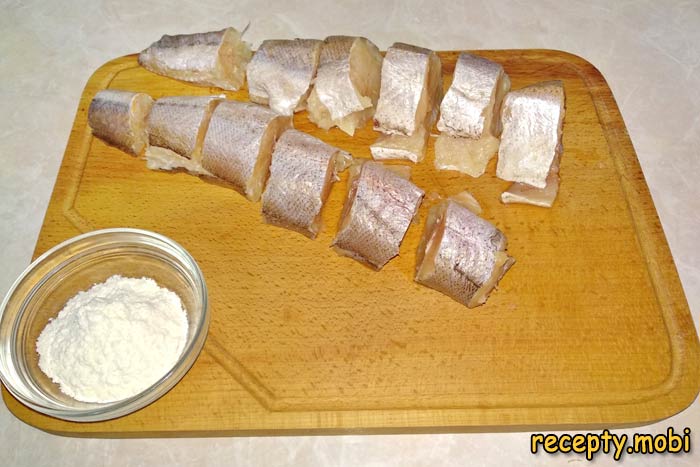
The vegetable dressing is ready – now I move on to the fish. I scale the fish, cut off the fins and clean out the insides. I always remove the black membrane in the belly – it gives the finished dish a bitter taste. I cut the fish into portion pieces 4–5 cm, sprinkle them with salt and leave them for 10 minutes to take up the seasoning. Then I coat each piece in flour (3 tbsp.) and fry them on all sides in hot vegetable oil (2 tbsp.) until golden and crisp.
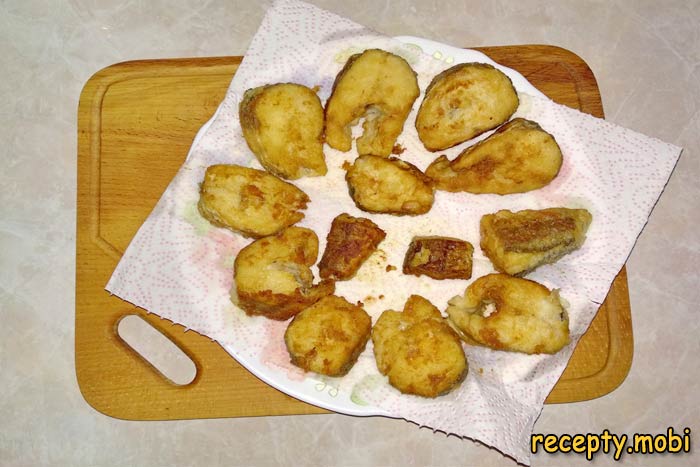
I place the fried pieces of fish on a paper towel to remove excess oil. I let them cool a little (5–7 minutes) – it makes them easier to handle. Without this draining, the oil seeps into the vegetable dressing and makes the dish greasy.
After frying, the backbone comes away easily by hand – the flesh holds its shape and does not fall apart. I carefully take out the backbone and any large bones from each piece. I put the prepared fillets straight into the dish in which I will pour over the vegetable marinade and serve the fish to guests.
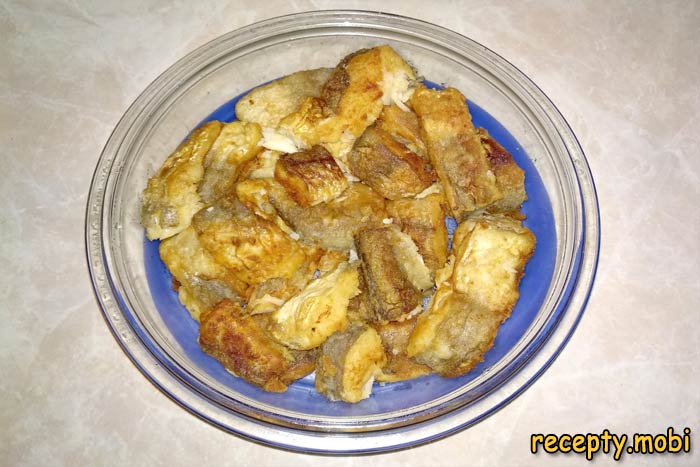
Now I have two finished components: stewed vegetables in tomato sauce and boneless fried fish. From these I make one whole dish – fish under marinade.
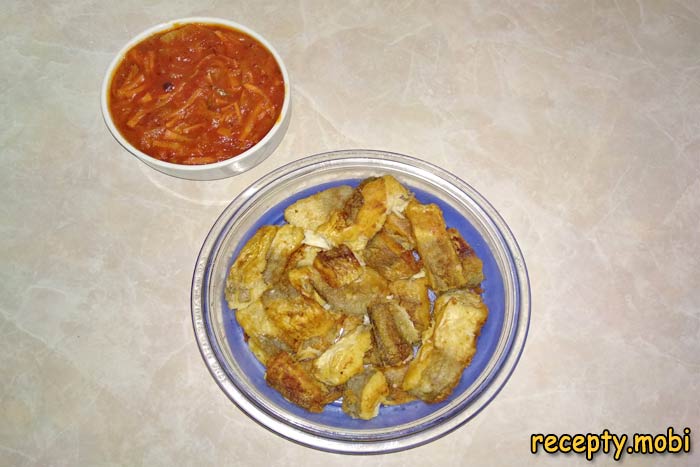
I spread the vegetable dressing evenly over the pieces of fish and pour the remaining tomato sauce on top. The sauce seeps through the fish and soaks it from below – this gives the finished dish maximum juiciness. I cover it with a lid or cling film and let it cool at room temperature for 30–40 minutes.
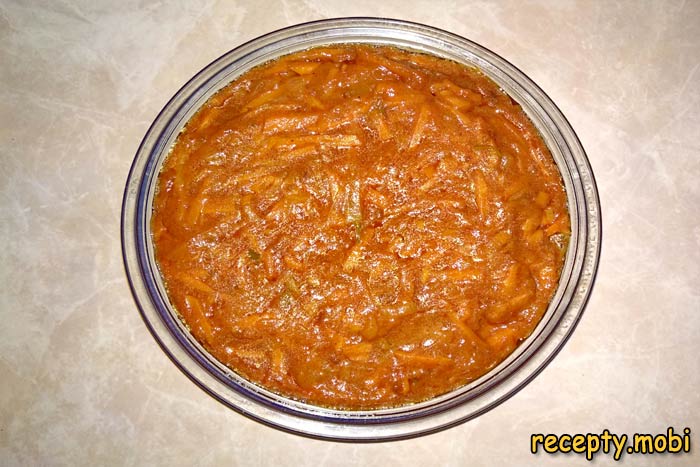
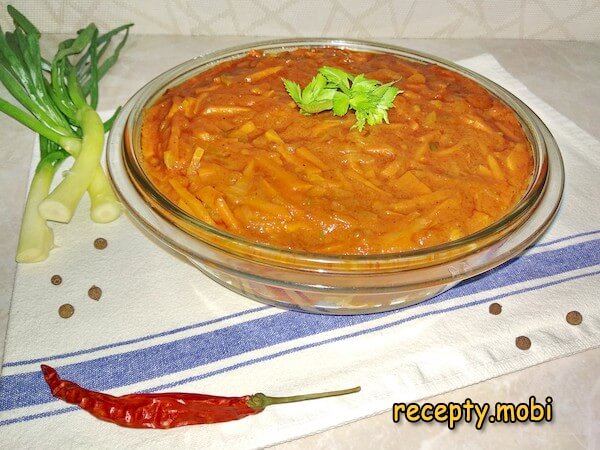
Then I put it in the fridge for 8 hours or OVERNIGHT – this is the secret stage for soaking. In that time the fish takes up all the aromas of the marinade and the flavours finally come together as one. Freshly made fish under marinade always tastes underdone; after a night in the cold it has that very taste, like in the old Soviet canteens. Classic fish under marinade is ready! I serve it chilled as a main dish or as an appetiser.


Tips
- 1
Be sure to LET the dish rest in the fridge overnight – freshly made, the fish tastes underdone, but after a night in the cold the flavour is just right.
- 2
Remove the black membrane from the belly of the fish – it gives the finished dish a bitter taste. Beginner cooks often skip this step.
- 3
The sugar (1 tsp.) is essential to balance the acidity of the tomatoes – it will not make the dish sweet, it only neutralises the acid. I use the same principle when making herring under a fur coat.
- 4
Do not stew the fish in the marinade together – you will get a different dish, tinned fish in tomato. The marinade is laid ON TOP so the fish can soak it up.
FAQ
Which fish is best to use? +
The classic choice is sea fish with firm white flesh: hake (the most popular for this dish), pollock (the budget option), pangasius, cod (more of a delicacy), navaga, horse mackerel. Pelengas, mullet and sea bass also work. Not suitable: oily fish (salmon, mackerel) – their distinctive taste overpowers the vegetables; and small river fish (too bony, awkward to eat). Frozen fish works too, but be sure to thaw it completely in the fridge for 8 hours before cooking – quick thawing will spoil the texture of the flesh.
Can the dish be made for Lent? +
Yes – for a Lenten version, make just the vegetable dressing without the fish, which gives a Lenten sauté. You can also replace the fish with tinned red or white beans (200 g, drained of their liquid) for plant protein. For a vegan version, use mushrooms (300 g of button mushrooms, fried separately) instead of fish. Stew all the components without oil, in water, or use vegetable oil. The calorie content drops from 93 to 60 kcal per 100 g. Ideal for Lent and other fasting days.
How long does the finished dish keep? +
Finished fish under marinade keeps in the fridge for up to 4 days in a tightly closed container. On the second and third day the taste is even richer – the flavours finally come together. Do not leave it at room temperature for more than 2 hours – the fish spoils quickly in the warmth. You can freeze it in portions for 1 month – before eating, thaw it completely in the fridge for 8 hours. After thawing the texture will spread a little, but the taste will keep. It is ideal to make the dish a day before serving – by the time you eat it, it will have rested and be at its most flavourful.
What to serve fish under marinade with? +
Classically with mashed potato, boiled or baked potatoes – a grandmother’s dinner. With basmati or jasmine rice for a light supper. With boiled buckwheat or pearl barley – a Russian pairing. On open sandwiches with dark Borodinsky bread – as a snack. For drinks: kvass, fruit cordial, light beer (for a men’s gathering), dry white wine (Riesling). On the Lenten table with boiled potatoes and sauerkraut as a starter. Ideal for a family dinner in winter or as a cold appetiser for the festive table in summer.
- Comment
or post as a guest
Be the first to comment.