avg —
Baked Pink Salmon in the Oven

Instructions
I prepare the ingredients. The fish can be baked head-on or head-off. If you keep the head on, remove the gills; either way, clean out the belly cavity. Take the butter out ahead of time so it softens – then it blends evenly into the sauce. Preheat the oven to 180 °C with top and bottom heat.
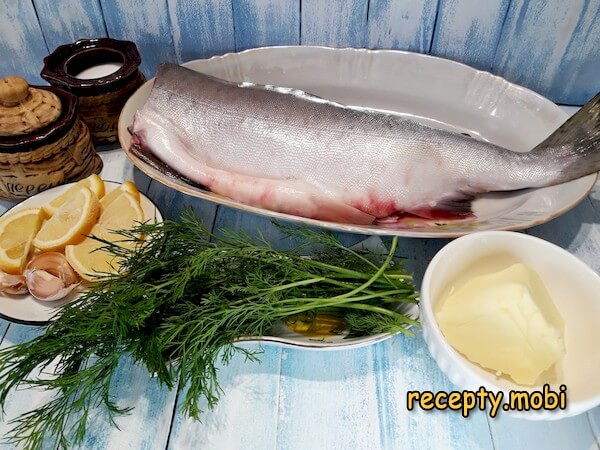
Pink salmon has very fine scales embedded in the skin, and they melt during cooking, so there is no need to scale it. Just rinse the fish, pat it dry with a paper towel, and set it aside. Then start on the sauce: finely chop half the bunch of dill.
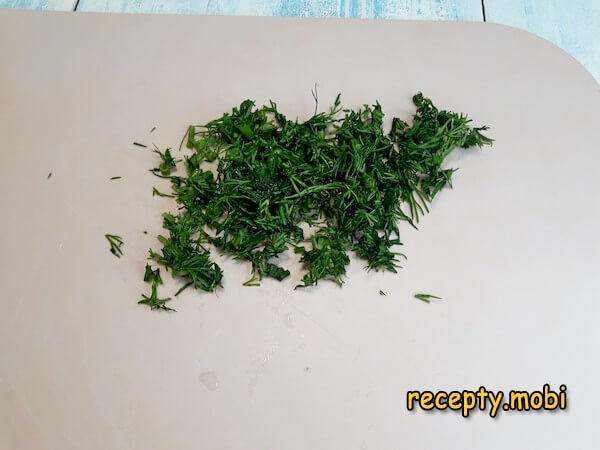
Transfer the dill to a bowl with the soft butter – it should be soft rather than melted, so you get a thick green paste that clings well to the fish and does not run off.
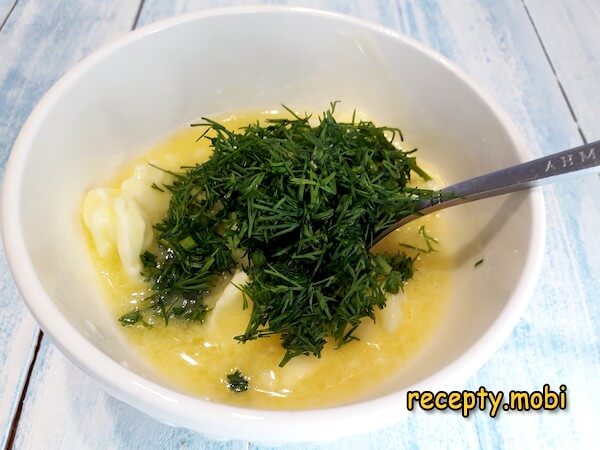
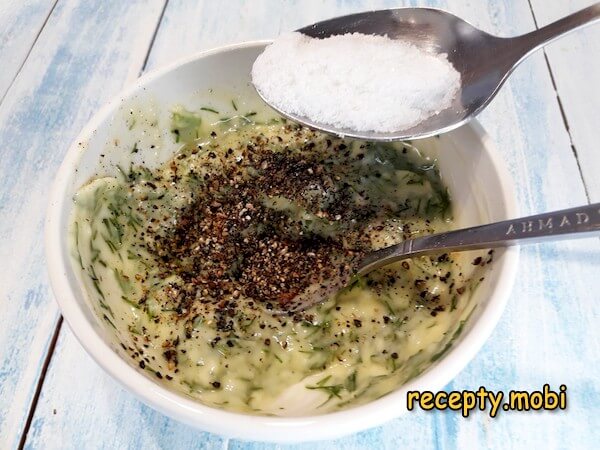
I stir the mixture with a fork and add freshly ground black pepper – it pairs beautifully with fish and brings out the delicate flavour of the red flesh. Freshly ground pepper is more aromatic than pre-ground.
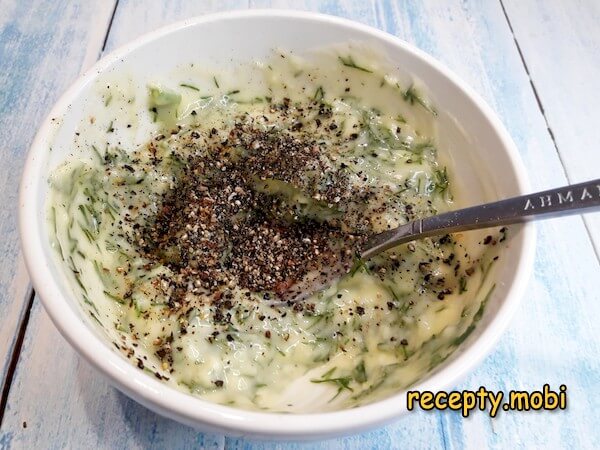
Next, I season everything with salt – in the sauce, not on the fish. If you salt the fish directly, the salt draws out the little moisture the lean pink salmon fillet has, and it turns out dry.
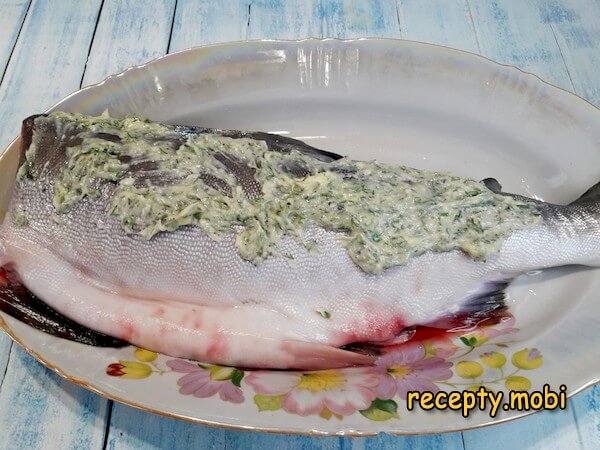
I coat one side of the salmon with a quarter of this thick sauce, spreading it evenly from tail to head and rubbing the soft butter into the skin. The sauce acts as a protective barrier against drying out.
I line the baking sheet with several layers of foil and lay the fish on it coated-side down. I also spread another quarter of the sauce over the top of the fish – the same protective-layer technique for the second side.
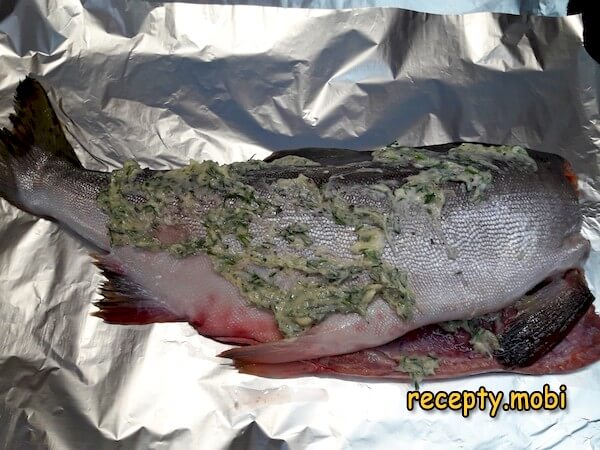
I crimp the foil into a cocoon so no open seams remain – the sealed wrap traps steam and hot, fragrant air around the fish. I slide the baking sheet onto the middle rack of the oven.

Meanwhile, I change the flavour of the remaining sauce a little: I add lemon juice and garlic crushed through a press. The acidity and garlic enliven the creamy base and make it brighter.
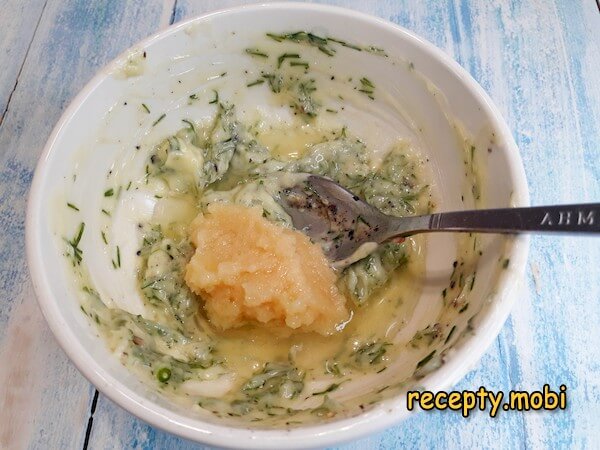
Into the same bowl I add the finely chopped remainder of the dill – the finishing sauce should have plenty of fresh herbs, which give a bright, grassy aroma that echoes the baked dill on the fish.
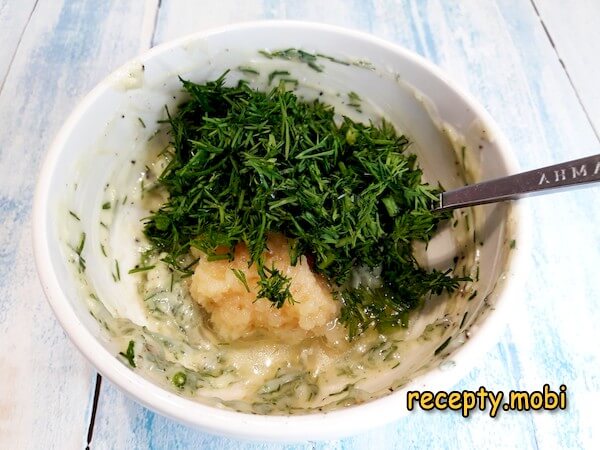
After 25–30 minutes I take the baking sheet out and open up the foil – fragrant steam escapes from the cocoon. The fish is nearly done by this point; all that is left is to brown the skin.
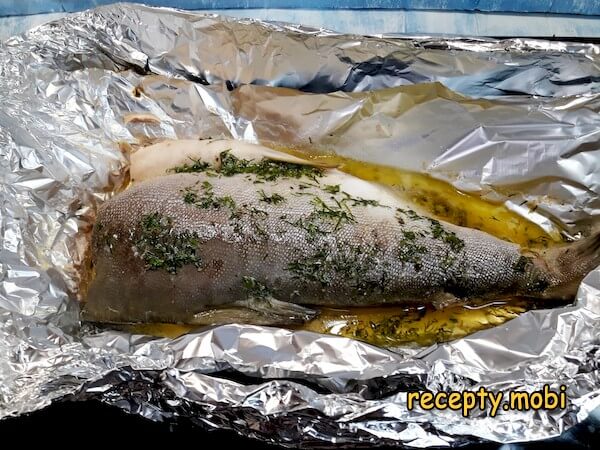
Since the fish will bake a little longer so the top skin browns, I scrape all the herbs down into the melted butter with a knife – otherwise the dill dries out and burns, leaving a bitter trace. I put the salmon back in the oven like this for another 15 minutes.
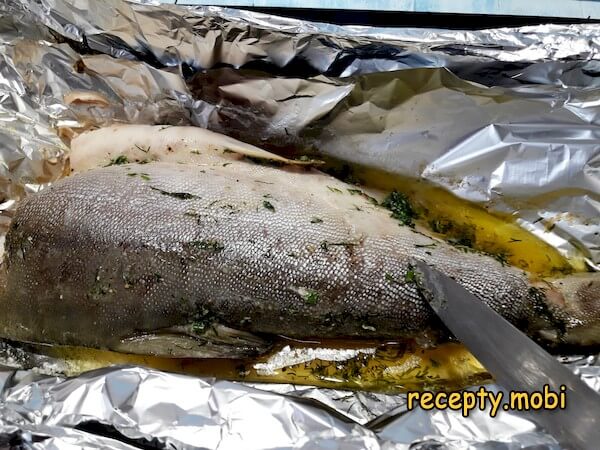
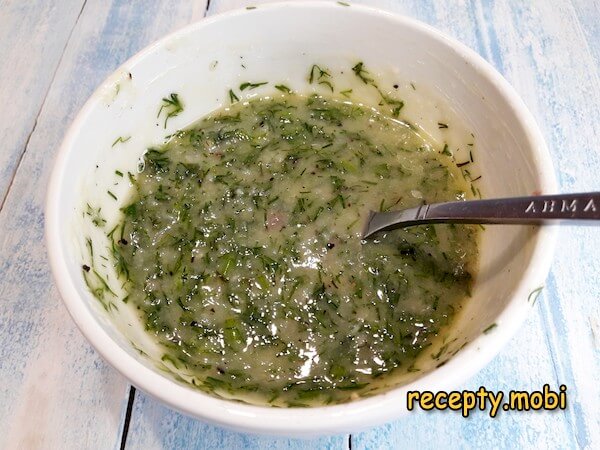
After that time I transfer the fish to a serving dish and carefully pour the hot, buttery liquid into the bowl with the finishing sauce – this is the secret to its juiciness, as the fish juices intensify the flavour of the dish.
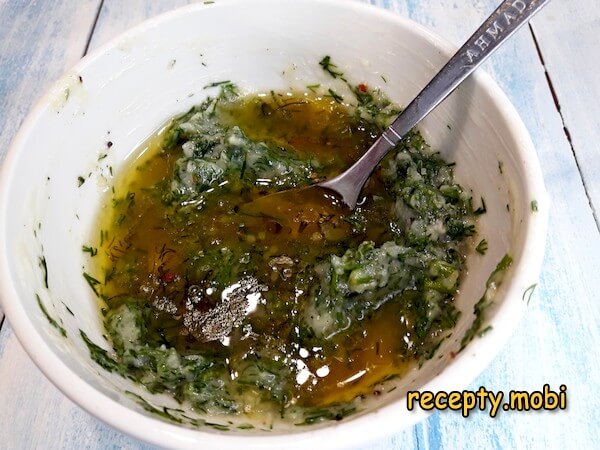
I whisk the new sauce with a fork until it turns whitish – vigorous whisking emulsifies the butter with the lemon juice and the fish liquid, and the sauce becomes airy and delicate.
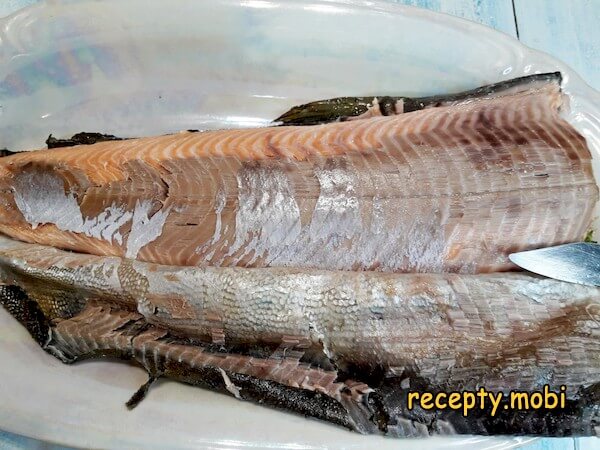
I cut the skin near the tail and along the back, then gently pull it down – it lifts off the baked fish easily and cleanly. Never throw the skin away: it is very tasty and juicy, and you can serve it as a separate snack.
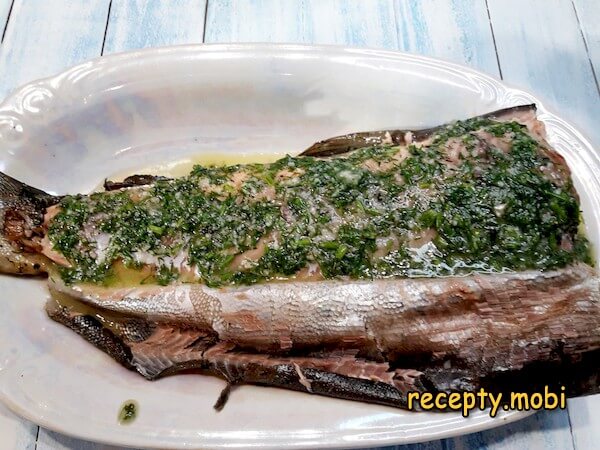
I dress the flesh of the salmon on one side with half of the new sauce – once the top is eaten, I remove the spine and dress the second half of the fish with sauce. That way every portion gets a fresh helping of the fragrant sauce.This is how baked pink salmon in the oven turns into remarkably juicy, tender fish, even though the fillet started out rather dry. I cut the whole fish into portioned pieces and serve it with potatoes and fresh vegetables.


Tips
- 1
SALT ONLY IN THE SAUCE – the secret to a juicy lean fish. Salt on the fish itself draws moisture out of the already dry pink salmon fillet, and the result is dry and stringy. Salt added solely to the creamy sauce works on the flavour without dehydrating the flesh. The same approach gives you premium juiciness in pink salmon baked in the oven in foil.
- 2
A DOUBLE SAUCE – the secret to concentrated flavour. Half of the sauce goes onto the raw fish as a protective barrier against drying out; the other half is enriched with lemon and garlic and served with the finished, browned fish. To the serving sauce I also add the fish juices from the foil, and the flavour comes out rich and layered.
- 3
DILL UNDER THE BUTTER BEFORE BROWNING – the secret against bitterness. The dill on the top skin would dry out and burn during the 15 minutes in the open oven, giving the fish a bitter note. Before the final bake I scrape all the greens down into the melted butter – the dill stays aromatic and the skin browns freely to a golden crust.
- 4
AN ALTERNATIVE IN THE SAUCE – the secret to variety. If you want an even creamier version, I cook it using the method from pink salmon in creamy sauce in the oven – the flesh bakes right in a thick creamy pour and soaks it up all the way through.
FAQ
Why does pink salmon turn out dry? +
The main reasons: pink salmon is very low in fat, only 6–7%, so it needs a special cooking technique. You must not salt the fish directly – the salt will draw the last of the moisture out of the fillet. You must not bake it without a protective layer of fat – the flesh will be dried out by the hot air. And you must not overcook it in the oven – for a 1100 g fish, 25 minutes in foil plus 15 minutes of open browning is enough. The creamy garlic sauce the fish is coated with before baking solves all three problems at once.
Can you bake pink salmon without foil? +
You can, but the technique changes fundamentally – without foil the fish loses moisture to the hot air and comes out noticeably drier. If you have no foil, lay the fish on a bed of onion and carrot – the vegetables release juice and create steam around it. Cover it with buttered parchment for the first 25 minutes. Without any protection at all, pink salmon will only work with a generous layer of sauce on top and a lower temperature of 160 °C instead of 180.
How long should you bake pink salmon in foil? +
A fish weighing 1100 g at 180 °C needs 25–30 minutes in sealed foil plus 15 minutes of open baking to brown the skin. For a smaller fish of 700–800 g I shorten the first stage to 20 minutes; for a large one of 1500 g I extend it to 35 minutes. I check doneness with a skewer in the thickest part near the backbone – if clear juice runs out with no pink tinge, the fish is ready. Overcooking is risky, as the fillet turns dry instantly.
What do you serve with baked pink salmon? +
The classic side is boiled new potatoes drizzled with butter and sprinkled with dill. Fresh vegetables – cucumbers, cherry tomatoes, leaf salad, spring onion – give a fresh contrast to the creamy fish. Among grains, boiled rice, quinoa and pearl barley work well. For a festive table I bake the pink salmon whole and serve it on a large dish with lemon wedges and sprigs of dill – it looks impressive. As for sauces, besides the signature dill-and-garlic one, tartare or a sour-cream-and-mustard sauce goes nicely.
- Comment
or post as a guest
Be the first to comment.