avg —
How to Deliciously Cook Chicken Gizzards

Instructions
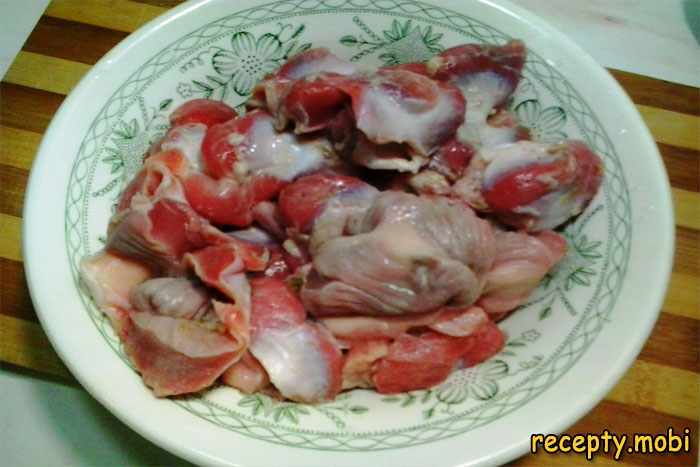
Thoroughly wash the chicken gizzards (500 g) under cold running water, changing the water several times until it runs clear. Be sure to remove all the yellow films from the outside and inside of the gizzards – they are what give the finished dish its characteristic bitterness. This is the most important preparation step, and it is often skipped. The films come off by hand or with a knife.
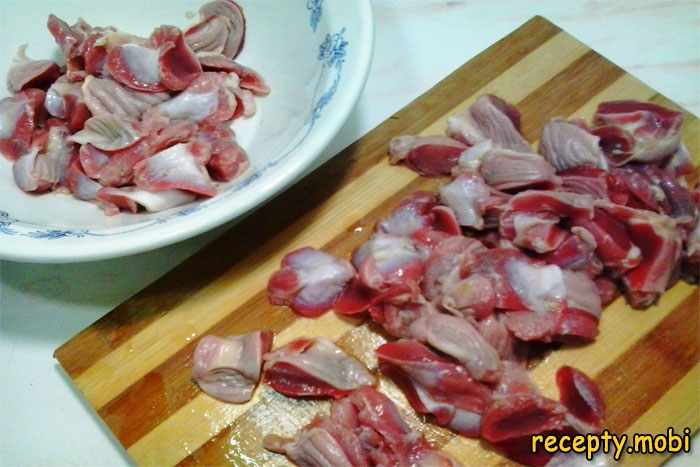
Cut each gizzard crosswise into 3–4 pieces – this size is best: pieces that are too small overcook during the long stewing, while pieces that are too large stay tough. Rinse the cut pieces once more under running water – this removes any remaining bits of film and possible debris.
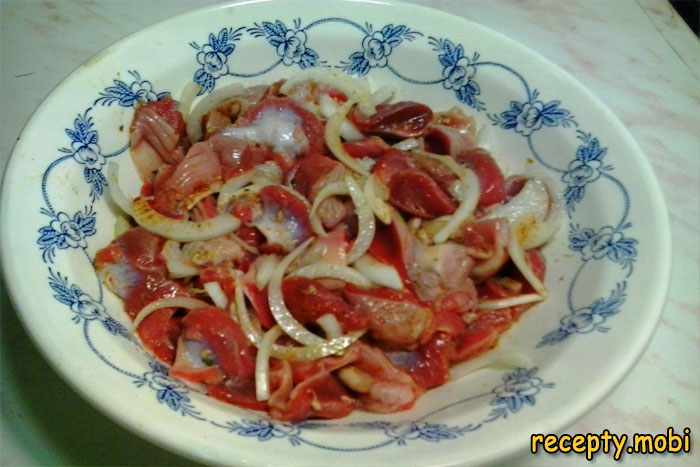
Place the prepared cut gizzards in a deep bowl, add a pinch of salt, sprinkle with 1–2 teaspoons of the chicken spice mix, and add 1 onion sliced into half-rings. Knead the mixture well by hand for 1–2 minutes so the spices and onion are evenly distributed. Leave covered for 15 minutes to marinate – during this time the gizzards take on the aromas.
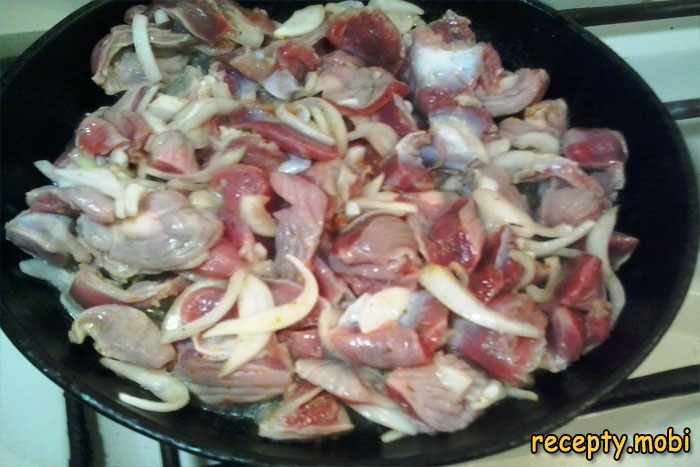
In a deep skillet or a heavy-bottomed saucepan, heat 50–75 ml of sunflower oil over medium heat for 1–2 minutes. Add the marinated gizzards together with the onion to the hot oil. At first the gizzards will release a lot of juice – let it evaporate, stirring occasionally, for 5–7 minutes. Then continue frying over low heat until light golden for 5–8 minutes – the onion and meat should brown a little.
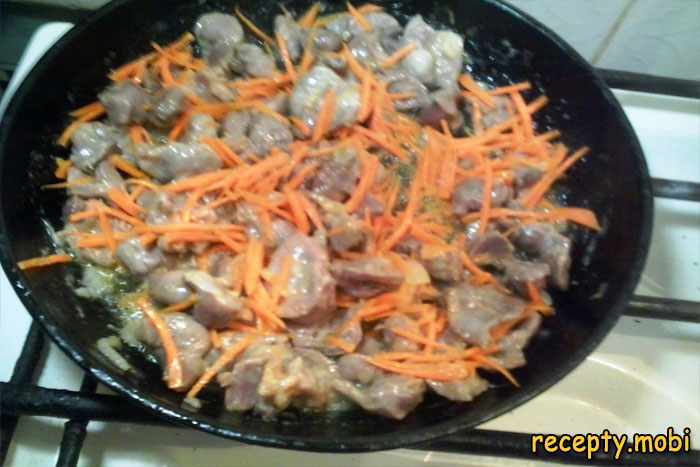
Sprinkle the contents of the skillet with 0.5–1 small carrot, cut into thin strips or grated on a coarse grater. Fry with the carrot for 5–8 minutes until it is soft and slightly golden – the oil will turn orange, which gives the finished dish its characteristic warm tint.
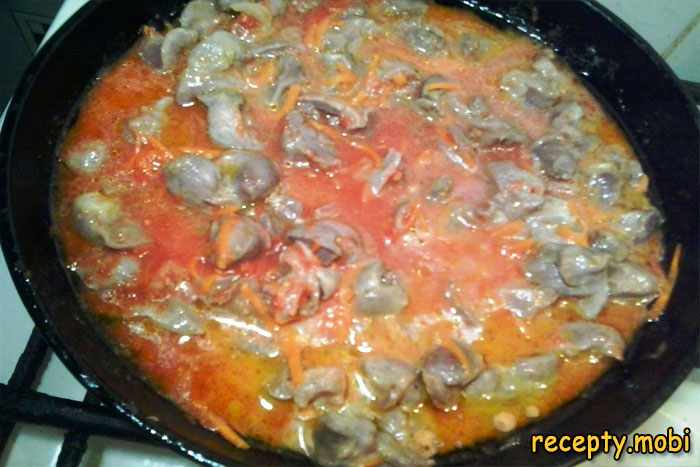
Pour 250 ml of tomato juice over the gizzards and vegetables and bring to a boil over medium heat. Reduce the heat to the lowest setting and stew under a closed lid for about 1.5 hours, stirring occasionally – this is the critical time for making the gizzards tender. Less than 1 hour and they will be tough; more than 2 hours and they will fall apart into fibres. As the tomato juice boils away, add 50–100 ml of hot water or broth at a time to keep the liquid level up. Two minutes before the end of stewing, sprinkle the dish with finely chopped fresh herbs (dill, parsley), and if you like, add 1–2 cloves of pressed garlic for a piquant note.
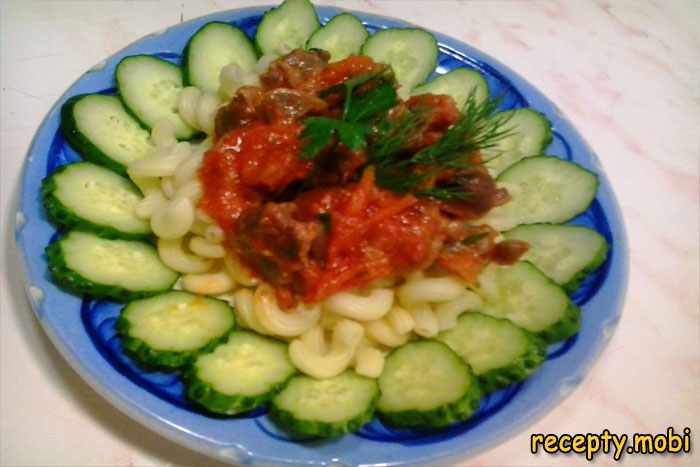
Arrange the finished homemade chicken gizzards in tomato sauce on individual plates and serve to your taste. Serve them hot with a side of mashed potatoes (a classic of the Russian table), crumbly buckwheat, boiled rice, or durum-wheat pasta. Fresh vegetables and herbs are a great addition – the result is a hearty, budget-friendly lunch for the whole family.Now you know how to deliciously cook chicken gizzards.


Tips
- 1
Always remove all the yellow films from the chicken gizzards – they are exactly what gives the finished dish its characteristic unpleasant bitterness. The films come off easily by hand or with a knife. Without this step the dish will be spoiled.
- 2
Stew the gizzards for at least 1.5 hours over low heat under a lid – only then do they become genuinely soft and tender. A short stewing time (30–60 minutes) gives a tough, rubbery result.
- 3
You can replace the tomato juice with diluted tomato paste – 2–3 tablespoons of paste in 180 ml of water gives the same result. Homemade tomato sauce works even better, for a richer flavour.
- 4
Serve the homemade chicken gizzards with mashed potatoes, boiled rice, or pasta – the gravy from the stewing becomes a natural sauce for the side dish. The dish is especially tasty the next day.
FAQ
Why did my chicken gizzards turn out tough and rubbery? +
The main reason is insufficient stewing time. Chicken gizzards are a very dense muscle tissue that needs at least 1.5 hours over low heat for the collagen to soften fully. If stewed for only 30–60 minutes, the gizzards will stay tough and rubbery, no matter how well they are seasoned. The solution: if you find them tough when you taste them, keep stewing for another 30–45 minutes, adding hot water. It also helps to marinate them beforehand in kefir or milk for 1–2 hours before frying – the lactic acid softens the fibres. For quick cooking, use a pressure cooker – 30 minutes under pressure is equivalent to 1.5 hours of ordinary stewing.
Can I stew chicken gizzards in a sour cream sauce? +
Yes, this is an excellent option – a sour cream sauce makes the dish even more tender and creamy. Replace the 250 ml of tomato juice with 200 g of 20% sour cream diluted with 100 ml of water or chicken broth. Stew in the same way for 1.5 hours over low heat – the sour cream gives a characteristic creamy gravy. You can also use 20% cream (200 ml) for a more delicate, restaurant-style taste. For an Asian version, try coconut milk (200 ml) plus 1 tablespoon of soy sauce and 1 teaspoon of grated ginger – an unusual home recipe. White sauces go very well with rice or pasta.
How do I choose good, fresh chicken gizzards? +
Signs of a good product: a light pink or beige colour (ones that are too dark or greenish are not fresh), a firm, dense texture (when pressed with a finger it springs back), and a light, neutral smell without sourness (a sour or putrid smell indicates spoilage), with a minimum of yellow films inside (well-cleaned ones save time). Buy chilled rather than frozen – they have a more tender texture. The shelf life of chilled gizzards is 2–3 days from the production date. If you see a lot of liquid in the packaging, it may be a sign of repeated thawing. For the best quality, buy from a trusted farm-produce seller at the market – the home-style option is always preferable.
How long do cooked chicken gizzards keep in the refrigerator? +
The finished stewed dish keeps in the refrigerator in a closed pot or container for up to 3 days without losing flavour. On the second day the dish becomes even tastier, as the aromas soak more deeply into the meat – a property of most stewed dishes. Reheat over medium heat under a lid with 2–3 tablespoons of water or tomato juice – this restores the consistency of the sauce. In the microwave, 2–3 minutes at medium power. You can freeze it for up to 2 months in portioned plastic containers – a handy way to prep meals for the week. After thawing in the refrigerator, heat through to boiling.
- Comment
or post as a guest
Be the first to comment.