avg —
Calf Liver Pâté with Carrots, Butter, and Fried Onions

Instructions
Rinse the veal liver thoroughly under cold water and clean it completely of membranes and large ducts with a sharp thin knife. Cover with fresh water and boil for 25–30 minutes, until the cut is pale with no blood. More mature offal is best soaked in milk for 1–2 hours beforehand, as this removes bitterness and any off smell.
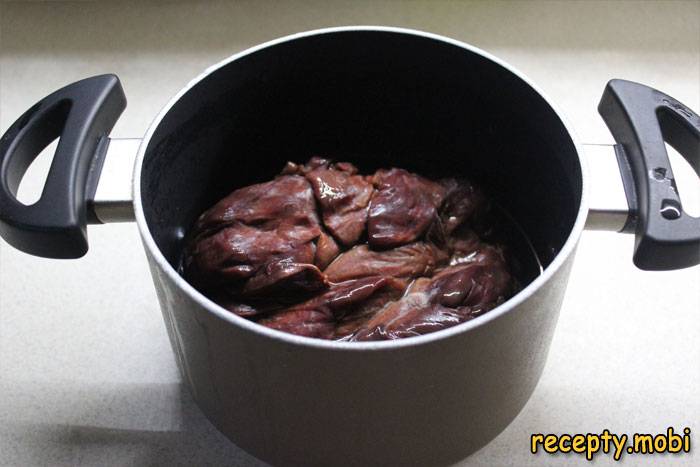
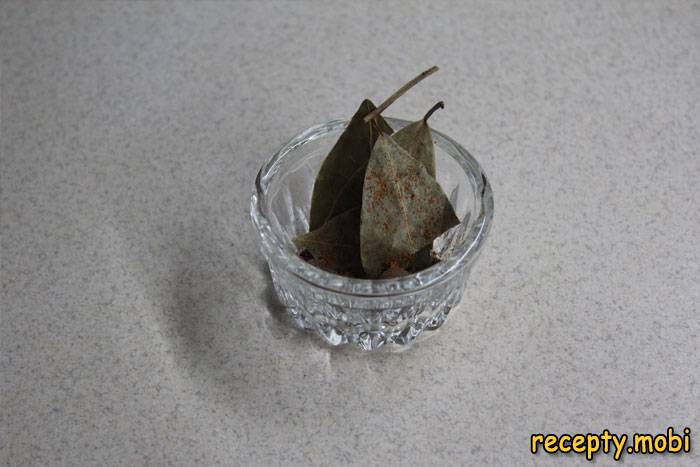
Add the aromatic spices to the liver – bay leaf, allspice, and a pinch of nutmeg. Cool the cooked offal completely in the same water; hot liver must not be puréed in a blender, as it will splash onto your hands and the equipment.
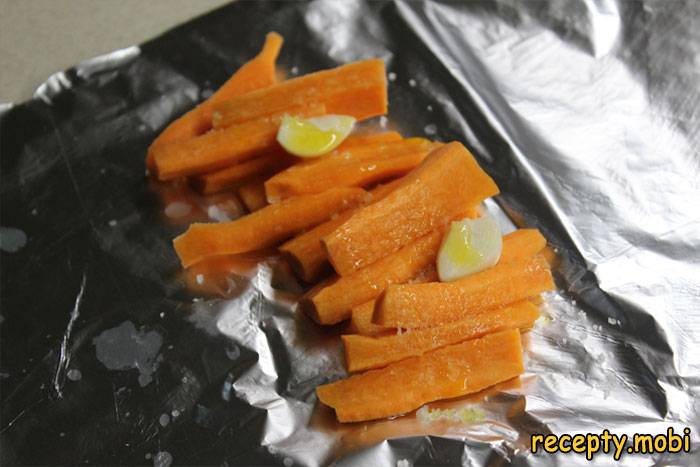
Peel and cut the carrot into sticks. Place it on a sheet of foil together with the peeled garlic, drizzle with vegetable oil, and lightly salt. Bake for 25–30 minutes at 180 °C until fully done and lightly caramelised. Roasting makes the carrot sweet and concentrated in flavour, which boiling will not achieve.
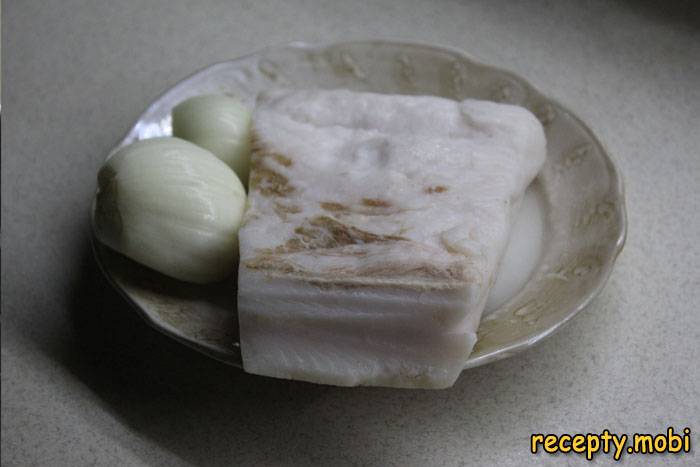
Prepare the lard (cut off the rind) and peel the onion. Lard gives the pâté its uniquely creamy texture; without it the result is more like liver purée than a true pâté.
Divide the cooled liver in half. Blend the first half with the lard for 2–3 minutes until you have a smooth, silky mass. You can also mince it through a meat grinder with a fine plate – twice for a smoother result.
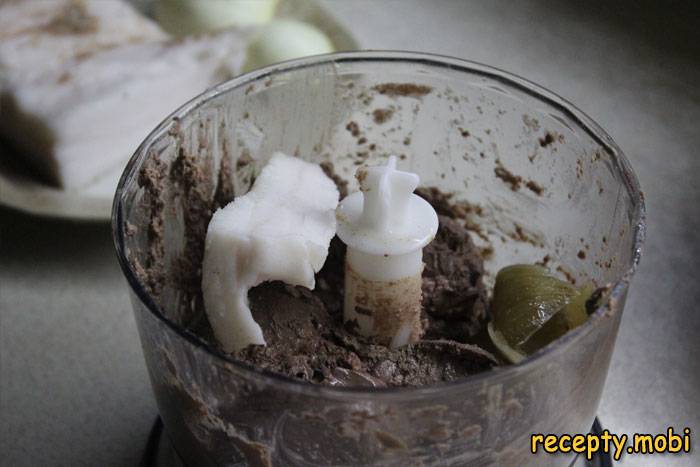
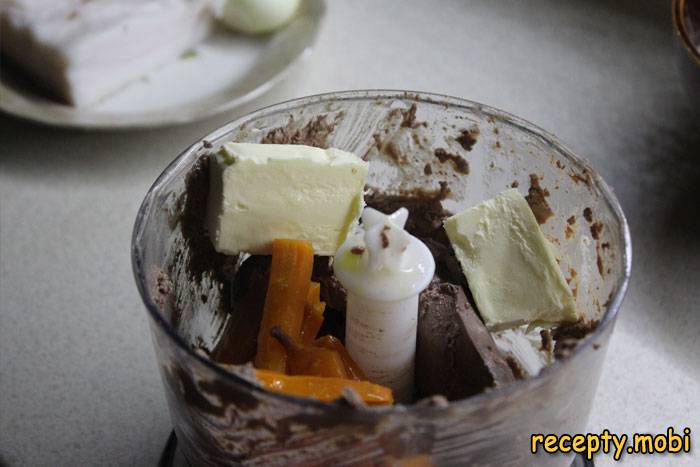
Blend the second half of the liver with the softened butter and the roasted carrot and garlic. The carrot gives a lovely orange tint, and the butter adds a creamy tenderness.
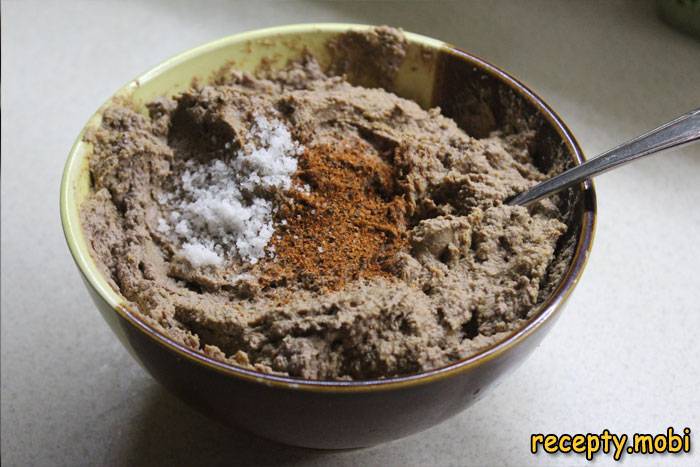
Combine the two portions of liver pâté with a spatula until uniform. Add salt to taste and freshly ground spices – pepper and nutmeg. Add the salt gradually, tasting as you go, as it is very easy to over-salt the finished pâté.
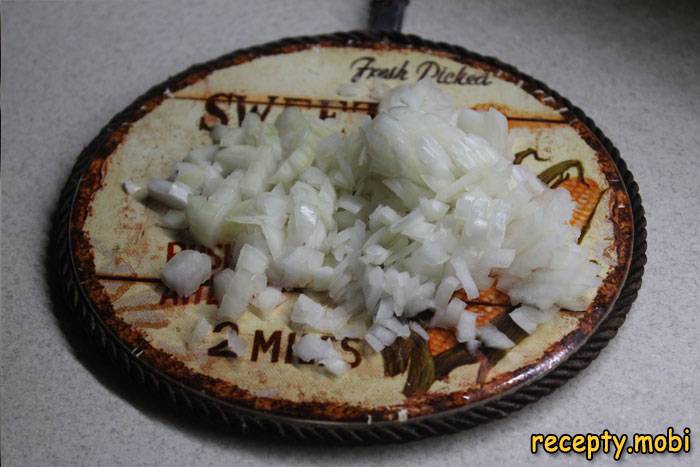
Chop the second onion into very small cubes, 3–4 mm. This onion goes into the pâté in pieces, so a neat dice matters.
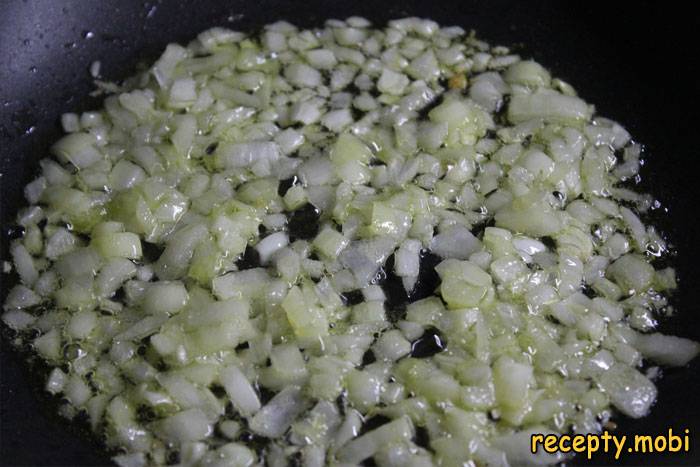
Fry the onion in butter over medium heat for 7–10 minutes, until soft and golden. Butter gives the onion a caramel tint that you cannot get with vegetable oil.
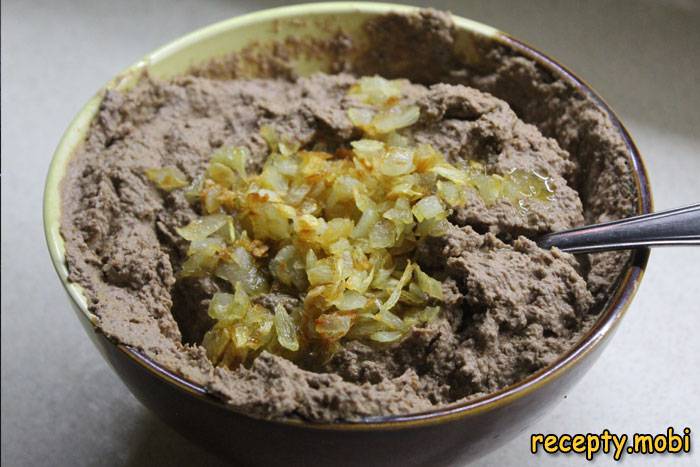
Add the fried onion to the pâté without blending it in – it is the onion pieces that give that essential textural contrast in the tender mass. This is a small culinary trick.
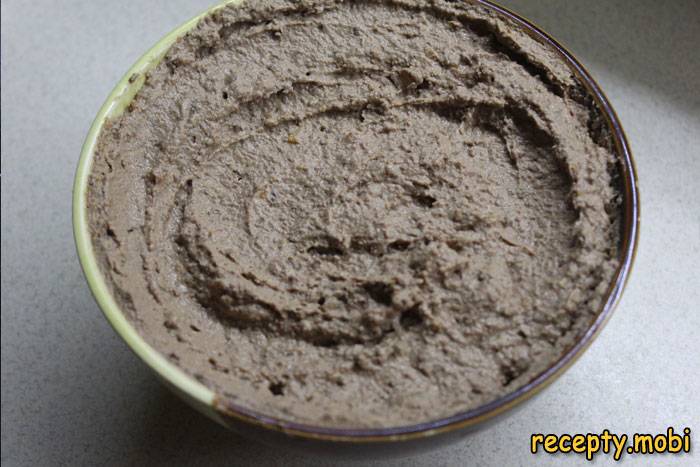
Stir all the ingredients together with a spatula until uniform, with the onion pieces evenly distributed. The pâté is ready!
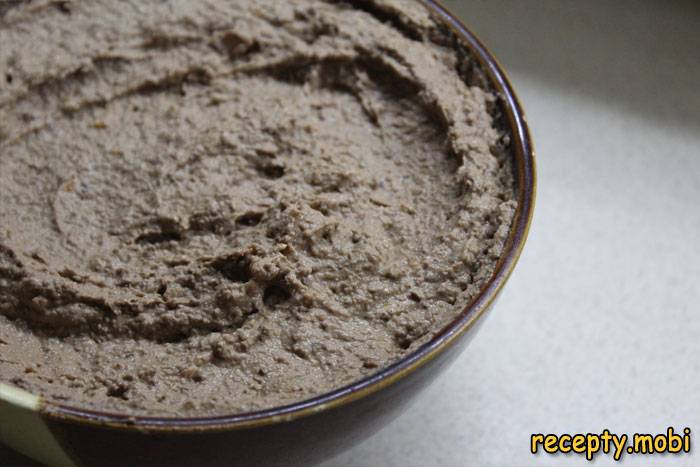
Transfer the creamy pâté into a ceramic dish or glass jars and refrigerate for at least 4 hours to set. During this time the butter firms up and the pâté reaches the right consistency for spreading.


Tips
- 1
Choose young liver of a light burgundy colour without dark patches – it will not be bitter and will give the most tender pâté.
- 2
Add the fried onion in pieces rather than blending it – this gives the textural contrast you want and makes the pâté more interesting in structure.
- 3
The more butter you use, the more tender and creamy the consistency of the pâté. Forshmak is made on a similar principle.
- 4
Serve with homemade croutons or toast, or use it as a filling for pancakes and tartlets – a versatile appetiser.
FAQ
Can I use chicken liver instead of veal? +
Yes, chicken liver also works very well and is even considered more tender in texture. The boiling time drops to 15–20 minutes, as it cooks faster. Chicken liver is softer and sweeter and gives a more homely pâté. Veal gives a richer, deeper flavour with a slight bitterness – it is the one used in classic French pâtés. You can mix the two 50/50 for an interesting combination. Pork and beef liver are also suitable, but they need longer soaking in milk.
Why add lard to the pâté? +
Lard gives the pâté a creamy, silky texture and juiciness – without it you get a dense, dry mass more like liver purée. The fat in the lard binds all the components together and makes the pâté uniform. You can replace the lard with an extra portion of butter (add 50 g) – it will be more tender but less authentic. Classic French pâtés use lard or duck fat. Bacon also works and gives a light smoky aroma.
How long does homemade pâté keep in the fridge? +
In the fridge in an airtight container, up to 5 days. For longer storage, cover the surface with a thin layer of melted butter or ghee – this creates a protective barrier against air and extends the shelf life to 2 weeks. You can freeze it in portions in ice-cube trays or small containers – it keeps in the freezer for up to 2 months. After thawing, stir lightly and serve. Do not refreeze, as the texture will spoil.
- Comment
or post as a guest
Be the first to comment.