avg —
Rice Kutya with Raisins

Instructions
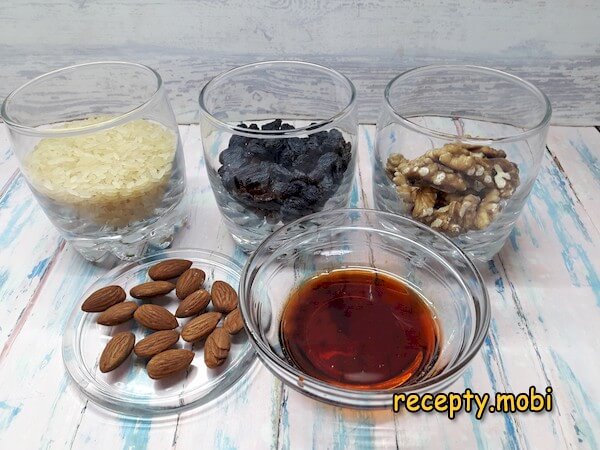
I prepare the ingredients for rice kutya with raisins. You can use any rice – long-grain, round or parboiled. Two kinds of raisins create more variety and a good play of flavour, and the nuts can be any you like.
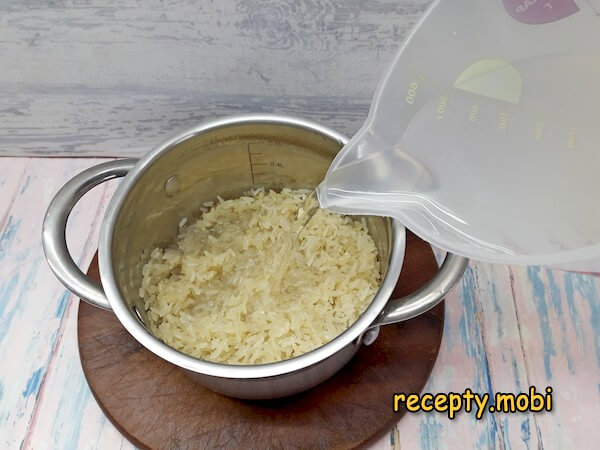
Rinse the rice several times until the water runs clear.
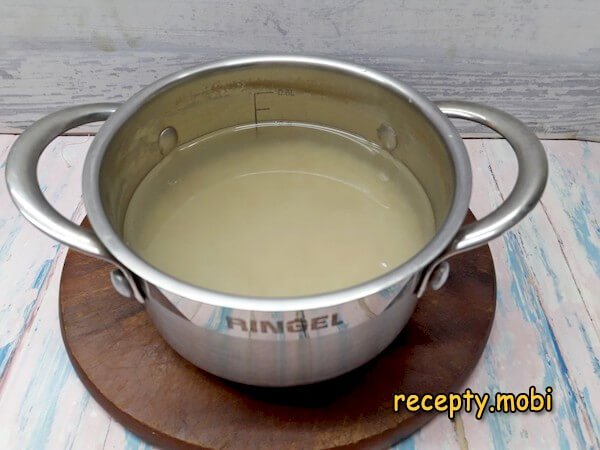
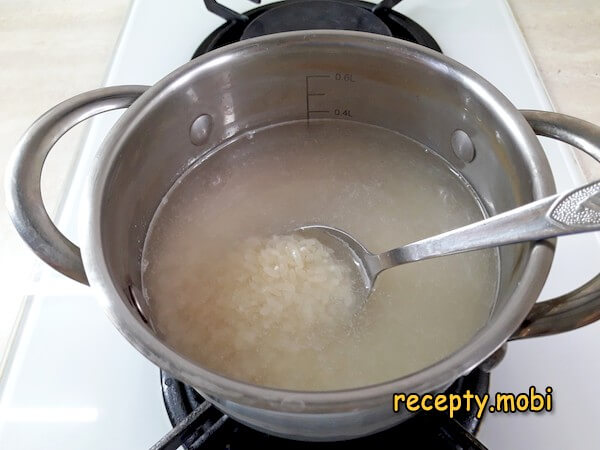
Then pour in the specified amount of purified water.
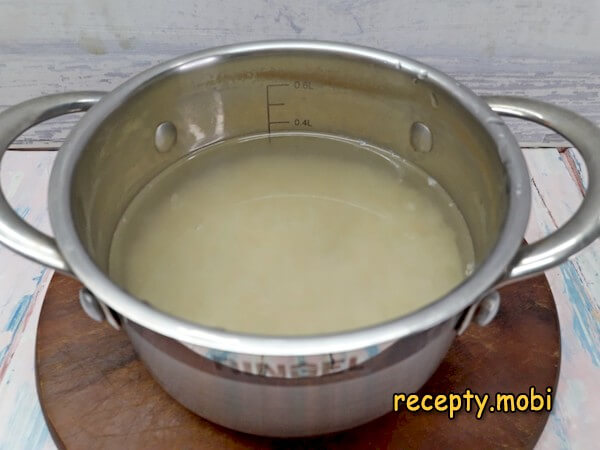
Its level should end up 2 cm above the level of the rice.
Put the pot on low heat and, for the first while, stir the grain so it does not stick to the bottom.
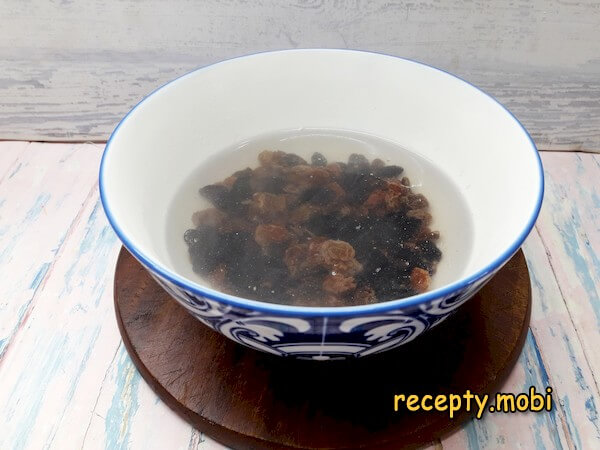
At the same time, pour boiling water over the raisins.
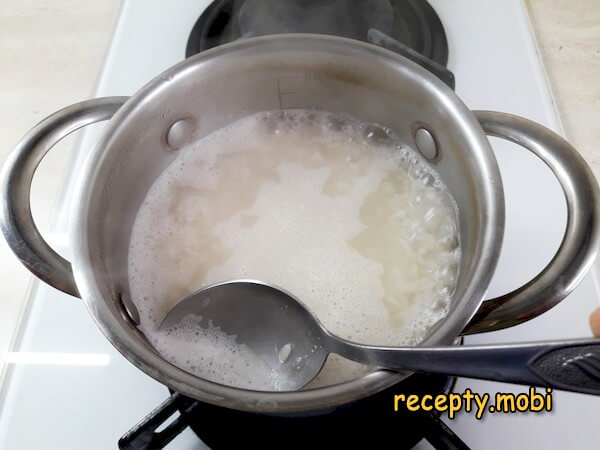
When foam appears in the pot, skim it off with a spoon and turn the heat down to its lowest.
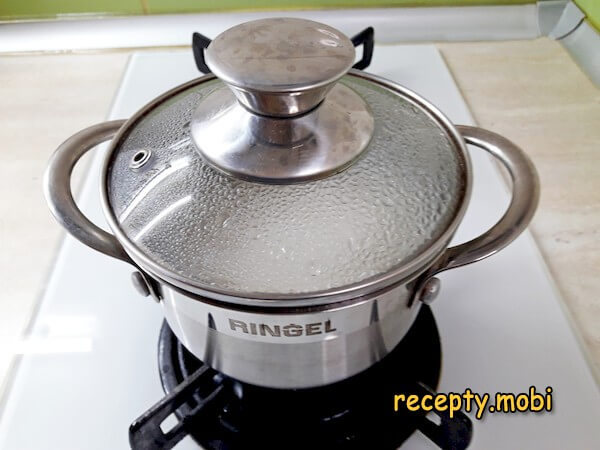
Cover the rice with a lid and cook for 15 minutes.
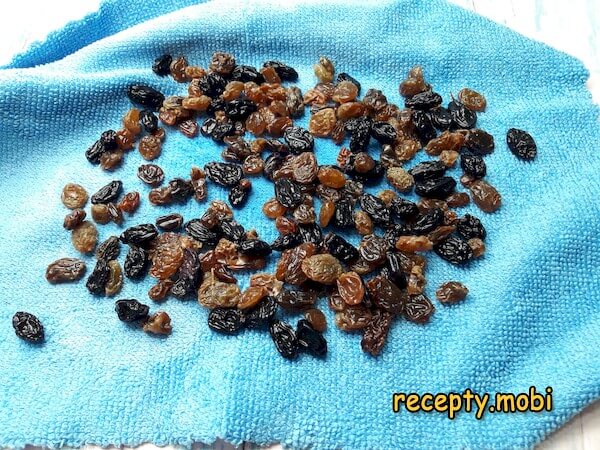
During this time, rinse the raisins and dry them on a cloth or paper towel.
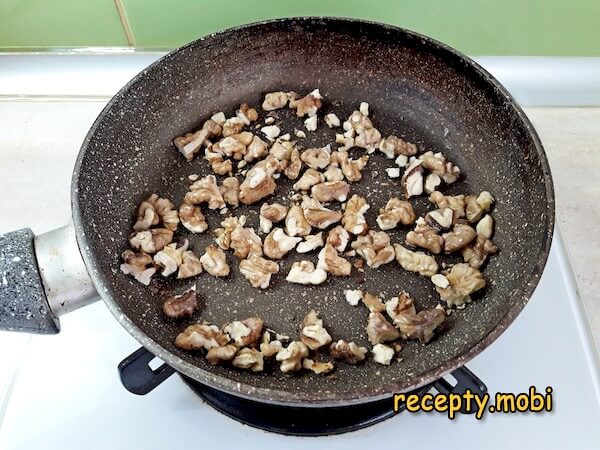
Break the walnuts into small pieces with your fingers and toast them in the pan for 1.5 minutes.
After 15 minutes of cooking, the water should have gone from the rice. Take the pot off the heat.
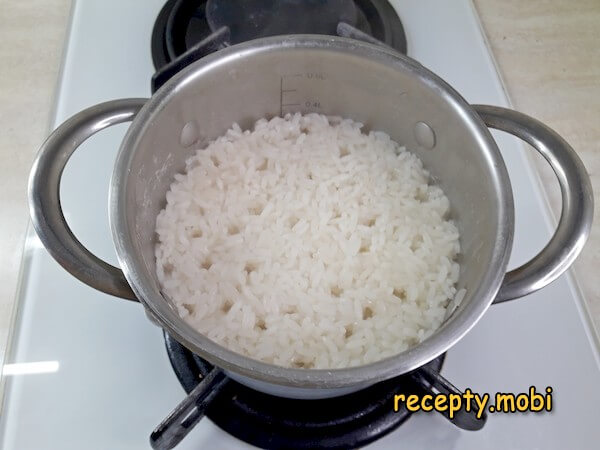
Wrap the pot in a towel and leave it for 15 minutes to steam further.

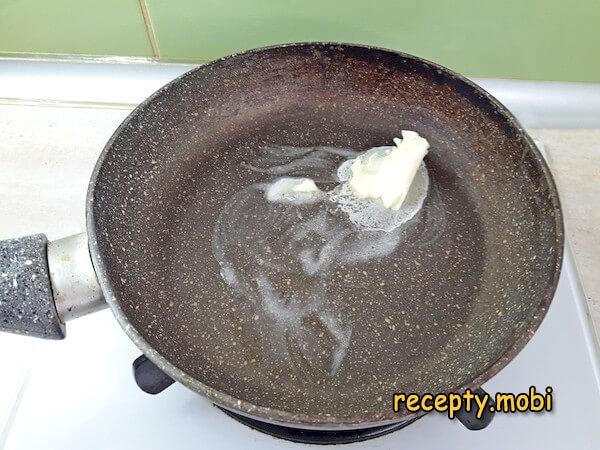
Melt the butter in a pan.
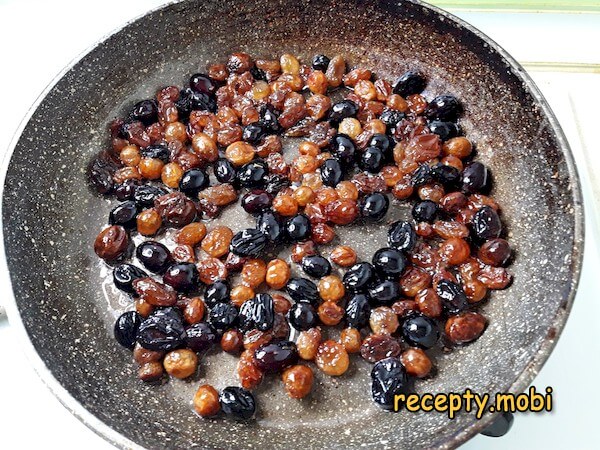
Fry the raisins in the pan for 3 minutes. As they heat up, they will start to swell.
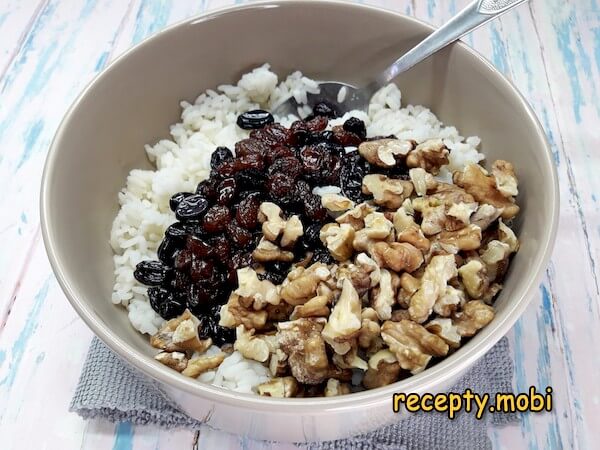
Transfer the rice to a bowl and add the hot nuts and raisins.
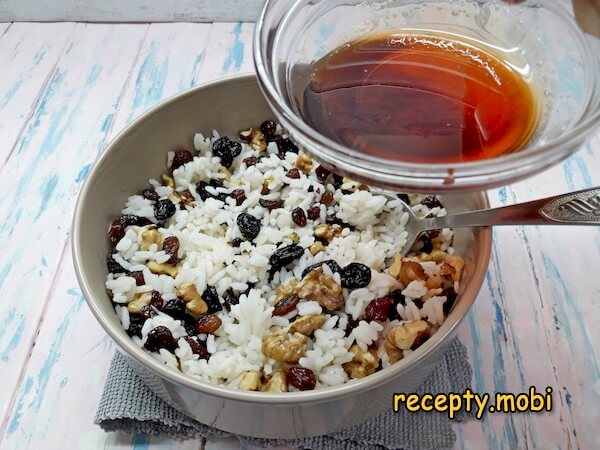
Sweeten it all with honey or sweet syrup.
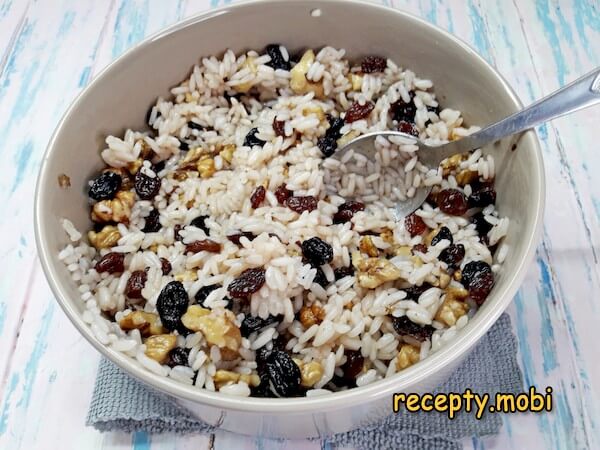
Stir the mixture together.
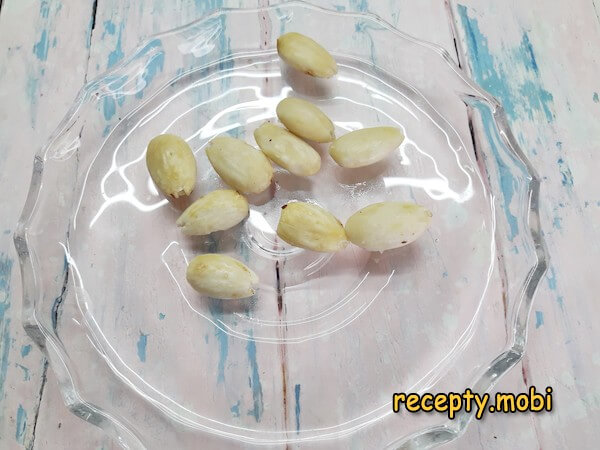
To remove the skin from the almonds easily, hold them in boiling water for literally a minute.
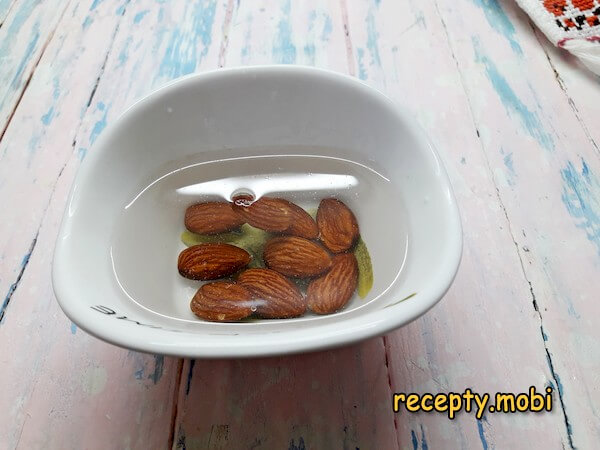
Peel the nuts and add them to the kutya.
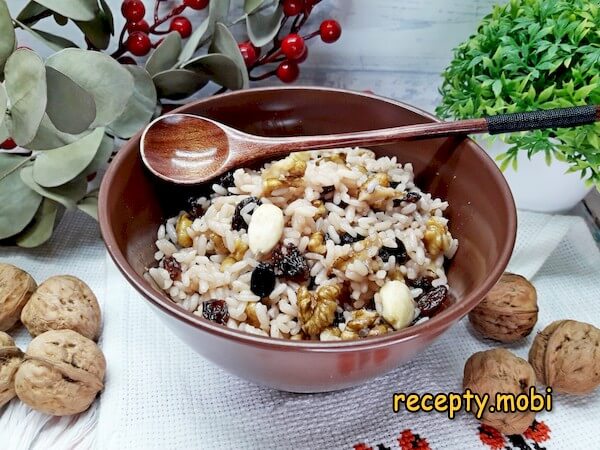
The rice kutya with raisins is ready. This is the basic recipe, and you can adjust its composition to your own taste – for example, add candied fruits, dried apricots or other dried fruits.


Tips
- 1
Water 2 cm above the rice is the "secret" to fluffy grains. Less, and the rice will not cook through; more, and it turns to porridge. Exactly 2 cm.
- 2
Toasting the nuts and raisins is the "secret" to aroma. Raw, they have no pronounced flavour; toasted, they are more fragrant in the kutya.
- 3
Peeling the almonds with boiling water is the "secret" to a neat look. A minute in boiling water and the skin slips off in your fingers, leaving the almonds white.
- 4
A towel over the pot is the "secret" to steaming. After cooking, wrap it up and the rice will finish in its own heat. The same principle works in other kinds of kutya and sweet rice dishes.
FAQ
Which rice should you choose? +
Ideally, round "Krasnodar" or "Kuban" rice (150 g – more tender in the kutya). Alternatives: long-grain "Jasmine" (150 g – a "premium" choice), parboiled (150 g – will not overcook), basmati (150 g – more elegant), brown wild rice (150 g – the "healthy" option). The brands "Mistral", "Zhmenka" and "Sen Soy" are tried and tested. Fresh packaged rice is the "premium" choice. Do not use: instant rice (it will turn to porridge) or coarse polished rice (it cooks unevenly). Rinse it until the water runs clear (4–5 times).
What can replace honey? +
Alternatives: sugar syrup (4 tbsp – the "budget" option), maple syrup (3 tbsp – "premium"), agave syrup (3 tbsp – "diabetic-friendly"), jam (3 tbsp – a fruity note), stevia (for a "light" version, but less aromatic). The honey brands "Altai", "Bashkir" and "Tentorium" are tried and tested. Fresh liquid honey is the "premium" choice. Do not use: artificial sweetener (no aroma) or expired syrups. For the "classic" version, honey is a must. For people with allergies, substitutes are essential.
How long does kutya keep? +
In the fridge, in a tightly closed container, 2–3 days. Longer than that and the rice goes stale and the raisins harden. Before serving, warm it in the microwave for 30 seconds or let it stand at room temperature for 30 minutes. I do not recommend the freezer, as the texture changes. Fresh kutya is at its best 30–60 minutes after cooking, once it has "settled". On the second day the flavour is deeper and brighter. Do not leave it at room temperature for longer than 4 hours in a warm room, as the honey may start to ferment.
What to serve kutya with? +
The Christmas classic: the first dish at the Christmas supper. With uzvar (dried-fruit compote). With a stewed-fruit drink of apples and pears. With a cup of herbal tea with mint. With a glass of Cahors wine – the "church" serving. With hot tea and lemon. For the "Epiphany supper" it is an essential part. With poppy-seed or nut pies. With pancakes and honey. It is eaten during the fast. At a "memorial meal" it is an essential part of the table. With sour cream on the side (an unusual option). A universal ritual dish for Slavic traditions.
- Comment
or post as a guest
Be the first to comment.