avg —
Mamaliga Moldovan Style

Instructions
I get the ingredients ready. It is best to use finely ground cornmeal – it is the fine grind that gives the firm "bread" texture you want. Sometimes mamaliga is made with corn flour – that is also a good option for a tender mamaliga.
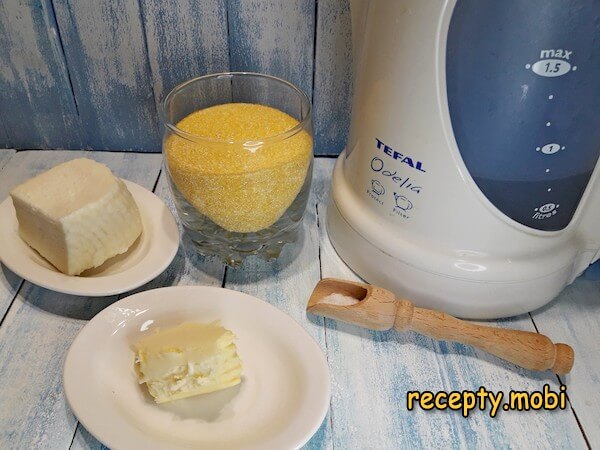
I measure out the water by the volume of the cornmeal – there should be 2.5 times as much water as cornmeal. This is the "secret" ratio for a firm Moldovan mamaliga, not for a porridge.

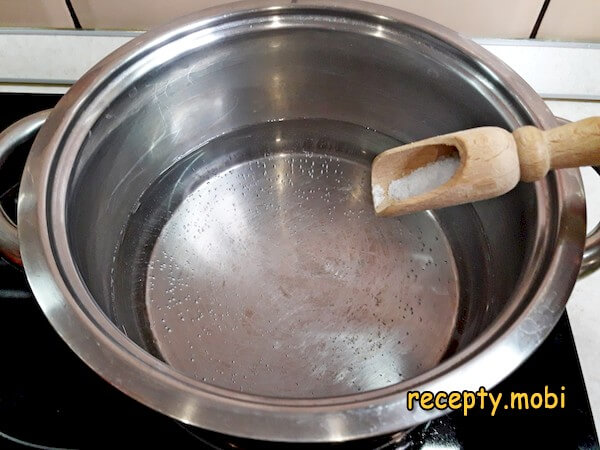
I put the pot of water on the heat and salt it once it comes to the boil. I keep the heat just below medium – too high a heat will throw the porridge out of the pot as the cornmeal goes in.
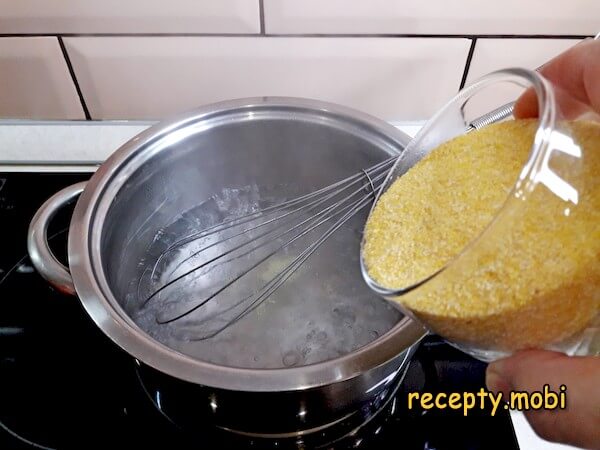
Next I pour the cornmeal into the pot in a thin stream while whisking the boiling water at the same time. The porridge clumps together quite quickly, so I break up the lumps vigorously – continuous whisking prevents "clots" from forming in the porridge.
Once all the cornmeal is in the pot, I keep working it with the same whisk for as long as I can – this is the "secret" to a smooth, even mamaliga without lumps.
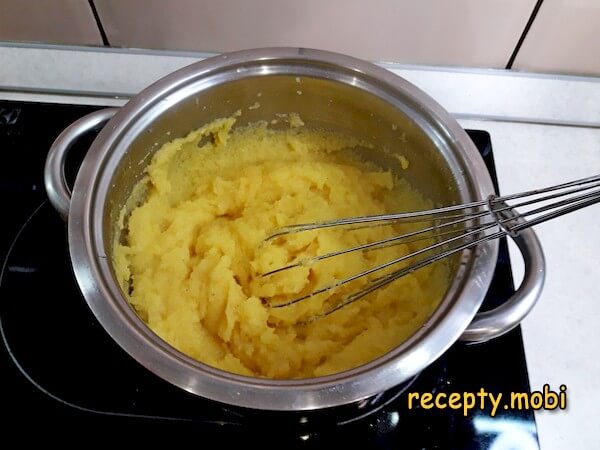
The porridge swells and thickens quickly, so I then change tools and take a wooden spoon or spatula – it is already impossible to stir such a thick mass with a whisk.
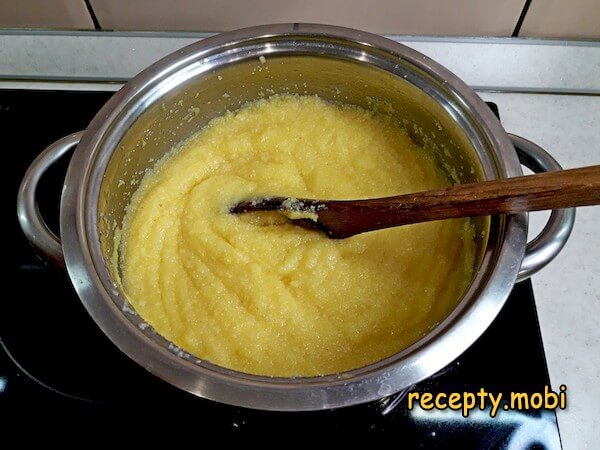
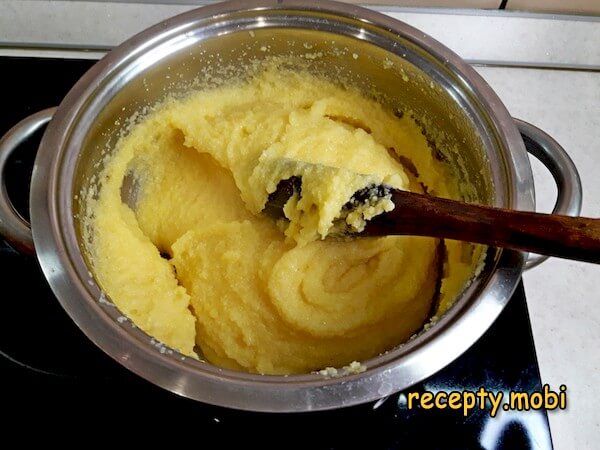
At this stage I turn the heat down to its lowest and keep stirring the mamaliga until it starts to pull away from the bottom of the pot and not a drop of moisture is left. This takes about 7–10 minutes. Then I switch off the stove – it is exactly this dryness and density that sets Moldovan mamaliga apart from an ordinary cornmeal porridge.
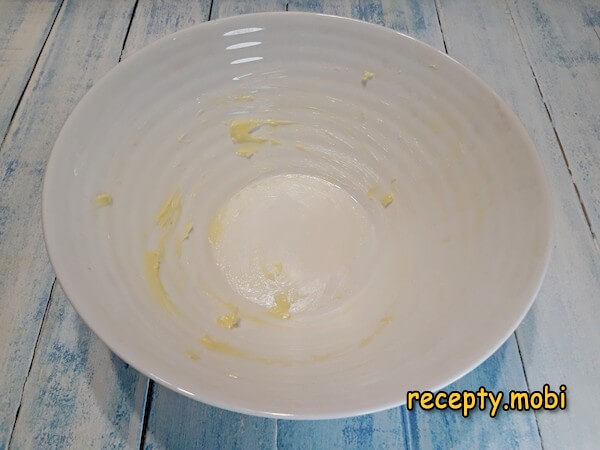
I prepare a spherical bowl, greasing it with butter – it is the spherical bowl that gives mamaliga its classic "domed" presentation.
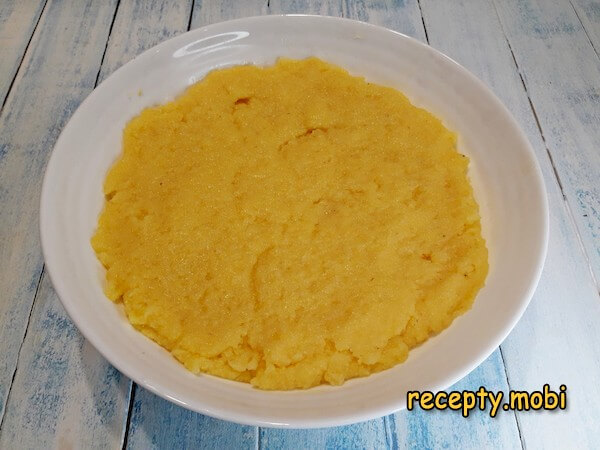
I transfer all the contents of the pot into it. I pack it down and smooth the surface of the mamaliga – tight packing is needed for the final shape.
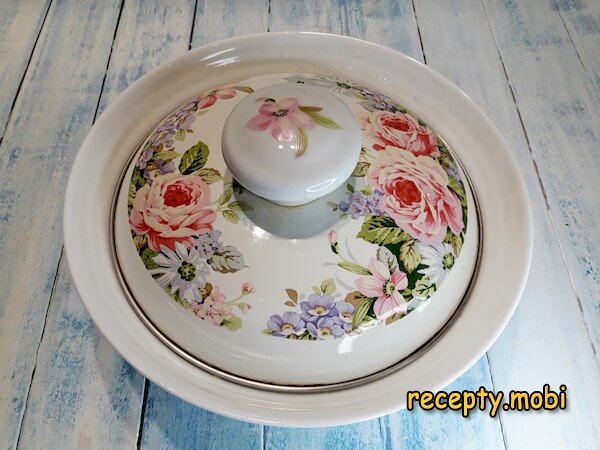
I cover the bowl with a lid – so the steam does not escape and the mamaliga "finishes" in its own heat.
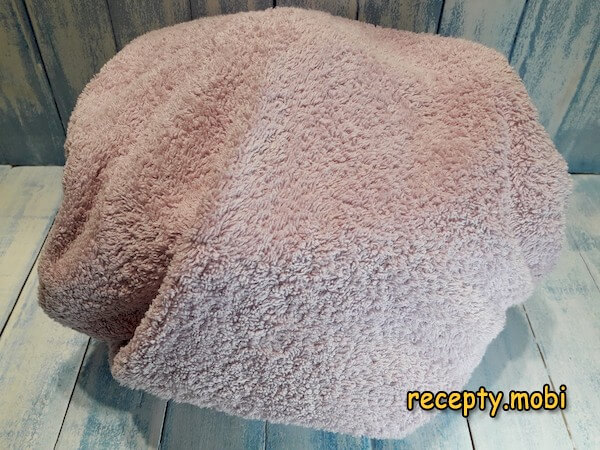
And I wrap it in a thick towel. I leave the mamaliga like this – the grain needs to steam for another 15 minutes or so. This "resting under a blanket" is what makes the mamaliga firm and springy.
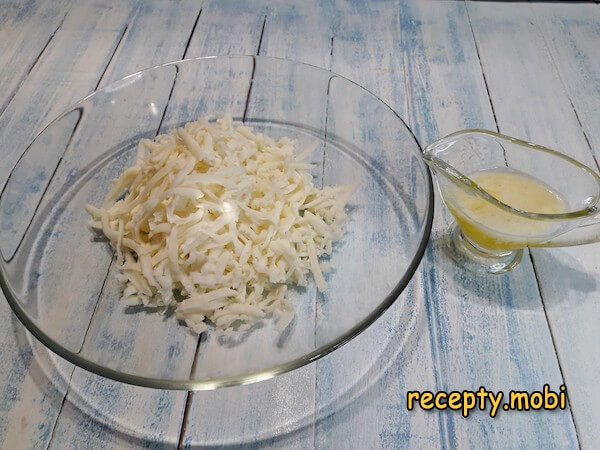
Meanwhile I grate the brinza, and melt the butter in the microwave or over a water bath – the two "companions" for serving the finished mamaliga.
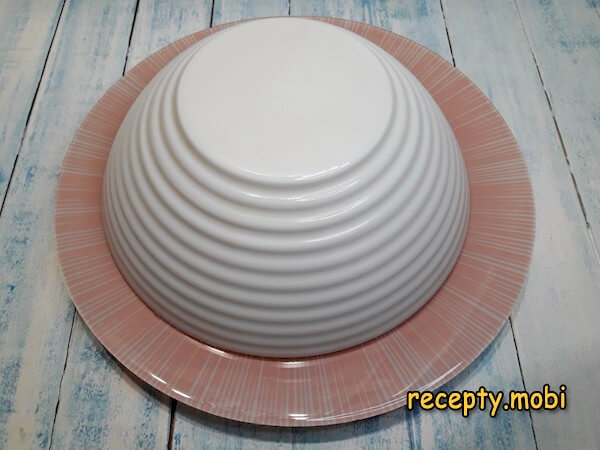
Next I turn the bowl out onto a plate of a suitable diameter – the mamaliga "drops" out of the bowl as a beautiful dome.
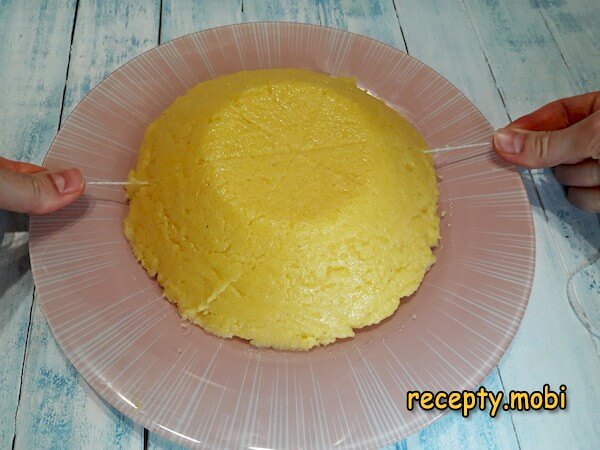
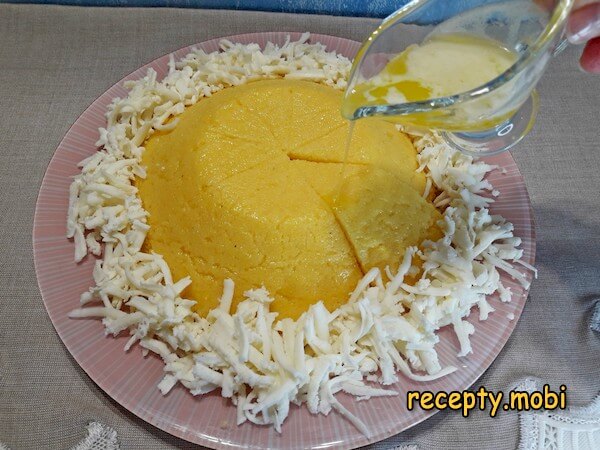
The mamaliga Moldovan style has pressed together nicely and slid out of the bowl easily. Now it needs to be sliced, but not with a knife – with a nylon thread pulled taut between two hands. A knife crushes the dense mamaliga, whereas the thread "cuts" like a hot knife through butter, leaving clean, even slices.
I arrange the brinza around the edge of the plate, and drizzle the mamaliga itself with melted butter – the classic three-component Moldovan presentation.Soaked in butter and eaten alongside salty brinza, mamaliga Moldovan style can make a wonderful breakfast. You can also use the dish as a side. In Moldova it is often served with shkvarki (rendered pieces of pork fat) and garlic.


Tips
- 1
The 1:2.5 ratio is the "secret" to the right density. The standard ratio for porridge – 1:3 or 1:4 – gives a loose structure that is not suited to Moldovan mamaliga. Only 1:2.5 (a cup of cornmeal to 2.5 cups of water) gives the firm, "bread-like" consistency that can be sliced with a thread. Less water and it dries out; more and the "dome" will not hold when you turn it out of the bowl.
- 2
The whisk as you add the cornmeal is the "secret" against lumps. The main problem with cornmeal is that it clumps instantly on contact with hot water. Pouring it in a thin stream while continuously whisking the boiling water completely prevents lumps from forming. Without a whisk and without stirring you get a "lumpy porridge" that cannot be stirred back into a smooth mass.
- 3
A nylon thread instead of a knife is the "secret" of the Moldovan presentation. A knife crushes the dense mamaliga as you cut, leaves "ragged" slices and spoils the look. A nylon thread (even, smooth and strong) is pulled taut between two hands and "cuts" the mamaliga in a single pass – the slices come out perfectly even, like factory-made bread. This is the "secret" of the classic Moldovan presentation.
- 4
A universal grain base – the "secret" of seasonal side dishes. A similar technique of cooking grain in water and then resting it under a blanket works for different porridges. On the principle of millet porridge cooked in milk you can make millet Moldovan style, and on the principle of Guriev porridge a "premium version" with milk skins and fruit.
FAQ
What is mamaliga and where is it eaten? +
Mamaliga is a national dish of Moldovan and Romanian cuisine, a thick porridge made from cornmeal or corn flour. It is found in Moldova, Romania, Transnistria, Ukraine (especially the Carpathians and Transcarpathia) and partly in Bulgaria. It is the "second bread" of these regions – historically it was an everyday food of peasants because of how cheap corn was. In modern cooking it is served as a side dish with meat, as a dish in its own right with brinza, or as the base for elaborate "layered" presentations with sour cream, cracklings and mushrooms. In traditional Moldovan restaurants it is cooked in large copper cauldrons called "kazanki".
Can the cornmeal be replaced with flour? +
Yes, made with flour the mamaliga turns out more tender and uniform. The ratio is the same – 1:2.5. The cooking time is shorter, about 5–7 minutes (flour cooks down faster than grain). The texture is more "baby-food" smooth, without the characteristic graininess of a true mamaliga. For authenticity it is the grain that is used – preferably fine or medium grind. With a coarse grind the mamaliga comes out very textured, almost "crunchy" – also a good option for those who like a "stony" texture.
How long does cooked mamaliga keep? +
In the fridge in an airtight container – up to 3 days. As it cools, mamaliga becomes even firmer and "sturdier" – handy for cutting into neat pieces. Before serving I reheat it in the oven at 150°C under foil for 10–15 minutes, or in the microwave for 1–2 minutes. You can also fry the sliced pieces on both sides in butter – you get "fried mamaliga", very tasty as a snack. I do not recommend freezing it – after thawing the structure becomes watery and loses its springiness.
What to serve mamaliga Moldovan style with? +
The classic Moldovan trio is mamaliga + brinza + sour cream. In addition: shkvarki (rendered pieces of pork fat) with garlic – an essential Moldovan "companion". Vegetables: pickled peppers, marinated onion, fresh tomatoes and herbs. With meat: with stewed rabbit or poultry in tomato sauce ("toba" or "fricassee"), or with fried pork. For breakfast: with a fried egg and brinza. To drink: homemade Moldovan wine (Saperavi, Merlot, Riesling), tuica (Moldovan plum brandy) or milk tea. For a large table: it is served on a communal dish and cut with a thread in front of the guests – a "showpiece" element of a Moldovan feast.
- Comment
or post as a guest
Be the first to comment.