avg —
Buckwheatotto

Instructions
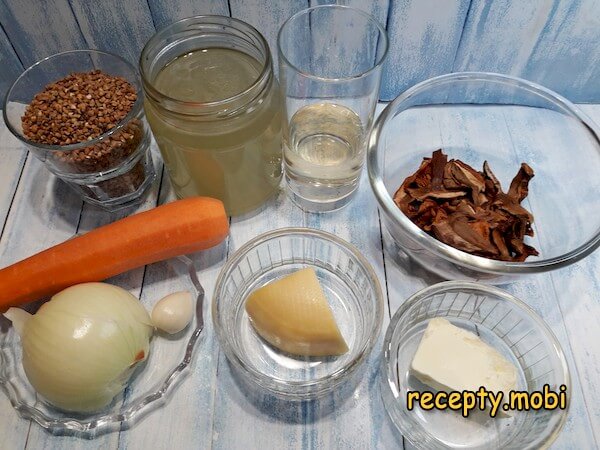
I prepare the ingredients for the buckwheatotto. You can use any dried mushrooms, or replace them with 150 g of champignons. Dried mushrooms give a richer "forest" aroma, while fresh champignons have a more neutral, delicate taste.
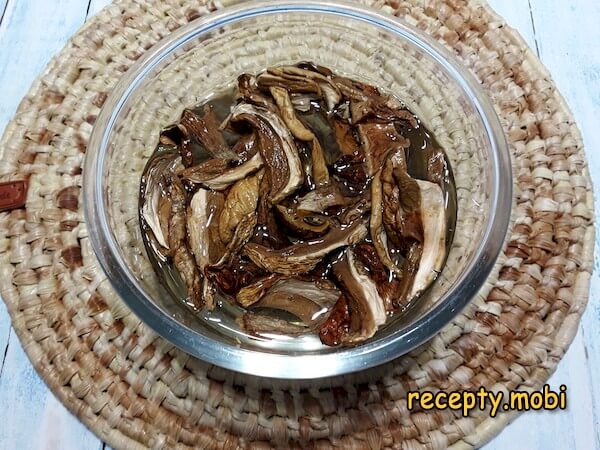
I cover the dried mushrooms with water and leave them for half an hour so they swell – this step is essential for dried mushrooms, otherwise they stay tough and don't release their aroma.
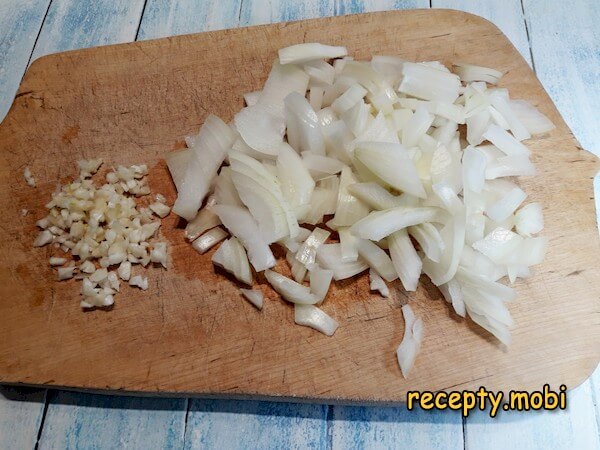
Meanwhile I finely chop the onion and garlic – the finer they are, the more evenly they spread through the finished buckwheatotto and won't turn up as large pieces while eating.
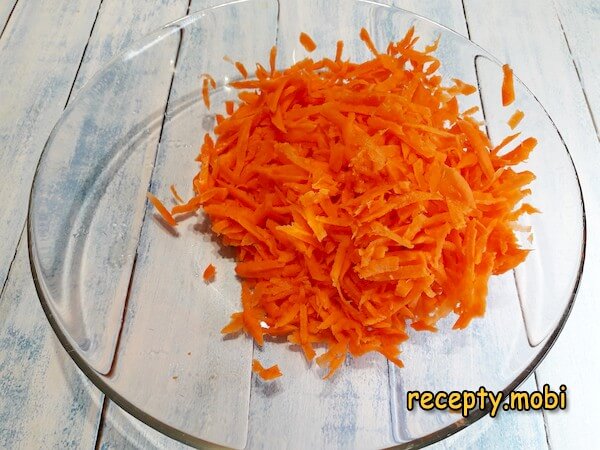
I grate the carrot coarsely – the large shavings give a bright "orange" tone to the dish and a pleasant textural note.
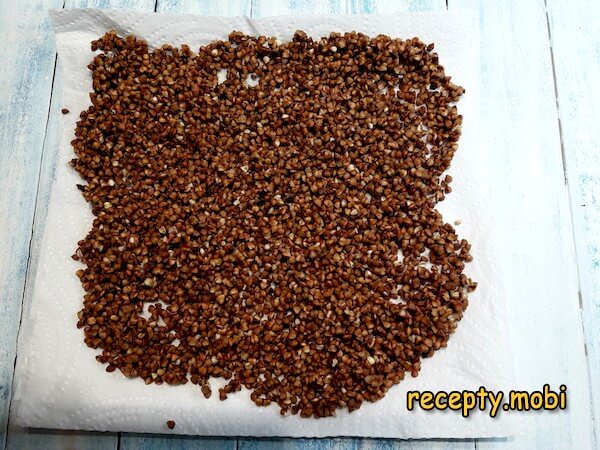
If the buckwheat is from the premium range, you don't need to wash it; ordinary buckwheat should be sorted, rinsed and patted dry with paper towels – rinsing removes dust and surface starch, and drying helps the grain toast better.
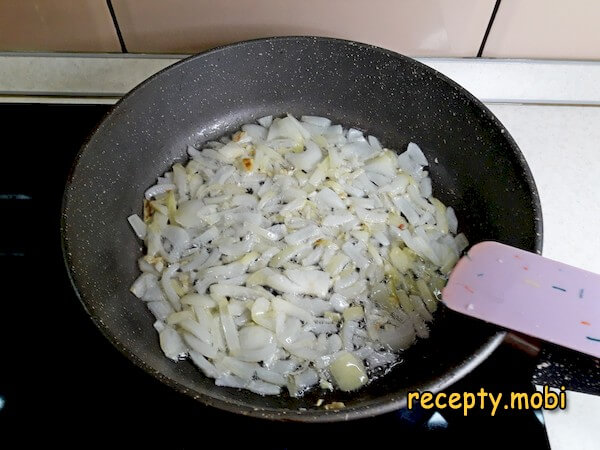
In hot vegetable oil I sauté the onion together with the garlic until a warm garlicky smell appears – it should be a "warm" smell, not a golden fry, so the garlic doesn't burn and turn bitter.
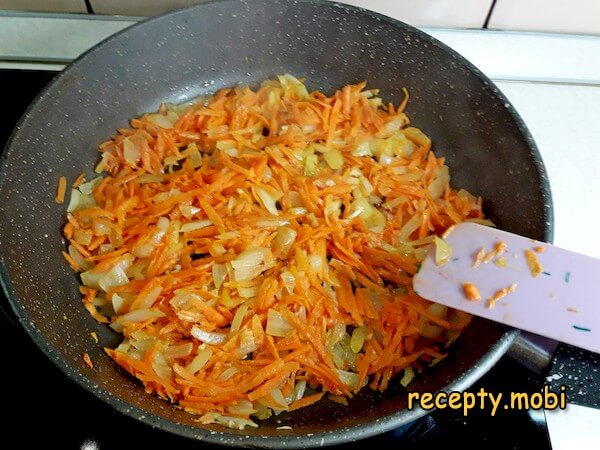
Next I add the carrot and let it soften for 2-3 minutes – the carrot should become soft but not fried, so it keeps its sweetness.
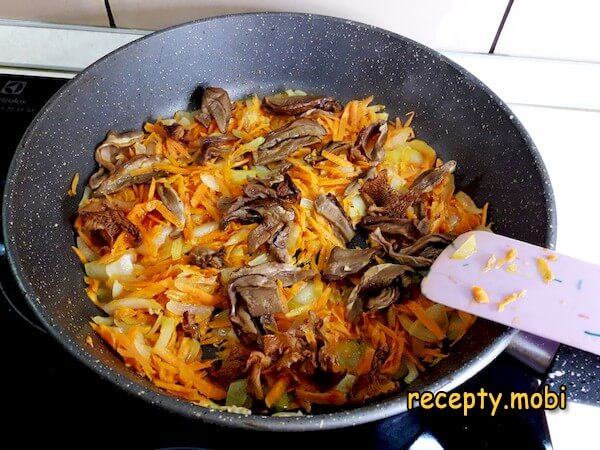
Now it's the mushrooms' turn – I sauté them with the vegetables for about 7 minutes. Champignons I cut into fairly large pieces and sauté the same way – the mushrooms should brown and release their aroma into the oil with the vegetables.
Next I add the buckwheat to the skillet – dry, without boiling it first. This is the "secret" of buckwheatotto: the grain cooks straight away in the whole mass with the vegetables and mushrooms.
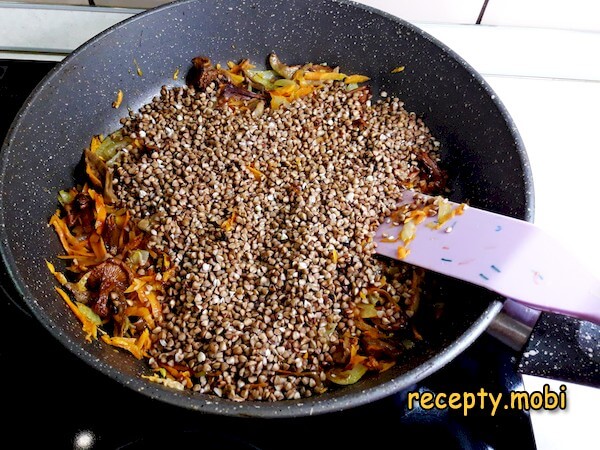
I let everything cook together for 3 minutes – simply so the grain warms through and absorbs the aromas of the vegetables and mushrooms. This is the "secret" of the Italian risotto technique – "tostatura".
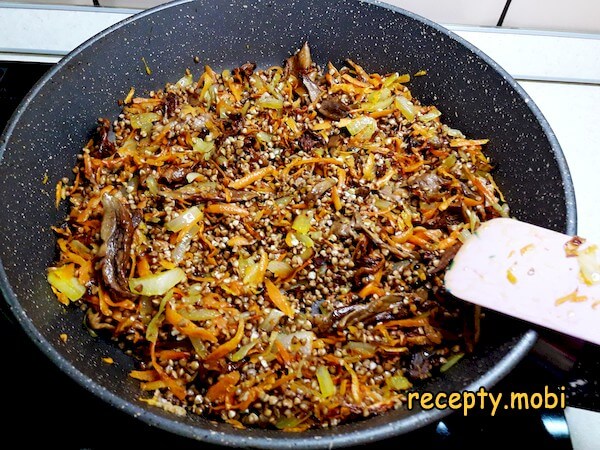
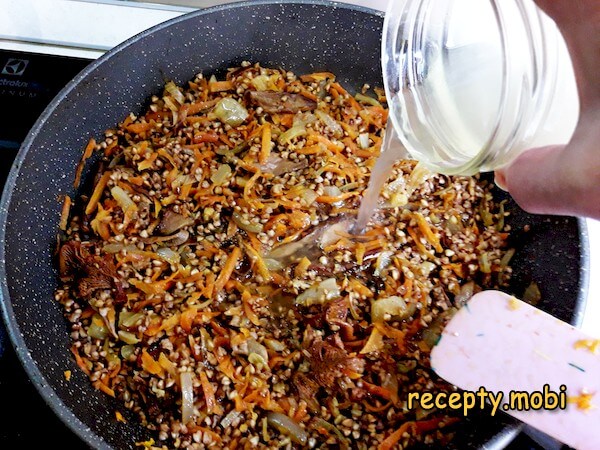
Now, in portions (I divide it into 4 parts), I start adding the broth, waiting each time for the buckwheat to absorb all the liquid. I cover the skillet with a lid. I add the next portion after about 5 minutes and stir the mixture. All of this takes about 20-25 minutes, during which the grain swells and takes in all the broth.
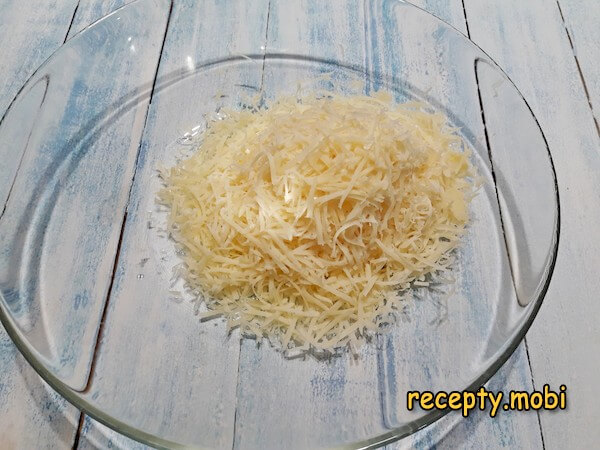
In the spare time I grate the cheese finely – a fine grater is needed so the cheese melts quickly in the hot mass and spreads evenly.
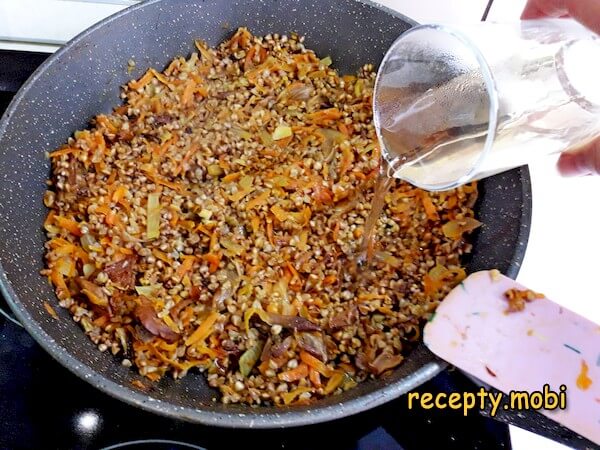
Next I pour in the dry wine and remove the lid. All the alcohol evaporates, leaving behind only a tart acidity. The dish must be salted very carefully, because the chicken broth is already salted – I taste it before adding any salt.
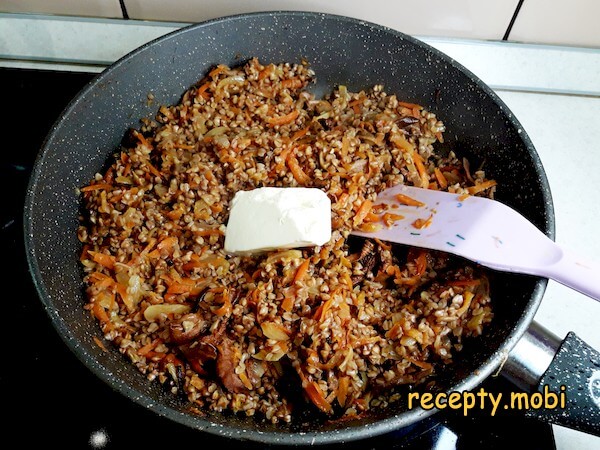
Once the wine has evaporated, I add the butter to the buckwheatotto and mix everything well – this is "mantecatura", the Italian technique of enriching risotto with butter at the end. The same works for buckwheatotto.
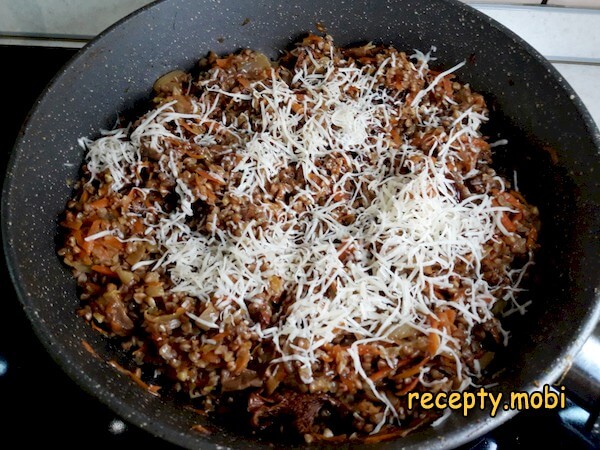
I turn off the heat straight away, add half the grated cheese to the skillet and mix everything again – I keep the other half of the cheese for serving right on the plate.A tasty and hearty dish, buckwheatotto (this time with mushrooms) – is ready. All that's left is to divide it among plates and sprinkle with the remaining cheese. This is how you can turn ordinary buckwheat into a splendid dish with a refined flavour palette.


Tips
- 1
TOASTING THE BUCKWHEAT – the "secret" from the Italian technique. Before adding the broth, the buckwheat is always "toasted" for 3 minutes with the vegetables – this is the Italian "tostatura" technique, which unlocks the aroma of the grain and forms its base flavour. Without this step the buckwheatotto will taste "boiled", like ordinary porridge.
- 2
BROTH IN PORTIONS – the "secret" of the creamy texture. If you pour in all the broth at once, the buckwheat simply boils into porridge – without the characteristic "creamy" texture of risotto. Adding the broth gradually, a quarter at a time, lets the grain slowly release its starch, which thickens the liquid to a creamy consistency. Patient stirring with gradual additions is the key to the signature creamy texture.
- 3
MANTECATURA AT THE END – the "secret" of the Italian gloss. The final addition of cold butter and cheese with the heat switched off is the Italian "mantecatura" technique, which creates the characteristic "glossy" look and the silkiest creamy texture. This is the final stage, without which the buckwheatotto won't turn out as refined as the versions made by Italian chefs.
- 4
VARIATIONS WITH CHICKEN – the "secret" of heartiness. Using this technique you can make buckwheatotto with chicken instead of mushrooms: finely chopped chicken is sautéed with the vegetables and then the buckwheat is toasted in the whole mass. The result is an even heartier version with a bright "chicken-and-mushroom" note.
FAQ
What is buckwheatotto and who invented it? +
Buckwheatotto is a modern Russian "gastro dish" that imitates Italian risotto but is made with buckwheat groats instead of arborio rice. It was created by modern Russian chefs who were looking for a way to reinvent familiar buckwheat in a new European presentation. It appeared in the restaurant scene of Moscow and St Petersburg between 2010 and 2015 and quickly became popular both in restaurants and in home cooking. It combines the best of two worlds: familiar, affordable buckwheat with the Italian cooking technique.
How does buckwheatotto differ from ordinary buckwheat? +
The main differences are the cooking technique and the final texture. Ordinary buckwheat is boiled in a separate pot in water until all the liquid is absorbed, and turns out crumbly. Buckwheatotto is cooked in a wide skillet with broth added in stages, following the Italian "risotto" technique, and turns out creamy. The basic set of ingredients is also different: plain buckwheat uses only the grain, salt and sometimes butter; buckwheatotto uses the grain + broth + wine + cheese + butter + onion + garlic + mushrooms. The final flavour of buckwheatotto is far richer and more complex.
Can the white wine be replaced with another alcohol? +
Yes, with some reservations. The best substitute is dry white vermouth (Martini Extra Dry, Cinzano) – it gives a similar herbal aroma but more pronounced. You can also use champagne or cider (10-12% alcohol). Not suitable: red wine (it changes the colour of the dish), fortified wines (such as port – too sweet), beer (turns bitter when reduced), vodka (too harsh and neutral in flavour). For a completely alcohol-free version: replace it with 100 ml of white wine vinegar diluted with water 1:3, plus a pinch of sugar – this gives a similar acidity without the alcoholic note.
What to serve buckwheatotto with? +
Buckwheatotto is a stand-alone main dish, served hot in wide, shallow plates. It is generously sprinkled with grated cheese (parmesan, gruyère, gouda). Serve with the same dry white wine the dish was cooked in. For starters: a light green salad with mustard dressing, or grilled vegetables. With meat: buckwheatotto goes perfectly as a side for roast chicken, turkey, duck breast or veal. With fish: with salmon, trout or sea bass – the subtle creamy-grain note complements the fish. For a family dinner: as a stand-alone main course with a glass of wine.
- Comment
or post as a guest
Be the first to comment.