avg —
Puff Pastry Without Yeast

Instructions
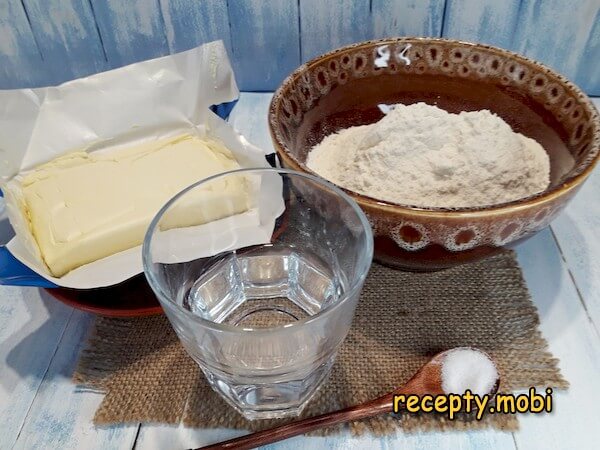
I prepare the ingredients. I take the water at room temperature. Butter of 82% or 72% fat will do, and it needs to be taken out of the fridge in advance (about 20 minutes) so that its texture becomes pliable.
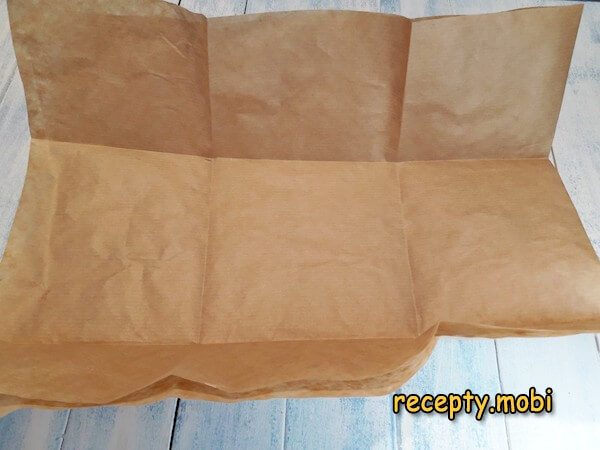
First I prepare an envelope from baking paper, which will give the butter the shape it needs. To do this I make creases on a piece of parchment so that there is a square with a 12-centimetre side in the middle.
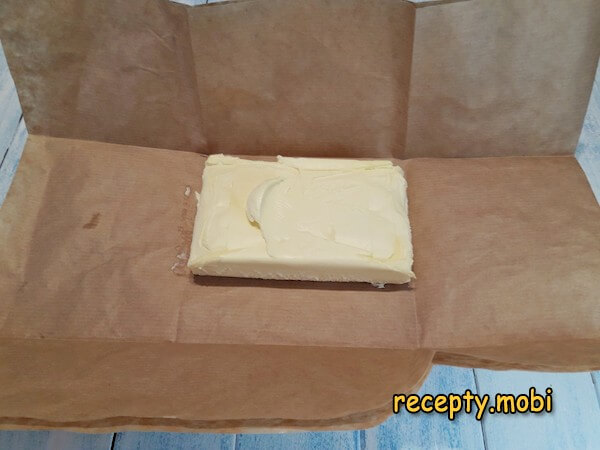
When the paper square is ready, I place the butter in the middle and fold the edges in along the marked creases.
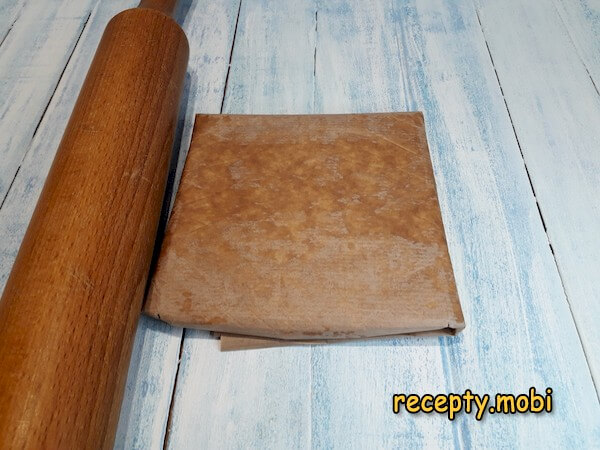
Now I start rolling out the butter with a rolling pin — it will fill all the free space, taking on the shape of a square. I put the package in the fridge for 30–40 minutes.
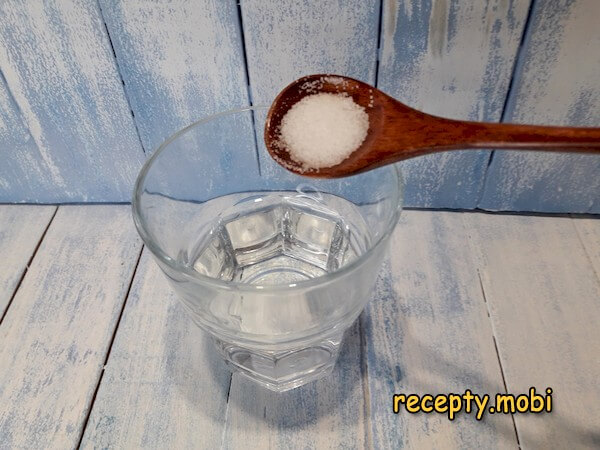
Meanwhile I can get on with the dough. I stir the salt into the water until it is fully dissolved.
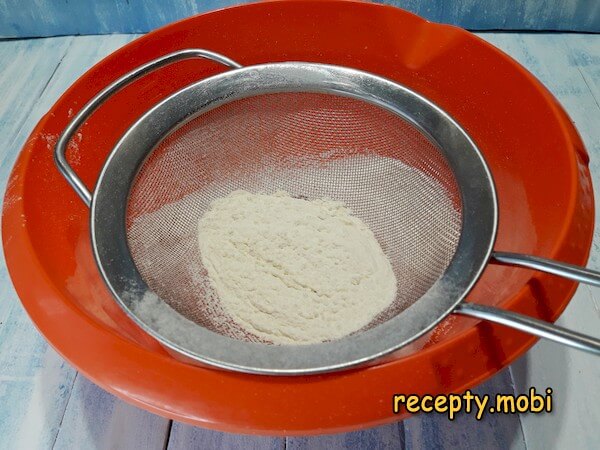
I sift the flour into a bowl.
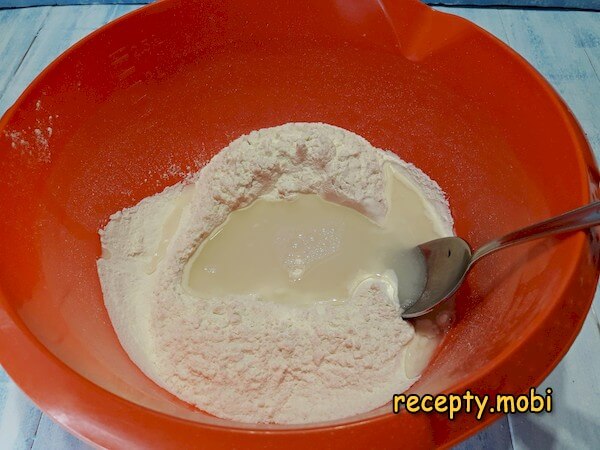
I pour all the water into the middle of it.
I begin to knead the dough slowly. At first with a spoon, right in the bowl.
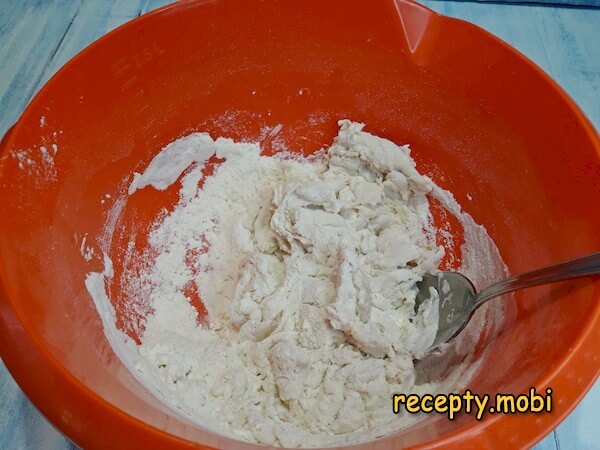
Then I turn the mixture out onto the work surface and knead it by hand for 7–10 minutes. The dough should come out dense, firm and perfectly smooth. Depending on the quality of the flour, you may need about 10–20 g more or less. If the dough has become firm enough and no longer takes in flour, then it is sufficient. It is important that the dough turns out firm, like dough for dumplings, because soft dough will start to spread when rolled with the butter and will not hold the butter inside.
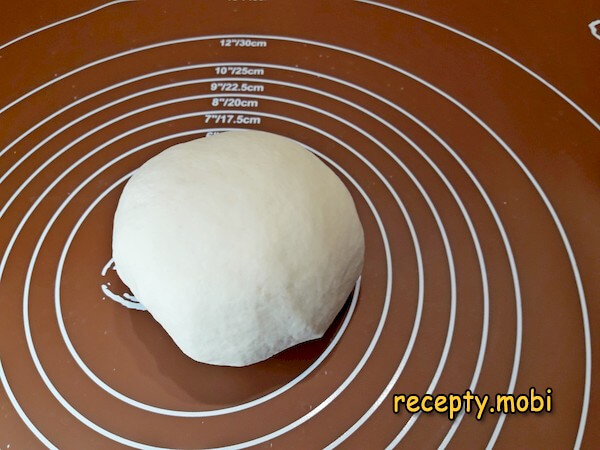
I let the dough rest for half an hour, covering it with a bowl.
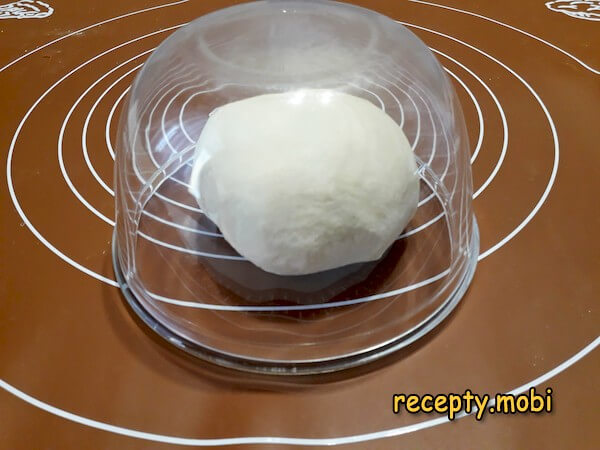
Next I begin to laminate the dough. For this I dust the table very lightly with flour. I roll out a rectangle, going by the size of the butter slab. Two squares should fit, with a little margin around the edges.
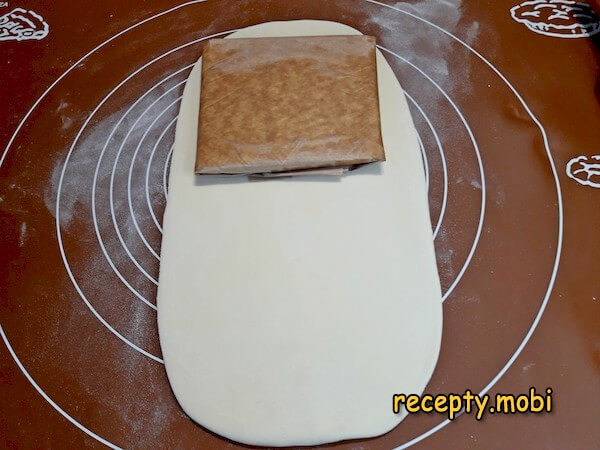
Now I free the butter from the paper. I lay it in the centre of the rectangular sheet.
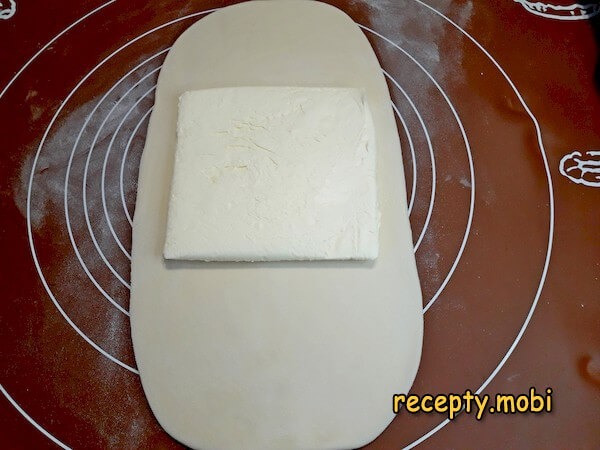
I bring the edges of the dough together and seal them carefully.
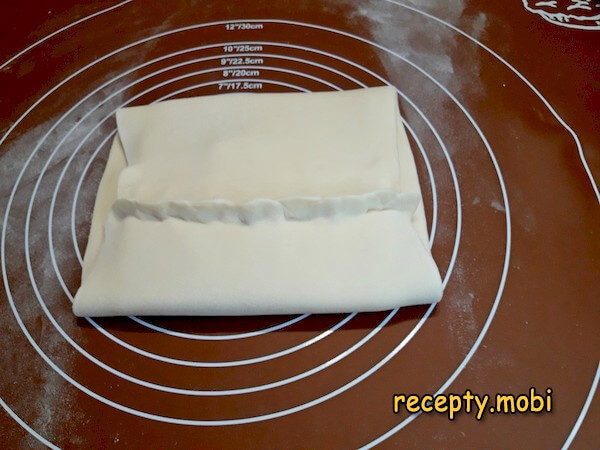
With the rolling pin I gently drive out all the air, moving from the middle of the sheet towards the sides. Any remaining air bubbles will tear the dough during rolling and the butter will escape, which is not at all what we want.
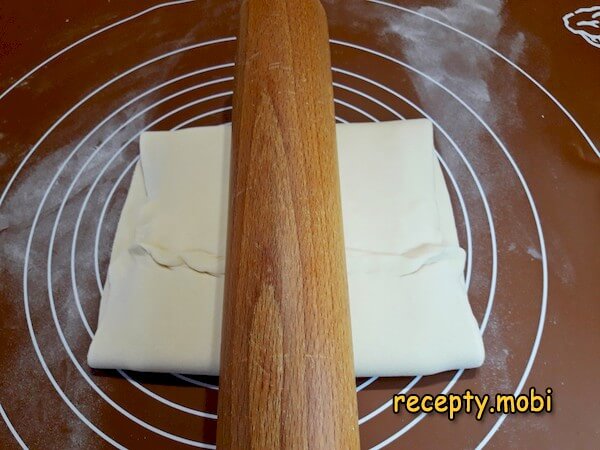
I pinch the seams tightly.
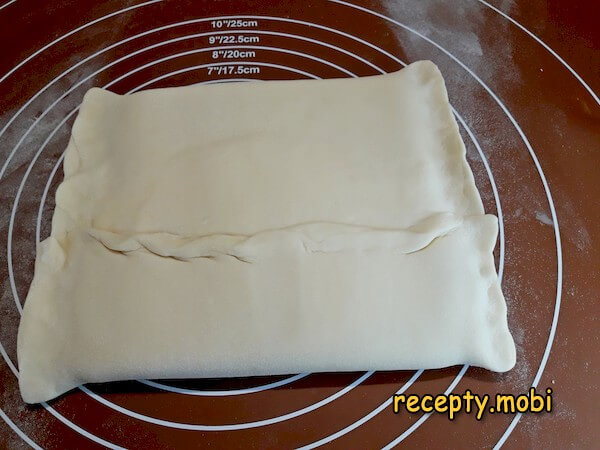
I roll the dough out to the size of the original rectangle, working the rolling pin in one direction only.
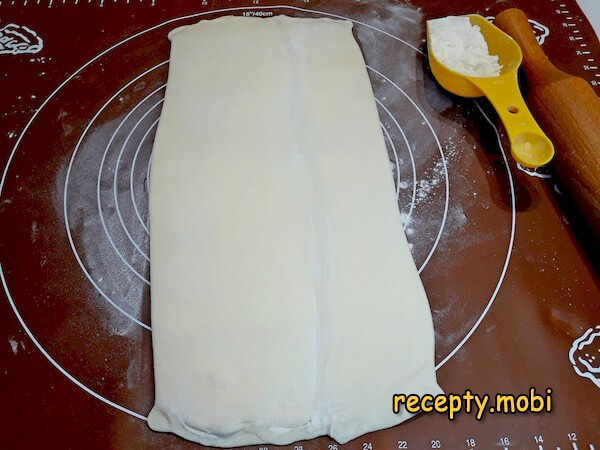
I start folding the sheet — I turn one end in, but not to the middle, rather closer to the edge.
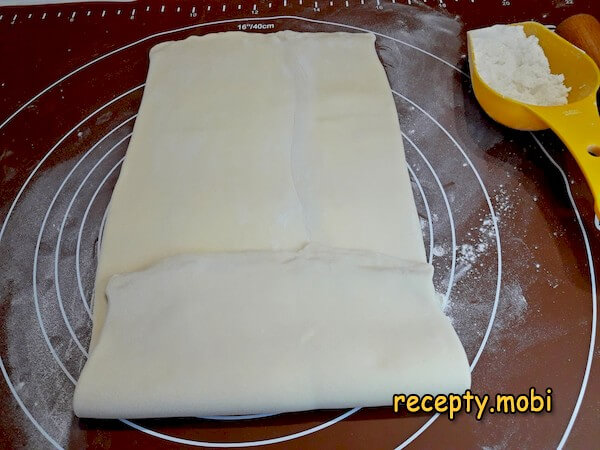
I fold the second end in to meet it, butting up against the first.
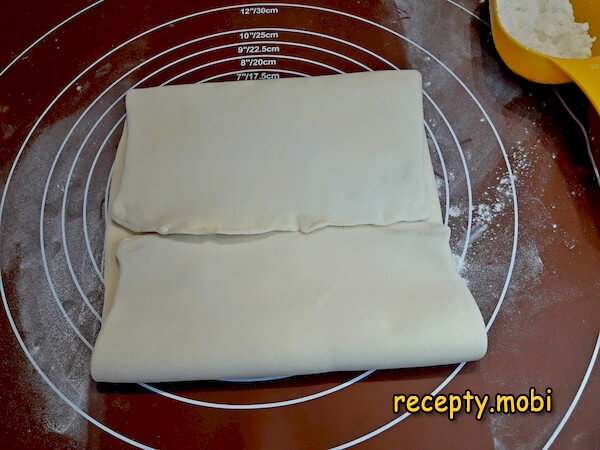
And now I fold the dough in half along the join line.
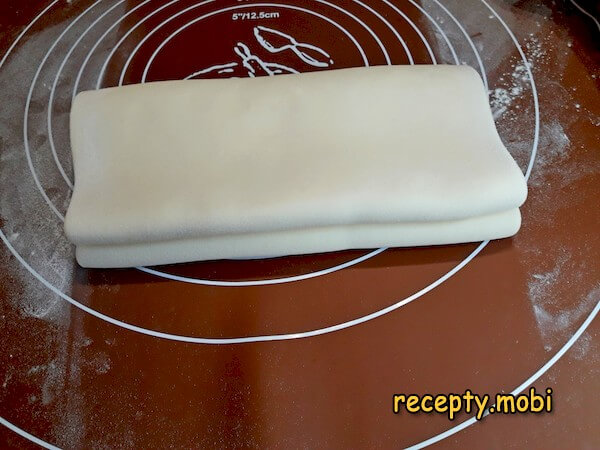
You get a concertina of 8 folds interleaved with a layer of butter, that is, the dough is divided into 16 layers.
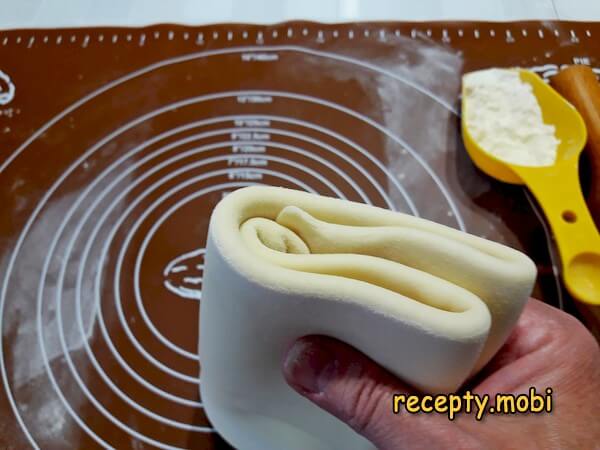
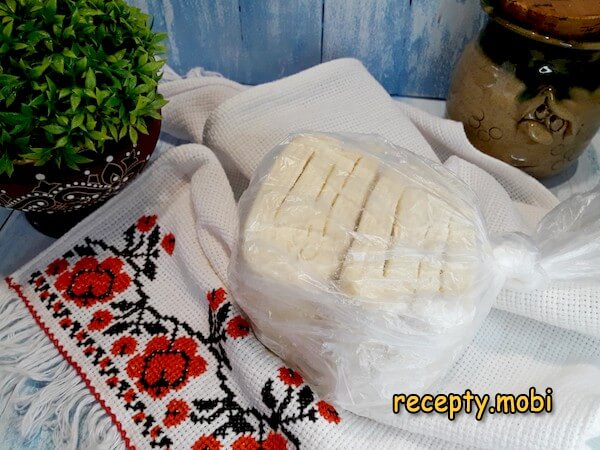
I wrap it in a bag and send it to the fridge to chill for half an hour.
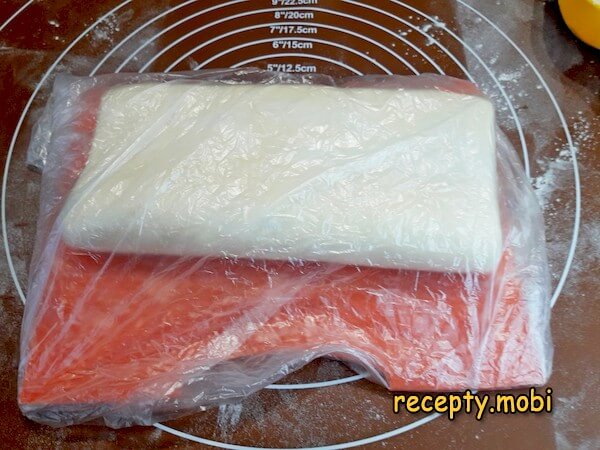
Then I roll the dough out into a rectangle again.
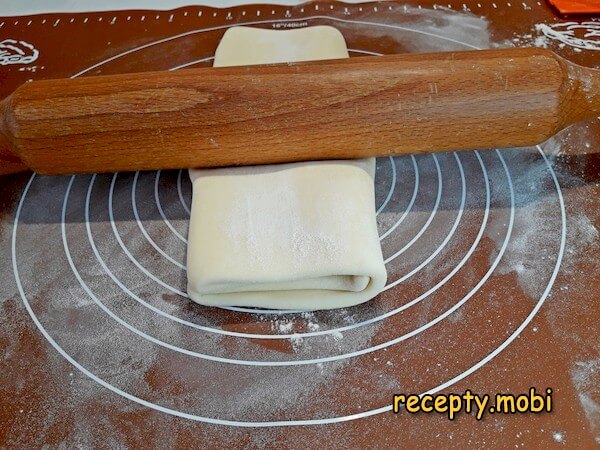
I fold it as before into 4 layers and again leave it to chill for half an hour. In all, the dough needs to be rolled out and folded 4 times, and with each successive rolling the layers will become ever thinner, so the chance of the floury shell tearing increases. But if you work slowly and carefully, this will not happen.
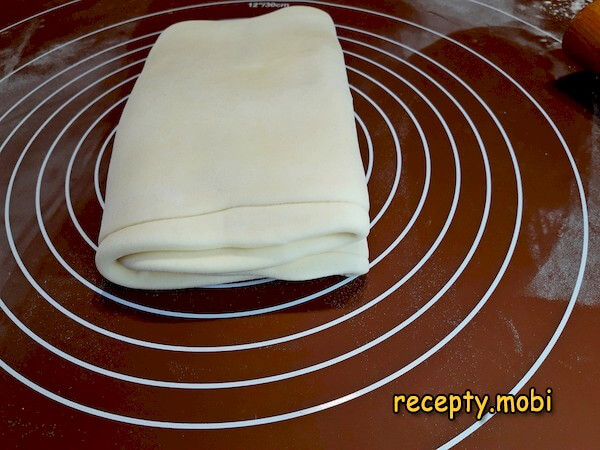
The weight of the finished dough by the proportions given comes to 472 grams.
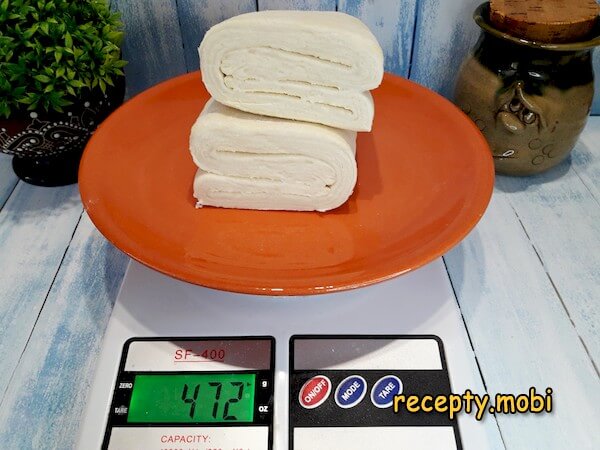
If you are going to bake with the dough straight away, you first need to keep it in the fridge for at least an hour. You can also make the dough ahead and put it in the freezer, having wrapped it in a bag first.Yeast-free puff pastry is suitable for baking both simple items, such as puff pastry tongues, and more complex ones, such as Napoleon cake. Frozen dough I defrost beforehand by moving it to the fridge.


Tips
- 1
Cold butter is the "secret" of the layers. Warm butter mixes into the dough and the layers will not separate during baking. Only a chilled 12×12 cm block gives genuine flakiness.
- 2
Firm dough is the "secret" of holding the butter. Soft dough tears when rolled and the butter escapes. The dough should be firm, like dough for dumplings — then it holds the butter inside.
- 3
Four rollings are the "secret" of the structure. Fewer, and there are too few layers, so the item is not airy. More, and the butter mixes into the dough. Exactly 4 rollings with chilling in between give an ideal 256 layers.
- 4
One direction is the "secret" of evenness. Rolling crosswise tears the layers at the corners. One direction only — and the sheet keeps its structure. The same principle works in other kinds of layered pastry and cakes.
FAQ
Which butter should I choose? +
Use natural butter of 82% fat content; 72% will also work. Lower-fat butter, spreads and margarine are not suitable, as they will not give proper layers. For a true classic result, use butter without any vegetable fats added.
What can I use instead of premium-grade wheat flour? +
Premium (top-grade) wheat flour is best, as it has the gluten needed to hold the layers. Depending on the flour's quality you may need about 10–20 g more or less than stated. Wholemeal and rye flour are not suitable here, as coarser flour will tear the thin layers.
How long does puff pastry keep? +
In the fridge, tightly wrapped in a bag, it keeps for a couple of days. For longer storage, freeze it in a bag. Defrost frozen dough only in the fridge, not on the worktop, otherwise the butter will run. Do not leave the dough at room temperature for long, as the butter softens and the dough loses its structure.
What can I bake from puff pastry? +
This dough is suitable for both simple items, such as puff pastry tongues, and more complex ones, such as the classic Napoleon cake. If you are baking straight away, chill the dough for at least an hour first; if you have frozen it, defrost it in the fridge before use.
- Comment
or post as a guest
Be the first to comment.