avg —
Lenten yeast dough for pies and pasties

Instructions
I prepare the ingredients for the lean yeast dough. The flour, even the highest grade, must always be sifted before use – this saturates it with oxygen, which is very important for a yeast dough. Dry yeast can be replaced with fresh pressed yeast by tripling the amount, so you will need 9 g of live yeast.
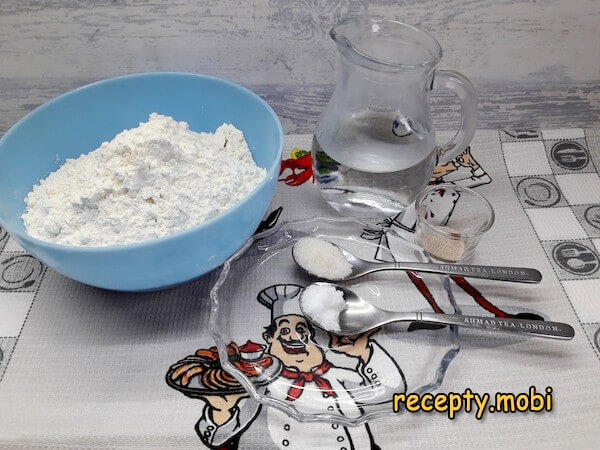
I start the sponge right away. I pour 50 ml of warm water into a glass, add all the yeast and half of the listed sugar. I stir, cover with a lid and leave it in a warm place for 5 to 10 minutes.

From the total amount of flour I set aside 50 g for dusting the work surface and finishing the kneading.
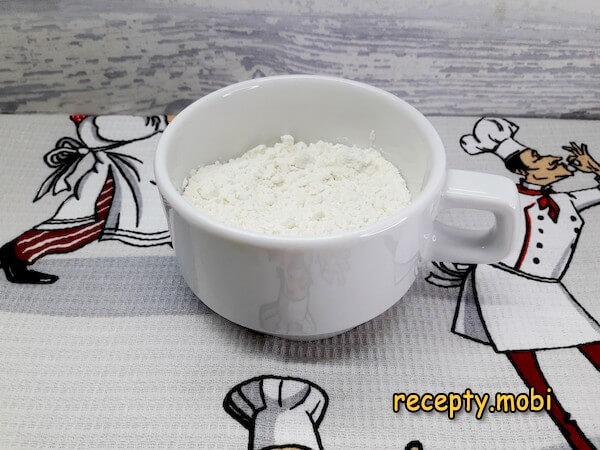
I mix the main amount with the remaining sugar and the salt.
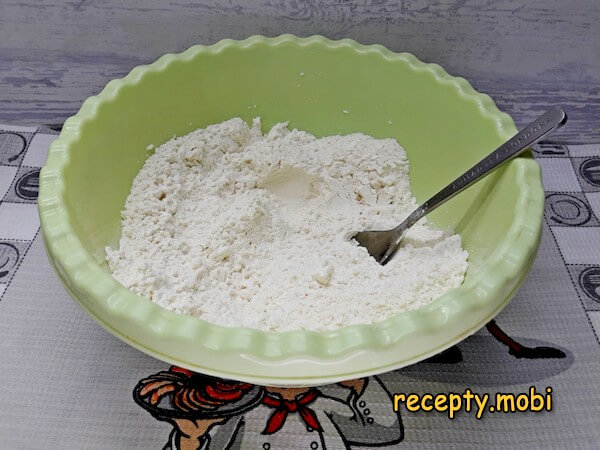
By this point the sponge will already show signs of fermentation, which means it is ready to work with.

I make a well in the flour mixture and pour in the fermented yeast.
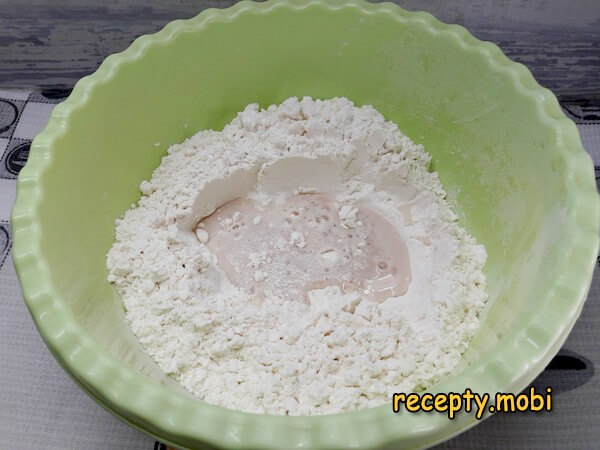
I add the water (keeping an eye on its temperature – it may need warming up slightly again).
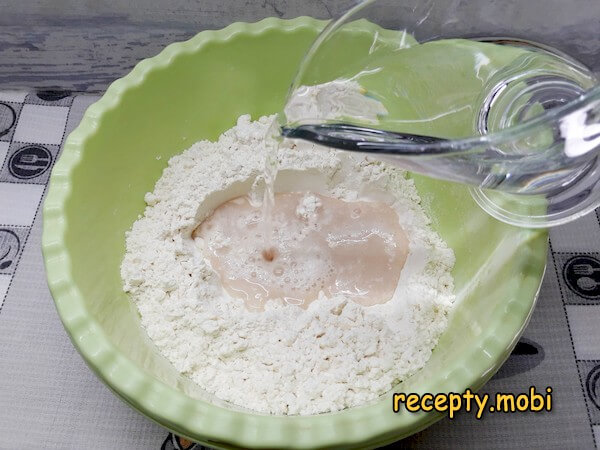
I mix the liquid and dry parts together right in the bowl.
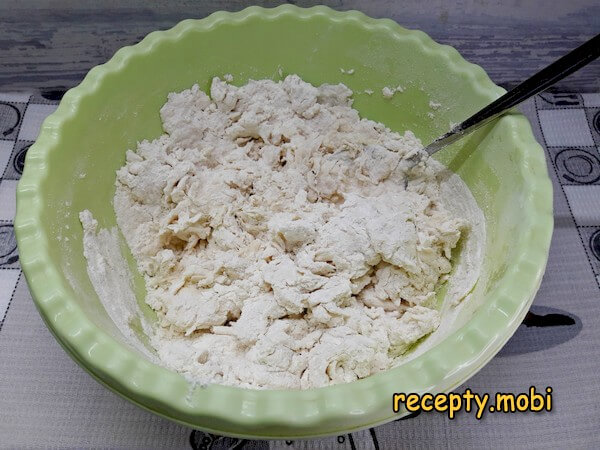
Then I turn the mass out onto the work surface and start kneading the dough by hand, pressing and stretching it. I dust in the reserved flour as needed. I go by the consistency: the dough should be firm but elastic and pliable, slightly sticky to the hands. I knead for about 10 minutes in total.
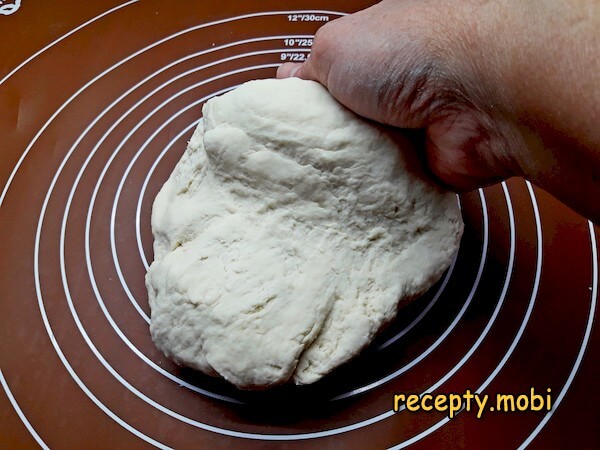
I shape a ball, coat it all over with vegetable oil and place it in a clean container with a lid to rise. To avoid drafts, I put the dough in a turned-off oven for 2 hours.
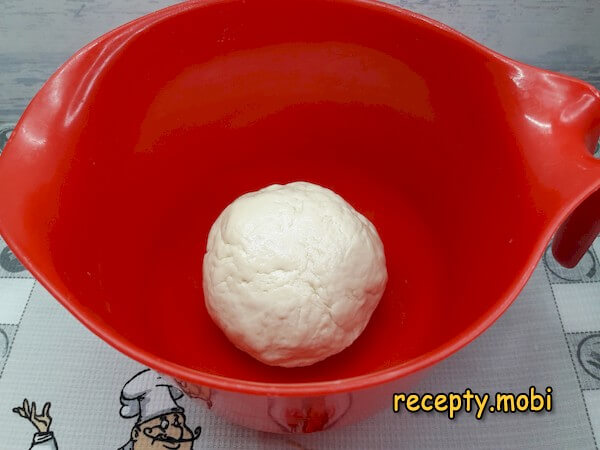
The dough increases by 2.5 times. I punch it down and start shaping the items – both baked and fried.

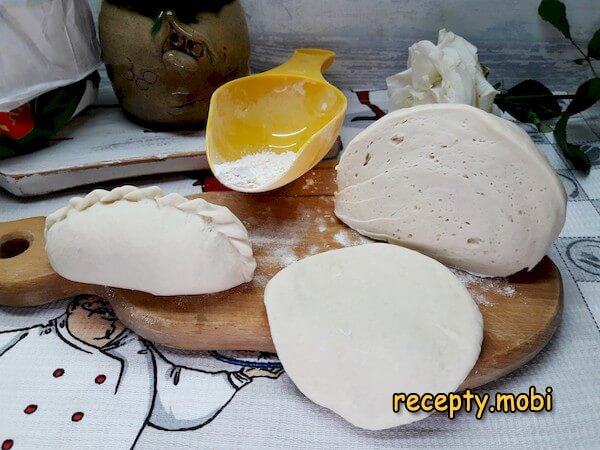
The soft, pliable lean yeast dough for pies and pastries is ready. Its fine-pored structure is a sign of quality: the dough will be easy to work with, and the items will turn out tender and fluffy.


Tips
- 1
WATER AT 34-38 °C is the yeast's secret. Colder and the yeast falls asleep; hotter and it dies. It should feel warm to the touch but not scalding.
- 2
A SPONGE FOR 5 TO 10 MINUTES is the secret to a good rise. If the sponge has not foamed up, the yeast is dead. It is better to replace it straight away than to wait for the dough later.
- 3
KNEADING FOR 10 MINUTES is the secret to elasticity. Less and the dough tears; longer than 10 and the gluten breaks down. Exactly 10 is ideal.
- 4
SIFTING THE FLOUR is the secret to airiness. Oxygen in the flour means fluffiness in the baking. The same principle works in other kinds of yeast dough.
FAQ
Which yeast should I choose? +
Ideal – fast-acting dry yeast (3 g, easy to measure). Alternatives: fresh pressed yeast (9 g, the classic, needs dissolving), active dry yeast (3 g, needs activating in a sponge), osmotolerant yeast (3 g, for sweet dough, the premium choice), hop starter (1 tbsp, the homemade option), dry yeast in a sachet (3 g, convenient). Brands such as "Saf-Moment", "Pakmaya" and "Dr. Oetker" are tried and tested. Fresh yeast keeps for 2 to 3 weeks – the premium option. Do not use: expired yeast (the dough will not rise) or brewer's yeast. For a classic lean dough, any baking yeast will do.
What can replace premium wheat flour? +
Alternatives: first-grade flour (300 g, darker in colour, coarser), wholegrain flour (300 g, more wholesome), a 50/50 mix of premium and wholegrain (150 g each, balanced), pizza flour (300 g, more gluten, premium), spelt flour (300 g, the ancient option). Brands such as "Makfa", "Belyaevskaya" and "Aleyka" are tried and tested. Freshly milled flour is the premium option. Do not use: pancake flour with baking powder, gluten-free blends (the dough will not rise) or cornmeal on its own. For classic pies, you must use wheat flour of premium or first grade.
How long does the dough keep? +
In the fridge, in an oiled container under cling film – 1 day (fermentation slows but does not stop). Before using, let the dough warm up at room temperature for 30 to 40 minutes. In the freezer – up to 1 month; thaw it in the fridge for 8 to 10 hours, then 1 hour in the warmth. Fresh dough is at its best for 2 to 3 hours after rising. If it over-proofs it turns sour and the bready notes grow stronger. Do not leave it at room temperature for longer than 6 hours after the second proof, or it will over-ferment.
What can I bake from this dough? +
Lenten classics: pies with cabbage, potato or mushroom. Fish pie (pink salmon, pollock). Lean pizza with vegetables and mushrooms. Flatbreads in a dry pan. Belyashi with mushroom or potato. Rasstegai. Kulebyaka with rice and mushrooms. Sweet pies with poppy seed, fruit preserve or berry jam. Lean buns with cinnamon and sugar. Chebureki made with water. Lean kurnik with buckwheat. Lean khachapuri with a vegetable filling. A universal dough for the lean table and beyond.
- Comment
or post as a guest
Be the first to comment.