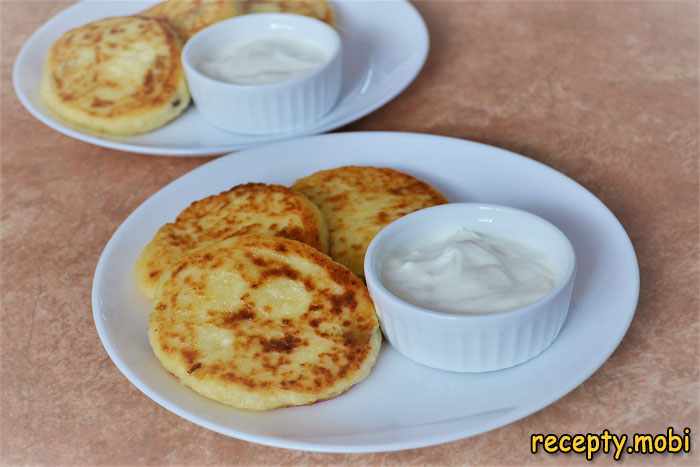
avg —
Dough for Manti

Instructions
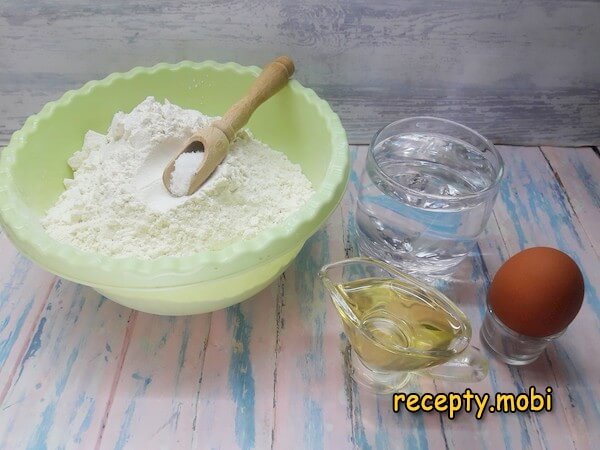
I prepare the ingredients for the manti dough. The water should be very hot – you can even bring it to a boil. Even top-quality flour must be sifted through a sieve: this saturates it with oxygen, which helps the gluten form faster, and clears out any stray bits and lumps.
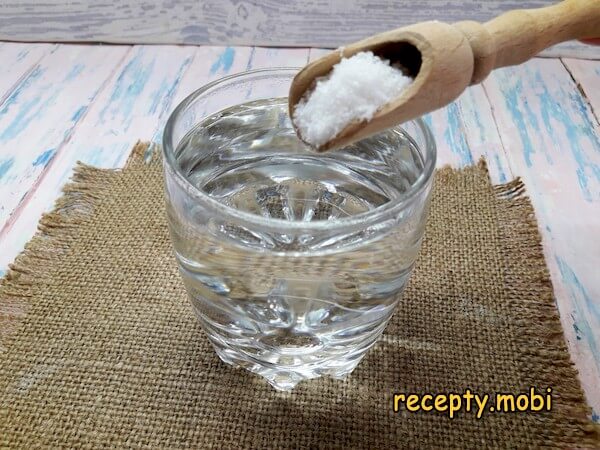
I dissolve the salt in the water.
For the kneading I do not take all the flour at once, but about two-thirds of it, and put it into the mixing bowl. I pour in the salted hot water.
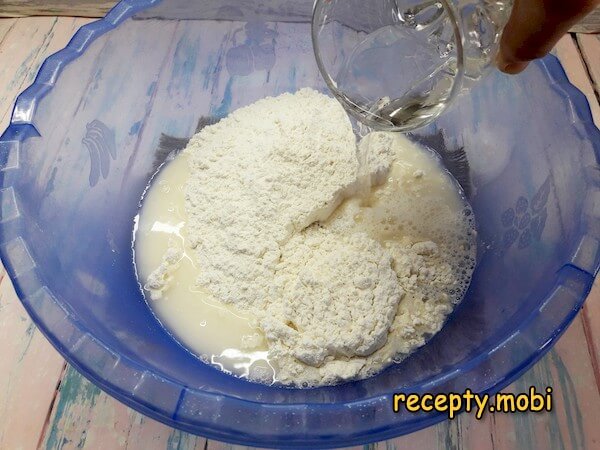
I stir the mixture with a spoon, then add the oil and stir again.
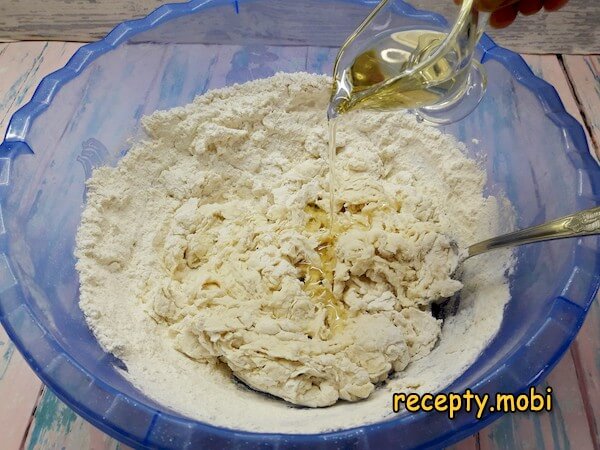
I wait until the dough scalded with boiling water cools a little and becomes warm, then I break in the egg.
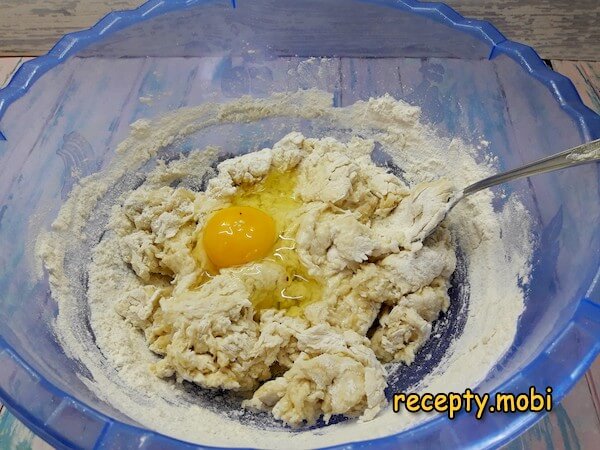
After stirring it in again, I begin adding the remaining flour in several batches – it will all be used, whatever the quality of the flour. You may need just one extra spoonful of flour to reach the right consistency later on.
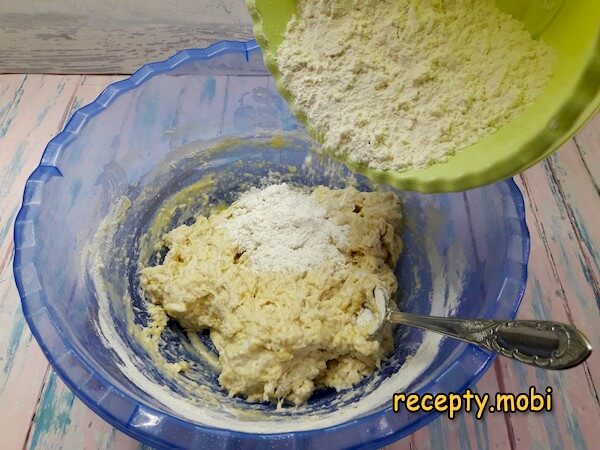
First I knead the mixture by hand in the bowl, lifting the edges up from the bottom and pressing them into the middle.
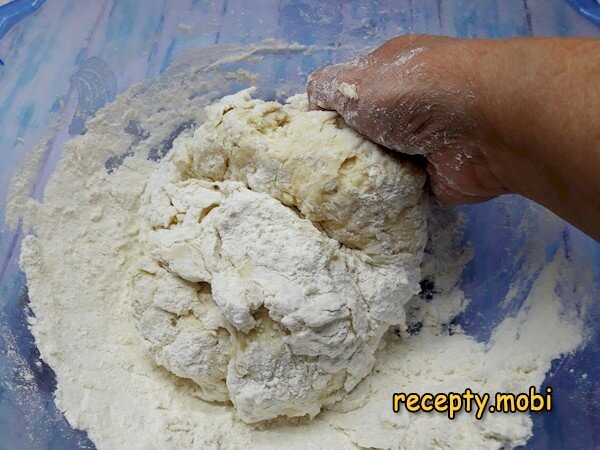
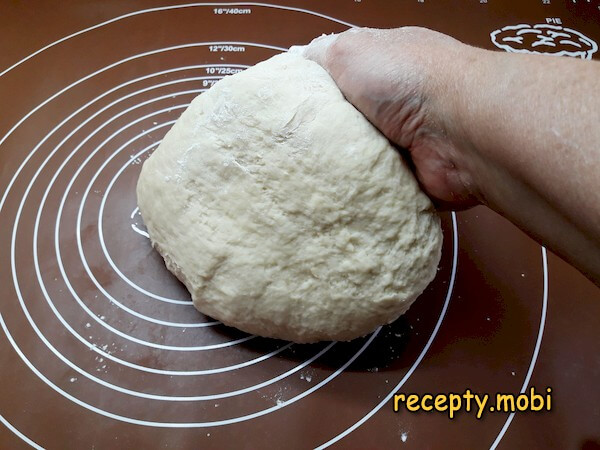
When no dry flour remains and the dough has more or less gathered into a single lump, I turn it out onto the work surface and keep kneading by hand. At this stage it is very important to work the dough well – the longer you knead, the softer and more elastic its structure becomes. Because the flour was scalded with boiling water, the kneading time is much shorter and comes to only about 5 minutes. What is more, the dough is not stiff but very soft and pliable, so kneading takes little effort.
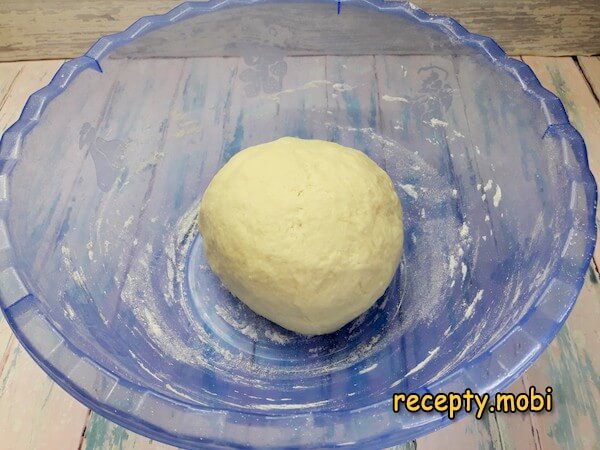
At the end I form a smooth ball and place it in a bowl under a lid – let it rest for 10 minutes. Then knead the whole mass lightly and go on to making manti with meat.This dough for manti holds the meat filling reliably and takes on a glossy sheen after steaming. If you cannot start shaping the manti straight away, the dough can be kept in the refrigerator for a while (up to 6 hours), wrapped in a bag. Before working with it, though, you will need to dust it generously with flour on all sides and knead it again to get rid of the stickiness that has developed. Give it a try, and enjoy your meal!


Tips
- 1
SCALD WITH BOILING WATER – the "secret" of elasticity. Boiling water activates the gluten faster, and the dough becomes pliable.
- 2
TWO-THIRDS OF THE FLOUR FIRST – the "secret" of consistency. If you tip it all in at once, the dough will be a bit dry. Adding it gradually gives the perfect density.
- 3
EGG INTO WARM DOUGH – the "secret" against curdling. In hot dough the yolk will cook. Only warm dough will do (40–45 °C).
- 4
A 10-MINUTE REST – the "secret" of pliability. After resting, the dough becomes even more elastic. The same principle works for other kinds of thin unleavened dough.
FAQ
Which flour should I choose? +
Ideally – premium-grade wheat flour (a protein content of 10–12% is optimal for elasticity). Alternatives: wholemeal (300 g + 300 g white – a "healthier" option), "00" pasta flour (600 g – "premium", Italian), or flour with a 13% gluten content – "premium". The brands "Makfa", "Frantsuzskaya Shtuchka" and "Caputo" are reliable. Fresh flour in the packet is the "premium" choice (a shelf life of no more than 6 months). Do not use: pancake flour (it contains a raising agent) or cake flour (soft, low in gluten). For the "classic" version – ordinary premium-grade flour. Always sift it.
Can I make it without egg? +
Yes, you can – the dough will be more "translucent" but less rich. Without the egg, increase the water to 280 ml. Egg alternatives: 1 tbsp sour cream (for richness), 1 extra tbsp vegetable oil (for elasticity), or 30 g curd cheese (for tenderness). A fresh chicken egg is the "premium" choice (it gives the dough a yellow tint and tenderness). Do not use liquid egg products in cartons. For the "classic Uzbek" version – with egg. For a "lean" version – without egg. For a "premium" version – with an extra yolk added.
How long does the dough keep? +
In the refrigerator in a bag – up to 6 hours. Any longer and the dough sours and loses its elasticity. Before using it, dust it with flour and knead it in (this removes the stickiness). In the freezer in a bag – up to 1 month. Defrost it in the refrigerator for 8–10 hours, then let it stand for 30 minutes at room temperature. Fresh dough is at its best in the first 30–60 minutes after resting. Do not leave it at room temperature for longer than 2–3 hours – the dough will dry out and crust over. The ideal is to knead the dough and shape the manti straight away.
What can I use the dough for? +
The classic use is for manti with meat. It is also suitable for pelmeni with meat (roll it thinner), for vareniki with curd cheese or potato, for chebureki with meat, and for homemade noodles. Use it for lasagne (instead of shop-bought sheets), for chuchvara (Uzbek dumplings), for dushbara (Azerbaijani dumplings) and for khinkali (large Georgian dumplings). It also works for lacy pancakes (dilute it heavily with water). It is a universal unleavened dough for any filled, shaped items. The main thing is to roll it out thin.
- Comment
or post as a guest
Be the first to comment.