avg —
Dough for Chebureks (Without Eggs)

Instructions
Tip 150 g of sifted premium wheat flour into a deep bowl – sifting aerates the flour and gets rid of lumps, which gives a more elastic texture. Add a pinch of salt and stir it evenly through all the flour with a spoon. The right amount of salt improves the gluten structure and gives the finished chebureks a pleasant flavour.
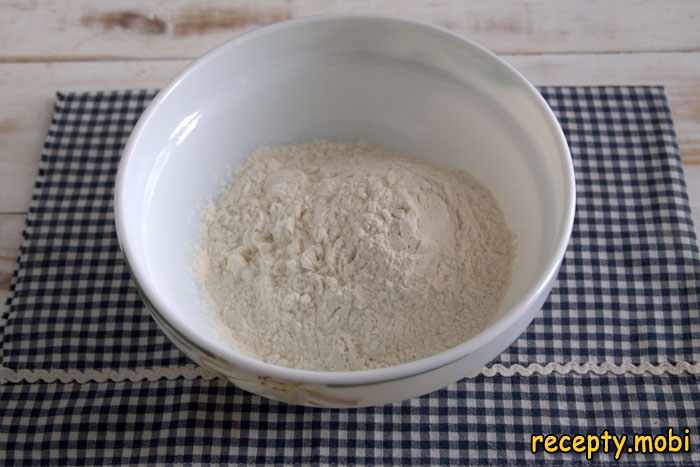
Make a well in the centre of the flour with a spoon and pour in 120 ml of cold water – it is the cold water that gives the finished chebureks their characteristic crisp crust and keeps the dough elastic. Hot or warm water would partly cook the gluten, making the dough dense and prone to tearing when rolled out. The water should be about 5–10 °C.
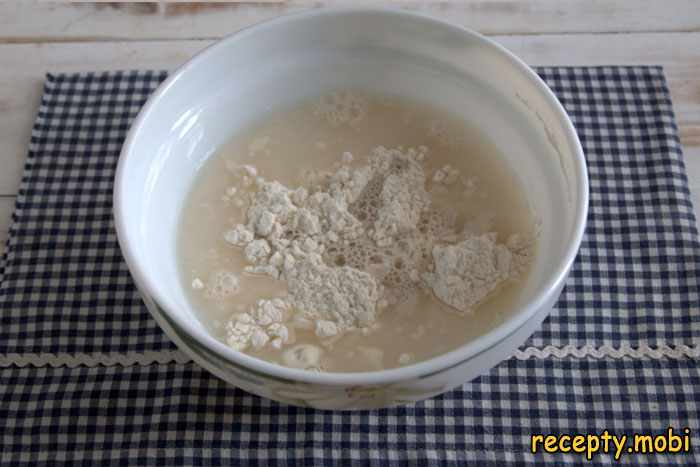
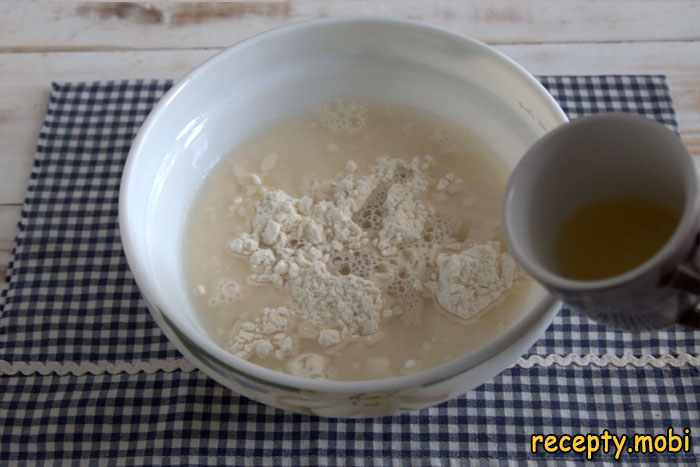
Add 1 tbsp of odourless refined vegetable oil – do not use olive, unrefined sunflower or sesame oil, as their aromas would overpower the filling. The oil makes the dough soft and elastic and keeps it from drying out while it rests. It also makes the dough easier to roll into a thin sheet.
Mix everything together thoroughly, first with a spoon, then gather the mass into a ball with your hands right in the bowl – different stages call for different techniques. Once the dough comes together, turn it out onto a lightly floured surface and knead for 5 minutes until smooth and elastic. Cover with a clean napkin or cling film and leave to rest for 27–30 minutes at room temperature. During this time the gluten relaxes, the dough becomes soft and pliable, and it will be easy to shape into thin cheburek rounds without tearing.
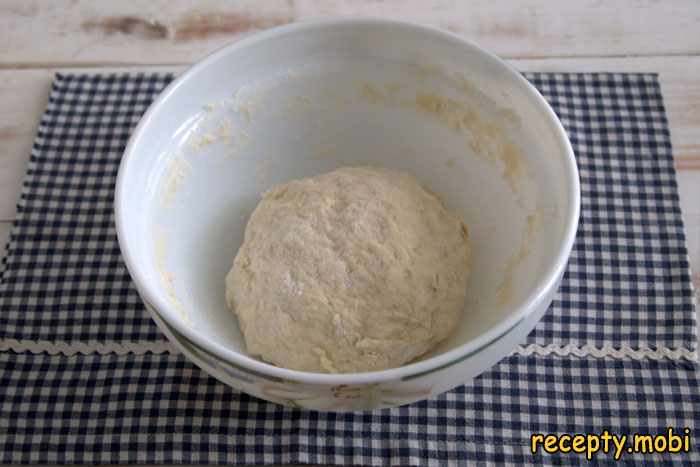
The homemade egg-free cheburek dough is ready to use! After resting it becomes smooth, springy and elastic – it rolls out easily into a thin sheet 1–2 mm thick without tearing. Divide it into 6 equal pieces of 45 g each for medium-sized portion chebureks. The dough really shows its best with a meat filling – a thin crust and juicy meat inside make for that classic flavour.


Tips
- 1
Use only odourless refined oil – otherwise the aroma of olive, unrefined sunflower or sesame oil will spoil the taste of the finished chebureks and overpower the filling.
- 2
Be sure to let the dough rest for 27–30 minutes under a napkin – this is the key to elasticity and a thin roll-out. Without resting, the gluten will contract as you roll and the dough will spring back to its original shape.
- 3
You can make the dough ahead in 2–3 portions and freeze it together with the filling as ready-formed raw chebureks – they keep in the freezer for up to 3 months without losing quality.
- 4
Fry frozen chebureks without thawing – put them straight into the hot oil. Thawed ones lose their shape and may fall apart. Increase the frying time by 1–2 minutes per side.
FAQ
Why does cheburek dough tear when rolled out? +
The main reasons: the dough has not rested long enough (a minimum of 27–30 minutes is essential), it is too dry (the gluten could not relax), or too much flour was added. The fix: cover the ball with cling film and let it sit for another 15–20 minutes, or carefully knead 1–2 teaspoons of warm water into the dough and let it stand. Also check the flour – it should be premium grade with a gluten content of 28–32%. Weak flour gives a brittle dough even with the right technique.
Which filling is best for chebureks? +
The classic one is minced beef or lamb with finely chopped onion in a 3:1 ratio, plus salt, pepper and 2 tbsp of meat stock or water for juiciness. These also work well: suluguni cheese with herbs (400 g), 5% cottage cheese with garlic and dill, mashed potato with fried onion, braised cabbage with mushrooms, or chopped salmon with cream cheese. For an Eastern accent, add cilantro and cumin to the meat. The homemade recipe lets you experiment with any combination.
How long does ready cheburek dough keep? +
In the fridge under cling film or in a bag, the dough keeps for up to 2 days without losing quality – after that it may darken slightly and become less elastic. In the freezer, in a tightly sealed bag, it keeps for up to 3 months. Before using, thaw it in the fridge for 4–6 hours, then let it stand at room temperature for 30 minutes so it regains its elasticity. Do not thaw it in the microwave – the gluten partly cooks and the dough loses its properties.
Why do homemade chebureks burst during frying? +
Three main reasons: the dough is rolled too thin (1 mm minimum, no thinner), the edges are poorly sealed (brush them with water and press with a fork), or the oil is too hot (170–180 °C is ideal – test it with a small piece of dough). A dry filling matters too – a wet filling releases steam inside that will burst the cheburek. Squeeze out the onion and add 1 tbsp of cold water to the filling rather than stock, so the moisture is spread evenly. Fry seam-side up for the first 2 minutes.
- Comment
or post as a guest
Be the first to comment.