avg —
Classic Shortcrust Pastry for Pie and Other Baking

Instructions
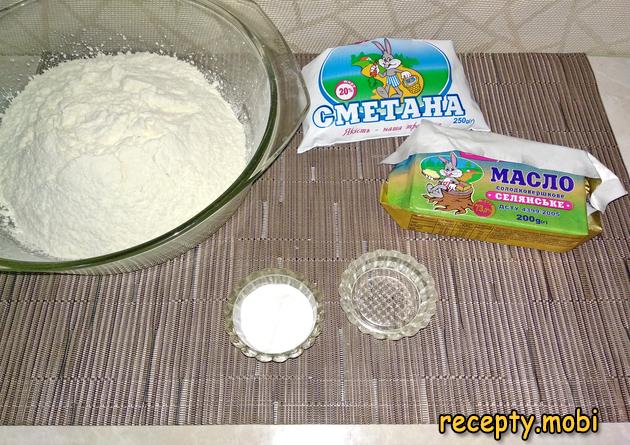
I lay out the products on the work surface. This is an old recipe for classic shortcrust pastry from "mum's cookbook" – simple and proven over decades. Every product on the list is available in any shop.
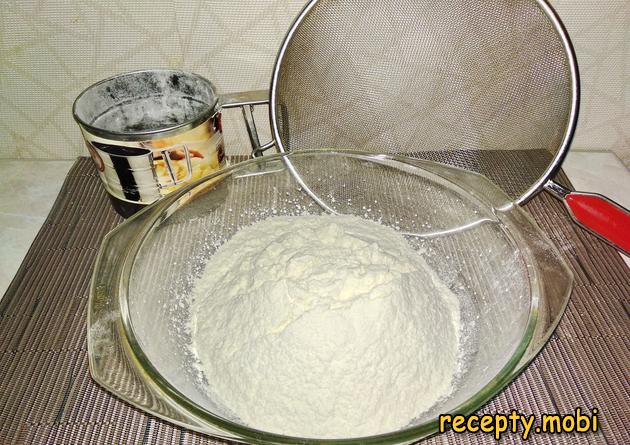
I always sift the flour (300 g) in advance through a sieve – it enriches it with air for a tender dough texture. You can use an ordinary sieve or a modern mechanical "sieve cup". Sifted flour makes the dough noticeably more crumbly.
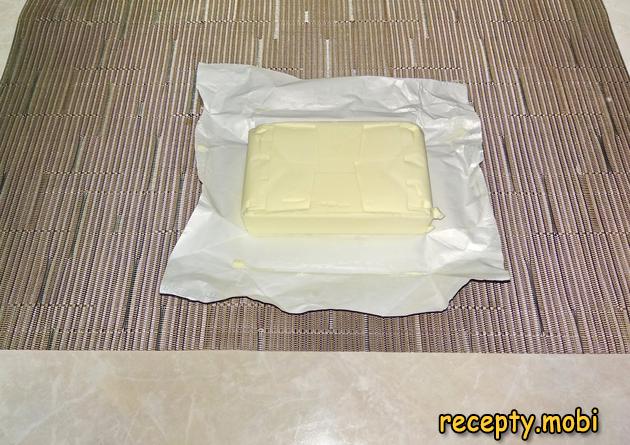
A key step: I use the butter (200 g) very cold – straight from the freezer, where it has been for at least 2–3 hours. Cold, "stone-hard" butter is the secret to crumbly shortcrust pastry. This recipe used to call for margarine (the budget Soviet option); now natural butter is better.
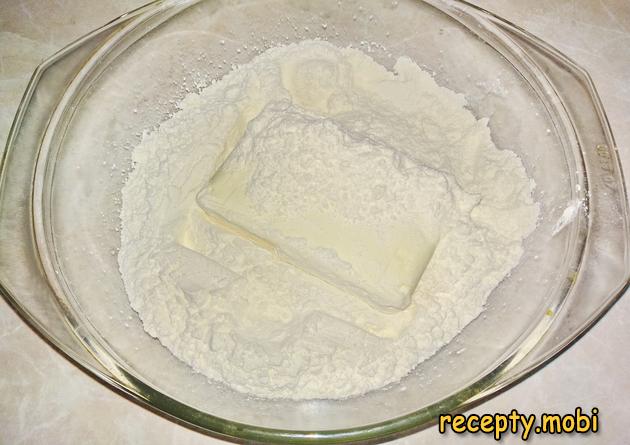
I pour all the sifted flour (300 g) into a large, deep mixing bowl. I take the frozen butter out of the freezer and roll it in the flour on all sides – the flour clings to the butter and stops it melting while grating.
A key step: I grate the frozen butter on the coarse side of a grater straight into the bowl with the flour. I do this quickly so the butter doesn't melt from the warmth of my hands. For convenience you can grate the butter in batches, rolling it in flour after every one or two strokes.
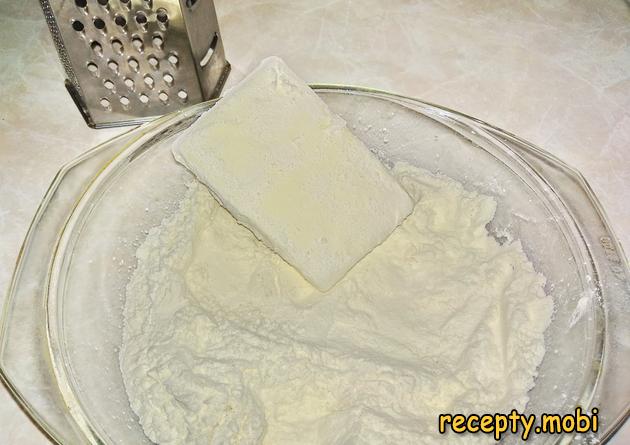
While grating, I roll the grated butter in the surrounding flour several times – the flour keeps clinging to the butter and stops it sticking into a lump. This is the secret to an even, floury crumb.
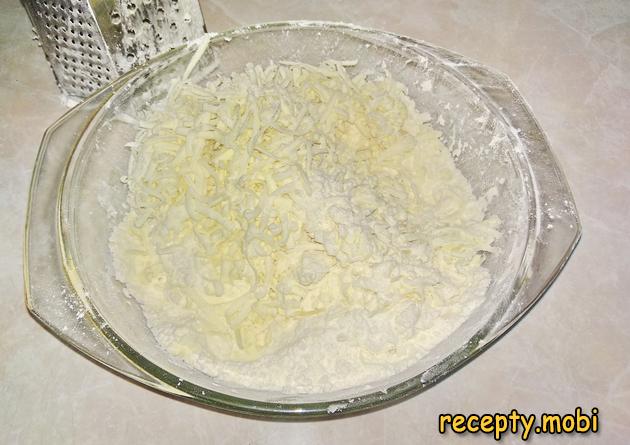
Once all the butter is grated, I put the grater away and work with my hands. I rub the flour and butter together between my palms with quick movements, turning it into fine, even crumbs the size of a pea. Important: do this quickly so the butter doesn't warm up from the heat of your hands. It is ideal if the kitchen is cool (16–18°C).
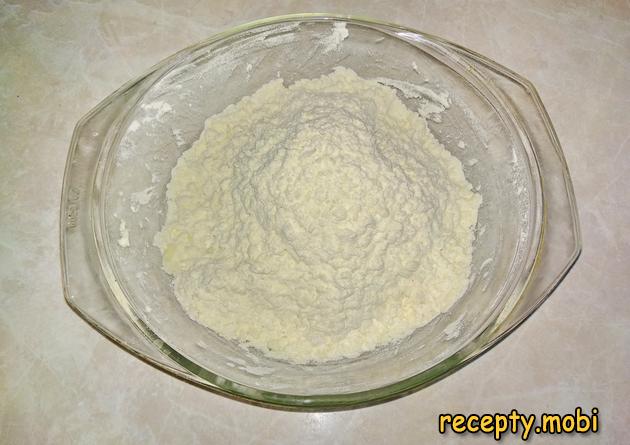
I add a pinch of salt to the flour-and-butter crumb – the confectioner's "secret" ingredient that enhances the flavour of sweet baking and balances the richness of the dough. Without salt the dough tastes flat.
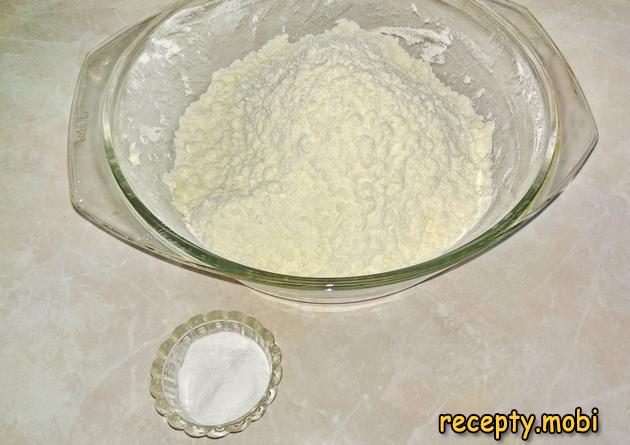
I mix the flour and salt with a silicone spatula or a spoon so the salt is evenly distributed. Then I form a hollow (a "well") in the centre of the flour-and-butter crumb – this is where I will pour the liquid ingredients.
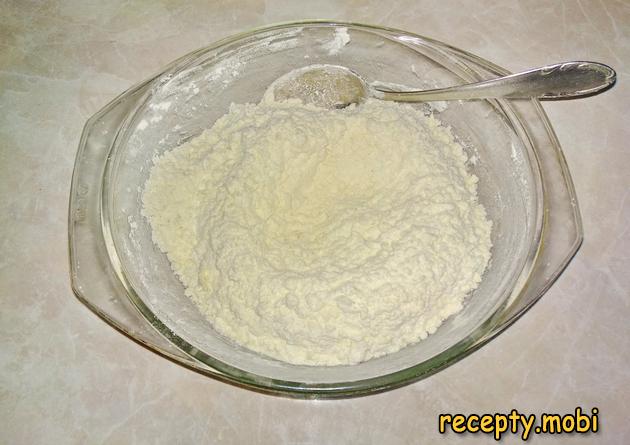
In a separate small bowl I extinguish the soda with vinegar. I add the baking soda (1 tsp) and the 9% table vinegar (1 tsp). I wait 5–10 seconds for the fizzing reaction to pass (carbon dioxide is released, which makes the dough lighter). I pour the extinguished soda straight into the well in the flour.
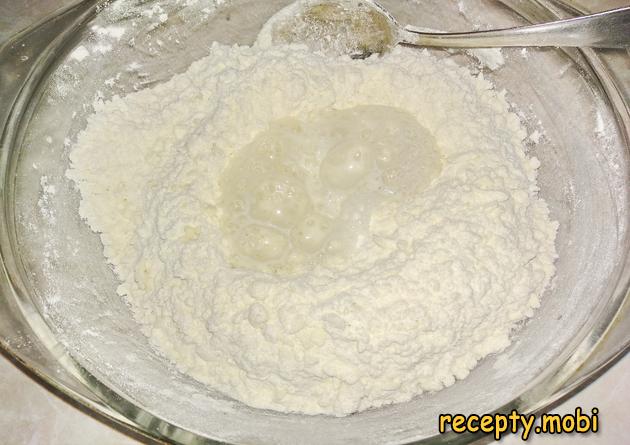
I use sour cream with a fat content of at least 20% – the secret to the right flavour. Sour cream of 10–15% gives the finished dough a sour taste. Richer sour cream of 25–30% gives a more tender, "melt-in-the-mouth" dough.

I add 6 tablespoons of sour cream (about 120 g) to the well in the flour, where the extinguished soda is already waiting. I combine the ingredients first with a spoon – not with my hands, so the dough doesn't warm up from their heat.
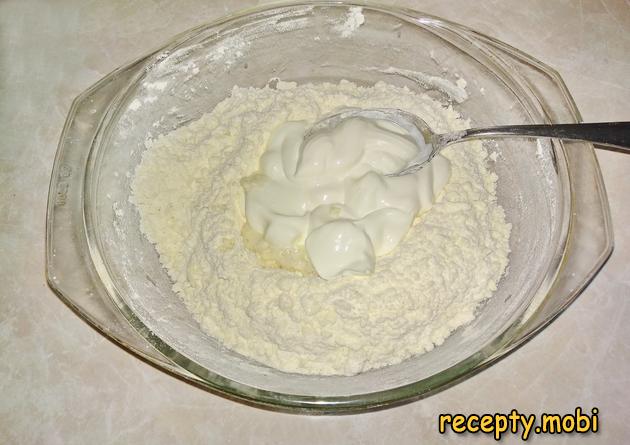
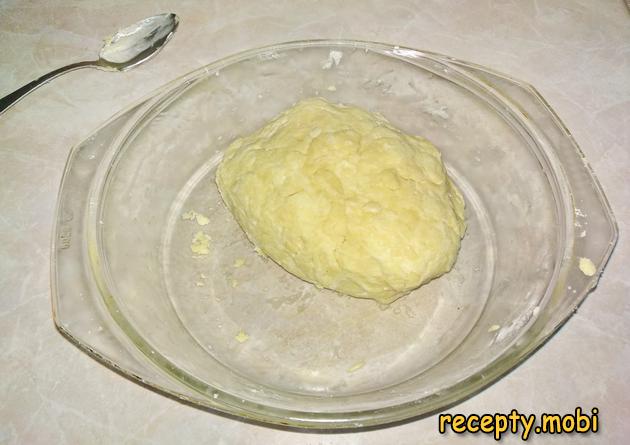
Once the ingredients have come together slightly, I put the spoon aside and carry on with my hands. Important: do not knead the dough – this is the secret of shortcrust pastry. It is enough to gently gather the mass into a single ball. Long kneading activates the gluten in the flour and the dough becomes tough instead of crumbly. Working by hand takes no more than 2 minutes.
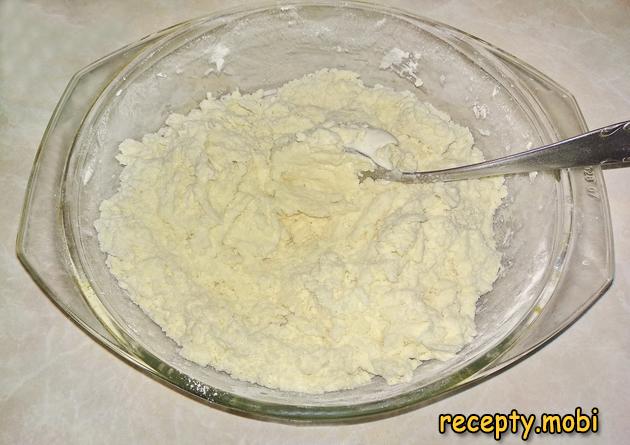
The classic shortcrust pastry for the pie is almost ready. But you cannot use it straight away – it needs to rest in the refrigerator for at least 2 hours (overnight is better). During this time the gluten relaxes, the butter is distributed evenly through the dough, and it becomes more workable and firmer.
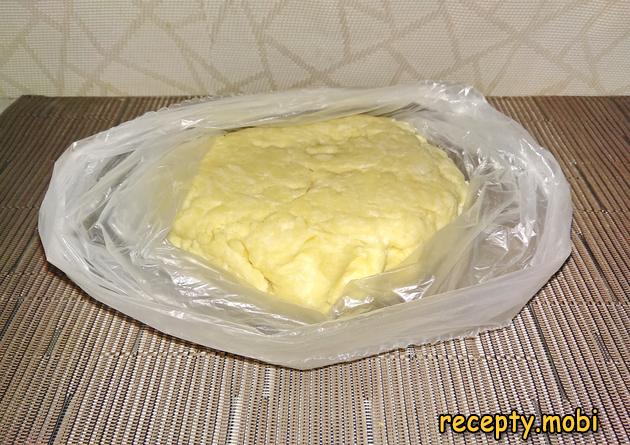
I transfer the dough into a plastic bag or wrap it in cling film – this protects it from drying out and from absorbing other smells in the refrigerator. I put it in the refrigerator for at least 2 hours. After 2 hours the firmed-up shortcrust pastry is ready to use! You can start making the baking you planned – pies, biscuits, cheesecakes, baskets and vatrushki.


Tips
- 1
Use very cold butter from the freezer – the secret to crumbly shortcrust pastry.
- 2
Do not knead for long – shortcrust pastry is only gathered into a ball, not kneaded like a yeast dough.
- 3
Always let the dough rest for 2 hours in the refrigerator – without this the dough will fall apart when you shape it. I make the royal vatrushka on a similar principle.
- 4
Use sour cream of 20% fat or higher only – a lower fat content gives the finished baking a sour taste.
FAQ
What can I bake with shortcrust pastry? +
It is a universal base for many recipes. Sweet baking: "Nut Cookies with Condensed Milk" (you need a nut-shaped mould), "Baskets with meringue cream", "Royal Cheesecake" with curd cheese, open fruit tarts (with apples, pears, strawberries), sugar biscuits of various shapes, and classic Scottish shortbread (with icing sugar). Savoury baking: a savoury pie with onion and processed cheese, a quiche with mushrooms and cheese, quiche Lorraine with bacon, and a tart with tomatoes and goat's cheese. Cheesecakes: a classic New York cheesecake with a curd-cream filling on a shortcrust base. The dough keeps in the refrigerator for up to 5 days or can be frozen for 1 month.
What can I use instead of sour cream in shortcrust pastry? +
The following will work: full-fat kefir 3.2% (the more "Russian" classic, with a light tang), thick Greek yoghurt 10% (a more "European" flavour), mascarpone (for an "Italian", tender dough), curd cheese (such as Philadelphia, for a creamier flavour), 33% cream (a richer dough), or full-fat coconut milk (for a vegan version). Classic recipes also use an egg yolk plus 2 tablespoons of iced water as a binding ingredient. Sour cream of 20% is the classic of Soviet shortcrust pastry, with a balance of fat and acidity for a little lightness.
How long does the finished shortcrust pastry keep? +
The finished shortcrust pastry keeps in the refrigerator for up to 5 days in a tightly closed plastic bag or cling film. For longer storage, freeze it for 1 month in airtight wrapping – before use, thaw it completely in the refrigerator for 8–12 hours (slow thawing preserves the texture). Do not thaw at room temperature, or the butter will run out of the dough. It is ideal to make the dough ahead at the weekend for 2–3 future pies. It is a convenient make-ahead item for a quick dessert for guests – take it out, roll it, fill it and put it in the oven.
How do I roll out shortcrust pastry without it tearing? +
A few proven techniques. Cold dough: roll it straight from the refrigerator; warm dough falls apart. Between two sheets of parchment: place the ball of dough between two sheets of baking paper and roll on top – it won't stick to the rolling pin or the table. Minimal flour: dust the surface with as little flour as possible; excess flour makes the dough tough. Roll from the centre outwards: with circular movements, turning the dough 90° after each pass. Thickness of 3–5 mm: ideal for pies. If it tears: moisten the edges with water and press them back together, or add 1 tablespoon of iced water to the dough.
- Comment
or post as a guest
Be the first to comment.