avg —
Marmalade on Agar-Agar from Grapefruit Juice at Home

Instructions
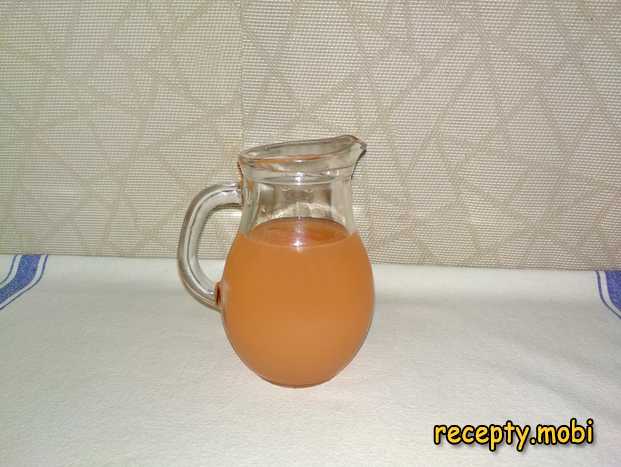
I prepare the ingredients - as natural a list as possible. Wash the grapefruit (2-3 large fruits) thoroughly. Cut them in half and squeeze out the juice with a hand or electric citrus press. Two large grapefruits give 230 ml of juice - exactly the amount needed. As an alternative, use shop-bought 100% natural juice with no additives (NOT nectar).
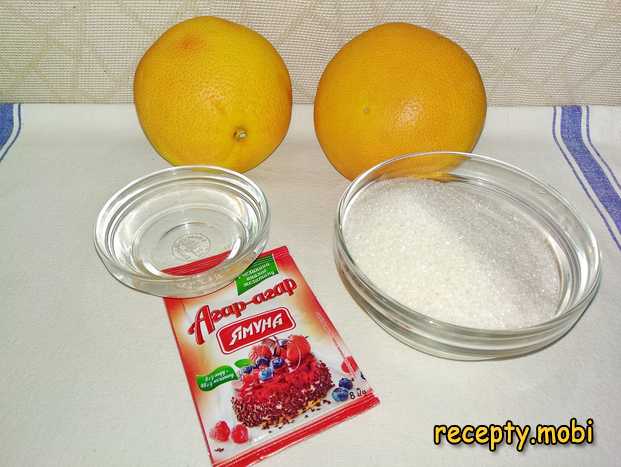
I choose a ripe, fragrant grapefruit with a glossy skin - it gives the most intense flavour. An overripe or underripe fruit will give cloudy juice with a weak aroma. You can use a mix of pink and white grapefruit for an interesting marmalade colour. Strain the juice through a sieve to remove pulp and seeds for clear marmalade.
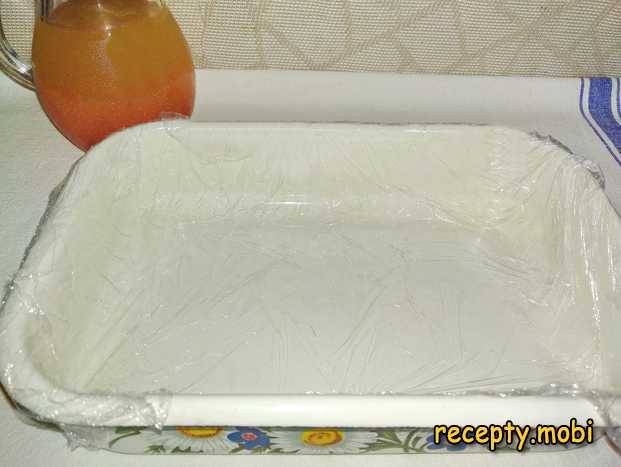
I prepare the mould for the marmalade. Suitable options are: silicone marmalade moulds (the special ones with shapes), ordinary silicone sweet moulds, or a shallow glass or plastic container of about 15x20 cm lined with cling film. Silicone moulds are the most convenient option - the marmalade comes out easily without a knife.
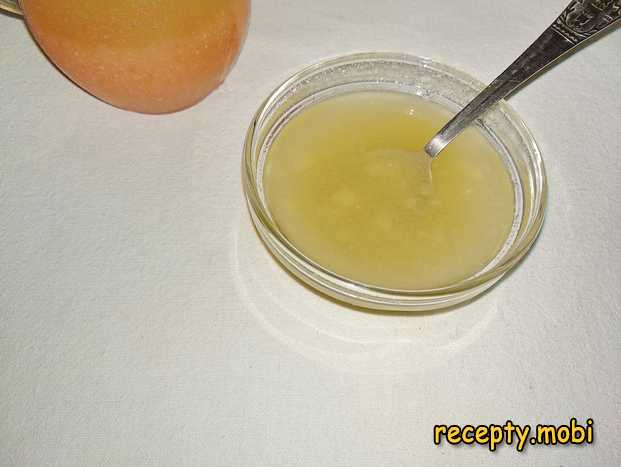
Into a heavy-bottomed saucepan (1 litre capacity) I pour the dry agar-agar (7 g). Add the water (100 ml) and whisk thoroughly until smooth. IMPORTANT: read how to dilute the agar-agar on its packaging - some types need to swell first (like gelatin), some dissolve straight away during boiling. In our case we dilute it in cold water and boil it immediately.
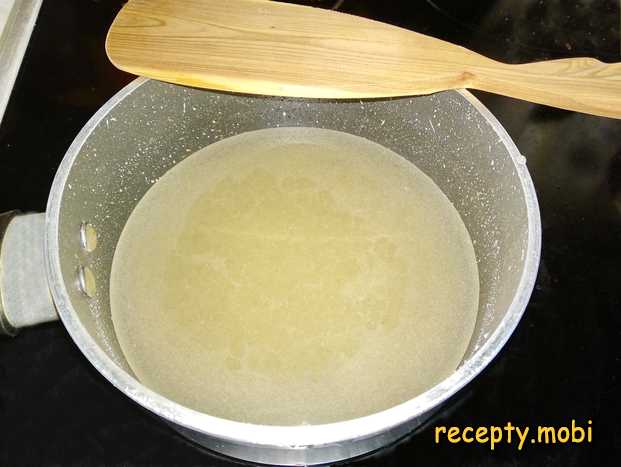
I add all the sugar (250 g) to the saucepan with the agar-agar and water straight away. Place it over the highest heat and bring it to the boil quickly, stirring from time to time with a silicone spatula. The sugar will start to dissolve and the mixture will turn clear.
CRUCIAL STEP: once it boils, I reduce the heat to MEDIUM and boil the mixture for EXACTLY 2-3 minutes. This is the "secret" to making agar-agar work properly - without these 2 minutes of boiling it will NOT set. Stir constantly with the spatula, paying particular attention to the bottom and sides of the saucepan so the sugar does not catch.
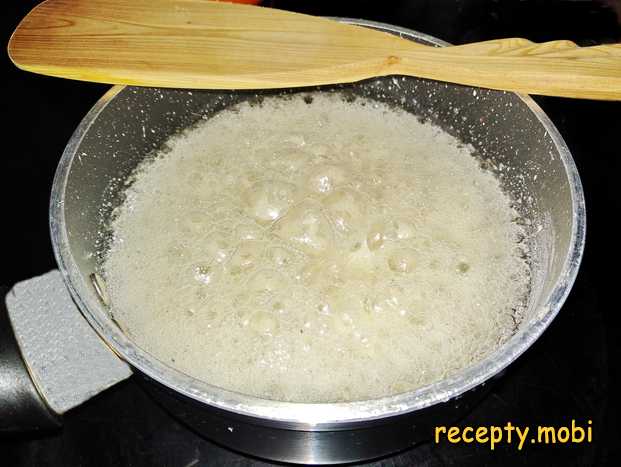
After 2-3 minutes I take the saucepan off the heat and pour the freshly squeezed grapefruit juice (230 ml) into the hot syrup. Whisk thoroughly until smooth - the juice and syrup should combine completely. The colour will turn a soft pinkish-yellow (depending on the grapefruit variety).
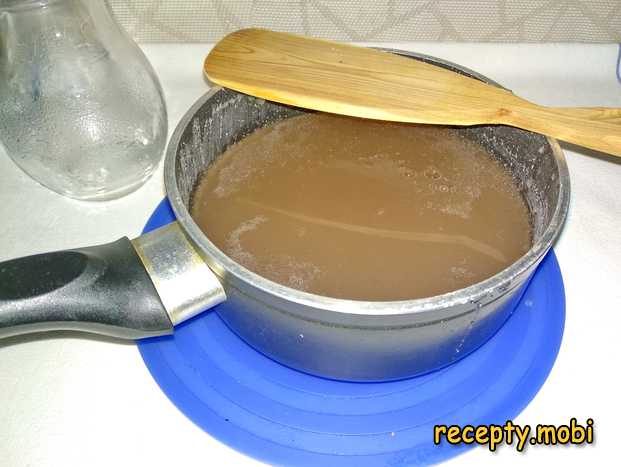
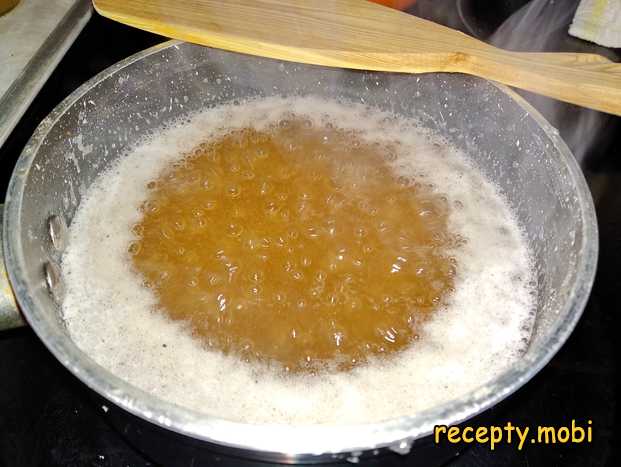
CRUCIAL STEP: I return the saucepan with the syrup and juice to the heat and bring it back to the boil QUICKLY over high heat. From the moment it boils, cook for EXACTLY 2 minutes, stirring constantly with the spatula. This second compulsory boil "activates" the gelling properties of the agar-agar after it has been mixed with the acid in the juice.
While still hot, I pour the finished syrup STRAIGHT into the prepared mould or moulds. You need to pour it VERY QUICKLY - agar-agar starts to set already at 40°C. If you are slow, the syrup will "thicken" right in the saucepan and you will have to reheat it.
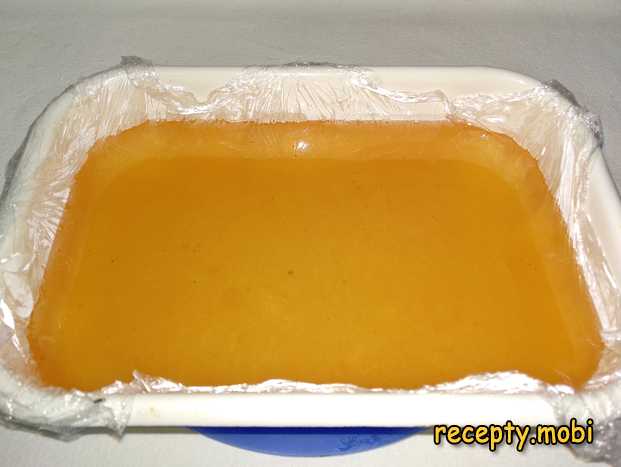
I leave the marmalade to stand at room temperature for 30-45 minutes until completely cool. During this time the syrup will start to "set" and take on its characteristic marmalade texture. If you use small silicone moulds, the marmalade will be ready at room temperature, without the fridge.
For a better set and firmer texture, I put the mould in the fridge for 1-2 hours. During this time the marmalade will finish "setting" and become springy, coming away from the mould easily. The finished marmalade is clear, with a soft pink tint, springy to the touch, and has a characteristic "fresh" grapefruit aroma.
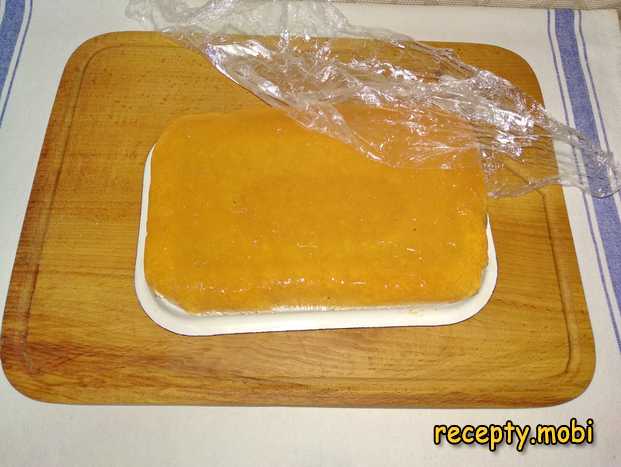
After 1-2 hours I take the mould out of the fridge and carefully remove the marmalade. From large moulds, turn it out onto a board and cut it with a sharp knife into 2x2 cm portion-sized pieces or any shape you like. From silicone moulds, simply push out the shapes.
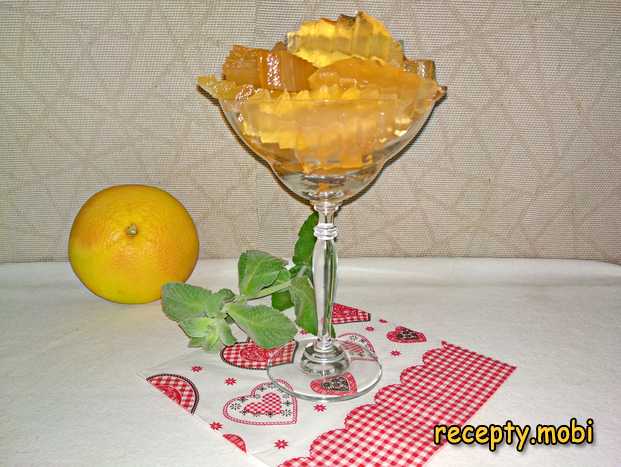
I roll the finished marmalade pieces in powdered sugar through a sieve (30 g) for a pretty "snowy" look and to stop them sticking together. You can also roll them in desiccated coconut, fine sugar, or cinnamon. Serve in a pretty glass dish or pack into gift boxes. The agar-agar marmalade from grapefruit juice is ready!


Tips
- 1
ALWAYS boil the agar-agar for 2-3 minutes after it comes to a boil - without this the marmalade will not set and will stay a runny syrup.
- 2
Pour the hot syrup into the mould QUICKLY - agar-agar sets at just 40°C, so the syrup may "set" in the saucepan.
- 3
Use freshly squeezed juice - shop-bought "nectar" with added sugar will make the marmalade too sweet. I use the same principle to make berry marmalade on agar-agar.
- 4
Small silicone moulds are better than large containers - you do not need a knife to cut the marmalade, and it is ready at room temperature.
FAQ
What is the difference between agar-agar and gelatin? +
Agar-agar: a plant-based thickener made from seaweed; kosher, halal, and vegan; it needs 2-3 minutes of boiling to activate, sets at 40°C, holds its shape at room temperature up to +60°C, and has a firmer, "crisper" texture. It is 5-7 times stronger than gelatin. Gelatin: an animal protein made from bones; not suitable for vegetarians; it is soaked in cold water for 30 minutes, warmed without boiling, sets at +10°C, and melts at +35°C (melts in the mouth), with a delicate, "wobbly" texture. For marmalade, use agar-agar (it does not melt in the hands); for jelly, use gelatin (it melts in the mouth). For vegans and during Lent, only agar-agar will do.
What other juices can be used to make marmalade? +
Any natural juice will work: orange (the classic, 230 ml), lemon (more sour, add more sugar, up to 300 g), pomegranate (a rich burgundy colour), cherry (stoned, gives bright red marmalade), currant (blackcurrant for dark, redcurrant for pink), raspberry (a delicate summer option), strawberry (a children's classic), apple (a mild flavour), pineapple (tropical), mango (exotic), or a fruit mix (any combination of juices). Each juice gives its own character. For an interesting presentation, make a "two-layer" marmalade from 2 different juices - pour them in layers at 10-minute intervals.
How long does the finished marmalade keep? +
The finished marmalade keeps in the fridge for up to 7 days in an airtight container. At room temperature it keeps for up to 3 days under a lid. For longer storage you can freeze it for 1 month in airtight bags - before serving, defrost it at room temperature for 2 hours. Do not leave the marmalade at temperatures above 60°C - the agar-agar will start to "melt". In high humidity (at the beach in summer) dust it with extra powdered sugar - this protects it from sticking. It is ideal to make it in small batches in little moulds, to be eaten within 3-5 days.
Can the marmalade be used in baking? +
Yes, homemade agar-agar marmalade is a versatile dessert ingredient: decorate cakes and cupcakes with it (cut into cubes), use it as a filling for handmade sweets, as a layer between cake sponges (cut into thin slices), to decorate Easter cakes, as an addition to ice cream, as a filling for homemade rolls and croissants, or to decorate dessert plates. You can even melt the marmalade in a bain-marie until liquid and use it as a glaze for a cake. It is a versatile product for creative dessert presentation.
- Comment
or post as a guest
Be the first to comment.