avg —
Currant and Gooseberry Marmalade – Without Pectin, Gelatin, and Agar-Agar

Instructions
I prepare the berries for the marmalade. KEY CONCEPT: to set the marmalade without shop-bought thickeners, you need berries with a high natural pectin content: black currants, red currants, gooseberries (especially red and dark-red ones), and sour apples. To 1 kg of these "pectin" berries you can add 500 g of "non-pectin" berries – raspberries, pitted cherries, bilberries, strawberries, or blueberries – for aroma and colour.
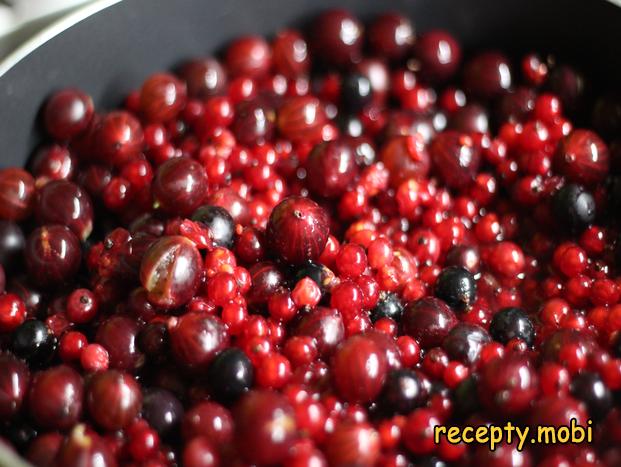
In my version I use a mix: 500 g of gooseberries + 400 g of red currants + 300 g of bilberries + 300 g of pitted cherries. The berries can be fresh or frozen (no need to thaw them). I wash the fresh berries thoroughly in cold water and remove the stalks and any leaves.
I transfer the prepared berries into a deep saucepan or pot with a thick non-stick base (3–4 litres in capacity). A thick base spreads the heat evenly, and the non-stick coating stops the marmalade from catching. I add a little clean water (150 ml) – just a little, as the berries release plenty of their own juice.
I set the saucepan over medium heat and cook the berries gently until completely softened – usually 15–20 minutes. I stir constantly along the bottom with a silicone spatula to prevent catching. The berries "burst", release their juice, and turn into a soft mass.
I take the saucepan off the heat. I purée the berry mass with an immersion blender in a bowl, or with a potato masher right in the saucepan. You get a thick berry mass with seeds and bits of skin.
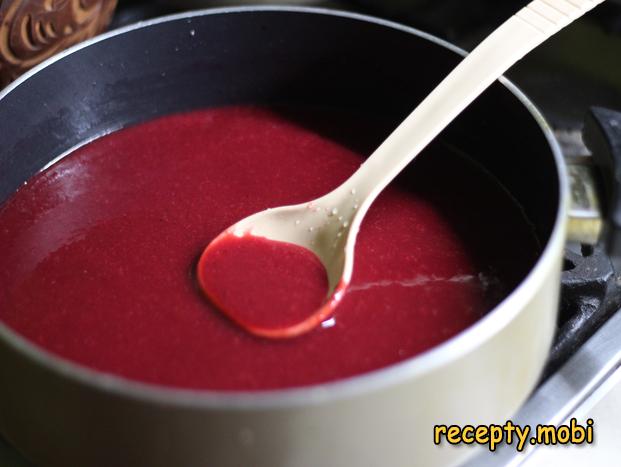
CRITICAL STEP: I rub the whole berry mass thoroughly through a fine sieve into a clean saucepan. I work the silicone spatula in circular movements, pressing all the pulp and juice through the sieve and leaving only the seeds and skins behind. I THROW AWAY the seeds and skins – they give an unpleasant "crunchy" texture in the finished marmalade.
I return the smooth berry purée to medium heat and bring it to the boil, stirring constantly. This is an important stage that "activates" the natural pectin from the berries – the heating "opens up" the pectin's structure so it can set later.
Into the boiling berry purée I add the sugar (600 g). If you like, add fresh lemon juice (2 tbsp) – it lifts the flavour and helps the pectin work. For the "grown-up" version I add a shot of cognac, almond liqueur, cherry kirsch, or whisky (50 ml) for an elegant aroma.
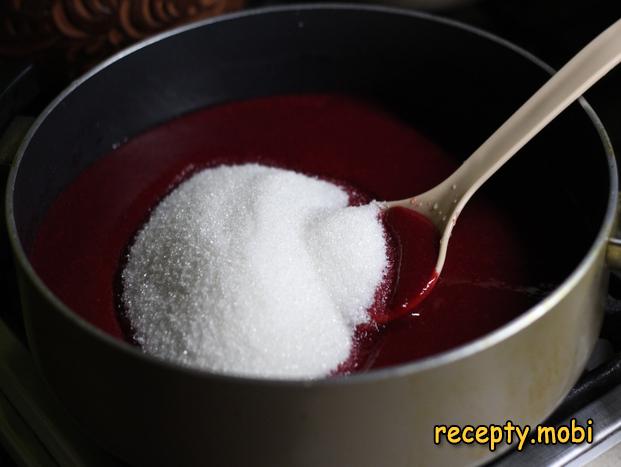
I stir well until the sugar has completely dissolved. I reduce the heat to its LOWEST setting and cook the marmalade for 25–30 minutes, stirring constantly with the spatula. The mass gradually thickens and takes on a characteristic "glossy" sheen.
CRITICAL DONENESS TEST: the "drop on an ice-cold plate" test. Chill a small plate in the freezer for 10 minutes beforehand. After 25 minutes of cooking, drop 1 tsp of the marmalade mass onto the ice-cold plate. Check after 1 minute: if the drop has set into a springy jelly and does not "run" when you tilt the plate, the marmalade is ready. If it is still runny and "spreads", cook for another 5–10 minutes and test again.
I prepare the mould for setting the marmalade. Suitable options are: silicone marmalade moulds with shapes, silicone sweet moulds, or shallow ceramic or glass dishes 15x20 cm. A silicone mould is the most convenient, as the marmalade comes out easily without a knife.
I pour the hot, ready marmalade mass into the prepared mould. Don't delay – the natural pectin starts to "set" already at 50–60°C. Tap the mould lightly on the table to release air bubbles and spread the mass evenly.
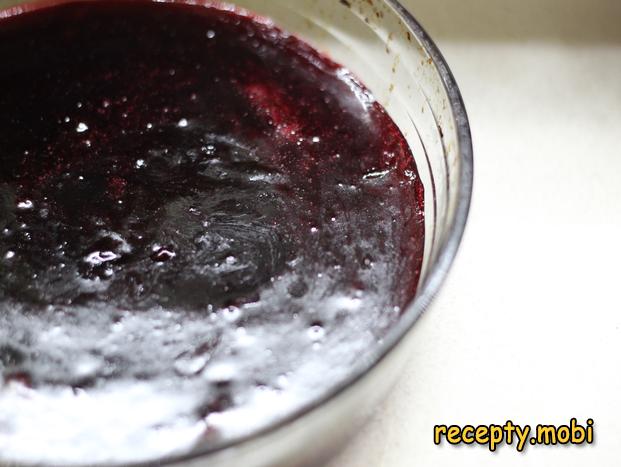
I leave the mould at room temperature for 30–45 minutes until completely cool. Then I move it to the refrigerator for 1.5–2 hours to set fully. The finished marmalade does not "wobble" in the mould when tilted – that means it has set completely.
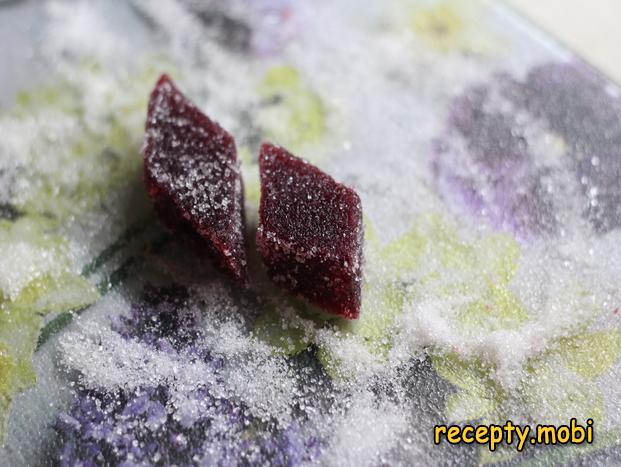
After 2 hours I take the mould out of the refrigerator and carefully remove the marmalade. From large moulds, I turn it out onto a board and cut it with a sharp knife – ONE FIRST DIPPED IN COLD WATER – into 2x2 cm cubes or strips. A wet knife won't "stick" to the marmalade. From silicone moulds, I simply push out the shapes.
I roll the marmalade pieces in brown or white sugar (100 g) for a pretty "snowy" look and to stop them sticking together. For a sugar-free alternative, I roll them in a 1:1 mix of cornflour and icing sugar. You can leave them without any coating at all – the marmalade still looks lovely. The currant and gooseberry marmalade without pectin is ready!


Tips
- 1
ALWAYS use pectin berries (currants, gooseberries) – without them the marmalade will not set without shop-bought thickeners.
- 2
ALWAYS rub the mass through a sieve – the seeds and skins give an unpleasant "crunchy" texture in the finished marmalade.
- 3
Test for doneness with the "drop on an ice-cold plate" – the only reliable way to check. I use a similar principle to make grapefruit juice marmalade with agar-agar.
- 4
Cut the marmalade with a wet knife – it won't "stick" to the blade and the cubes come out neat.
FAQ
Which berries contain the most pectin for self-setting? +
The top berries and fruits with a high natural pectin content are: black currants (1.5%), red currants (1%), gooseberries (especially red, up to 1%), sour apples (up to 1.5% – especially the "Antonovka" variety), quince (up to 2%, the record-holder), citrus fruits (especially the zest, up to 1.5%), and lingonberries. Medium-pectin: cherries (pitted, 0.4%), blueberries, and chokeberry (aronia). Low-pectin (will NOT set on their own): raspberries, strawberries, bilberries, blackberries, and sweet apple varieties – these need to be mixed with pectin berries in a ratio of 1:2 (one third pectin berries). Quince is the "gold standard" for pectin without shop-bought additives, and you can make marmalade from it alone.
What to do if the marmalade won't set? +
The main reasons are: 1) You used berries without pectin (raspberries, strawberries, cherries) – add 200 g of grated quince or 100 g of sour apple to the mix and boil again for 15 minutes. 2) Not enough sugar – pectin only "works" in a sugary environment (40–50% sugar minimum). Add another 200 g of sugar and cook for 10 minutes. 3) Undercooked – pectin only "activates" with prolonged boiling, so cook for another 10–15 minutes with the "drop on a plate" test. 4) Too much water – cook longer to evaporate the excess moisture. 5) Old berries – ripe berries contain more pectin than overripe soft ones.
How long does homemade marmalade without pectin keep? +
The finished natural marmalade keeps in the refrigerator for up to 2 weeks in a tightly sealed container. At room temperature it keeps for up to 5 days (but in hot weather it may "run"). For longer storage, freeze it for 1 month in airtight bags, or pour it into jars and seal them as you would for jam. Do not store it above 30°C – the natural pectin weakens. The sugar coating stops the pieces sticking together and keeps them fresh longer. It makes an ideal gift – serve it in pretty glass jars with a ribbon.
What to serve the marmalade with? +
It is ideal as a natural dessert with tea or coffee for anyone watching their diet. For children, it replaces shop sweets full of colourings and preservatives. With grown-up desserts, serve it with brut champagne, white semi-sweet wine (Moscato), or dessert liqueurs. Use the marmalade to decorate cakes and cupcakes (cut into cubes on top), as a filling for handmade sweets, in yoghurts and curd desserts, as a sauce for ice cream (melt 1 tbsp per scoop), or with quark and nuts as a "Russian dessert". It is a striking gift for colleagues in a jar.
- Comment
or post as a guest
Be the first to comment.