avg —
Cottage Cheese Easter with Condensed Milk

Instructions
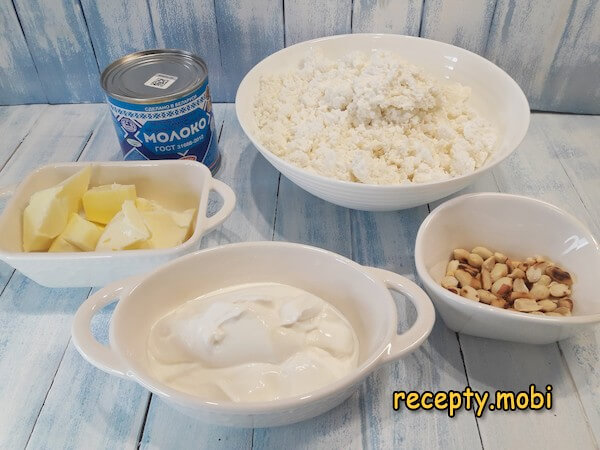
I prepare the ingredients. The cottage cheese must be full-fat, and so must the sour cream. The butter should be good-quality only; take it out ahead of time (about 15 minutes) so it warms up and turns pliable. Any nuts can be used – walnuts, hazelnuts or peanuts (these are lightly toasted).
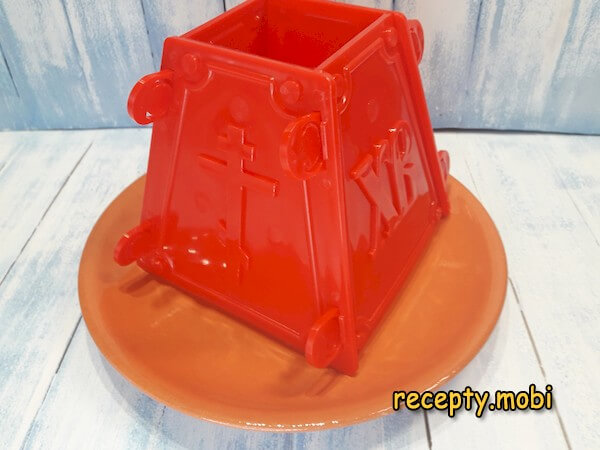
For cottage cheese Easter it is worth getting a special detachable Easter mould. But if you don't have one, you can adapt other containers with holes for the whey to drain out. The quantities here are calculated for a mould measuring 12 centimetres along the base side, 13 centimetres in height and 6 centimetres across the top of the truncated cone.
I start the condensed milk boiling straight away, placing the can in a pot of water with a piece of cloth underneath so the can does not knock against the sides as the water boils. I boil the condensed milk for 1.5 to 2 hours.

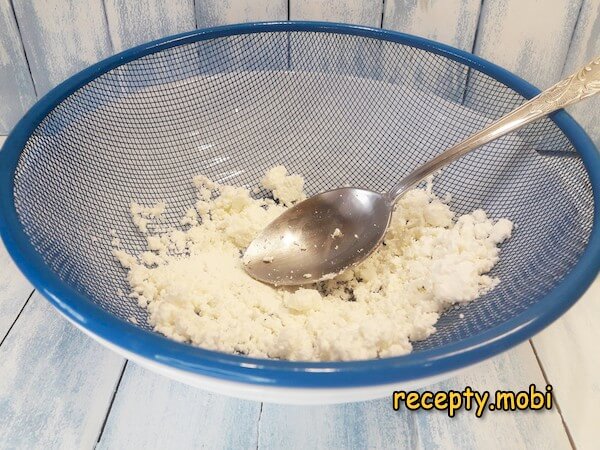
The cottage cheese needs to be pushed through a fine-mesh metal sieve or blended with an immersion blender.
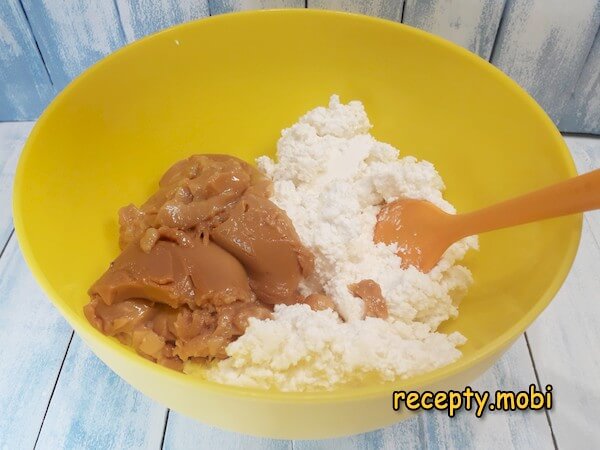
I add the cooled condensed milk to it, but not all of it – only 200 grams.
I add the butter and the sour cream here too.
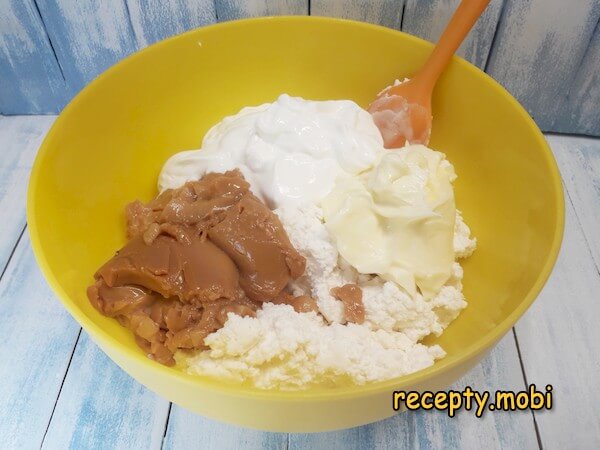
I mix everything until smooth and uniform (you can use an immersion blender). And there it is – a tender base for the cottage cheese Easter is ready.
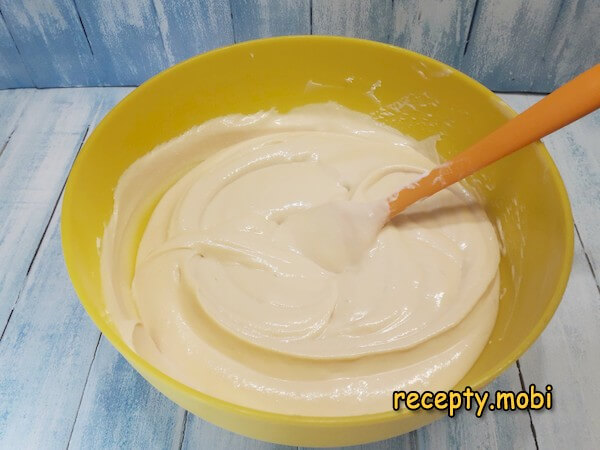
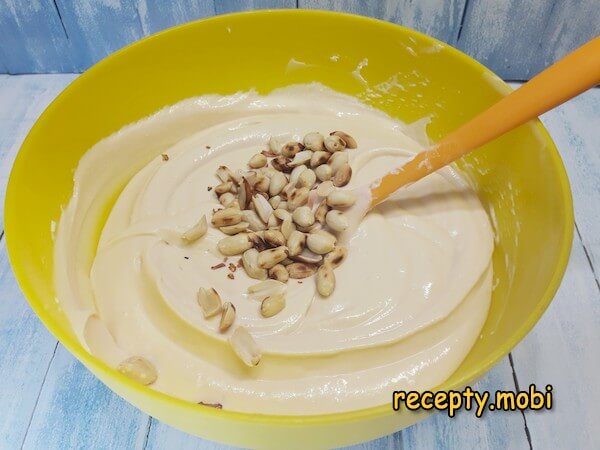
All that is left is to add the nuts to it.
I scald the cheesecloth with boiling water and wring it out. I set the Easter mould narrow-base-down on a plate. I line the inside with cheesecloth folded into 2 layers, leaving the free edges hanging outside. I smooth out all the folds, shifting them into the corners.

I fill the mould with the cottage cheese mixture.
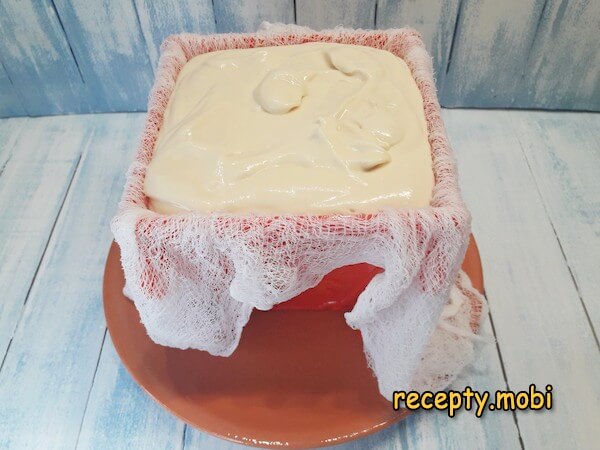
I lift the edges of the cheesecloth and carefully fold them over the top.
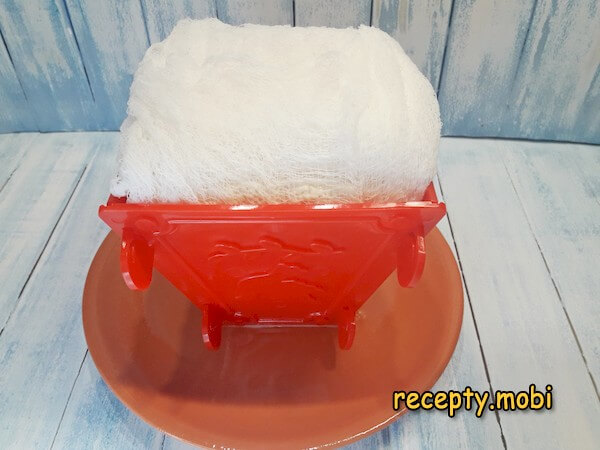
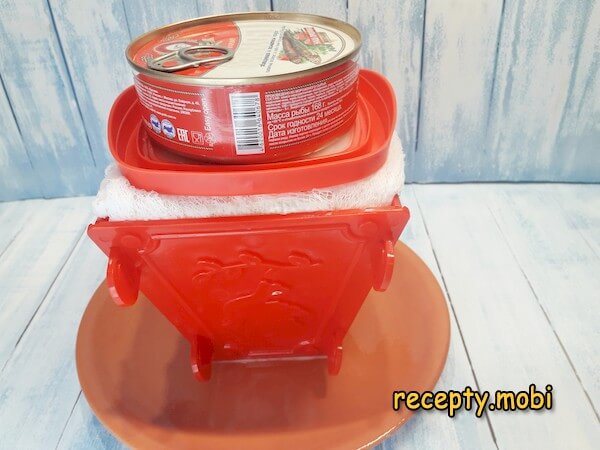
I place a small weight (200 to 300 grams) on top, putting a flat surface of a suitable size underneath it. I move this whole arrangement to the refrigerator and leave it there for at least 12 hours so the mixture compacts. Two or three times you will need to pour off the whey that collects on the plate.
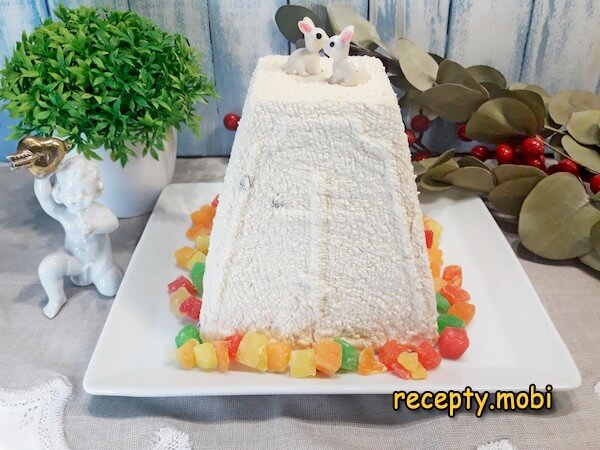
I turn the finished Easter out onto a plate, carefully take the mould apart and remove the cheesecloth. Decorated to your own taste, the cottage cheese Easter with condensed milk is set on the table for the bright feast of Easter together with kulich and dyed eggs.


Tips
- 1
BOILED CONDENSED MILK is the "secret" of the caramel flavour. Ordinary condensed milk is too sweet. Boiled condensed milk gives a deep caramel note and the characteristic colour of coffee with milk.
- 2
12 HOURS UNDER A WEIGHT is the "secret" of the shape. Any less and the Easter will spread. A full 12 hours give the ideal firmness, and it slices like cheese.
- 3
DRAINING THE WHEY is the "secret" of dryness. If the whey is left on the plate, the Easter soaks it back up from below. Drain it 2 to 3 times over the 12 hours.
- 4
TOASTING THE NUTS is the "secret" of the aroma. Raw nuts have no flavour. Toasted for 3 to 5 minutes in a dry pan, they are fragrant and crunch in the tender cottage cheese mixture. The same principle works in other kinds of cottage cheese Easter.
FAQ
How long do you boil condensed milk? +
Ideally 1.5 to 2 hours in a pot of water (the can must be completely covered). Alternatives: 30 minutes in a pressure cooker (faster), 3 to 4 hours over low heat (for the thickest consistency), or ready-made boiled condensed milk from the shop such as Alyonka or Glavprodukt (no boiling – the "budget" option), or condensed milk boiled at home in the oven (a glass jar, 1.5 hours at 180°C). The brands Rogachyov, Alekseyevsky and Glavprodukt are reliable. Fresh natural condensed milk is the "premium" option. Do not use condensed milk with vegetable fats (it will separate) or an out-of-date can (unsafe). For the "classic" version, a can of natural 8.5% condensed milk is a must.
Which nuts should you choose? +
Ideally walnuts (35 g – the "classic", they stand out clearly). Alternatives: hazelnuts (35 g – "premium", buttery), almonds (35 g – "premium"), cashews (35 g – "premium", mild), unsalted roasted peanuts (35 g – "budget", as suggested in the recipe), pine nuts (35 g – "premium"), pecans (35 g – "American premium"), or a nut mix (35 g – an interesting flavour). The brands Semushka, Sun Sun and Nevskie Orekhi are reliable. Fresh nuts in the shell are the "premium" option. Do not use salted nuts (they will throw off the sweetness) or nuts in caramel (too cloying). For the "classic cottage cheese Easter", unsalted toasted nuts are a must.
How long does Easter with condensed milk keep? +
In the refrigerator in a tightly closed container – 3 to 4 days. Any longer and the Easter loses its freshness and may develop a slightly sour taste. Before serving, let it stand for 15 minutes at room temperature so it becomes pliable. I don't recommend the freezer – the structure will separate. Fresh Easter is at its best after 12 hours of pressing (once it stabilises in the cold and the flavours come together). On the second day the flavour is deeper and brighter. Do not leave it at room temperature for longer than 4 hours – cottage cheese with dairy products spoils quickly. It is ideal to make it "for 1 to 2 days".
What do you serve Easter with condensed milk with? +
The classic at Easter: with Easter kulich and dyed eggs. With a cup of black tea with lemon. With a glass of Cahors (church wine). With a cold glass of milk. With a cup of coffee with milk. With fresh berries on top (strawberries, raspberries). With hot cocoa and marshmallows for children. With berry jam. With a glass of sweet Baileys liqueur. With a cup of cappuccino. With a cup of herbal tea with mint. With white dessert wine. For the Easter table it is a universal serving. A cottage cheese dessert with a caramel note for the bright feast of Easter.
- Comment
or post as a guest
Be the first to comment.