avg —
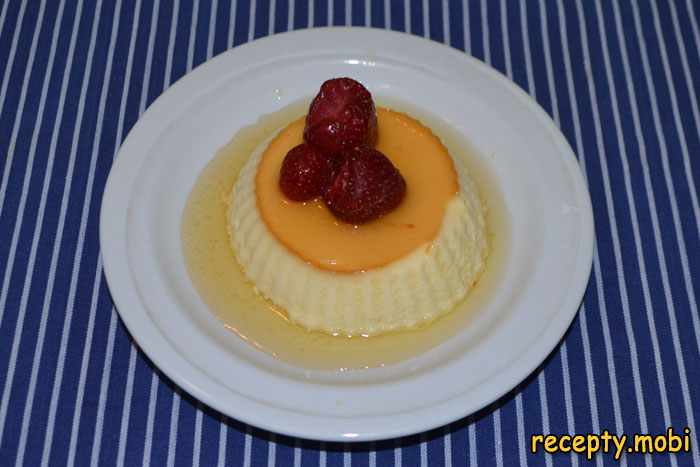
Classic Curd Easter

Instructions
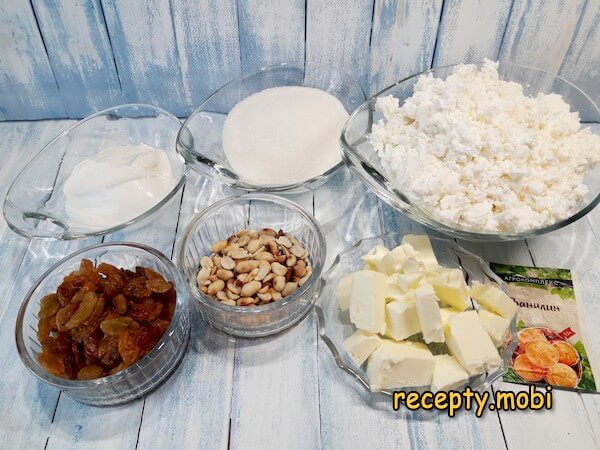
I get the ingredients ready. For this recipe you should not use cottage cheese with a fat content below 9%, though you can replace it with homemade. The butter should also be top quality at 82% fat, and you should take it out of the fridge ahead of time (about 30 minutes) so that it softens. As for the nuts, any will do – walnuts, peanuts or hazelnuts.
Straight away, pour boiling water over the raisins for 3 minutes to clean and soften them.

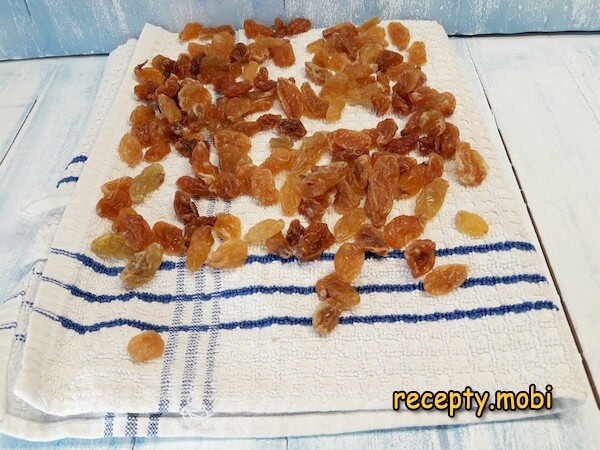
Then squeeze them out and dry them on a towel.
Add the sugar together with the vanillin to the sour cream. Stir.
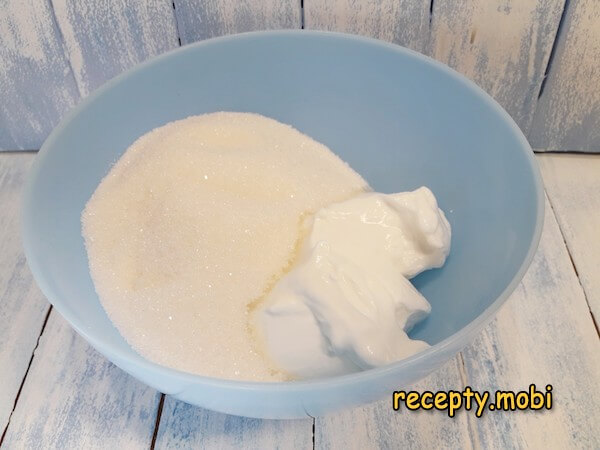
After about 5 minutes almost all the sugar will have dissolved, and any remaining granules will disperse later when you use the blender.

Now you need to turn the cottage cheese into a smooth paste. The easiest way is with a blender or a food chopper. If that is not an option, the old reliable method of rubbing the cottage cheese through a metal strainer will do.
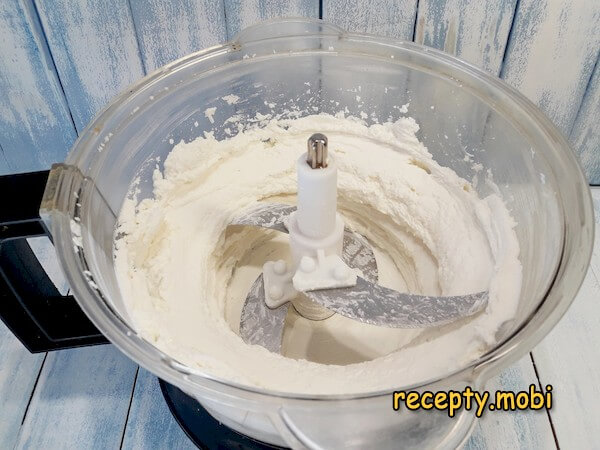
To the resulting mass I add the sweetened sour cream.
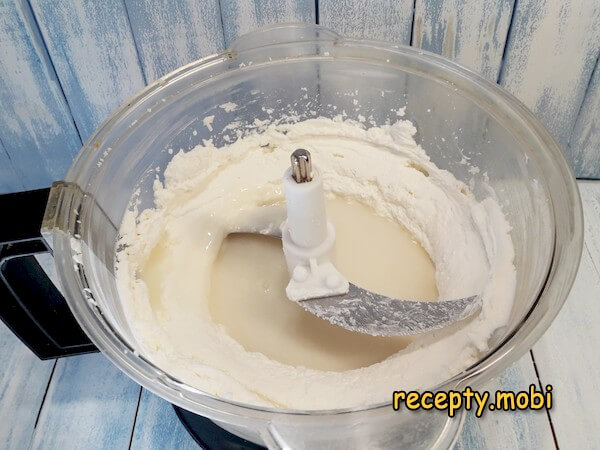
And along with it, the butter.
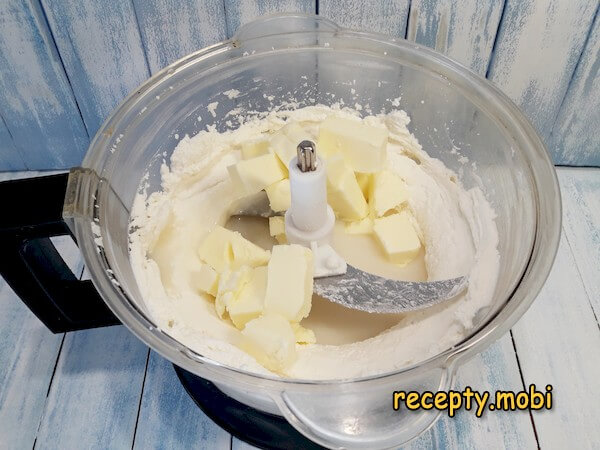
I beat everything again with the blender, or mix it by hand with a spatula. The result is a silky, uniform paste.
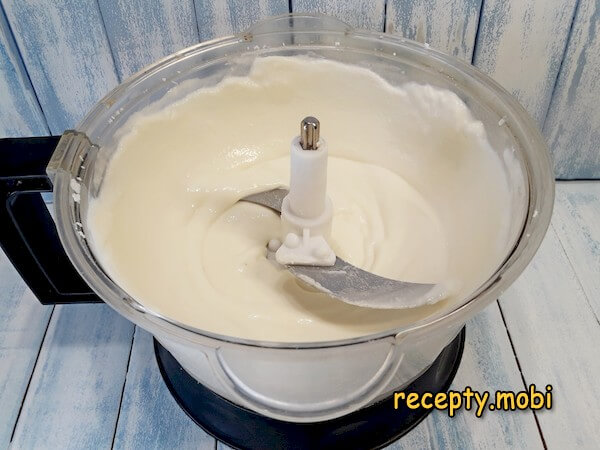
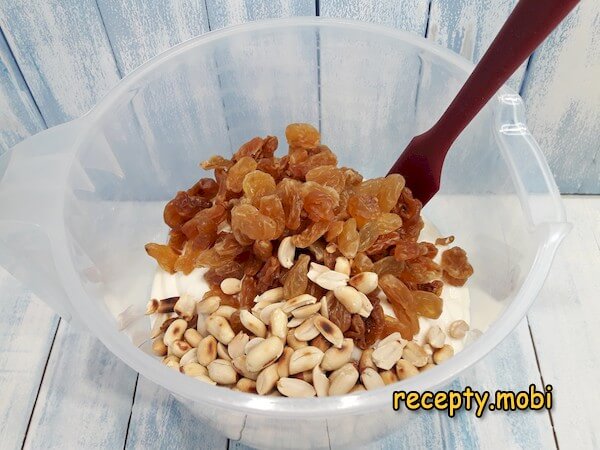
I transfer the mass to a deep bowl. I add the nuts and raisins. I mix so that they are evenly distributed throughout.
For the hemispherical strainer I choose a deep bowl whose diameter matches it.

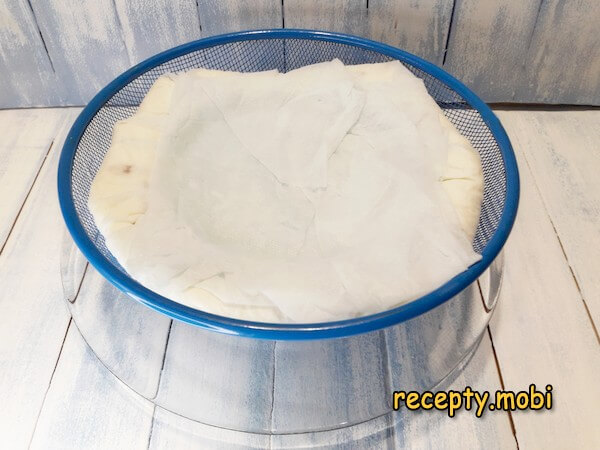
I set the strainer on the bowl. I scald the gauze with boiling water – this disinfects it, and while wet it is easier to shape as needed. I line the whole surface of the strainer with the gauze, leaving the ends hanging over.

I spoon the curd mass into the prepared container.
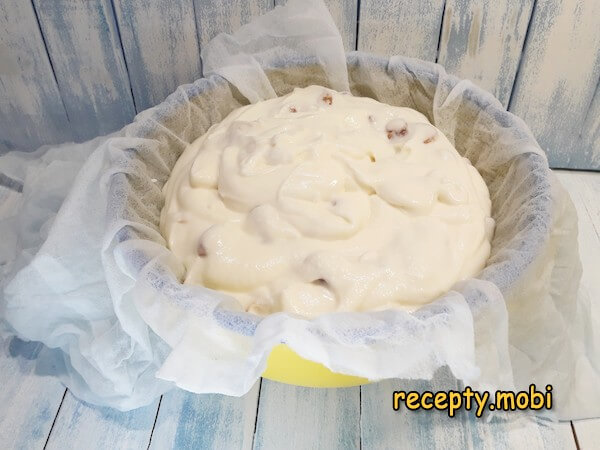
I fold the ends of the gauze over the top, smoothing them out carefully, and cover with a plate a little smaller in diameter than the strainer.
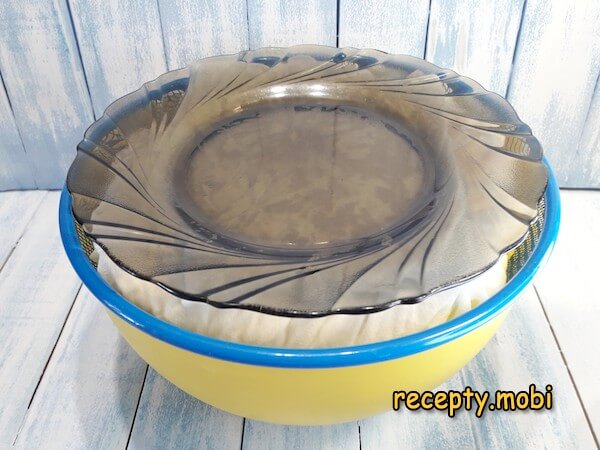
I set a weight on top – any stopper in a 1-litre jar will do. I leave the assembly on the table to compact for 4 hours, then move it all to the fridge for 8 hours.
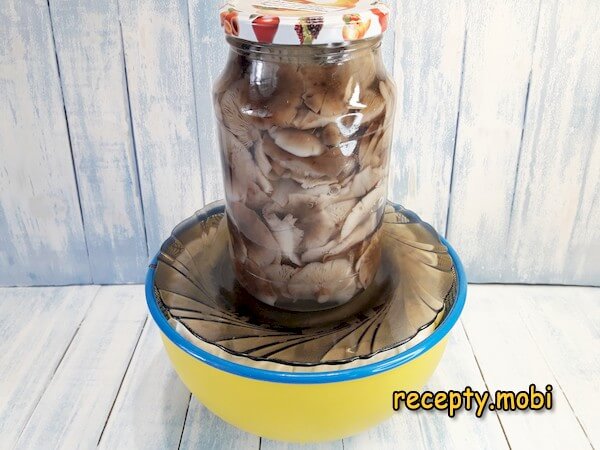
Once the stated time has passed, I remove the weight – the cottage cheese has settled and compacted considerably.
I drain off the whey that has formed (you can use it to make batter for pancakes).

I open out the gauze and turn the Easter cake out onto a dish.Classic curd Easter is decorated with nuts and Easter sprinkles. This delicious, dense mass is a wonderful alternative to kulich and vanishes from the table in the blink of an eye. What is more, it is not just beautiful and tasty, but wholesome too.



Tips
- 1
COTTAGE CHEESE FROM 9% FAT – the "secret" of the flavour. Low-fat cottage cheese gives a dry, bland Easter cake. From 9% you get a tender, creamy result with a rich flavour.
- 2
SCALD THE GAUZE WITH BOILING WATER – the "secret" of the shape. Dry gauze sticks out and wrinkles. Wet gauze hugs the strainer tightly and gives the Easter cake an even cone.
- 3
4 HOURS UNDER A WEIGHT + 8 IN THE COLD – the "secret" of firmness. Without a weight the Easter cake will spread when served. After 12 hours under pressure it holds its shape like a castle.
- 4
BLENDER OR STRAINER – the "secret" of smoothness. Grainy cottage cheese gives a "gritty" Easter cake. A blender or a strainer turns it into a silky paste. The same principle works in other kinds of curd desserts.
Video
FAQ
Which cottage cheese should I choose? +
Ideally, fresh cottage cheese at 9% fat (600 g gives a tender, creamy texture). Alternatives: homemade cottage cheese from milk (600 g – "premium"), 18% cottage cheese (600 g – richer, fuller), soft cottage cheese in a pack (600 g – convenient), grainy cottage cheese (600 g – needs to be pushed through a strainer), a 50/50 mix of 9% and 18% cottage cheese (300 g each – a "premium balance"), mascarpone plus cottage cheese 50/50 (300 g each – "premium creamy"). Fresh cottage cheese with a short shelf life is the "premium" choice. Do not use: low-fat (the paste turns out dry), out of date, or cottage cheese with fruit additions. For "classic curd Easter" it must be at least 9% fat.
What can replace the raisins? +
Alternatives: finely chopped dried apricots (100 g – "premium"), dried cranberries (100 g – slightly tart), assorted candied fruit (100 g – brighter), pitted dried cherries (100 g – "premium"), dried strawberries or raspberries (50 g – "premium"), a 50/50 mix of raisins and dried apricots (50 g each – "premium"), candied pineapple (100 g – "exotic"). Fresh, soft raisins are the "premium" choice. Do not use: hard old raisins (they will not soften) or candied fruit in a sugar glaze (too cloying). For a "classic Easter" it must be raisins or dried apricots.
How long does curd Easter keep? +
In the fridge, in a tightly closed container, 3–4 days. Any longer and the Easter cake loses its freshness, and the sour cream may separate. Before serving, let it stand for 15 minutes at room temperature so that it becomes pliable. I do not recommend the freezer – the structure will be completely destroyed. Fresh Easter cake is at its "star" best the night after pressing (once it has stabilised in the cold and the flavours have come together). On the second day the taste is deeper and brighter. Do not leave it at room temperature for longer than 4 hours – cottage cheese with dairy spoils quickly. It is ideal to make it "for 1–2 days".
What to serve curd Easter with? +
The Easter classic: with Easter kulich and dyed eggs. With a cup of black tea with lemon. With a glass of Cahors (church wine). With a glass of freshly squeezed grape juice. With a cup of coffee with milk. With fresh berries on top (strawberries, raspberries, blueberries). With hot cocoa and marshmallows for children. With berry preserves or jam. With a glass of sweet Baileys liqueur. With a cup of herbal tea with mint. With a white dessert wine (Moscato, Sauternes). For the Easter table it is a universal serving. The main curd dessert for Bright Easter.
- Comment
or post as a guest
Be the first to comment.