avg —
Chia Seed and Walnut Pudding

Instructions
I shell the walnuts (200 g) and carefully remove all the brown partitions between the kernels – they make the finished milk bitter. The quality of the nuts is crucial for the taste of the milk: use fresh shelled kernels with no signs of rancidity. Old nuts will give an unpleasant, bitter milk.
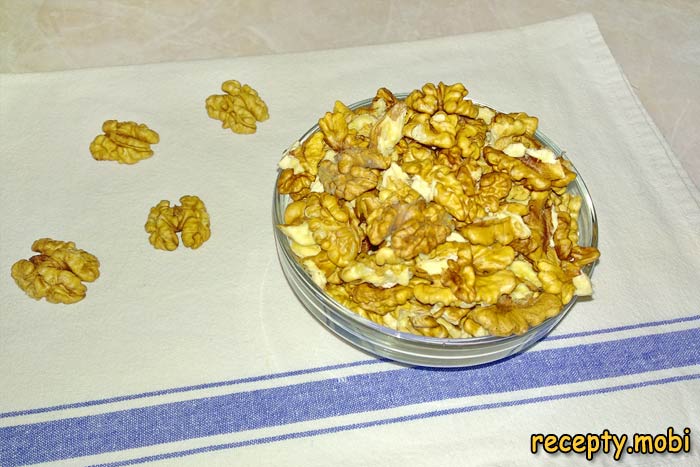
I cover the shelled walnuts with clean cold water so that the water covers them completely by 2–3 cm. Soaking helps "open up" the nuts – they release more oil and flavour into the milk, and it also reduces phytic acid, which interferes with mineral absorption.
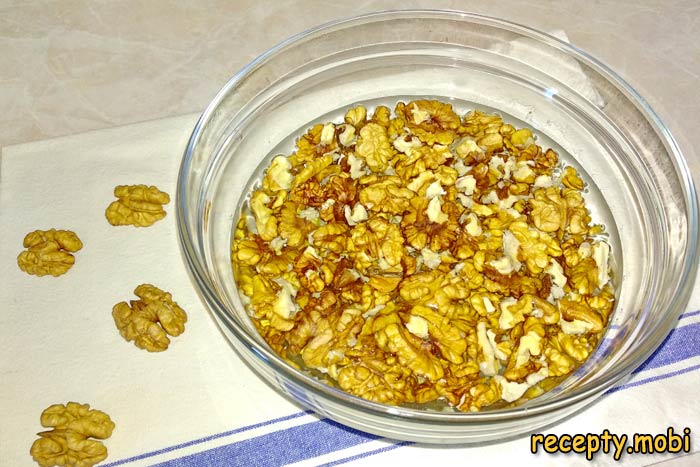
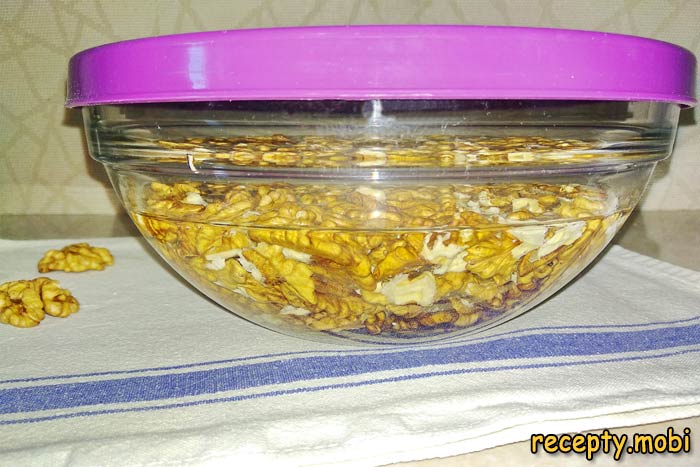
I cover the bowl of nuts with a lid or cling film and leave them for 4–6 hours, or overnight (8–10 hours), at room temperature. A long soak is the key to rich nut milk. Without soaking, the nuts will not release all their aromas and oils, and the milk will be thin and bland.
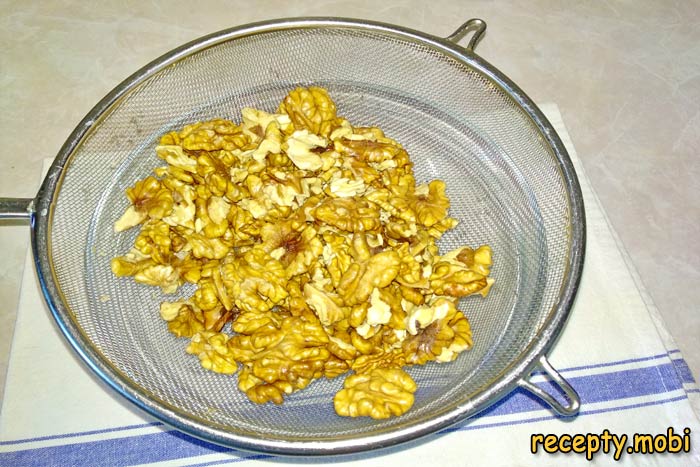
After soaking, I rinse the nuts thoroughly under cold running water, washing away the cloudy water from the soaked nuts. I tip them into a colander to let the water drain. Rinsing is essential – dirty water gives the milk an unpleasant, musty aftertaste.
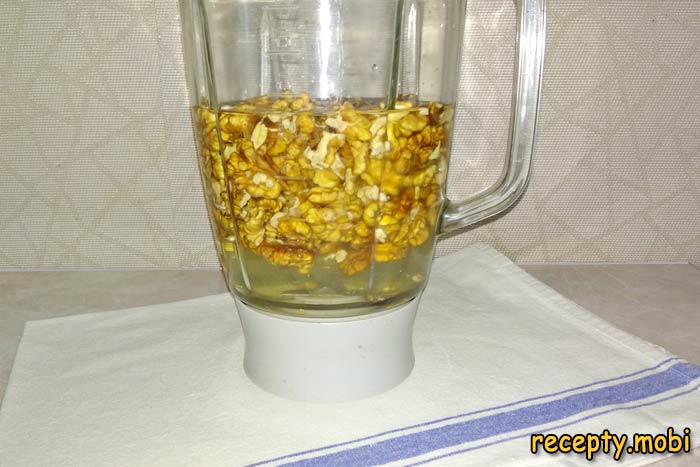
I transfer the rinsed nuts into the bowl of a powerful blender and pour in fresh clean drinking water (600 ml). I use a proper high-powered blender (not a hand blender) – it grinds the dense nut kernels to a complete smoothness much better. A weak blender will leave large pieces.
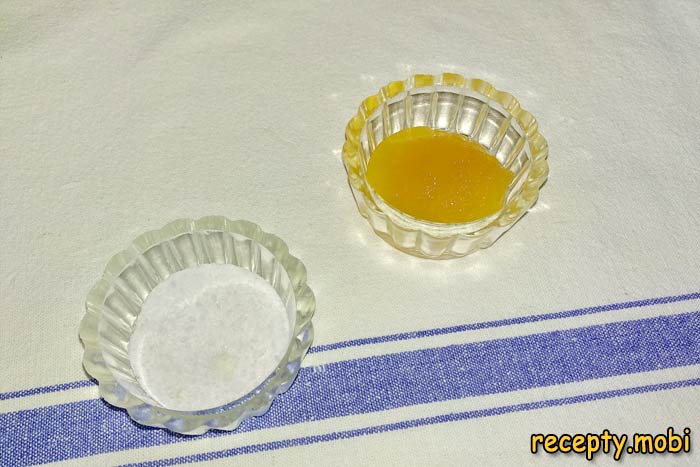
I add a pinch of salt (it balances the sweetness) and honey (2 tbsp) for natural sweetness. Salt brings out the nutty flavour – without it the milk tastes flat. Honey adds a gentle sweetness; it can be swapped for maple syrup, agave syrup for vegans, or date syrup.
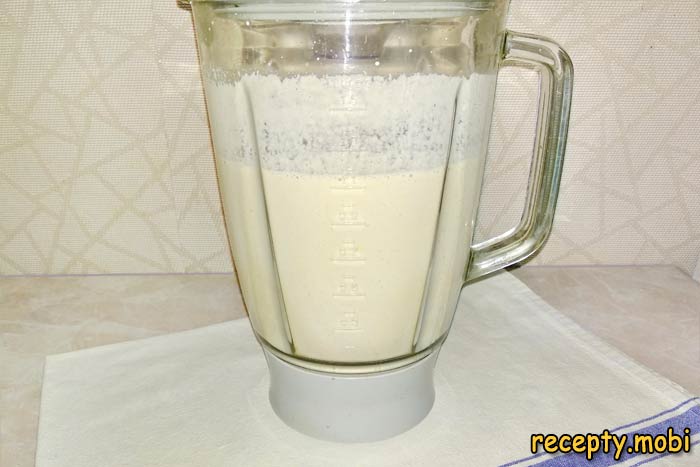
I switch the blender to maximum speed and blend for 4–5 minutes until I get a smooth white "milk". Longer blending gives a smoother milk without large particles. Do not exceed 5 minutes – the blender may overheat.
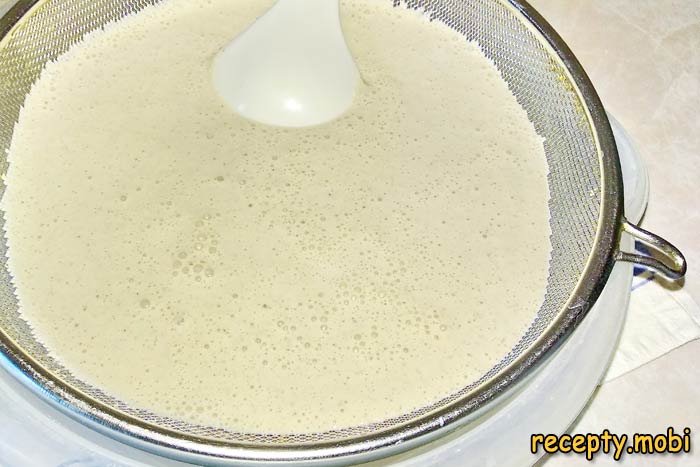
I strain the finished milk through a fine sieve into a clean large bowl, removing the larger pieces. The sieve takes out the coarse particles, but the fine ones still remain – a second filtering through cheesecloth is needed. Without straining, the milk will be paste-like rather than milky.
I additionally press the milk through cheesecloth folded in 4 layers into a clean jar. Do not throw away the leftover pulp – use it in baking (biscuits, muffins, cakes), porridges and granolas. The ideal milk comes from this second straining – without pressing through cheesecloth the milk will have sediment.
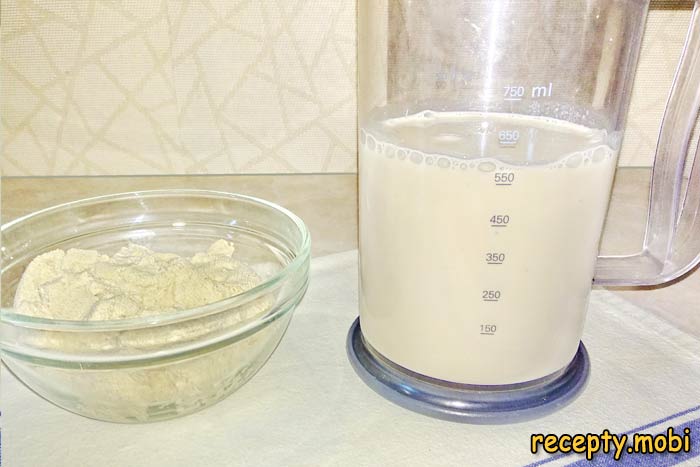
I pour the finished nut milk into a glass jar and add the chia seeds (4 tbsp). The classic ratio is 1 tbsp of chia per 100–150 ml of milk for a pudding consistency. Less, and it will be a runny "puree"; more, and it will be too dense a "gel".
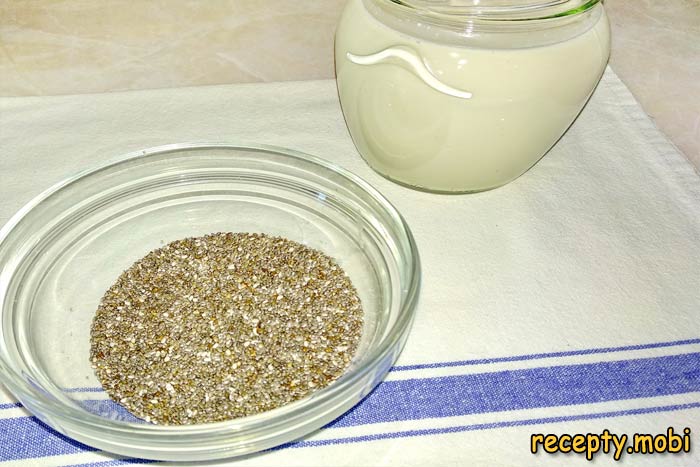
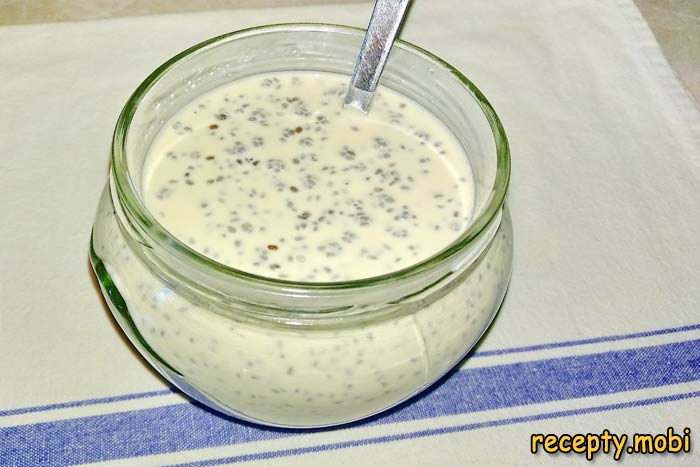
I close the jar with a lid and shake it vigorously for 30–40 seconds to distribute the seeds throughout the milk. After 20 minutes the mixture will start to thicken (the chia swells) – stir again to prevent lumps. I leave it in the fridge for at least 2 hours, ideally overnight (8–10 hours), for the seeds to swell completely.
I prepare the fruit for serving: I peel the kiwi (1 pc) and cut it into 5 mm rounds. I rinse and pat dry the raspberries (100 g). I peel the mango (1/2 pc) and cut it into cubes, or blend it into a puree. Fresh berries and fruit are the "cherry on top" of the dessert.
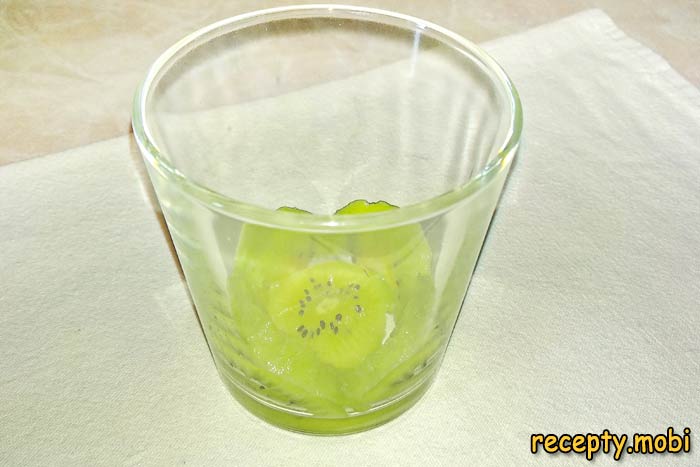
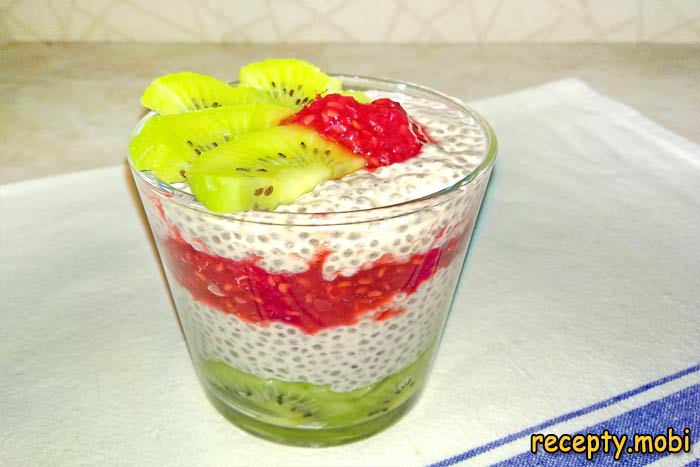
I assemble the pudding in a tall clear glass in layers: kiwi slices on the bottom, a layer of chia pudding on top, then a layer of raspberries. A clear glass lets you see the beautiful layers – a "restaurant" presentation with no special effort. A standard glass, a martini glass or a wine glass all work well.
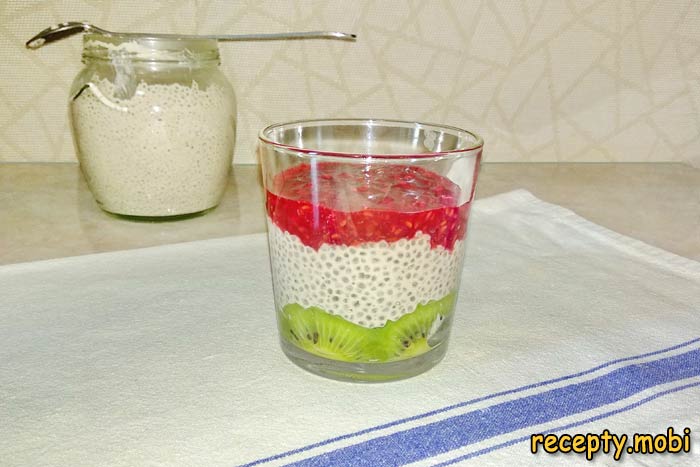
I fill the glass with the remaining pudding, leaving room for the final decoration on top. I garnish with whole raspberries, kiwi slices and mint leaves for a "green" note. You can sprinkle over desiccated coconut, cocoa or chopped nuts for extra texture.
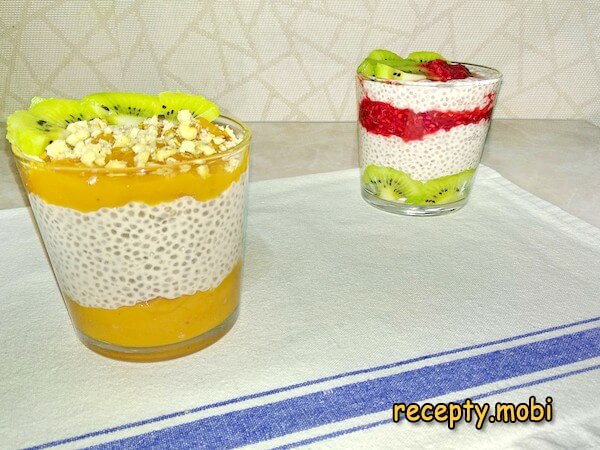
The finishing touch – I serve it with bright mango puree (as a sauce) and a scattering of walnut pieces on top for contrast. The chia seed pudding on nut milk is ready! It is a perfect healthy breakfast or diet dessert – it keeps you full for a long time, prevents spikes in blood sugar and is rich in omega-3.


Tips
- 1
The nut milk can be replaced with ready-made plant milk (almond, coconut, oat) or cow's milk – the proportions with chia stay the same.
- 2
Do not throw away the nut pulp – use it in cupcakes, biscuits, granolas and porridges. It still contains fibre and protein.
- 3
Experiment with seasonal fruit: in summer – strawberries, raspberries, blueberries; in autumn – apples, pears; in winter – tangerines, mango. I make homemade granola on a similar principle.
- 4
For more sweetness, add honey (1 tsp), maple or agave syrup, or mashed dates – natural sweeteners instead of sugar.
FAQ
How long should chia be steeped? +
At least 2 hours in the fridge for a basic pudding consistency, ideally overnight (8–10 hours) for maximum swelling of the seeds and a dense, jelly-like texture. In the first 20 minutes the seeds absorb about 30% of the liquid, in 2 hours – 70%, and in 8 hours – 100%. The longer the steeping, the more "pudding-like" the consistency. During the first 10 minutes be sure to stir 2–3 times – chia tends to stick together into lumps. If you leave it without stirring, you will get large "jelly balls" instead of an even pudding.
Is chia pudding suitable for vegans? +
Yes, with the right choice of ingredients it is a fully plant-based dessert with no products of animal origin. Use plant milk (nut, coconut, oat, almond) and replace honey with agave or maple syrup. Chia seeds are a superfood and a plant source of omega-3, calcium and protein. The pudding is ideal for vegans, vegetarians, those fasting, and people with lactose intolerance or a milk allergy. It also suits the paleo diet, the ketogenic diet (without sweeteners) and a raw-food diet.
How long does the finished pudding keep? +
Chia pudding without fresh fruit keeps in the fridge for up to 3–5 days in a tightly closed glass jar. With fruit – a maximum of 1 day, otherwise the fruit will go off and spoil the taste of the dessert. It is ideal to make the pudding "base" in advance (for 3–5 days) and add the fruit before each serving. Do not freeze it – when thawed, the chia texture breaks down and the pudding becomes watery. You can make it in individual jars for convenient storage and serving – "meal prep" for the whole working week.
What are the health benefits of chia seeds? +
Chia seeds are a superfood with an impressive composition: omega-3 fatty acids (more than in salmon per 100 g), calcium (5 times more than milk), magnesium, iron, zinc and antioxidants. Their high fibre content (28 g per 100 g of seeds) improves digestion, cleanses the gut and gives a lasting feeling of fullness. They help with weight control – they absorb water in the stomach and "trick" hunger. They lower blood sugar and support the cardiovascular system. They are an ideal product for healthy eating, athletes and those losing weight. The daily portion is 2 tbsp (28 g).
- Comment
or post as a guest
Be the first to comment.