avg —
Jelly from juice with gelatin

Instructions
I prepare the ingredients for the jelly from juice with gelatin. Instant gelatin can be replaced with regular gelatin, but it will take a little longer to swell – about 10–15 minutes more at each stage.
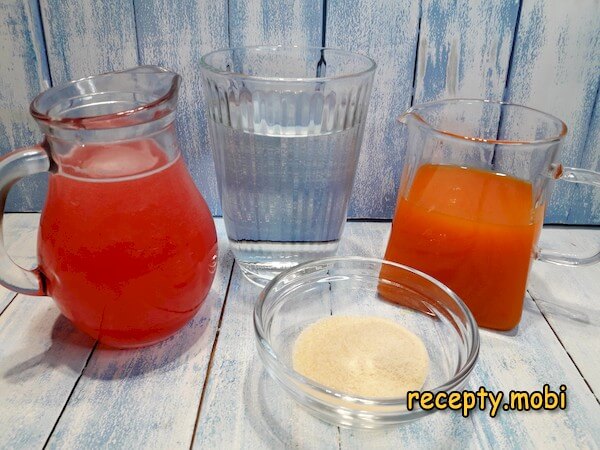
I stir one tablespoon of gelatin into 75–100 millilitres of water and leave it to swell – cold water is exactly what is needed for proper swelling, as in hot water the gelatin would immediately curdle into lumps.
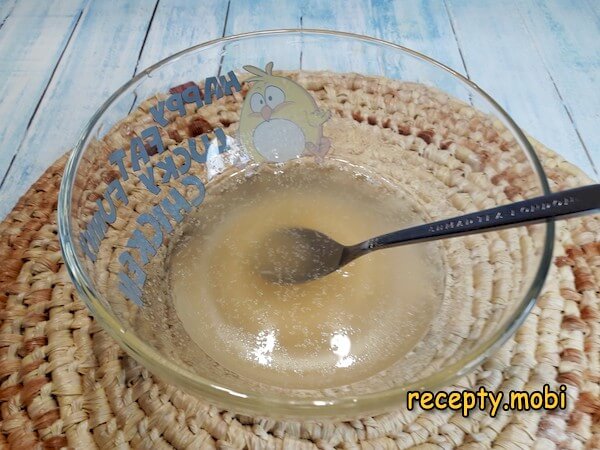
After about 10 minutes instant gelatin will absorb all the liquid, while regular gelatin takes about 20 minutes. Once fully swollen, it becomes a dense, jelly-like mass ready for heating.
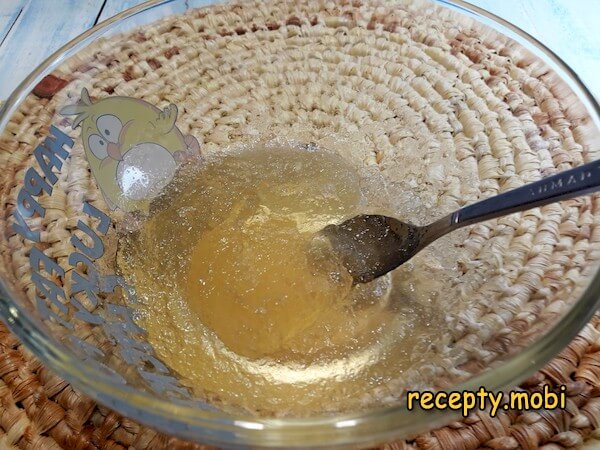
In short bursts (20 seconds each) I heat the gelatin in the microwave until it turns liquid. You can also do this over a water bath. I make sure the solution does not come to the boil – boiling destroys the gelling properties of the protein. Then I pour the resulting hot liquid into the strawberry juice and stir.
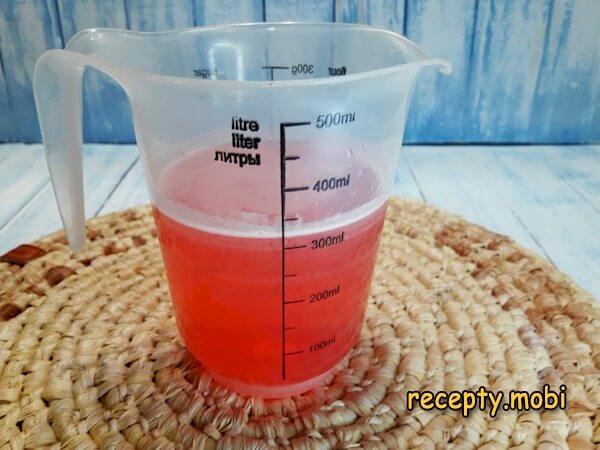
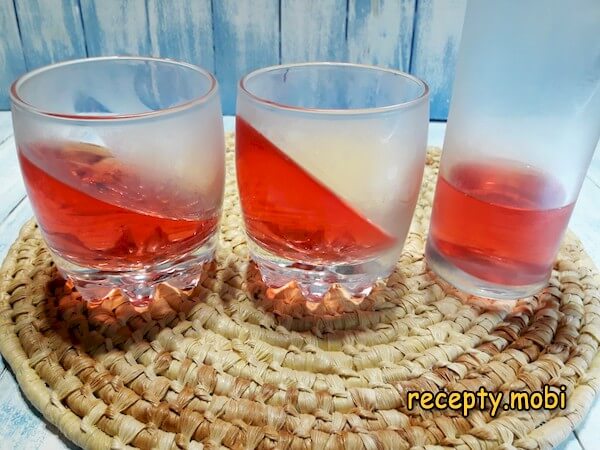
Now the strawberry mixture needs to be poured into clear glasses, which for effect I fix at a tilt so that the jelly sets at an angle – this is the "secret" trick for an impressive diagonal presentation. I carefully transfer the whole arrangement to the fridge.
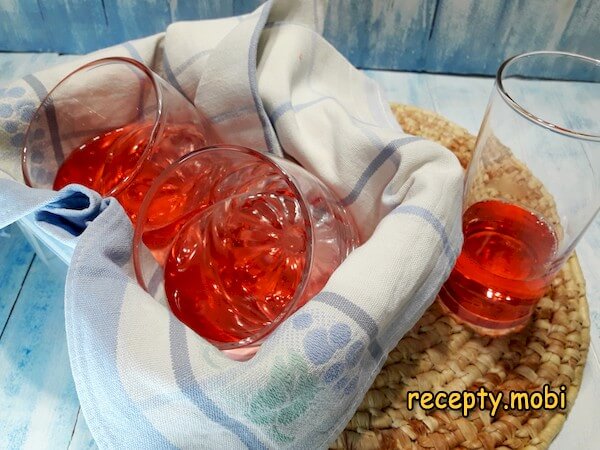
After about 45 minutes the strawberry jelly stabilises and the glasses can be set on a flat surface. The gelatin sets completely, and you can pour in the second layer.
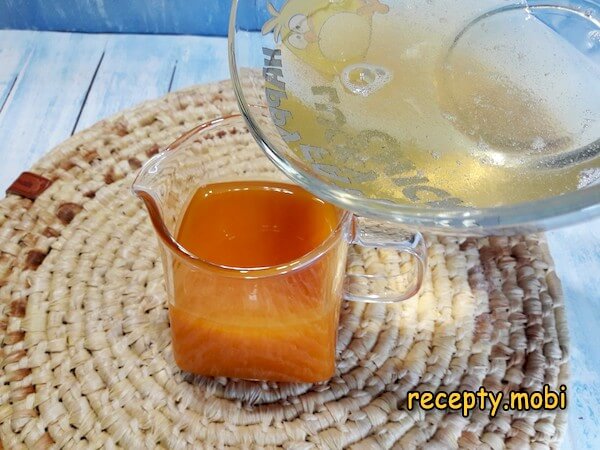
In exactly the same way I dissolve the remaining gelatin in water and, once it has swollen, heat it in the microwave or over a water bath. I pour the hot gelatin solution into the pumpkin juice and stir – the same technique for the second colour.
I pour the orange juice into the 3 glasses and put them back in the fridge – now the glasses stand upright, and the second layer will be horizontal, complementing the diagonal lower layer.
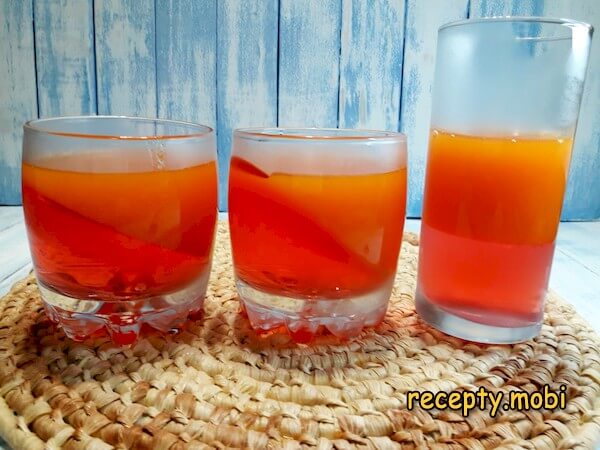
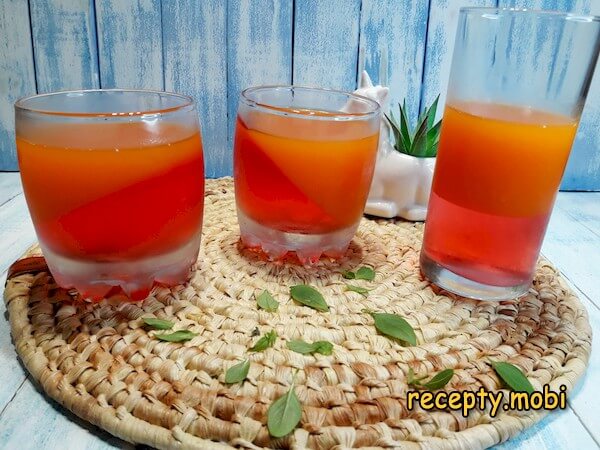
After 45 minutes the jelly is completely ready – two contrasting colour layers in one glass look like a little dessert masterpiece.Two-layer jelly from juice with gelatin wins you over with its rich flavour. This proper dessert is wonderfully refreshing and quenches thirst. It can be multi-layered or made from just a single kind of jelly – it all depends on your personal preference.


Tips
- 1
COLD WATER FOR THE GELATIN – the "secret" against lumps. In hot water the gelatin will curdle into lumps and fail to dissolve, leaving the dessert with unpleasant "grains" in its texture. Only cold water gives proper swelling – the gelatin absorbs it evenly and forms a pliable, jelly-like mass. After swelling you can heat it, but carefully, without boiling.
- 2
THE TILTED POUR – the "secret" of an impressive presentation. Straight horizontal layers make ordinary jelly, just like everyone else's. Pouring the first layer into tilted glasses gives that signature "diagonal" effect that turns a simple dessert into a restaurant-style presentation. I fix the glasses in a special stand or prop rolled-up towels under one side.
- 3
COLOUR VARIATIONS – the "secret" of an artistic presentation. Using this technique you can make a multi-layer jelly from any juices. Contrasting pairs: green (kiwi) + yellow (pineapple), red (cherry) + white (cream and milk), pink (raspberry) + creamy (banana). Following the principle of strawberry soufflé with gelatin, you can add a "cloud" of whipped cream between the layers.
- 4
FROM JUICE TO A PREMIUM DESSERT – the "secret" of the Italian style. Using the same gelatin technique you can make the Italian dessert panna cotta – instead of juice you use cream with vanilla. The same principle of swelling and heating the gelatin, the same chilling in the fridge – a premium-level result of Italian cuisine.
FAQ
How much gelatin do you need per 1 litre of juice? +
The standard ratio for classic "wobbly" jelly is 25–30 g of powdered gelatin per 1 litre of juice. In my recipe there are 2 tablespoons (≈ 30 g) per 500 ml of juice + 200 ml of water – this concentration gives a firmer jelly that holds its shape well with the tilted pour. For a softer, "trembling" jelly use 20 g per litre. For a very firm "sliceable" jelly use 40 g. With sheet gelatin: 6 sheets = 1 tablespoon of powder, so 12 sheets per litre is the standard ratio.
Which juice is suitable for jelly? +
Any natural juice without preservatives. The best ones are strawberry, cherry, raspberry, grape and pomegranate – they give a bright colour and a rich flavour. Vegetable juices also work: pumpkin, carrot and tomato (for a savoury version). Not suitable: fresh pineapple, kiwi and papaya juice – they contain the enzyme bromelain, which breaks down gelatin. If you really want these juices, you first need to boil them for 5 minutes to deactivate the enzyme, and only then add the gelatin.
How long does jelly from juice keep? +
In the fridge, covered with cling film or in an airtight container, it keeps for up to 5 days without losing flavour or texture. On the second day the flavour becomes even richer – the ingredients have time to "settle". Signs of spoilage: a liquid fraction separating from the firm one (it splits), wateriness, an unpleasant smell – I throw such jelly away. Jelly cannot be frozen – after thawing the structure is completely destroyed and the jelly turns into a watery mass. You can only freeze finished jelly as an ingredient for smoothies or cocktails.
What do you serve jelly from juice with? +
It is a versatile light dessert. The classic way to serve it is in clear glasses with a long spoon. Garnishes: a mint leaf, a berry matching the juice (strawberry jelly with fresh strawberries on top), icing sugar, a handful of muesli or granola for a contrast of textures. As additions: vanilla or whipped cream on top, desiccated coconut, basil leaves. For a children's party: moulds shaped like stars, flowers or animals – the jelly is cut into shapes and served on a plate. With drinks: compotes, fruit drinks, a light white wine or champagne for a celebration.
- Comment
or post as a guest
Be the first to comment.