avg —
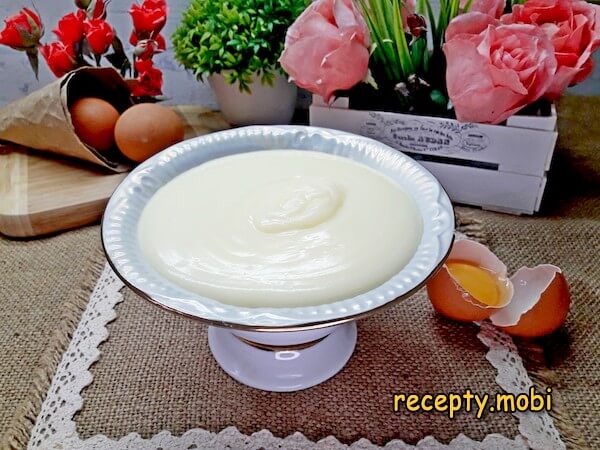
Custard Cream for Napoleon

Instructions
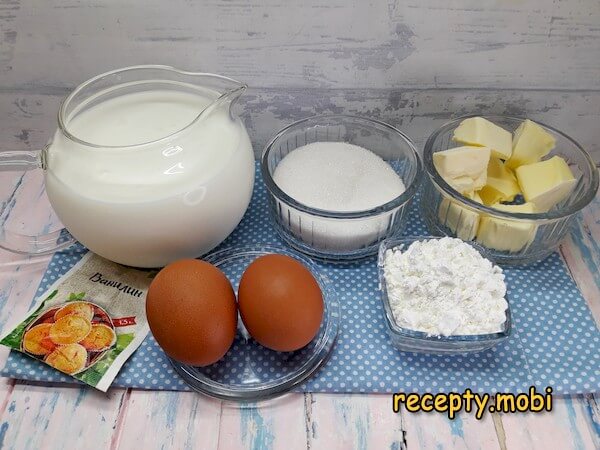
I get ready the listed ingredients for making the custard cream for Napoleon.
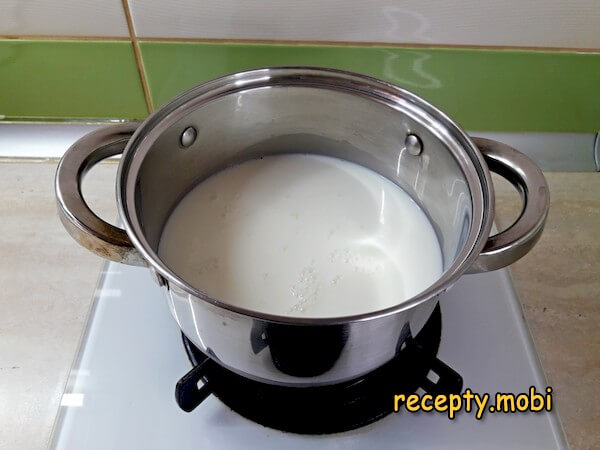
I pour the milk into a saucepan and set it over low heat. It needs to be brought to a very hot state, but not to a boil.
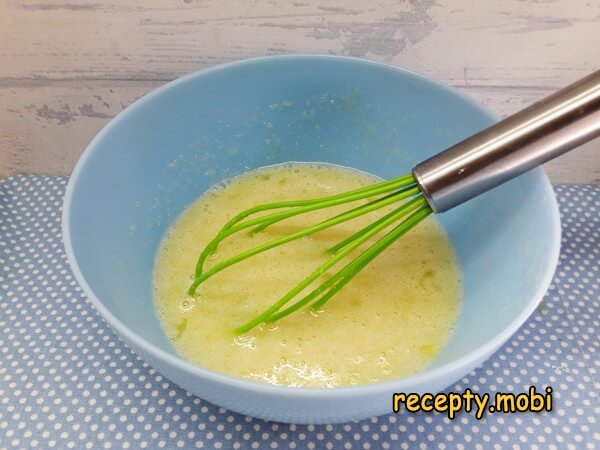
In a separate bowl I combine the eggs with the sugar and vanillin. There is no need to whip them; you only have to bring these ingredients together.
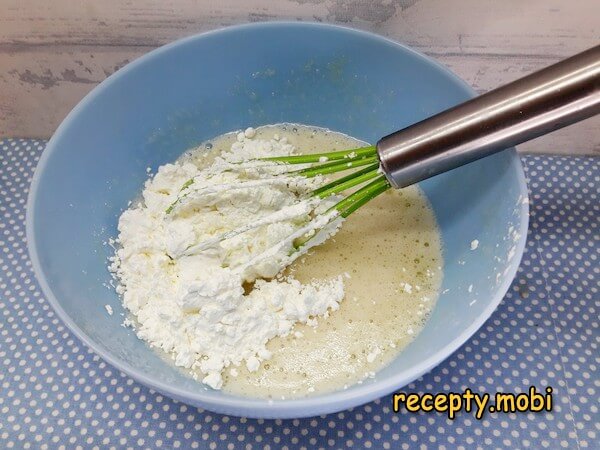
I add the starch here too and stir so that no lumps are left (with starch this is very easy to do).
I pour part of the hot milk (about 100 millilitres) into the egg mixture, stirring it constantly all the while so that the eggs do not curdle.
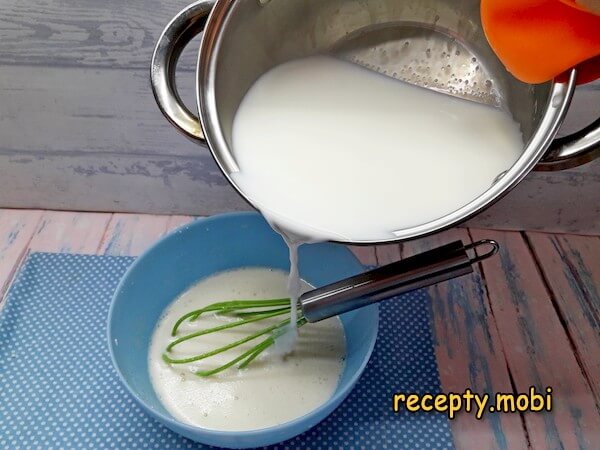
Next I return the saucepan with the remaining milk to medium heat and pour in the egg mixture in a thin ribbon. While doing this I make sure to swirl the milk with a whisk so that not even small lumps form in the mixture.
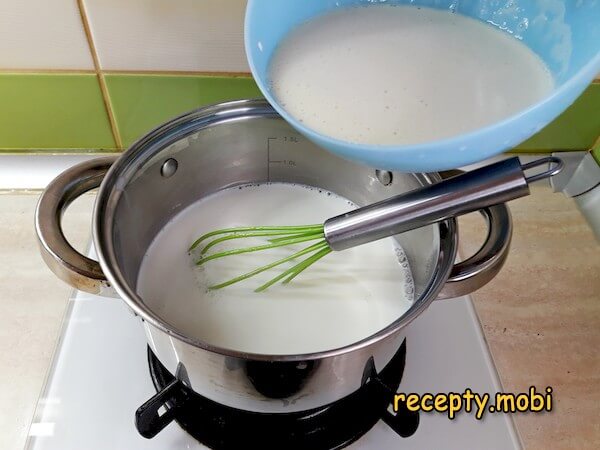
Without stopping the whisk for even a second, I bring the mass to a boil and cook it over very low heat for another 1–2 minutes (this time depends on the thickness you want for the cream – the longer it cooks, the thicker its texture becomes). For spreading on a Napoleon you don't need a very thick cream, so the time given is enough.
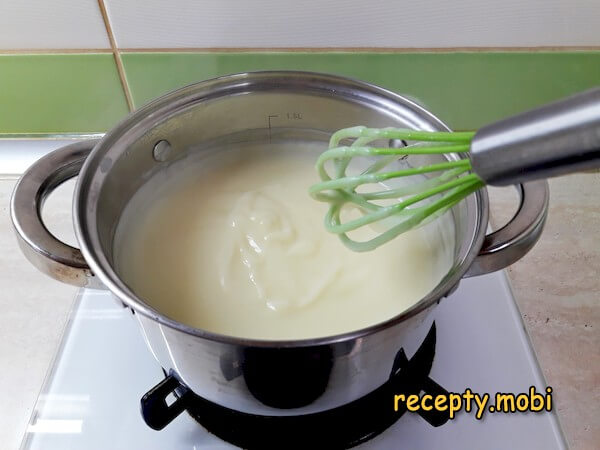
I take the saucepan off the heat and immediately add the butter in portions. I stir well and add the next portion of butter. With each addition the cream becomes smoother and silkier.
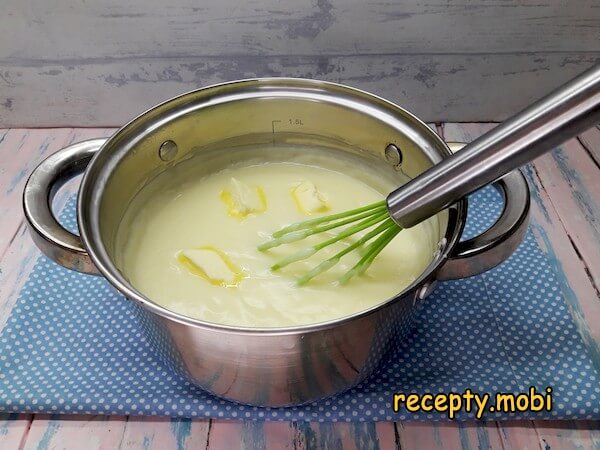
If the custard cream for Napoleon is not going to be used right away, it needs to be covered with cling film in direct contact so that droplets of condensation do not form. I wait for it to cool and move the batch to the refrigerator, where it can stand for a couple of days. If the layers are already prepared, you can spread them with the hot cream straight away.


Tips
- 1
DO NOT BOIL THE MILK – the "secret" of smoothness. Boiling water curdles the eggs at once. Very hot (but not boiling) milk keeps the eggs from going grainy.
- 2
TEMPERING THE EGGS – the "secret" against curdling. First add 100 ml of hot milk to the eggs in a thin stream, stirring constantly. Then pour everything into the saucepan – the eggs will not scramble.
- 3
BUTTER IN PORTIONS – the "secret" of silkiness. All the butter at once and it will separate, with flakes appearing. Added in portions of 30–40 g, stirring as you go, the cream becomes glossy.
- 4
CLING FILM IN CONTACT – the "secret" against a skin on top. Without it, a "crust" forms on the cooled cream. Clear film right on the cream keeps the surface smooth. The same principle works with other kinds of cake creams.
Video
FAQ
Which milk should I choose? +
Ideally – whole milk 2.5% or 3.2% (570 ml – a more delicate cream). Alternatives: rich milk 3.2–3.5% (570 ml – "premium"), a 50/50 mix of 2.5% milk and 10% cream (285 ml each – "more velvety"), baked milk (570 ml – a "rustic" option with a caramel note), coconut milk (570 ml – "vegan"), lactose-free milk (570 ml – for those with allergies). Trusted brands include Prostokvashino, Domik v Derevne and Parmalat. Fresh milk with a short shelf life is the "premium" choice. Do not use: skimmed milk (the cream will be watery) or milk with vegetable additives (it will curdle). For the "classic Napoleon" a fat content from 2.5% is a must.
What can replace corn starch? +
Alternatives: potato starch (40 g – a little coarser, but it works), premium wheat flour (50 g – the "budget" option, a denser cream), unflavoured pudding mix (40 g – convenient, "premium"), a 50/50 mix of starches (20 g each – "premium"), rice starch (40 g – "premium"), tapioca starch (40 g – the most "elastic"). Trusted brands include Garnets, S. Pudov and Mistral. Fresh starch in sealed packaging is the "premium" choice. Do not use: modified "instant" starch (it will disrupt the boiling) or gelatine (the cream will set like jelly). For the "classic Napoleon" corn or potato starch is a must.
How long does the cream keep? +
In the refrigerator in a tightly closed container under cling film in contact – 2–3 days. Any longer and the egg base oxidises, giving a slightly sour taste. Before using, let it stand for 15–20 minutes at room temperature so that it becomes pliable. If the cream has thickened in the cold, beat it lightly with a mixer for 30 seconds. I don't recommend the freezer – the texture will separate on thawing. Fresh cream is at its "star" best 2–3 hours after cooling (once it has "settled" in the cold). Do not leave it at room temperature for longer than 4 hours – eggs with milk spoil quickly.
What to serve with custard cream? +
A classic for baking: as a layer in Napoleon cake. For éclairs and choux profiteroles. For a tart with fruit (strawberries, raspberries, kiwi on top). For "Choux" and "Saint-Honoré" pastries. As a dessert on its own in glasses with savoiardi biscuits. For crêpe cakes as a layer. For trifles with berries and sponge. As a sauce for fruit (pears, peaches). As a layer in sponge cake. For tartlets with fruit. With fresh croissants and buns. A universal pastry cream for home baking.
- Comment
or post as a guest
Be the first to comment.