Starch substitutes: 11 options with proportions
As a thickener, starch is easy to replace with flour (you need twice as much), semolina, maize or rice flour, and for wobbly desserts, with gelatine, agar or pectin. In rissoles and syrniki, the binding job is taken over by semolina, soaked bread, ground oats, egg or grated potato. The main rule: first decide whether you need to thicken a liquid or bind a mixture, and follow the proportions precisely, otherwise the dish will come out runny or, on the contrary, too dense.
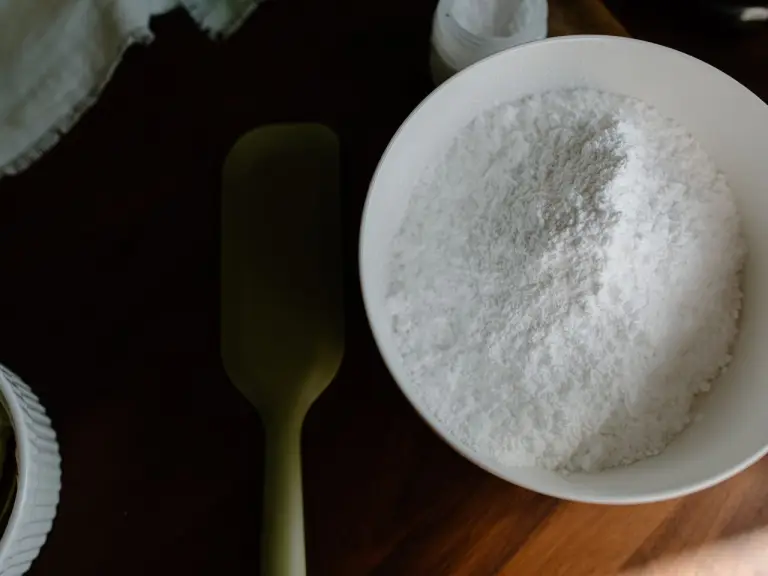
Starch substitutes: proportions and uses
| Substitute | Proportion instead of starch | Best for | Note |
|---|---|---|---|
| Wheat flour | 2 tbsp per 1 tbsp | Sauces, gravies, kissels | Clouds it, simmer 3-5 min |
| Semolina | 1.5 tbsp per 1 tbsp | Kissels, syrniki, rissoles | Let it swell, slight graininess |
| Maize flour | 2 tbsp per 1 tbsp | Sauces, kissels, gluten-free | Soft corn note |
| Rice flour | 2 tbsp per 1 tbsp | Kissels, Asian sauces | Clearer than flour, gluten-free |
| Oat flour | 2 tbsp per 1 tbsp | Rissoles, syrniki, kissels | Nutty taste, fibre |
| Egg | 1 egg per 250 ml or 500 g mince | Custards, rissoles, bakes | Do not boil, it will curdle |
| Gelatine | 15-20 g per 1 l | Jellies, soufflés, aspic | Cold dishes only, do not boil |
| Agar-agar | 4 g per 500 ml | Jellies, jelly sweets, marshmallow | Boil it, sets even when warm |
| Pectin | 5-10 g per batch | Jams, berry jellies | Needs sugar and acid |
| Xanthan gum | 0.5 tsp per 500 ml | Sauces, smoothies, gluten-free | Thickens without cooking, easy to overdo |
Starch substitutes: 12 working options with proportions
1. Wheat flour
The most accessible substitute for sauces, gravies and kissels. Flour thickens more weakly than starch, so you use roughly twice as much. The finished dish turns out matte and slightly cloudy rather than clear, but the flavour is soft and familiar. Be sure to simmer the mixture so the raw floury taste disappears.
- Proportion: 2 tbsp flour instead of 1 tbsp starch
- Mix into 50-100 ml cold water or milk, pour into the hot liquid in a thin stream while stirring
- Simmer for 3-5 minutes after it comes to the boil
- Ideal for white sauce (béchamel) and gravy, not for clear jelly
Recipe: Gravy for rissoles with tomato paste.
2. Semolina
Semolina works equally well both as a thickener (kissels, bakes) and as a binder (syrniki, rissoles). It absorbs moisture and gives a dense, slightly grainy texture. The main rule: let the semolina swell, otherwise the grains will stay hard to the bite.
- As a thickener: 1.5 tbsp semolina instead of 1 tbsp starch
- For syrniki: 1-2 tbsp semolina per 400-500 g curd cheese instead of starch
- Let it swell for 10-15 minutes in the liquid or in the curd cheese
- Not suitable for clear sauces and kissels
Recipe: Curd cheese syrniki with semolina and raisins.
3. Maize flour
Maize flour is finer than wheat flour and gives a more delicate texture with a light corn note. It is gluten-free and suits sauces, kissels and gluten-free baking. It thickens more gently than starch, so you use roughly twice as much.
- Proportion: 2 tbsp maize flour instead of 1 tbsp starch
- Mix into cold liquid, simmer for 3-5 minutes
- Good for gluten-free sauces and creams
- Gives a creamy, slightly yellowish tint
4. Rice flour
Rice flour is gluten-free and sets almost clear, which is why it is valued in Asian cooking and in kissels. It gives a light, smooth texture with no pronounced taste. If you have no ready-made flour, you can grind rice in a coffee grinder.
- Proportion: 2 tbsp rice flour instead of 1 tbsp starch
- Perfect for milk and fruit kissels
- Clearer and more neutral than wheat flour
- Thickens gently, let the dish come to the boil and cool slightly
Recipe: Gluten-free rice milk kissel.
5. Oat flour or ground oats
Ground oats replace starch both as a thickener and as a binder in rissoles and syrniki. They add fibre and a light nutty taste. For rissoles it is also a way to make them juicier and softer.
- As a thickener: 2 tbsp oat flour instead of 1 tbsp starch
- For rissoles: 2-3 tbsp ground oats per 500 g mince
- Let it swell for 10-15 minutes
- Not suitable for clear desserts and sauces
Recipe: Beef rissoles for children.
6. Egg
Egg binds and thickens thanks to the protein that coagulates when heated. It is the classic thickener for custards and a binder for rissoles, syrniki and bakes. The key limitation: the egg mixture must not be brought to the boil, otherwise it will curdle into flakes.
- Custard thickener: 1-2 yolks per 250 ml milk
- Binder for mince: 1 egg per 500 g
- Temper it: pour a little hot liquid into the egg, then return it to the pan
- Heat to 75-80°C, do not boil
Recipe: Custard for a Napoleon cake.
7. Gelatine
Gelatine replaces starch where you need a springy, wobbly texture: jellies, soufflés, cold desserts, aspic. It is not a thickener for hot sauces but a gelling agent that works only after cooling. It is of animal origin.
- Proportion: 15-20 g per 1 l for a delicate jelly, 25-30 g for a firm one
- Soak in cold water for 30-60 minutes (instant type as per instructions)
- Dissolve at 60-80°C, absolutely do not boil
- Sets only in the fridge over 3-6 hours
Recipe: Classic panna cotta recipe.
8. Agar-agar
Agar-agar is a plant-based (from seaweed) alternative to both starch and gelatine. It sets more firmly and already at room temperature, so it holds its shape even in warmth. It is ideal for jelly sweets, marshmallow, jellies and vegan desserts.
- Proportion: 4 g (about 1 tsp) per 500 ml liquid
- Be sure to boil for 1-2 minutes, otherwise it will not set
- Sets quickly, already at 35-40°C
- By weight it is 8-10 times stronger than gelatine
Recipe: Strawberry jelly sweets.
9. Pectin
Pectin is a thickener for fruit and berries: jams, confitures, jellies and jelly sweets. It works only together with sugar and acid, so it is no good for savoury dishes. It gives a soft, slightly stretchy texture.
- Proportion: 5-10 g per batch (0.5-1 kg berries), check the type of pectin
- Mix with part of the sugar before adding, so it does not clump together
- Acid (lemon juice) and sugar are needed for it to set
- Does not thicken meat and dairy sauces
Recipe: Strawberry jelly for winter.
10. Xanthan or guar gum
Gums thicken even cold liquids and in tiny doses, which is why they are used in gluten-free baking, sauces, smoothies and homemade ice cream. An overdose makes the texture slimy, so you add them literally a pinch at a time.
- Proportion: 2-3 g (about 0.5 tsp) per 500 ml
- Sprinkle in very finely, ideally through a whisk or in a blender
- Thickens without heating, suits cold sauces
- For gluten-free dough: 0.25-0.5 tsp per cup of flour for elasticity
11. Soaked bread or breadcrumbs
In rissoles and meatballs, starch is often added specifically for binding, and here it is perfectly replaced by white bread soaked in milk or breadcrumbs. They hold moisture and make the rissoles more tender. This is a classic that often works better than starch.
- Proportion: 100-150 g bread (2-3 slices) per 500 g mince
- Or 2-3 tbsp breadcrumbs per 500 g
- Soak the bread in milk or water for 5-10 minutes, then squeeze it out
- Let the mince rest for 15-20 minutes in the cold before frying
Recipe: Pork liver rissoles, soft and juicy.
12. Grated potato or mashed potato
Fresh starch straight from the potato works as a binder and a light thickener. Raw grated potato is added to rissoles and potato pancakes, and cold mash to mince and bakes. It is a natural source of the same starch, just without the shop-bought powder.
- For mince: 1 small grated potato per 500 g
- Squeeze excess juice from the raw potato before mixing
- Cold mash: 2-3 tbsp per 500 g mince
- It also adds juiciness, but not for clear sauces and desserts
Recipe: Lung rissoles.

Tips and tricks
- Any floury thickener (flour, semolina, a starch substitute) should first be mixed into cold water or milk and only then poured into the hot liquid in a thin stream while stirring constantly, otherwise lumps will form.
- After adding flour or semolina, simmer for 3-5 minutes so the raw taste disappears.
- Do not confuse gelatine and agar: gelatine is dissolved at 60-80°C and not boiled, while agar, on the contrary, needs to be boiled for 1-2 minutes.
- For clear kissels and sauces use maize or rice flour, wheat flour makes the dish cloudy.
- Add a binder to the mince and let the mixture rest for 15-20 minutes in the fridge, then the rissoles will not fall apart when frying.
- Judge the thickness after cooling: kissel, custard and sauce thicken noticeably as they cool, do not rush to add more.
- Let semolina and ground oats swell for 10-15 minutes before cooking.
- Add gums little by little, starting with 0.25 tsp: they are very easy to overdo, and the texture will turn slimy.
Common mistakes
- Adding flour or semolina dry straight into boiling water: lumps form instantly. Only via a cold slurry.
- Boiling gelatine: it loses its strength and the dish will not set.
- Using a substitute one to one with starch: you need 1.5-2 times more flour and semolina, otherwise it will come out runny.
- Boiling the thickener for too long: overheated flour or starch thins back out again.
- Leaving agar jelly in the warm, expecting it to behave like gelatine: agar sets already at room temperature, while gelatine needs the fridge.
- Pouring egg into a boiling sauce to thicken it: it will curdle into flakes, the mixture must be tempered and not brought to the boil.
Thickener or binder: which job you are choosing a substitute for
Starch does two different jobs in the kitchen, and a successful substitute depends on which of them you need right now.
- Thickening. In kissels, sauces, gravies and creams, starch binds water and makes the dish thick. Here it is replaced by flour, semolina, maize or rice flour, as well as gums. For wobbly desserts, gelatine, agar or pectin are used instead of starch.
- Binding. In rissoles, syrniki, fritters and bakes, starch holds the mixture together so it does not fall apart. This job is done by egg, semolina, soaked bread, breadcrumbs, ground oats and grated potato.
Before choosing a substitute, answer one question: do you need to thicken a liquid or bind a mixture. Both the product and the proportion depend on this.
How to replace starch without gluten and without flour
Wheat flour is unsuitable for those who avoid gluten, but starch has many gluten-free substitutes.
- Corn starch and potato starch are gluten-free in themselves, so with a wheat intolerance they are the first choice.
- Rice flour thickens gently and almost clear, suiting sauces and kissels.
- Maize and buckwheat flour replace wheat flour in gravies and baking.
- Agar and gelatine gel desserts without a single gram of flour.
- Xanthan and guar gum bind gluten-free dough and thicken sauces even when cold.
For gluten-free baking, the most convenient option is a mix of rice flour with a quarter teaspoon of gum per cup: the dough becomes more elastic and crumbles less.
How to replace starch in specific dishes
Below is a short cheat sheet on what to use instead of starch in the most common dishes.
- Kissel: flour, semolina, maize or rice flour, 2-3 tbsp per 1 l of liquid. A starch-free example, rice milk kissel.
- Sauce and gravy: flour in a 2 to 1 ratio to starch, as in gravy for rissoles with tomato paste.
- Custard: flour plus yolks instead of starch, see custard for a Napoleon cake.
- Syrniki: semolina or flour, 1-2 tbsp per 400-500 g curd cheese, as in syrniki with semolina or vanilla syrniki.
- Rissoles: soaked bread, semolina or oats instead of starch, for example pork liver rissoles.
- Jelly and jelly sweets: gelatine, agar or pectin, as in strawberry jelly for winter and strawberry jelly sweets.
Does the flavour and calorie content of the dish change
Starch is added to a dish in a small amount, so replacing it barely changes the calorie content of a portion. The difference is mainly in flavour and texture.
- Flour and semolina are close to starch in calories (about 330-360 kcal per 100 g), but give a denser, matte result.
- Rice and maize flour have roughly the same calories, but the texture is more delicate and clearer.
- Gelatine and agar add almost no calories, and gelatine is also a source of protein.
- Gums go in tiny doses and do not affect the calorie content, but they do add fibre.
The flavour changes most noticeably with wheat and oat flour: they give their own note, so in neutral desserts it is better to use maize or rice flour.
❓ Frequently asked questions
Can potato starch be replaced with corn starch and vice versa?
Yes. Corn starch thickens a little more gently than potato starch, so you use roughly 20-30% more: for 1 tbsp of potato starch, about 1.2-1.3 tbsp of corn starch. Potato starch gives a clearer, more viscous result and is good for kissels, while corn starch, being more stable and delicate, is better for sauces and creams.
What can replace starch in kissel?
Wheat, maize or rice flour and semolina will do. Use 2-3 tbsp of flour per 1 l of liquid, which is roughly twice as much as starch. Mix into cold water, pour into the hot compote in a thin stream and simmer for 3-5 minutes. Maize and rice flour give a clearer kissel, wheat flour a slightly cloudy one.
What happens if you do not add starch to rissoles?
Starch in rissoles acts as a binder, without it they can fall apart and turn out drier. Replace it with soaked bread (2-3 slices per 500 g mince), semolina (1-2 tbsp), ground oats or egg. Let the mince rest for 15-20 minutes in the cold so the mixture holds together.
How can you quickly thicken a sauce without starch?
The easiest way is with flour: mix equal parts flour and soft butter (beurre manié) and whisk it into the hot sauce, or mix flour into cold water. For 250 ml of sauce, 1 tbsp of flour is enough. A sauce also thickens as it reduces and from egg yolk, if you do not bring it to the boil.
Can starch be replaced with flour in baking?
Partly yes. In baking, starch makes the crumb more tender and drier, while flour, on the contrary, makes it denser and with more gluten. If a recipe has a little starch, replace it with the same or a slightly smaller amount of flour. It is not advisable to remove starch entirely from sponge cakes and shortcrust pastry, as the texture will become coarser.
What can replace starch in syrniki?
The best substitute is semolina or flour: 1-2 tbsp per 400-500 g curd cheese. Let the semolina swell for 10-15 minutes, then the syrniki will turn out firm and will not spread on the pan. For a more delicate version, rice or maize flour works well.
How much flour should you use instead of a tablespoon of starch?
About 2 tablespoons of flour per 1 tablespoon of starch, because flour thickens more weakly. The same rule works for maize, rice and oat flour. You need a little less semolina, about 1.5 tablespoons.
What can replace starch in jelly and panna cotta?
In such desserts starch does not give the springiness needed, so gelatine or agar is used. Use 15-20 g of gelatine per 1 l of liquid (soak and dissolve, without boiling) or 4 g of agar per 500 ml (be sure to boil it). Agar sets even at room temperature, while gelatine needs the fridge.
How can you thicken a dish without starch and without flour?
For sauces use xanthan or guar gum (0.5 tsp per 500 ml, without heating), egg yolk or reducing with cream. For desserts, agar, gelatine or pectin will do. All these options are also fine for a gluten-free diet.
Can baking soda or baking powder replace starch?
No. Baking soda and baking powder raise dough, they do not thicken or bind, these are completely different jobs. If a recipe needs starch for thickness or binding, use flour, semolina, egg or gelatine, and leave the baking powder for making baked goods fluffy.