Soy Sauce Substitutes: 11 Swaps and Exact Ratios
The most accurate replacement for soy sauce is tamari or Worcestershire sauce, one to one. For a wok and Asian dishes reach for fish or oyster sauce, for dressings, coconut aminos or balsamic, and in a real pinch a little salt with a drop of balsamic for colour and umami will save the day. Below are exact ratios for a marinade, a wok, rice, noodles and a salad dressing.
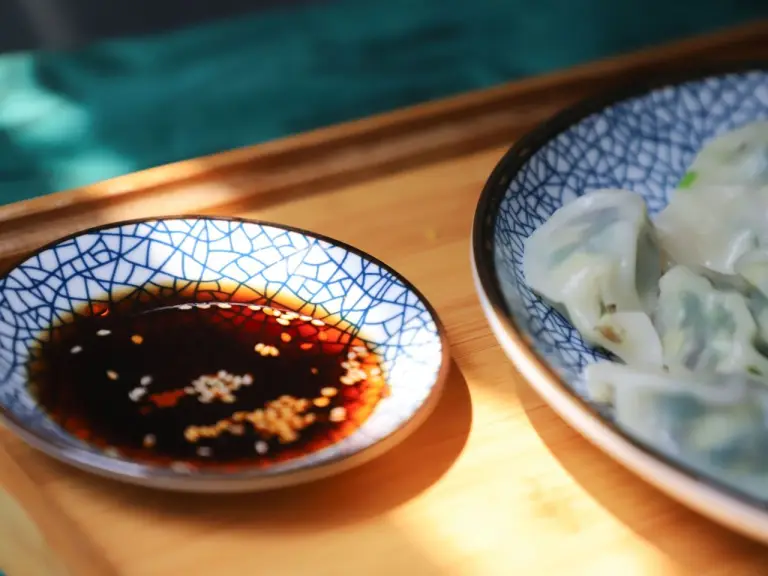
Soy sauce substitutes: a swap table with ratios
| Swap | How much for 1 tbsp soy sauce | Which dishes | Flavour note |
|---|---|---|---|
| Tamari (gluten-free) | 1 tbsp (1:1) | Marinades, stir-fry, rice, dressings | Identical flavour, darker colour |
| Worcestershire sauce | 1 tbsp plus a pinch of salt | Meat, gravies, marinades | Sharper and spicier, contains anchovies |
| Teriyaki sauce | 1 tbsp, cut the sugar in the dish | Chicken, pork, salmon, glaze | Sweeter and thicker |
| Oyster sauce | 1 tbsp (optionally plus 1 tsp water) | Stir-fry, fried noodles, vegetables | Thicker and sweeter, not for cold dishes |
| Fish sauce (nam pla) | 1/2 tbsp plus 1/2 tbsp water | Tom yum, pad thai, stir-fry | Pungent smell, very salty |
| Coconut aminos | 1.5 tbsp plus a pinch of salt | Dressings, bowls, dishes for children | Sweeter, 60-70% less sodium |
| Miso plus water | 1 tsp miso plus 1 tbsp water | Soups, sauces, glazes | Do not boil, clouds the broth |
| Maggi seasoning | 1/2 tbsp plus 1/2 tbsp water | Gravies, broths, meat | Concentrated, easy to oversalt |
| Mushroom stock with salt | 2-3 tbsp of the infusion | Vegan umami, soups, rice | No dark colour |
| Salt or a stock cube | 1/4-1/3 tsp salt | Emergency, when no sauces on hand | No umami or colour |
11 ways to replace soy sauce: ratios and uses
1. Tamari: an almost perfect twin
Tamari is a Japanese soy sauce brewed with little to no wheat, so it suits people with gluten intolerance. It tastes thicker, mellower and richer than the usual kind, while the saltiness is the same, which makes it the most honest one-to-one swap. If you want a substitute your guests will not notice, start with this one.
- Ratio 1:1: 1 tbsp soy sauce equals 1 tbsp tamari, nothing to recalculate
- Works for everything: marinades, stir-fry, rice, noodles, dressings, dipping dim sum
- Darker than soy sauce, the dish will come out a touch browner
- Look for the gluten free label, not every tamari is completely wheat-free
2. Worcestershire sauce: a versatile swap from the fridge
Worcestershire sauce sits in many fridges and delivers the same fermented umami flavour thanks to anchovies, molasses and spices. It is sharper and spicier than soy sauce, but it works brilliantly in meat marinades and hot dishes. It is the first thing to check when the soy sauce runs out.
- Ratio 1:1 plus a pinch of salt, Worcestershire is less salty
- Best used in: marinades for beef and pork, gravies, goulash
- Contains anchovies, so it is not suitable for vegetarians and vegans
- Add to cold dressings with care: it brings a noticeable tang
3. Teriyaki sauce: for marinades and a caramel glaze
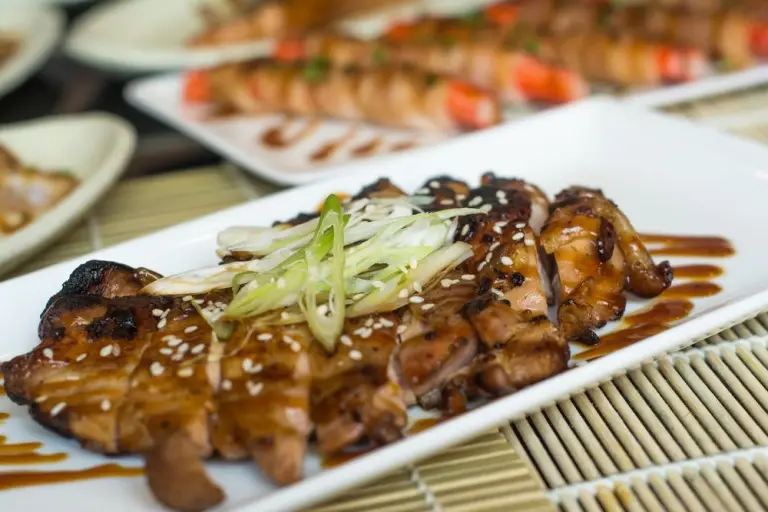
Teriyaki is essentially soy sauce reduced with sugar, mirin and ginger, so it is thicker, sweeter and glossy. It is ideal wherever you need a caramel glaze: chicken, pork, salmon. Shop-bought or homemade teriyaki will replace soy sauce in almost any hot dish.
- Ratio 1:1, but leave out the sugar and honey in the recipe, teriyaki is already sweet
- For a marinade: 2-3 tbsp per 500 g of meat or fish, marinate for 30-60 minutes
- Not suited to light, clear dressings: it will make them sweet and cloudy
- You can make it yourself in 10-15 minutes with the recipe below
Recipe: Homemade teriyaki sauce.
4. Oyster sauce: for stir-fry and frying
Oyster sauce is thick, dark and salty-sweet, with a strong umami. It was created precisely for stir-frying, so in a wok with chicken, beef or vegetables it replaces soy sauce best of all. It will add a little sweetness of its own, which is worth keeping in mind while cooking.
- Ratio 1:1, thin it with 1 tsp water if you like, the sauce is thick
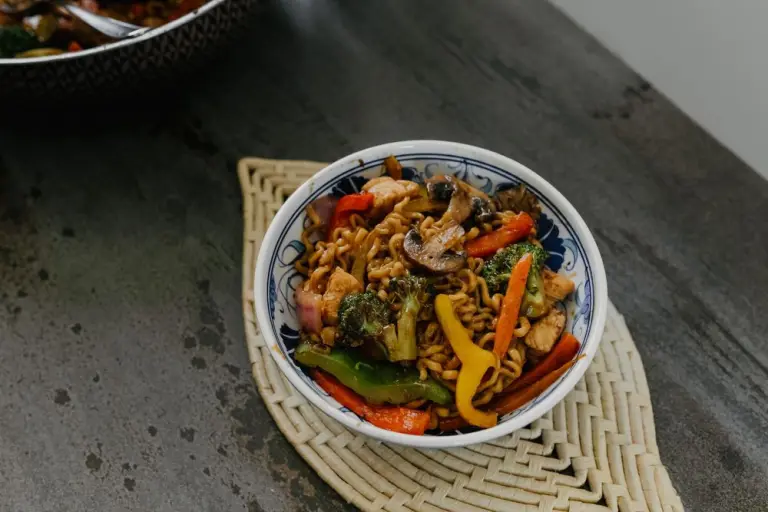
- Ideal for stir-fry and fried noodles, for example for wok noodles with chicken
- Adds more sweetness, reduce the sugar and honey in the recipe
- Not suited to cold salads: the thick texture does not spread well
Recipe: Wok noodles with chicken and vegetables.
5. Fish sauce (nam pla): for Thai and Asian dishes
Fish sauce (nam pla, nuoc mam) is a concentrate of salty umami made from fermented fish. The smell is pungent, but in a finished hot dish it opens up gently and very much in the Asian style. It is the best swap in Thai and Vietnamese cooking.
- Ratio about half: 1/2 tbsp fish sauce plus 1/2 tbsp water in place of 1 tbsp soy sauce
- For tom yum, pad thai, stir-fry, chicken marinades
- Very salty, do not add more salt to the dish until you have tasted it
- Not for vegans, it contains fish; add it to dressings drop by drop
6. Coconut aminos: for those avoiding soy and gluten
Coconut aminos is a sauce made from the fermented sap of the coconut palm. It contains no soy, gluten or wheat, and has 60-70% less sodium, which is why it is popular in diet and children's food. The flavour is mild and slightly sweet.
- Ratio 1.5:1 plus a pinch of salt: the sauce is low in salt
- Good for dressings, bowls, marinades, dishes for children
- Sweeter than soy sauce, no sugar needed for sweet teriyaki-style sauces
- It costs more and is not sold everywhere, look in the health food sections
7. Miso paste thinned with water: a umami concentrate
Miso paste is fermented soy (sometimes with rice or barley) pressed into a thick paste. Thinned with warm water, it gives a powerful umami and a light saltiness close to soy sauce. It is especially good in soups and glazes.
- Ratio: 1 tsp miso plus 1 tbsp warm water replaces 1 tbsp soy sauce
- Great in soups, sauces, glazes, dressings for warm salads
- Do not boil for long: the live enzymes die, the flavour fades, add it at the end
- The paste clouds clear broths, so it is not suited to a clear dashi broth
8. Liquid Maggi seasoning: a quick substitute for gravies
Liquid Maggi seasoning is made from hydrolysed vegetable protein and tastes surprisingly close to soy sauce: salty, with a strong umami. It is concentrated, so a spoonful goes a long way.
- Half the amount: 1/2 tbsp Maggi plus 1/2 tbsp water in place of 1 tbsp soy sauce
- For gravies, broths, braised meat, rice
- Concentrated, easy to oversalt: taste first, then add more salt
- Some versions contain gluten, read the ingredients if that matters to you
9. Mushroom stock: vegan umami without soy
If you need a swap without soy and without fish, dried mushrooms will provide the umami. An infusion of porcini or shiitake with salt and a drop of balsamic is a purely plant-based version of the soy flavour. Such a stock is easy to make ahead and keep on hand.
- Recipe: pour 100 ml boiling water over 2-3 dried mushrooms, infuse for 20-30 minutes, add 1/2 tsp salt and a couple of drops of balsamic
- 2-3 tbsp of this stock match the depth of flavour of 1 tbsp soy sauce
- A vegan swap for soups, rice, vegetable stir-fry
- Lighter than soy sauce, for a dark crust add a little balsamic or burnt sugar
10. Balsamic with salt: for colour and dressings
When dark colour and depth matter more than the soy flavour itself, balsamic vinegar will save the day. With a pinch of salt it mimics umami and tints the dish a rich brown. It works more as a colouring and an acidic accent than as a full sauce.
- Ratio: 1 tbsp balsamic plus a small pinch of salt in place of 1 tbsp soy sauce
- For dressings, marinades, glazes on meat and vegetables
- Noticeably more acidic than soy sauce, add a pinch of sugar or honey to balance
- Not for delicate rice dishes: the acidity and vinegar aroma will stand out
11. Salt or a stock cube: the emergency option
The simplest backup when there is not a single sauce in the house is plain salt or a stock cube. You will get almost no umami or brown colour, but you will restore the saltiness and the overall balance of the dish. For Asian dishes this is a last-resort choice.
- Ratio: 1/4-1/3 tsp salt in place of 1 tbsp soy sauce, add it gradually
- A stock cube (mushroom, beef) gives more umami than plain salt
- Fine in mince, soups, braised dishes where only the saltiness matters
- For colour, add a drop of balsamic or burnt sugar
Tips and tricks
- Taste the dish after every swap: almost all the alternatives are saltier or sweeter than soy sauce, so add salt and sweetness right at the end.
- If you want to match the flavour as closely as possible, reach for tamari or thinned miso: they are fermented, like soy sauce, and give the same umami.
- For an appetising dark crust on meat and in the wok, add a few drops of balsamic or a pinch of burnt sugar to any swap: soy sauce is prized partly for its colour.
- In hot Asian dishes (stir-fry, noodles, rice) feel free to use fish or oyster sauce, and for cold dressings choose tamari, coconut aminos or balsamic.
- If you are replacing soy sauce in a ready marinade recipe, cut out or reduce the sugar: oyster sauce, teriyaki and coconut aminos are already sweet.
- Thin the concentrates (Maggi, fish sauce) with water one to one, then they are easier to measure out and harder to oversalt.
- Keep tamari or coconut aminos at home if someone in the family is allergic to gluten or soy: it is a ready, safe substitute.
Common mistakes
- Swapping soy sauce spoon for spoon with fish sauce or Maggi and oversalting: these sauces are 1.5-2 times more concentrated, so use less and dilute them with water.
- Adding sweet oyster or teriyaki sauce while keeping all the sugar in the recipe, so the dish turns cloying.
- Adding miso to boiling broth and cooking it for a long time: the paste clouds the liquid and loses flavour, so add it right at the end and do not boil.
- Using balsamic or wine vinegar as a full replacement in rice dishes: the acidity overpowers the delicate flavour, vinegar is mainly good for colour and dressings.
- Forgetting that Worcestershire and fish sauces contain anchovies or fish, and serving such a dish to vegetarians.
- Expecting salt or a stock cube to give the same result: they provide saltiness but no umami or brown colour, so this is only an emergency option.
How to choose a swap for a specific dish
The main rule: choose the swap to match the temperature and type of dish. In hot Asian dishes the umami opens up more gently, while in cold dressings any sharp flavour comes through more strongly.
- Marinade for meat: Worcestershire or oyster sauce, teriyaki. Use 2-3 tbsp per 500 g of meat and marinate for 30-60 minutes.
- Stir-fry, fried rice and noodles: oyster or fish sauce, tamari. Add to the hot pan right at the end of frying.
- Salad dressing: tamari, coconut aminos or balsamic with a pinch of salt. It works well, for example, in a tuna and avocado salad.
- With rice and dim sum for dipping: tamari or coconut aminos one to one.
Replacing soy sauce for health: salt, gluten and soy
Soy sauce is not replaced only because it has run out. One tablespoon holds around 900-1000 mg of sodium, so with high blood pressure and a tendency to swelling people try to cut back on it. Two more common reasons: gluten from wheat and a soy allergy.
- Less salt: coconut aminos contain 60-70% less sodium, and mushroom stock you salt yourself.
- Gluten-free: choose tamari with a gluten free label or coconut aminos.
- Soy-free: coconut aminos, mushroom stock and Worcestershire sauce will do (check the ingredients on the label).
If you are limiting salt on a doctor's advice, discuss the swap with a specialist: this is a matter of health, not just of taste.
Storing soy sauce and its substitutes
Thanks to its salt, soy sauce keeps for a long time, but after opening the flavour gradually fades. Its substitutes are more temperamental, so each has its own rules.
- Soy sauce and tamari: best in the fridge after opening, peak flavour in the first month, safe after that but the aroma is weaker.
- Fish and oyster sauce: in the fridge only after opening, tightly closed.
- Miso paste: in the fridge for several months, the surface may darken, this is not spoilage.
- Coconut aminos: put in the fridge after opening.
- Homemade mushroom stock: in the fridge for 3-4 days, after that it is better to freeze it in portions.
❓ Frequently asked questions
What can replace soy sauce in a meat marinade?
Worcestershire or oyster sauce works best, as does teriyaki, in a ratio of roughly one to one. Use 2-3 tbsp of the swap per 500 g of meat and marinate for 30-60 minutes. If the sauce is sweet (teriyaki, oyster), leave the sugar out of the recipe.
What can replace soy sauce in stir-fry and noodles?
Oyster and fish sauce work brilliantly in a hot wok, as does tamari. Use oyster sauce one to one, fish sauce at half the amount and diluted with water. Add the sauce at the end of frying so it does not burn or lose its flavour.
Can salt replace soy sauce?
Yes, but this is an emergency option. In place of 1 tbsp soy sauce use 1/4-1/3 tsp salt, adding it gradually. You will restore the saltiness but get no umami or brown colour, so for Asian dishes it is better to find a sauce.
What can replace soy sauce without gluten?
Take tamari with a gluten free label or coconut aminos. Tamari replaces soy sauce one to one, coconut aminos are used at about 1.5 times the amount with a pinch of salt added, because they are less salty.
What can replace soy sauce in a dish for a child?
For children, coconut aminos (less salt, a mild flavour) or mushroom stock, which you salt yourself to a minimum, are suitable. This makes it easier to control the amount of sodium. Pungent fish sauce and concentrated Maggi are not the best choice for a child's table.
What can replace soy sauce for sushi and rolls?
For dipping, use tamari or coconut aminos one to one: they give the familiar dark, salty flavour, and tamari is also gluten-free. Fish or oyster sauce is too sharp for sushi.
What can replace soy sauce in a salad dressing?
In dressings, tamari, coconut aminos or balsamic with a pinch of salt are good. Balsamic is more acidic, so balance it with a pinch of sugar or honey. Sharp fish and oyster sauces are added to cold salads literally drop by drop.
Is Worcestershire sauce the same as soy sauce?
No. Both are fermented and give umami, but Worcestershire is more acidic, spicier and contains anchovies, molasses and spices. You can replace soy sauce with it one to one, adding a pinch of salt, because it is less salty.
What can replace soy sauce for vegans?
For vegans, tamari, coconut aminos, miso paste thinned with water and mushroom stock are suitable. It is important to avoid fish, oyster and classic Worcestershire sauce: they contain fish or shellfish.
What happens if you simply leave soy sauce out of a recipe?
The dish will turn bland and lose depth of flavour and dark colour. To compensate, add salt and a source of umami: a pinch of a stock cube, a drop of balsamic or a spoonful of mushroom stock.