Secrets of Making Delicious Jam
Secrets of making delicious jam is a question that comes up for every home cook during berry and fruit season, when you want to put up as much wholesome and tasty preserve as possible for winter. Despite the simplicity of the basic principle (berries + sugar + cooking), real homemade jam has many subtleties: how to achieve perfect thickness without commercial thickeners, how to keep berries whole and firm, what cookware to use, how to properly sterilize jars, how to prevent crystallization and much more. This guide gathers all the main secrets from experienced cooks: the right sugar ratios for different berries, the multi-stage short-cooking method, harnessing natural pectin, the importance of skimming foam, the "drop test" for doneness and long-storage conditions. The guide is useful for beginners and experienced jam-makers alike.
I gathered the secrets of making delicious jam over many years – at my grandmother's country house, from old cookbooks and my own preserving experience. From my own experience, the main "secret rule" of real homemade jam is to keep the proportions at 1:1 (a kilogram of berries to a kilogram of sugar), to cook it in a wide, thick-bottomed vessel (a copper or enamelled basin) in several stages, and always to cool it completely before pouring it into jars. These three rules solve 80% of all the "failures" that beginner cooks run into: a syrup that separates, crystallisation, mould and berries losing their shape.
In this article you will find my complete guide to making perfect jam: the general principles of cooking, choosing the produce and the cookware, the best combinations of berries and fruits, ways of telling when it is ready, the rules of storage and even techniques for "rescuing" spoiled jam. It suits any berries and fruits – strawberries, raspberries, cherries, apricots, currants, gooseberries, apples, pears, quinces and citrus. Save the article to your bookmarks – it will be a lifesaver for every preserving season.
General Principles of Making Jam
There are 10 basic principles that work for any jam. You should only ignore them when a particular recipe calls for it:
- Cooking in several stages – this preserves the shape of the berries and fruits as much as possible. You can get away with a single stage only for delicate berries (wild strawberries, raspberries) – these are sprinkled with sugar overnight beforehand.
- Covering with parchment – the basin of jam is covered with parchment paper during cooking and steeping, which protects it from drying out.
- Proportions of 1:1 – take 1 kg of sugar per 1 kg of produce. With less sugar the jam will turn sour; with more it will become a "sugary mass" with no berry flavour.
- Low heat for the first 10 minutes – after it comes to the boil, so that the sweet mass does not "overflow" because of foaming.
- Keeping it away from odours – do not cook meat, fish or garlic at the same time, as the jam absorbs foreign smells.
- Blanching the produce – pears, apples and quinces are scalded with boiling water for 2–3 minutes so that they keep their shape and absorb the syrup.
- A soda solution for plums and apricots – 1 teaspoon of soda per 1.5 litres of water for 5 minutes; the fruit then holds its shape during cooking.
- Protecting apples from darkening – put the slices in a salt solution for 2–3 minutes, then in boiling water for the same length of time.
- Pricking firm skins – prick pears, plums and gooseberries with a toothpick in 2–3 places so that the skin does not burst.
- Pouring out only after complete cooling – hot jam will separate, with the berries on top and the syrup at the bottom.
Choosing Quality Produce
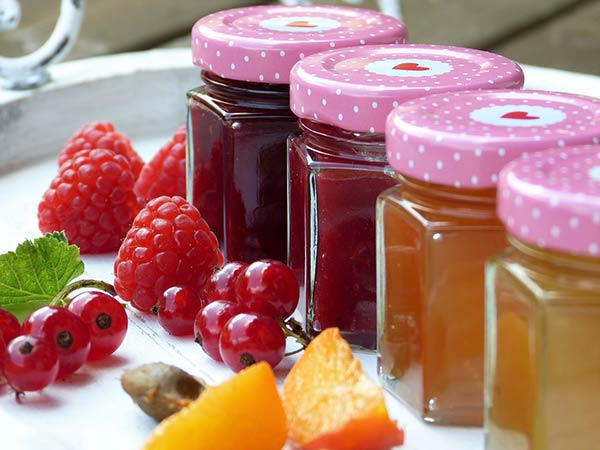
Good jam comes only from good fruit. For jam made from whole berries, choose small specimens with no damage – that way there is a better chance of keeping their shape during cooking. Ideally the berries should be picked in sunny, dry weather on the day of cooking. Overripe and partly rotten fruit is unsuitable – it will go mouldy or sour.
Washing is hugely important. Delicate berries (raspberries, wild strawberries, blackberries) are washed in a colander under a shower head for 2–3 minutes – the stream should be soft, not "hard". You can use a tap with an aerator. Sturdier fruit (cherries, currants, gooseberries) is washed under ordinary running water. Dry the fruit thoroughly before cooking – excess water will dilute the syrup.
The Right Cookware for Cooking
A saucepan is handy for small batches (up to 1 kg), but experienced cooks recommend using a wide basin. In a basin the layer of jam is thin, so it heats up and boils quickly – the berries lose their shape less. Stirring is easier in a basin too: you simply shake it and tilt it from side to side, without a spatula that might damage the berries.
Which cookware NOT to use:
- Copper and brass basins – they were once considered ideal, but fruit acid dissolves copper oxides (a dark coating) and copper ions destroy vitamin C. Modern research does not recommend copper for jam;
- Aluminium cookware – fruit acid breaks down the oxide film, so aluminium molecules get into the jam (harmful);
- Chipped enamelware – the metal reacts with the acid, spoiling the flavour and colour of the jam.
What is ideal: stainless steel cookware (thick-bottomed basins and saucepans), enamelled basins and saucepans WITHOUT chips, and special copper basins with a food-safe coating. A thick bottom is essential to prevent scorching.
Fruit of the Same Level of Ripeness
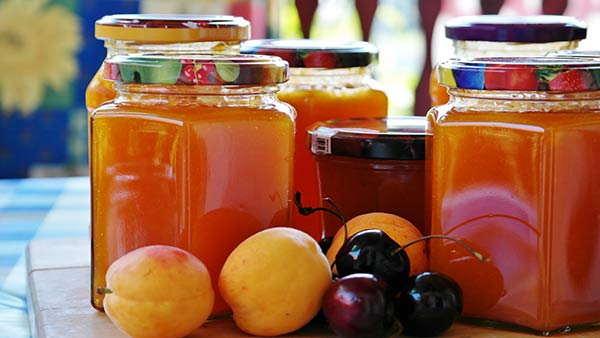
The perfect jam consistency is achieved only when you use fruit of the same level of ripeness. If you mix underripe and overripe fruit, the second will turn to mush before the first has cooked. The signs of ripeness:
- Underripe – uneven colour, firm flesh. Suitable for jam from quince, pears, apricots, gooseberries and walnuts;
- Ripe – even, rich colour and firm flesh. The all-purpose choice for most jams;
- Overripe – deformed, with soft flesh. Suitable only for fruit butter, pastila and jam (where shape does not matter).
The Best Combinations of Berries and Fruits
Multi-ingredient jam often turns out tastier than a single-ingredient one. Tried-and-tested combinations that work in both taste and aroma:
- cherry and black chokeberry – the tartness balances the sweetness;
- pear and cherry plum – sweetness with a slight tang;
- quince and raisins – an "autumn" aroma;
- apricots and gooseberries – an unexpected but successful pairing;
- lingonberry and plum – a northern classic;
- wild strawberry and red currant – a summer balance;
- plum and pear – a thick jam for the winter;
- blueberry and apples – a "light" combination;
- pear and orange – a citrus note for pear;
- apples and guelder rose – a "medicinal" jam for colds.
Methods of Cooking and Telling When It Is Ready
The classic method (3–4 stages): the sugar is mixed with cold water and brought to the boil. Once the sugar has dissolved, the syrup is taken off the heat, the fruit is added and it is left for 5 hours. Then it is brought to the boil and cooked for 10 minutes. It is cooled completely and cooked again for 3–5 minutes. This method preserves the shape and the vitamins as much as possible. Ideal for whole berries.
The quick method (1 stage): the fruit is mixed with sugar and left for 5 hours. It is brought to the boil and cooked for 5–10 minutes. It is cooled completely and poured out. Convenient for a large batch of preserves.
The "cold jam" method: berries (raspberries, blackcurrants) are mashed with sugar in a ratio of 1:1.5 without cooking. Keeps in the fridge for up to 6 months. Maximum vitamins, but it requires cold storage.
Telling when it is ready: visually, the jam becomes translucent and the foam gathers in the centre of the vessel. The "drop" test – scoop up some jam with a spoon, let it cool and drop it onto a cold plate. Ready jam holds its shape; jam that is not ready spreads out. You must not overcook it – this loses the flavour, colour and vitamins.
Useful Secrets of Experienced Cooks
- Rescuing scorched jam – pour it into a clean vessel immediately, as soon as you notice clumps on the spoon. Do NOT stir – the scorched layer will stay on the bottom.
- Protecting against crystallisation – 5 minutes before the end of cooking, add ½ teaspoon of citric acid or the juice of ½ a lemon per 1 kg of jam.
- Improving wild strawberry jam – 5 minutes before it is ready, drop in a whole peeled raw carrot and take it out before pouring. The carrot enhances the aroma and colour.
- Thickening runny jam – pectin (5 g per 1 kg of berries) or agar-agar (2 g per 1 kg) is added at the end of cooking. Natural thickeners: apples or quince (which provide pectin naturally).
- Aroma from spices – vanilla, cinnamon, cloves, cardamom and anise add a complex flavour. Put them in 5 minutes before it is ready and remove them before pouring.
Storing and Sterilising the Jars
Jars for jam must be sterilised. Methods of sterilising: in the oven at 100°C for 5–7 minutes (jars without lids, upside down); over the steam of a kettle for 5 minutes per neck; with boiling water (fill the jar completely and pour it out after 5 minutes); in the microwave (a jar with 2 tablespoons of water for 3 minutes at 800 W). Boil the lids separately for 5 minutes.
Ready jam is poured only into completely dry jars – even a drop of water will cause mould. Properly preserved jam keeps for 3 years in a dark, dry place at 5–15°C. After 3 years the jam is still edible, but the vitamins have already broken down. Jam with stones (cherries, apricots, plums) should be kept for no longer than 1 year – the cyanide from the stones becomes dangerous over time. For long storage, open such a jar and take out the stones.
Rescuing Spoiled Jam
- It has crystallised – dilute it with water (½ a glass per 1 litre of jam), re-cook it until the sugar dissolves and add citric acid;
- It has turned sour – re-cook it with extra sugar syrup (½ a glass of water + 1 glass of sugar per 1 litre);
- Mould has appeared on the surface – the jam is spoiled and dangerous to eat (the mycotoxins permeate the whole batch);
- It has gone runny – re-cook it with pectin or add grated apple for natural thickening.
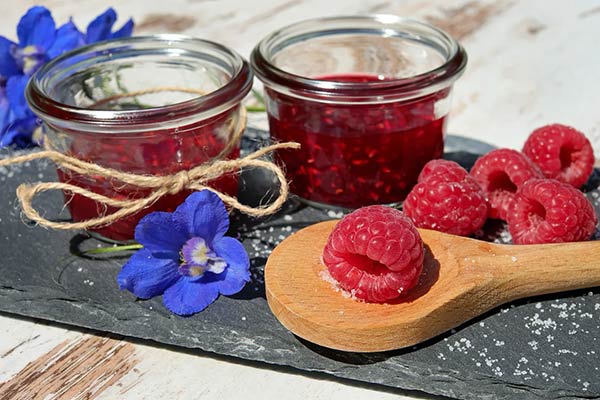
The perfect jam has a clear syrup of medium thickness, with the berries evenly distributed throughout the jar, holding their shape, a rich colour and a sweet flavour with a slight tang. Following my advice, you will make jam like this without any trouble. Strawberry jam and jam from other berries works on a similar principle.
❓ Frequently asked questions
What proportions of sugar should I use for different berries?
The standard proportion is 1:1 (1 kg of sugar per 1 kg of berries). For very sour berries (red currants, gooseberries, cranberries) use 1.2:1 (more sugar). For very sweet ones (pears, Antonovka apples, quince) use 0.8:1 (less sugar). For "cold jam" (without cooking) use 1.5:1, so that the sugar works as a preservative. Never reduce the sugar below 0.7:1 – the jam will turn sour within 1–2 months of storage.
How long does homemade jam keep?
Jam that has been cooked and sealed properly keeps for 2–3 years in a dark, cool place (5–15°C, without temperature swings). After 3 years the jam is still edible, but the vitamins have already broken down. Jam with stones keeps for no longer than 1 year because of the cyanide in the stones. "Cold jam" (without cooking) keeps only in the fridge for up to 6 months. Keep an opened jar in the fridge with the lid on for up to 1 month. Signs of spoilage: fermentation (bubbles, a sour smell), mould and a change of colour.
Can I make jam in a multicooker or a breadmaker?
Yes, a multicooker and a breadmaker are excellent for small batches of jam (up to 1 kg) with the minimum of attention. In a multicooker, use the "Jam" or "Stew" mode for 30–40 minutes – the automatic temperature control prevents scorching. In a breadmaker, use the "Jam" mode, usually 1–1.5 hours for the full cycle. The advantage is that you do not have to stand over the stove and stir. The drawback is the small amount you can make at once. Ideal for a city flat without a country house.
What should I do if mould has appeared on the jam?
Jam with mould on the surface is dangerous to eat – even after the visible layer is removed, the mycotoxins (the poisonous products of the moulds) have penetrated the whole jar and can cause serious food poisoning and damage to the liver and kidneys. Such jam should be thrown away together with the jar (or the jar thoroughly sterilised for re-use). The causes of mould are: insufficient sterilising of the jars, damp jars when pouring, the wrong proportions of sugar (below the norm) and storage in a damp place. Be careful next season.