Pollock – how to cook deliciously
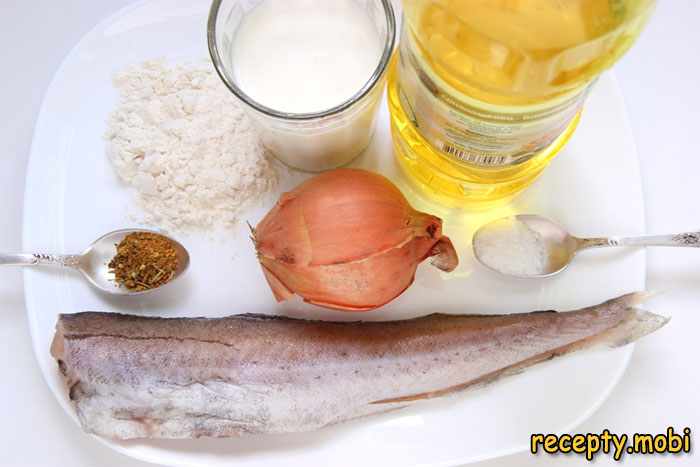
I cook pollock as one of the most affordable and versatile commercial fish – it makes tender fish cakes, juicy fillet under a cheesy topping, light stewed dishes and even homemade "crab sticks" (surimi). From my own experience, the main "drawback" of pollock is its dryness after incorrect thawing and over-frying. If you choose good-quality fish with a clear ice glaze, thaw it slowly in the fridge and don't keep it in the pan for longer than 7–10 minutes, pollock reveals itself as a delicacy with tender white flesh.
In this guide you'll find everything I know about pollock: where it lives, why it's good for you, how to choose it properly in the shop, how to avoid being passed off pangasius or tilapia, how to clean the carcass and what dishes to make at home. With just 72–145 kcal per 100 g, pollock is an ideal fish for a diet-friendly, family menu. It's a universal fish for frying, stewing, baking, fish cakes and surimi.
About the fish and its habitat
Pollock belongs to the cod-like order – it's a close relative of cod, haddock and saffron cod. It lives mainly in the cold waters of the northern Pacific Ocean: the Bering Sea, the Sea of Okhotsk, and the coastal waters of Alaska and Kamchatka. An adult fish reaches 30–90 cm in length and lives up to 17 years, but the fishery values 3–4-year-old fish – their flesh is the most tender and juicy.
Young pollock feeds on plankton (protozoa, larvae, molluscs, crustaceans), while adult fish switch to squid and small fish. Despite the enormous volumes caught, the pollock population is stable – the fish breeds very quickly. Its taste and composition are affected by its habitat: fish from the Bering Sea and the Alaska area is considered the cleanest, with a minimum of chemicals and heavy metals.
Calories and nutritional value
Pollock is one of the lowest-calorie fish, ideal for a diet-friendly menu. The exact calorie count depends on the cooking method:
- boiled fillet – 72 kcal per 100 g;
- stewed without sauces – 75 kcal per 100 g;
- baked in the oven – 77 kcal per 100 g;
- boiled whole – 79 kcal per 100 g;
- fried without batter – 127 kcal per 100 g;
- fried in batter – 145 kcal per 100 g;
- stewed with vegetables – 50–60 kcal per 100 g;
- under a cheesy topping – 100–120 kcal per 100 g.
Using sour cream, mayonnaise, cream and hard cheese significantly increases the calorie count. For a diet-friendly menu, choose boiling, stewing and baking without rich sauces. Pollock is rich in protein (15–17 g per 100 g), omega-3 fatty acids, iodine, fluorine, selenium, and vitamins A, D and the B group. Its low mercury content compared with tuna and marlin makes pollock safe to eat weekly.
How to choose good-quality pollock
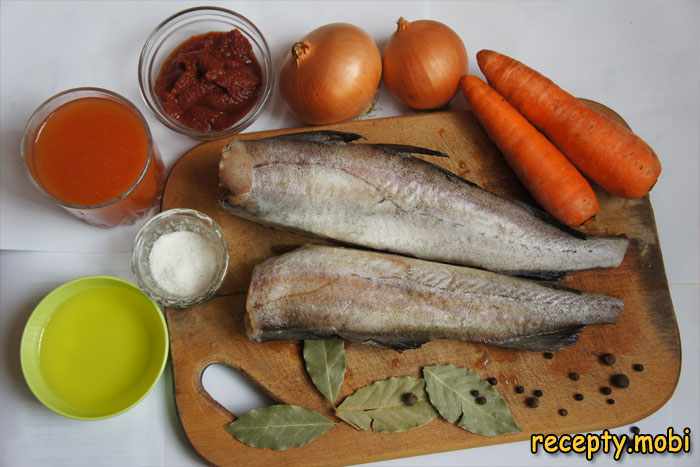
The main rule is to find out the catch region. Fish from the Bering Sea, the area around the Aleutian Islands and Alaska is the cleanest and safest. Avoid anonymous products sold "with no catch area stated".
Fresh fillet: a uniform white colour, with no yellow or dark patches (a sign of fat oxidation and spoilage). A slight pinkish tint near the back is acceptable – that's normal. The flesh should be firm and dense, and shouldn't fall apart under your finger. Fresh fish smells of the sea with a sweetish freshness – no sharp or unpleasant odour.
Frozen fillet: the ice glaze should make up no more than 4% of the product's weight (under the Russian state standard). A thick crust of ice is a con – you're buying water at the price of fish. The glaze should be clear, with no cloudy patches or frost.
Whole carcass: skin without patches or weathered areas, scales lying tightly against the body. Thick scars and cracks on the skin are a sign of repeated thawing (absolutely not allowed!). The gills should be pink or red, and the eyes clear and bulging.
Where not to buy it: markets without certificates, and unknown sellers. Sometimes pangasius or tilapia is sold instead of pollock (cheaper species farmed on waste from the bottom of ponds and often containing harmful substances). Pollock can be recognised by its thin tail and its characteristic lower jaw that juts forward.
How to store and thaw it properly
Frozen pollock keeps in the freezer at -18°C for up to 6 months. It's critical to avoid temperature swings – they cause moisture loss, and the fish turns dry and greyish. Thaw it only slowly, in the fridge on the bottom shelf, for 8–12 hours (move it from the freezer in the evening and it's ready to clean by morning). Never thaw it at room temperature, in the microwave or under hot water – the fish loses its flavour, texture and nutrients. Dried pollock is kept in parchment paper in a cool, dry place for up to 3 months.
How to prepare the carcass before cooking
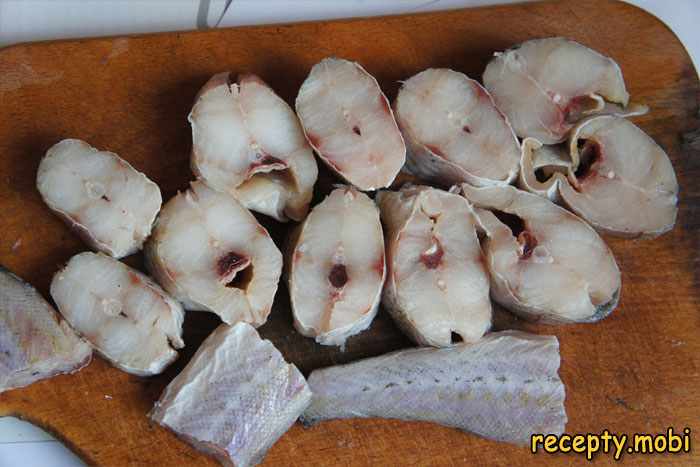
If you've bought fillet there's no problem – you can cook it straight away. A whole carcass needs cleaning. Pollock is covered with small scales that are easily scraped off with a small sharp knife, against the direction in which the scales grow. After cleaning, cut off the head (keep it for fish stock), slit the belly from the anal opening towards the head and carefully remove the entrails. Be especially thorough in removing the dark membrane from the inside of the belly – it makes the finished dish bitter. Cut off the fins with sharp scissors. Remove the bones from the fillet carefully with tweezers, so as not to damage the tender flesh.
What to cook from pollock – an overview of dishes
The tender white flesh with its flaky texture is a universal base for many dishes:
- Fish cakes – the most popular use for pollock; bread and egg offset its dryness;
- Fried fillet – in batter, flour or breadcrumbs, quickly, 5–7 minutes on each side;
- Stewed pollock – with vegetables and a sour-cream or tomato sauce, to counter the dryness;
- Baked under a cheesy topping – a festive option with tomatoes, onion and cheese;
- Surimi (crab sticks) – an industrial product you can recreate at home from fillet and starch;
- Fish fingers and nuggets – a breaded option for children;
- Minced fish – a base for dumplings, fish balls and fillings;
- Dried and cured pollock – a snack to go with beer;
- Liver and roe – delicacies that are added to salads and eaten with bread and butter;
- Canned fish – an industrial product for sandwiches and salads.
The main cooking rule is not to keep it on the heat too long. Check doneness with a toothpick or fork: it should go in and out of the flesh easily. Over-frying destroys the omega-3 fatty acids and makes the fish "rubbery". My favourite everyday standby is a simple recipe for pollock fish cakes in the oven.
❓ Frequently asked questions
How does pollock differ from pangasius and tilapia?
Pollock is a marine commercial fish from the clean waters of the Pacific Ocean, with firm white flesh and a thin tail. Pangasius and tilapia are freshwater fish from South-East Asia, farmed in artificial ponds and often feeding on waste from the bottom. Pollock is safer in composition, though less fatty. Pangasius is more "oily", but contains more heavy metals because of the pollution of Vietnamese ponds. Buy pollock from trusted places that state the catch area.
Why does pollock turn out dry after frying?
The main reason is keeping it on the heat too long. Pollock cooks quickly (5–7 minutes on each side over medium heat), and over-frying instantly makes the flesh "rubbery". Other reasons: incorrect thawing (room temperature or the microwave draws out the juices), too high a temperature (above 180°C dries it out), and the lack of a protective layer (flour, batter or breadcrumbs hold in moisture). For guaranteed juiciness, stew pollock in a tomato-and-sour-cream sauce for 15–20 minutes, or bake it under a cheesy topping for 15–20 minutes at 180°C.
Can pollock be given to children and pregnant women?
Yes, pollock is one of the safest fish for a children's or pregnancy menu. It has a low mercury content (10–15 times lower than tuna) and is rich in iodine, selenium and omega-3 fatty acids – all critical for the development of the brain and the thyroid gland of the baby. For children under 1 year – a purée of boiled pollock (from 8–9 months); for schoolchildren – fish cakes, nuggets and baked fillet. For pregnant women – boiled or baked fillet 1–2 times a week. Before cooking, check especially carefully for bones.
How do you use the fish head and bones?
Don't throw away the head, bones and fins after cleaning – they make a rich fish stock for fish soup, risotto or fish aspic. Cover 1 kg of trimmings with 1.5 l of cold water, add an onion, a carrot, a bay leaf and allspice, and simmer for 30–40 minutes over low heat, making sure to skim off the foam for the first 15 minutes. Strain through muslin – you'll get a clear, "golden" stock. Freeze it in portions and it will be a standby for a quick fish soup.