avg —
How to Properly Cook Rice for Sushi – The Simplest Methods

Instructions
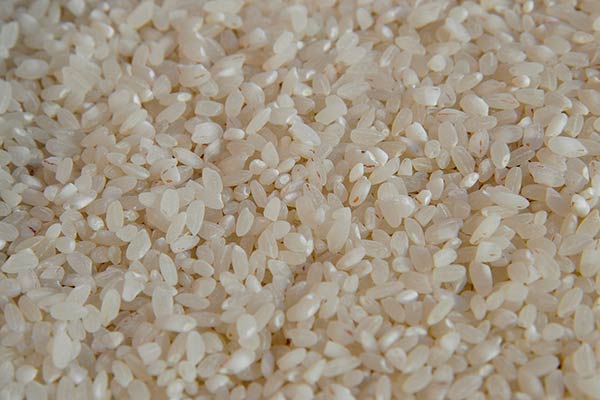
I sort the medium-grain rice on a white plate, removing any stray pebbles and dark grains. I rinse it in several changes of cold water – at least 5–7 times, until the water runs completely clear. This stage is crucial: without thorough rinsing the rice turns "slimy" instead of sticky, and the finished rolls end up looking crumpled.
I leave the rinsed rice in a sieve for 40 minutes – the grains should dry slightly and swell from the absorbed moisture. This "rest" is an important Japanese technique; without it the grains heat unevenly during cooking. Rice that has dried a little cooks more evenly and holds its shape.
I cover the prepared rice with cold water in a strict 1:1.5 ratio (1 cup of rice to 1.5 cups of water). This ratio differs from ordinary rice (1:2) – sushi needs less water for the right stickiness. I bring it to a boil over high heat without a lid.
I turn the heat down to the very minimum and cover tightly with a lid. I cook for 15–20 minutes without opening the lid and without stirring the rice at all. Opening the lid releases the steam and the rice will be raw at the bottom. Stirring destroys the structure of the grains and gives "porridge" instead of the right texture.
I make the traditional Japanese dressing: in a small saucepan I combine the rice vinegar, salt, and sugar. I heat it over the lowest heat until the sugar and salt dissolve completely (without bringing it to a boil!). A warm dressing spreads more evenly through the rice and gives a smooth, signature flavour.
When the water in the pan has fully evaporated (you can tell by the characteristic "sighing" of the rice), I turn off the heat and leave the lid closed for another 10 minutes to "steam through". This stage is the secret to the right texture: the steam finishes the cooking and stabilises the structure of the grains.
I transfer the finished rice to a wide bowl (traditionally a wooden "hangiri", but an ordinary one will do), pour over the dressing, and gently fold it through with a wooden spatula using bottom-to-top movements, without crushing the grains. The Japanese also "fan" the rice for shine – this is optional.

Tips
- 1
Use only medium-grain round rice (Krasnodar, sushiki, nishiki) – it contains the starch needed for stickiness. Long-grain basmati is not suitable.
- 2
Do not open the lid while the rice cooks and do not stir it – the steam must stay inside for even cooking.
- 3
Shape the sushi only from rice that has cooled to room temperature (35–40 °C). I cook ordinary boiled rice on a similar principle.
- 4
Cold rice straight from the fridge is not suitable for rolls – it turns hard, shapes badly, and the rolls crack. Use only warm or room-temperature rice.
FAQ
Which rice is suitable for making sushi? +
Ideally, special "sushi rice" of the Japanese varieties sushiki, nishiki, or koshihikari. They contain the right amount of starch for proper stickiness and hold their shape in rolls. If a Japanese variety is not available, use ordinary round-grain Krasnodar rice – it is naturally sticky. Long-grain varieties (basmati, jasmine, Indian rice) are absolutely unsuitable – they are crumbly, and the sushi will fall apart while you shape them. You can use "Japonica", "Krasnodar", or "Kuban" rice.
Can rice vinegar be replaced with something else? +
Yes, there are a few proven alternatives: a mix of apple cider vinegar (1 tablespoon) with sugar (1/2 tsp) and salt (a pinch) gives a similar mild result. Grape or wine vinegar with sugar also works, but gives a more "European" flavour. Lemon juice with sugar is the most natural option. Do not use ordinary 9% table vinegar – it is too sharp and will spoil the flavour. Rice vinegar is sold in supermarkets in the "Asian cuisine" section.
How long does finished sushi rice keep? +
Use the rice straight after cooking – within 2–3 hours of dressing it at most. In storage the rice loses its stickiness and becomes hard and bland. Do not put it in the fridge – the cold completely destroys the structure and texture of sushi rice. If you do need to hold it, cover it with a damp cloth at room temperature. Cook exactly as much as you will eat in one go. Freshly cooked rice is the basis of good-quality sushi and rolls.
How much rice is needed for one portion of sushi? +
A standard guideline: 80–100 g of dry rice per portion (8–10 pieces of rolls). One cup of dry rice yields about 3 cups cooked – enough for 4–5 portions. For a family dinner for 4 people, take 1.5–2 cups of dry rice. For large sushi sets for a group, take 2–3 cups. Cook with a small surplus – any leftover rice can be used the next day as a side dish with fish. The exact portion depends on your preferences and your guests' appetite.
- Comment
or post as a guest
Be the first to comment.