avg —
How to Properly Cook Buckwheat – The Most Popular Methods, Useful Tips

Instructions
I sort the buckwheat on a white plate, removing any stray pebbles, dark unhulled kernels, and any debris. This step is especially important for cheap loose buckwheat – expensive packaged grain is usually already cleaned. A single pebble can break a tooth, so do not skip the check.
I rinse the buckwheat in cold water 2–3 times until the water runs clear. Rinsing removes surface dust and fine particles. Cold water matters here – hot water activates the starch and makes the porridge sticky. A fine-mesh sieve makes this easier.
I toast the rinsed and slightly dried grain in a dry, heavy-bottomed pan for 2–3 minutes over medium heat, stirring now and then. This is the key secret to a crumbly texture and the characteristic nutty aroma. Toasted buckwheat smells completely different – brighter and more intense.
I transfer the toasted buckwheat to a thick-walled pot, pour in cold water in a strict ratio of 1:2.5 (1 cup of grain to 2.5 cups of water), and add salt to taste. Keeping to the exact ratio is the key to perfect doneness. Less water and it stays raw; more water and it cooks down to mush.
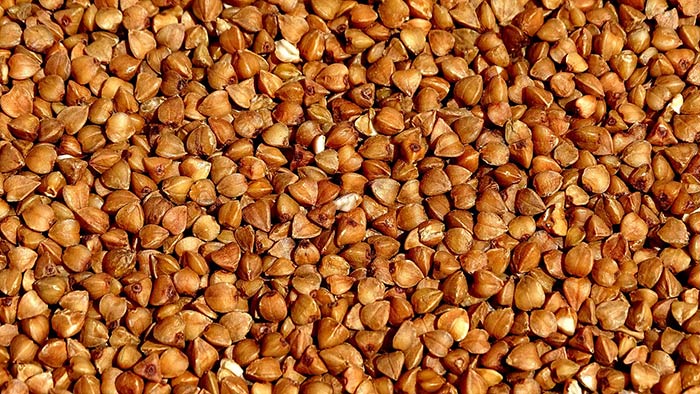
I bring it to a boil over high heat, then turn it down to the very lowest setting and cover tightly with a lid. I cook it for 20 minutes without opening the lid or stirring. An open lid lets the steam escape and the buckwheat turns out tough. Stirring breaks up the structure of the grains and makes the porridge sticky.
After 10 minutes of cooking I carefully lift the lid, add a knob of butter on top of the grain, and cover it again. The butter soaks into the buckwheat as it finishes cooking and gives it a distinctive creamy flavour. You can use clarified or vegetable oil instead, to taste.
I take it off the heat and leave the buckwheat under the lid for another 10 minutes to “steam through” – this is the most important stage. During this time the remaining steam spreads evenly, the grains reach full doneness, and the buckwheat becomes as crumbly as possible. Without this pause the buckwheat may be slightly raw inside.
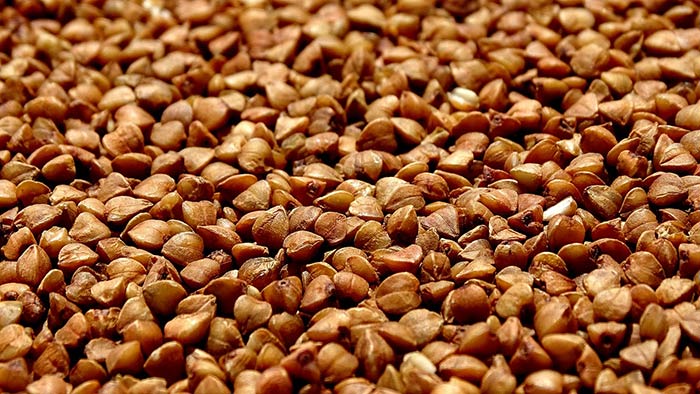
I gently fluff the finished crumbly buckwheat with a fork and serve it hot. It is perfect on its own with butter, or as a side dish for meat, mushrooms, or vegetables. You can add fried onion with carrot for the classic Soviet-style version.


Tips
- 1
Do not stir the buckwheat while it cooks – stirring breaks up the structure of the grains and makes the porridge sticky. Only fluff it gently with a fork at the end.
- 2
Use a cauldron or a thick-walled pot – a thin base gives uneven heating and scorches the buckwheat.
- 3
Skim off the foam with a slotted spoon as it first comes to the boil – this makes the finished porridge cleaner and more appealing. I cook pearl barley porridge on a similar principle.
- 4
Wrap the pot in a towel for 30 minutes after cooking for extra “steaming through” – this makes the buckwheat even softer and more aromatic.
FAQ
Why does buckwheat clump into a sticky mass when cooked? +
The main reasons are: using too much water (the 1:2.5 ratio was not kept), not toasting the grain before cooking (an essential step for a crumbly result), stirring with a spoon while it cooks (which breaks up the grains), and cooking over high heat (a vigorous boil breaks up the structure). Use good-quality, top-grade grain – cheap buckwheat is often more “starchy” and less suited to a crumbly porridge. Rinsing and toasting are the two steps many people skip, but they are exactly what gives the result.
Do you need to soak buckwheat before cooking? +
It is not essential, but soaking overnight halves the cooking time and preserves more of the vitamins. Pour cold water over the rinsed buckwheat in a 1:2 ratio and leave it at room temperature for 6–8 hours. In the morning, drain off the excess water, add fresh water in the right ratio, and cook for just 5–7 minutes. This method is especially good for green (untoasted) buckwheat, which needs less heat treatment. Soaking gives a more “living”, wholesome product.
What goes well with buckwheat as a side dish? +
Classic pairings: with stewed meat (the Soviet army-style serving), meat cutlets, fried mushrooms with onion, fried liver with gravy, or braised meat with vegetables. For vegetarian options: with fried onion, carrot and herbs, with mushrooms in sour cream, or with braised spinach and egg. For breakfast, buckwheat goes well with milk and honey, or with sour cream and herbs. It is a versatile side dish that suits any protein-based meal.
How do you cook buckwheat in milk instead of water? +
Buckwheat porridge with milk is a classic breakfast. First boil the buckwheat in water according to the main recipe until fully cooked. Separately, warm the milk (300 ml per cup of grain), add sugar to taste (1–2 tablespoons) and a pinch of salt. Add the cooked buckwheat to the hot milk and simmer over the lowest heat for another 5–7 minutes under the lid. I do not recommend cooking it in milk from the start – the milk can scorch on the bottom, and the buckwheat will not cook evenly.
- Comment
or post as a guest
Be the first to comment.