How Long to Cook Chicken Thighs: Time and Table
Bone-in chicken thighs are cooked for 30-40 minutes after the water returns to the boil, boneless thigh fillet is ready in 25-30 minutes, and frozen thighs need an extra 10-15 minutes. For a clear broth, put the meat into cold water and simmer it for 40-50 minutes over low heat. Check for doneness by piercing the meat near the bone: clear juices with no pink and meat that comes away from the bone easily mean the thighs are cooked.
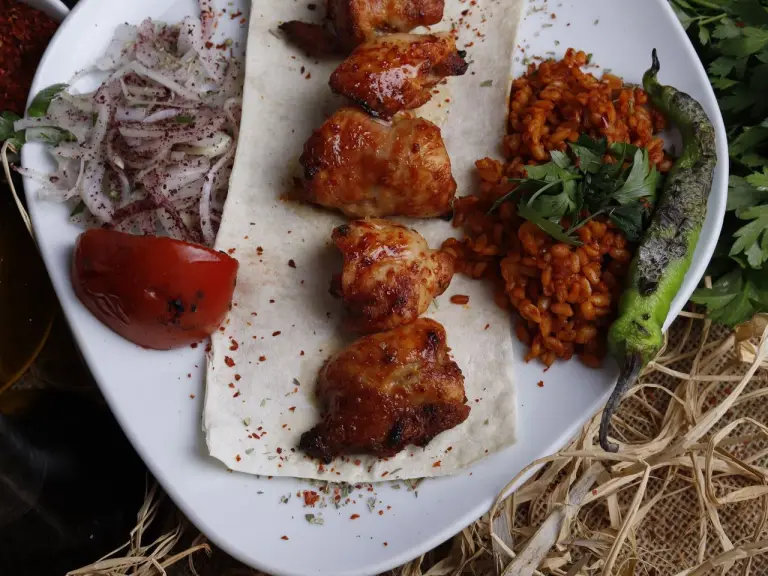
How long to cook chicken thighs: time and methods
| Type / method | Cooking time | Doneness sign | Note |
|---|---|---|---|
| Bone-in thighs, chilled (saucepan) | 30-40 min | Juices clear, meat pulls off the bone | Add to boiling water |
| Boneless thigh fillet | 25-30 min | Flesh evenly white inside | 3-4 cm cubes: 15-20 min |
| Frozen thighs | 45-55 min | Add 10-15 min to chilled | Better to thaw in advance |
| For soup and broth (cold water) | 40-50 min | Scum skimmed, broth clear | Salt at the start |
| In a multicooker ("Stew" / "Soup") | 40-60 min | Meat tender, pulls off the bone | Steam 35-45 min |
| In a pressure cooker | 15-20 min | Done under pressure | The fastest method |
| Steamed (steamer) | 40-50 min | Juices clear | Light, good for children |
| For salad (skinless fillet) | 25-30 min | Slices easily once cooled | Cool in the broth |
| For a child (boneless, second broth) | 35-40 min | Mashes with a fork | Drain the first broth |
How long to cook chicken thighs: times by type and method
1. Bone-in thighs, chilled (in a saucepan)
The most common option: a whole bone-in thigh weighing 150-200 g. Meat on the bone turns out juicier and more flavourful, which is why these thighs go into main courses, broth and hot dishes. Add them to already boiling salted water so the juices seal inside.
- Cook for 30-40 minutes after the water returns to the boil, over medium heat
- Keep a gentle simmer with slow bubbles: a rolling boil makes the meat tough
- Doneness: pierce with a knife near the bone, juices clear, with no pink
- Salt 15-20 minutes before the end if juicy meat matters more than broth
- Safe internal temperature 75 °C, for tenderness near the bone 80-85 °C
2. Boneless thigh fillet
A boneless thigh (about 100-130 g) cooks faster and is handy for salads, fillings and children's meals. Left whole, the flesh stays juicy; cut up, it cooks even quicker.
- Whole, cook for 25-30 minutes after the water comes to the boil
- Cut into 3-4 cm cubes, it is ready in 15-20 minutes
- Inside, the flesh is evenly white, with no pink fibres
- You can remove the skin beforehand: the broth will be less fatty
- Do not overcook: after 40 minutes the fibres turn dry
3. Frozen chicken thighs
You can cook thighs straight from the freezer, but the time increases and the centre risks staying raw. It is better to thaw them in advance, then the time and flavour will match chilled thighs.
- Thaw in the fridge for 8-10 hours, then cook as chilled thighs (30-40 min)
- From frozen: put into cold water and cook for 45-55 minutes
- Skim the first scum especially thoroughly, there will be more of it
- Do not thaw in warm water or on the counter: risk of bacteria multiplying
- Check the centre near the bone: that is where the meat cooks slowest
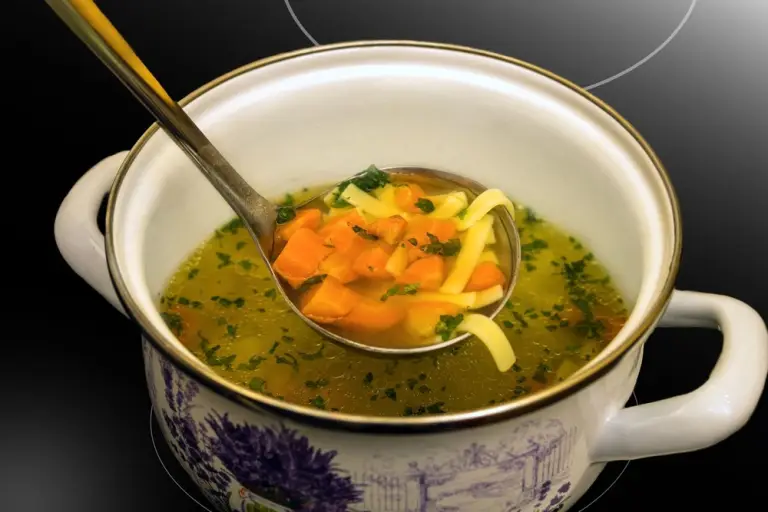
4. For soup and broth (into cold water)
When a rich stock matters, put the thighs into cold water and heat them slowly so the flavour passes into the broth. Meat on the bone gives a rich, aromatic base for any soup.
- Cover with cold water, bring to the boil and skim off the scum
- Cook for 40-50 minutes over low heat with the lid ajar
- Salt at the start or midway for a rich broth flavour
- Onion, carrot, bay leaf and peppercorns 20-30 minutes before the end
- Remove the cooked meat, pull it apart and return it to the soup at the end of cooking
Recipe: Pea soup with chicken.
5. In a multicooker
A multicooker is convenient because there is no need to watch the scum or the heat level. It suits both broth and tender meat for a main course.
- "Stew" or "Soup" mode: 40-60 minutes with the bone in
- "Steam" mode: 35-45 minutes, lighter meat
- Pressure-cooker "Meat" mode: 15-20 minutes under pressure
- Add enough water to cover the thighs completely
- Add salt and spices right away together with the water
Recipe: Chicken pilaf in a multicooker.
6. In a pressure cooker
The fastest method: under pressure, thighs reach doneness many times quicker than in an ordinary saucepan, and the meat stays juicy and comes off the bone easily.
- 15-20 minutes under pressure once it has built up (for meat as a main course)
- For a rich broth: 20-25 minutes
- Release the pressure naturally, around another 10 minutes
- It is enough to pour water just above the level of the meat
- Do not open the lid until the steam has fully released
7. Steamed (in a steamer)
Steamed thighs keep the most juiciness and do not release fat into the water, so this is the best option for diets, healthy eating and children's menus.
- Boneless fillet, steamed for 35-45 minutes
- Bone-in thighs, steamed for 40-50 minutes
- Better to remove the skin: less fat, faster heating through
- Doneness: juices run clear when pierced, flesh white
- You can salt and season before cooking by rubbing the meat
8. For salad
For salad, use skinless, boneless thigh fillet so the meat is even and slices easily. The main secret: cool it right in the broth, otherwise the fibres dry out and crumble.
- Cook the fillet for 25-30 minutes after it comes to the boil
- Take the pan off the heat and let the meat cool in the broth for 20-30 minutes
- Slice only fully cooled meat, then the slices are even
- For juiciness, add bay leaf and peppercorns to the water
- Keep the cooking broth as a base for a dressing or sauce
9. For pâté
For pâté, the meat is cooked longer than usual, until fully softened, so it pulls apart into fibres easily and blends into a smooth mass.
- Cook bone-in thighs for 40-45 minutes until tender
- The meat should separate from the bone easily and mash readily
- Separate the flesh from the skin and bones while still warm
- Blend with some of the broth and butter
- For 500 g of meat, add 70-100 g of butter for smoothness
10. For a child
For children, thighs are cooked especially carefully: skinless and boneless, with the first broth drained off to remove excess fat and traces of blood. The meat should be soft and mash easily with a fork.
- Remove the skin, trim off visible fat, leave clean flesh
- Bring to the boil, drain the first broth after 5-7 minutes
- Cover with fresh water and cook in the second broth for 35-40 minutes
- For toddlers under 3, purée with a spoonful of the stock
- Minimal salt or none at all, according to the child's age
Tips and tricks
- For juicy meat, salt 15-20 minutes before the end; for a tasty broth, salt right at the start.
- Keep a gentle simmer with slow bubbles: a rolling boil renders out the juices and makes the meat dry.
- Skim the scum in the first 5-10 minutes after boiling, then the broth will stay clear.
- Add an onion, carrot, bay leaf and peppercorns 20-30 minutes before the end for aroma.
- A thermometer shows doneness most precisely: 75 °C is safe, 80-85 °C near the bone for tenderness.
- Do not pour away the cooking broth: it is a ready base for soup, sauce or a salad dressing.
- Cool salad meat right in the broth so it does not dry out and slices well.
Common mistakes
- A rolling boil instead of a gentle simmer: the meat turns dry and tough.
- Pink juices near the bone when pierced: the thighs are undercooked and need another 10-15 minutes.
- Cooking frozen thighs for the same time as chilled ones: the centre stays raw.
- Salting right at the start when you want juicy meat: it draws the juices into the broth.
- Unskimmed scum: the broth turns out cloudy and bland.
- Slicing hot meat for salad: it crumbles, dries out and loses its look.
Preparing chicken thighs before cooking
Both the flavour of the meat and the clarity of the broth depend on proper preparation. Move frozen thighs from the freezer to the fridge 8-10 hours in advance: slow thawing keeps them juicy and makes the cooking time predictable.
- Rinse the thighs under cold water and pat them dry with a paper towel.
- Trim off excess fat and, if you like, remove the skin: the broth will be less fatty.
- For quick cooking, cut the fillet into 3-4 cm pieces.
- Choose a saucepan so the water covers the meat by 2-3 cm on top.
When to salt and how to make a clear broth
The moment you add salt decides what turns out tastier: the meat or the stock. If you want juicy thighs for a main course, salt 15-20 minutes before the end of cooking. If you are making soup or broth, salt at once: salt helps the flavour pass into the liquid.
- Adding the meat to boiling water keeps the juices in it, adding it to cold water gives the flavour to the broth.
- For the first 5-10 minutes keep a gentle simmer and skim the scum with a slotted spoon.
- Add a whole onion, carrot and root vegetables 20-30 minutes before the end.
- For a truly clear broth, do not let it boil hard and cook it with the lid ajar.
How to store cooked chicken thighs
Cooked thighs are best kept in their own broth: this way the meat does not dry out and stays tender. Cool it to room temperature for no longer than two hours, then put it in the fridge.
- In the fridge in a sealed container: 2-3 days.
- Meat keeps better in the broth than exposed to air.
- In the freezer in portions: up to 1 month with no loss of flavour.
- It is easier to reheat in the broth or under a lid so the meat does not dry out.
What to make from cooked chicken thighs
Cooked thighs taken off the bone go into salads, soups, fillings and julienne, while the broth becomes the base for a first course. A few ideas from our site:
- Cheese soup with chicken and processed cheese: cooked on ready broth from the thighs.
- Sorrel soup with chicken and egg: the cooked meat is added at the end.
- Julienne with chicken and mushrooms: the boiled meat is cut into thin strips.
- Julienne in mushroom caps in the oven: a tender chicken filling.
And if you fancy juicy thighs rather than boiled ones, try chicken thighs in beer, aromatic Georgian-style chicken chakhokhbili or fluffy chicken pilaf in a frying pan.
❓ Frequently asked questions
How long do you cook chicken thighs until done?
Bone-in thighs are cooked for 30-40 minutes after the water boils, boneless thigh fillet is ready in 25-30 minutes. Doneness is judged by clear juices when you pierce the meat near the bone.
How can you tell that chicken thighs are cooked?
When pierced with a knife near the bone, clear juices with no pink tinge run out, the meat comes off the bone easily, and the internal temperature reaches 75-85 °C.
How long do you cook frozen chicken thighs?
From frozen, put the thighs into cold water and cook for 45-55 minutes. It is better to thaw them in the fridge in advance, then the time is the same as for chilled ones, 30-40 minutes.
When should you salt chicken thighs while cooking?
For juicy meat as a main course, salt 15-20 minutes before the end. For a rich broth, salt right at the start so the flavour passes into the stock.
How long do you cook chicken thighs for soup?
Meat on the bone is cooked for 40-50 minutes in cold water, skimming off the scum. Vegetables and grains are added later, and the cooked meat is pulled apart and returned to the soup at the end.
How long do you cook chicken thighs for a child?
Remove the skin and bone, drain the first broth 5-7 minutes after boiling, cover with fresh water and cook the flesh for 35-40 minutes until fully tender.
How long do you cook chicken thighs in a multicooker?
On "Stew" or "Soup" mode 40-60 minutes, steamed 35-45 minutes, on pressure-cooker mode 15-20 minutes under pressure.
Do you need to thaw thighs before cooking?
Preferably: after slow thawing in the fridge the meat cooks through evenly and the cooking time becomes predictable. From frozen, add 10-15 minutes.
How long do you cook thighs for salad?
Use skinless, boneless fillet, cook for 25-30 minutes and cool it right in the broth. Slice only fully cooled meat, then the slices are even and do not crumble.
Can you overcook chicken thighs?
Yes, after 50-60 minutes of ordinary cooking the meat turns dry and stringy. The exception is making broth and stewing, where long cooking is acceptable.