avg —
Dandelion Tea

Instructions
The yellow dandelion petals are what you want for brewing, though there is no harm in putting whole flowers into the teapot. In that case, however, the taste will have a touch of bitterness – it is the green part of the flower that causes it. It is very easy to free the petals from the receptacle and the sepals by cutting off the green base.
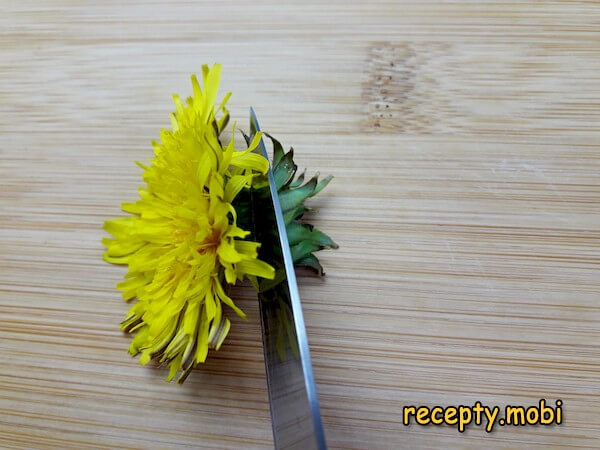
After that, all that remains is to easily pick out any leftover sepals from the bunch of yellow petals.
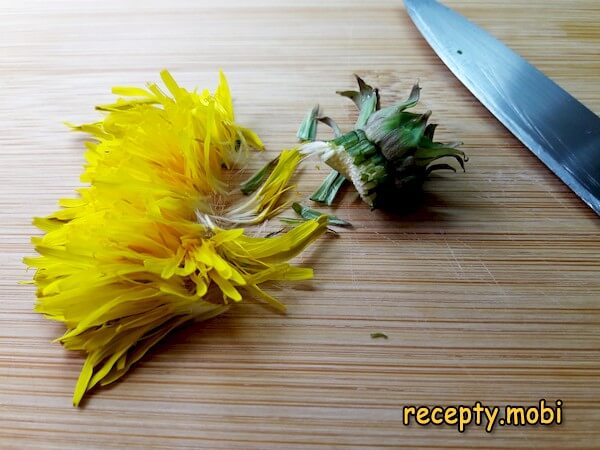
This gives you good-quality raw material for brewing dandelion tea.
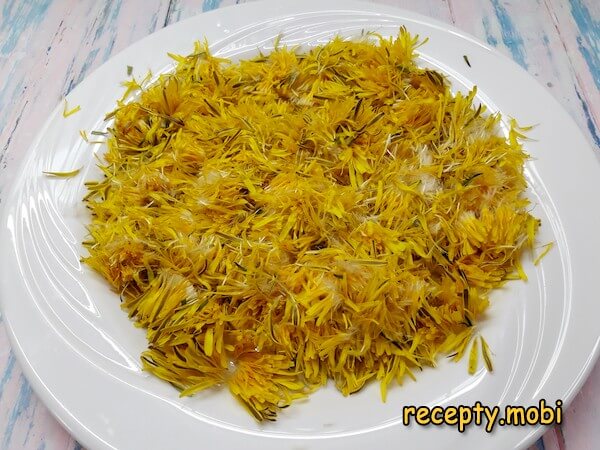
I put 2 pinches of petals into the teapot.
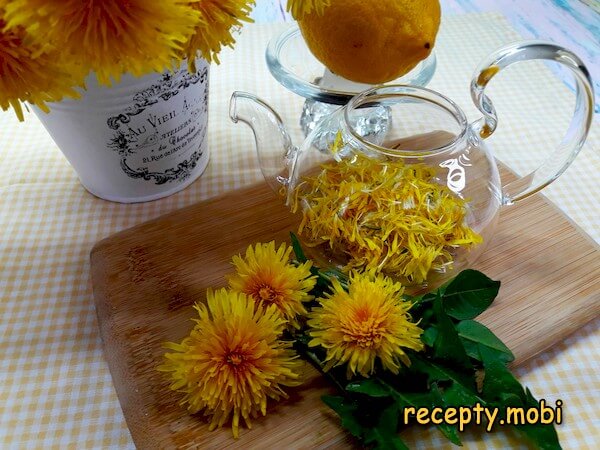
I pour over them not boiling water but hot water (60 degrees). I cover with the lid and let it steep for 5 minutes, just like ordinary tea. With every passing second the colour of the brew grows brighter and more beautiful.
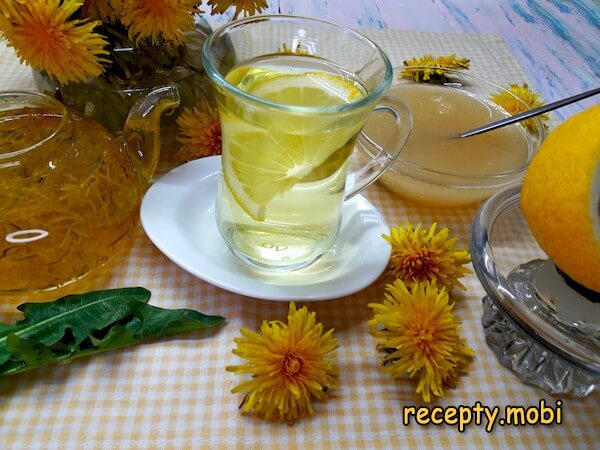
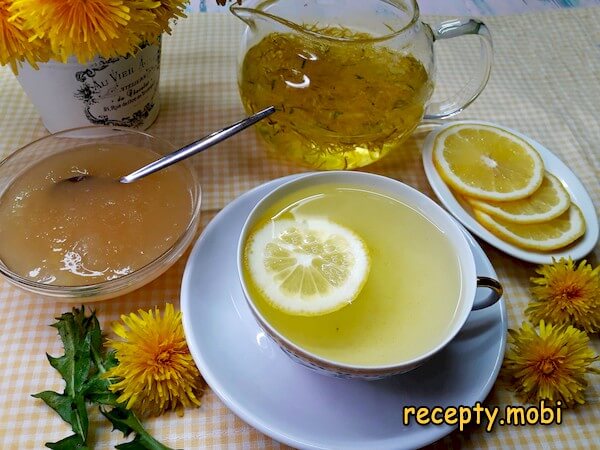
I pour the tea into a cup through a strainer. I add lemon – then the taste becomes more familiar.
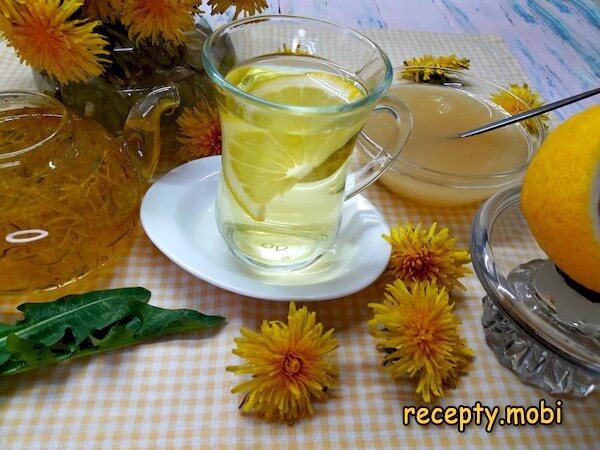
And a spoonful of honey makes it richer still.The prepared petals can be left spread out in a single layer on a windowsill (but not in the sun). After 1-2 days, with daily stirring, the raw material will dry out, and you can later use it to make dandelion tea. I put the dried petals into paper or cotton bags and keep them in a cupboard. In dried form, use 1-1.5 teaspoons of dried petals per 150 ml of water.Enjoy your tea!


Tips
- 1
ONLY THE YELLOW PETALS – the "secret" against bitterness. The green part (the sepals) gives a touch of bitterness. Cut off the base and you are left with a clean yellow bunch.
- 2
WATER AT 60 °C, NOT BOILING – the "secret" to preserving the vitamins. Boiling water "kills" the beneficial substances and the tea turns out "empty".
- 3
DON'T WASH THE FLOWERS – the pollen on the petals is a beneficial component. Washing rinses it away along with the dirt. Gather in clean places.
- 4
LEMON + HONEY – the "classic" way to serve. Lemon makes the taste familiar, honey makes it richer. The same principle works with other kinds of herbal teas.
FAQ
When should you gather dandelions? +
Ideally, from late April to mid-May in central Russia (the period of mass flowering). In the south – from the start of April. In the north – in June. Pick in the morning once the dew has dried (around 10-11 o'clock), but before the midday heat. Only in sunny weather – the flowers should be open. In overcast weather dandelions "close up" and the petals darken. Do not gather near roads, industrial zones or rubbish dumps – they accumulate toxins. Ideal spots are meadows, fields and forest edges far from motorways. Use them on the day of gathering or dry them. Do not pick faded flowers (with white "parachutes" or dried-out petals) – they have already finished blooming.
What properties does the dandelion have? +
The dandelion contains many beneficial substances: vitamins A, C and B, minerals (potassium, calcium, iron, magnesium), bitters and flavonoids. Petal tea is considered a mild diuretic, helps with swelling, improves digestion and supports the work of the liver. It is also rich in antioxidants. It is not recommended for people allergic to the daisy family (ragweed, chamomile), for those with a stomach ulcer or a flare-up of gastritis, or for those with gallstone disease. Pregnant and nursing women should consult a doctor. Do not give it to children under 5. Dosage: 1-2 cups a day, for no more than 2 weeks in a row (then take a break).
Can dandelions be stored for later? +
Yes – dry the petals in a single layer on a windowsill (not in the sun, so they do not fade) for 1-2 days, stirring daily. Storage: in paper or cotton bags in a dry, dark cupboard for up to 1 year. In dried form, use 1-1.5 teaspoons of dried petals per 150 ml of water. Alternatives: freezing fresh petals in bags (up to 6 months), dandelion jam (kept 1-2 years in jars), or syrup. For "premium" drying, use a dehydrator at 35-40 °C for 4-6 hours. Do not dry at a high temperature – the essential oils will be lost. The finished raw material is bright yellow, with no browning.
What should you serve the tea with? +
The classic: with honey and lemon (as the author advises). With milk and sugar – the "English" style. With honey in the comb – a "rustic" serving. With fresh berries or jam. With pies or biscuits. With apple pie or strudel. With a morning breakfast of toast and butter. With an afternoon snack of cottage-cheese bake. For a "relaxed evening" – with a bar of chocolate. With dried fruit and nuts – a "wholesome" afternoon snack. For a "fitness regime" – without sugar or honey (just lemon). A versatile herbal tea for all seasons (in winter from the stored petals).
- Comment
or post as a guest
Be the first to comment.