avg —
Rhubarb and Apple Compote

Instructions
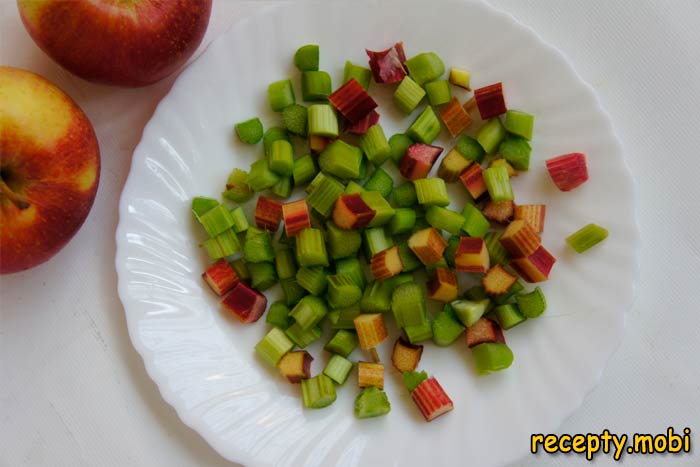
I wash the rhubarb stalks under cold water. I do not peel young rhubarb from the start of the season – its skin is still thin and tender. With older, later-season rhubarb I always remove the skin, trimming it off the way you would with celery. I cut the stalks into 1.5 cm pieces across – this size is best for even cooking.
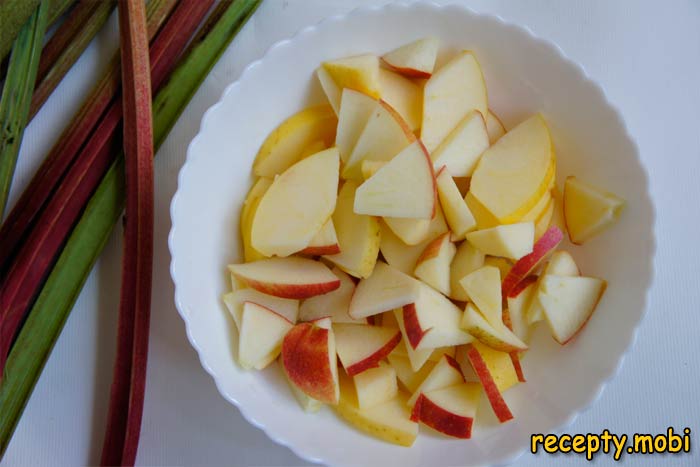
I take red-cheeked apples (Red Delicious, Gala, Early Golden) – they give the compote a lovely pink tint. I cut out the core with the seeds and slice the apples thinly, about 5 mm thick. I tip the sliced apples and rhubarb into a large pot of 3–4 litres – you need room to spare for cooking.
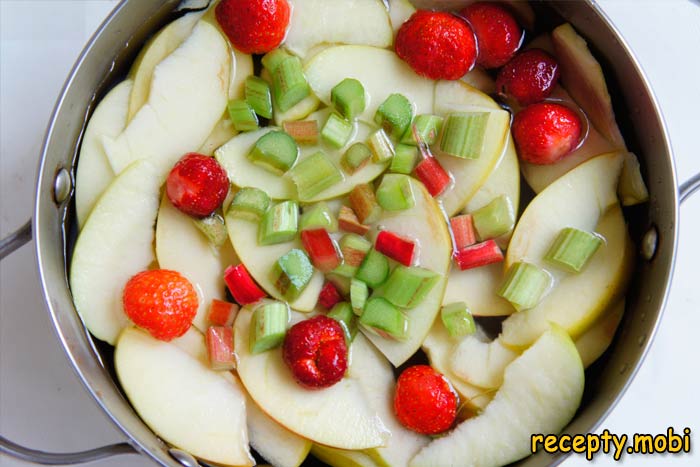
I pour cold water over all the ingredients (2 litres) and add sugar to taste (2 tablespoons for a less sweet version, 4 for a sweet one). For a brighter ruby colour and a richer berry aroma, I add a handful of fresh or frozen strawberries. I bring it to the boil over medium heat, then cook at a gentle simmer for 10 minutes. I take it off the heat, let it stand covered for 30 minutes and cool it completely.
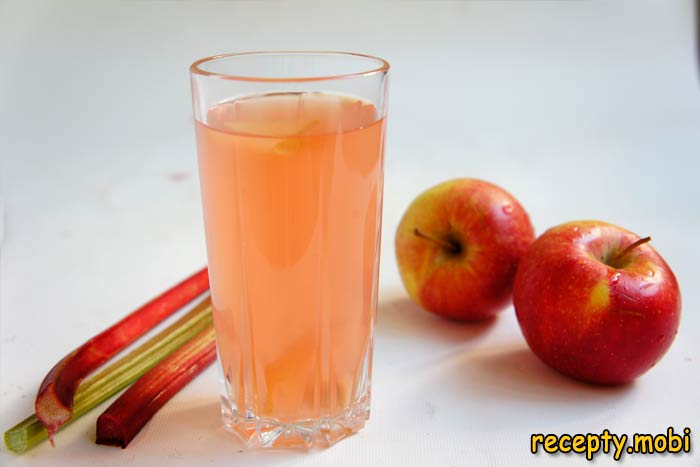
The rhubarb and apple compote is ready! I strain it through a sieve for a clear drink (or serve it with the berries and pieces of fruit – it is up to you). I serve it chilled with ice cubes and a sprig of mint – the perfect summer drink for a hot day. It is especially good on the first days of summer at the dacha.


Tips
- 1
Make the compote in spring or early summer – young rhubarb contains three to four times less oxalic acid, which is what gives the finished drink an unpleasant bitterness.
- 2
Do not add too much sugar – the drink should be refreshing, not cloying. Rhubarb is already slightly sweet when combined with apples.
- 3
Replace the sugar with honey in the cooled compote for a healthier version. I make apple compote on a similar principle.
- 4
For a bright ruby colour, add a handful of strawberries, raspberries or cherries – the berries will lend their colour and aroma.
FAQ
Can rhubarb compote be preserved for winter? +
Yes. Pour the hot compote into sterilised 2–3 litre jars and seal them straight away with metal lids. Turn them upside down and wrap them in a blanket until they cool completely, for extra sterilisation. It keeps in a cool, dark place for up to a year. For more reliable preserving, add 1 teaspoon of citric acid per 3 litres of compote – this strengthens the preserving effect of the natural acids. In winter it will bring back memories of summer freshness.
What can replace rhubarb in the recipe? +
Sorrel works (a more sour taste, use half the amount), fresh chard stalks (a milder taste), gooseberries (a tart, berry note), or fresh lemon with zest (a citrus version). Each substitute gives the drink its own character. Without a sour component you get a plain apple compote – also tasty, but without the characteristic "spring" note of rhubarb. Rhubarb is a unique ingredient and hard to replace fully.
How long does the finished compote keep? +
In the fridge, in a tightly sealed bottle or carafe, it keeps for up to 3 days without losing quality. On the second day the taste becomes richer as the fruit infuses. Canned compote keeps in jars for up to a year in a cool place. You can freeze fresh compote in ice-cube trays to make "compote cubes" for adding to water or tea. Keep an opened canned jar in the fridge for up to 7 days.
Is rhubarb compote good for you? +
Yes. Rhubarb contains B vitamins, vitamin C, minerals (potassium, magnesium, calcium, iron) and dietary fibre. It aids digestion, improves metabolism and has a mild laxative effect (helpful for constipation). The compote keeps some of its vitamins even after cooking. However, rhubarb contains oxalic acid, so it is not recommended for kidney disease, gout or urolithiasis. Give it to children under 3 only in limited amounts.
- Comment
or post as a guest
Be the first to comment.