avg —
Peach Compote for Winter

Instructions
First of all, I put a pot with 2 l of water on the heat – you can add a little more so that, after some boils off, there is definitely enough for two 1 l jars (or one 2-litre jar). At the same time I prepare the jars: I wash and sterilise them with boiling water, over steam, in the oven or in the microwave – whichever is more convenient.
I wash the peaches, remove the pits and, without peeling, cut them into wedges. There is no need to remove the skin – it gives a lovely colour and aroma.
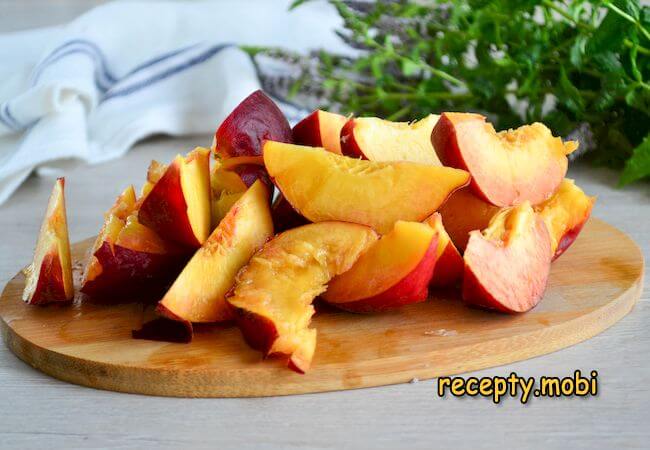
Once the water comes to the boil, I add the peaches, the sugar and just a tiny bit of citric acid (a couple of granules) to the pot. It brings out the fruity flavour.
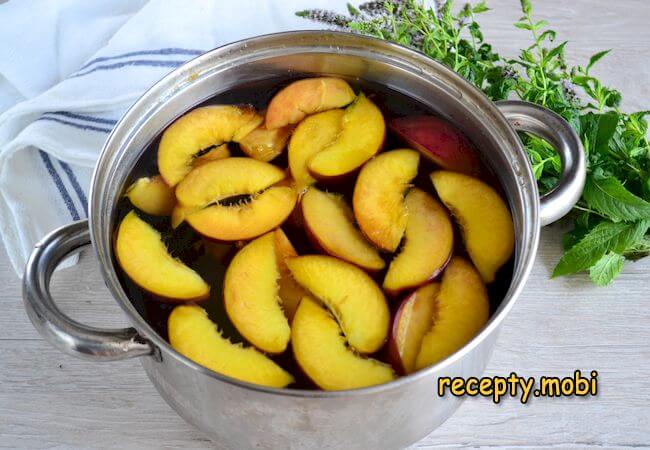
I boil the compote for 7–10 minutes and take it off the heat. There is no need to cook it any longer – the peaches would lose their shape.
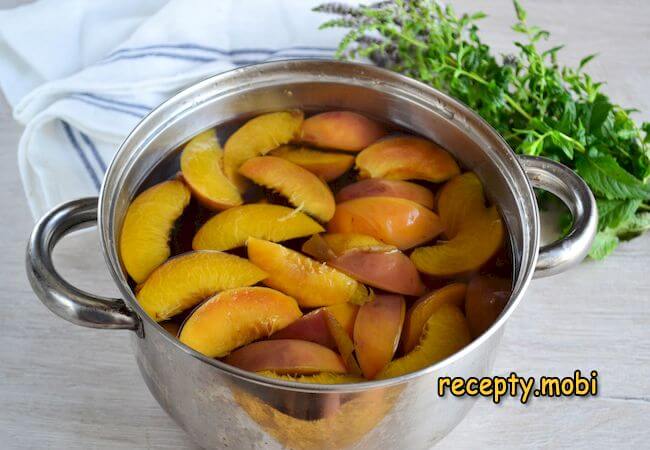
I pour the compote into the jars, adding the fruit pieces themselves – as it infuses, they will give up even more of their flavour and aroma. I seal the jars with sterilised metal lids and turn them upside down.
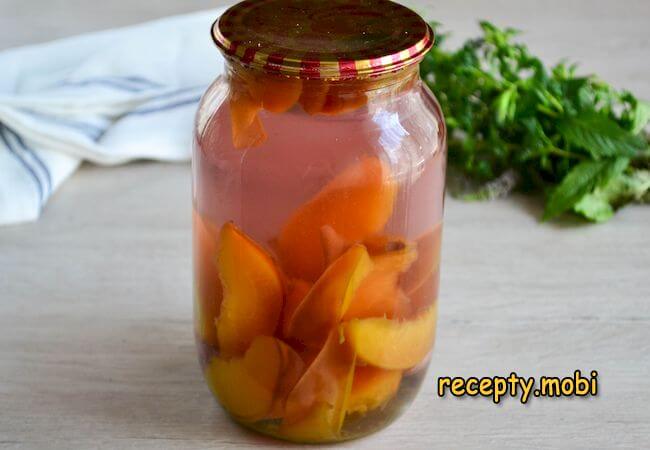
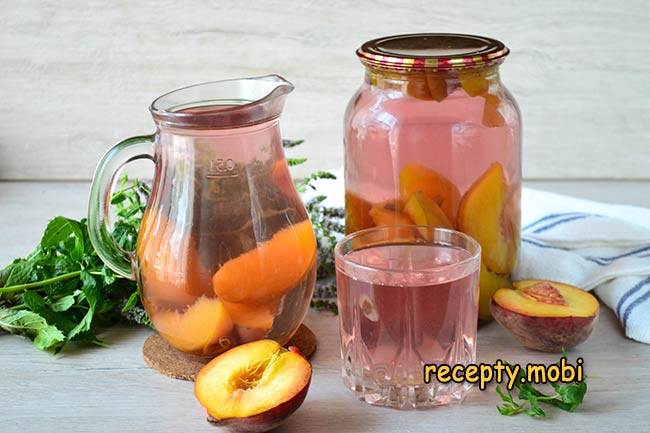
The tasty, aromatic peach compote for winter is ready. You can drink it straight away – you do not have to pour it all into jars. But do seal a few jars anyway; you will be very glad of them in winter!Bon appetit!


Tips
- 1
DO NOT remove the skin from the peaches – it gives the syrup a lovely shade and a rich aroma. Just wash them thoroughly.
- 2
CHOOSE peaches that are firm and only just ripe – soft ones will «go to mush» in the syrup and make the compote cloudy. The ideal is fruit that is «crunchy» like an apple.
- 3
Use the MINIMUM amount of citric acid (3–4 granules) – only for balance and preserving. Peaches already contain plenty of acid themselves.
- 4
Do not boil it for longer than 10 minutes – otherwise the peaches will fall apart and turn to purée. I apply this same «under-cooking» principle to other fruit compotes as well.
FAQ
Which varieties of peach are best for compote? +
The best choices are: Cardinal (firm, sweet, hold their shape well), Redhaven (the classic red-and-yellow, the most popular), Golden Jubilee (aromatic, does not overcook), Elberta (large, with firm flesh). Avoid nectarines – they are too delicate. Flat (doughnut) peaches make for an unusual presentation. White peaches (the White Pearl variety) have a more delicate flavour but overcook faster. The main thing is that the fruit should be firm, with dense flesh. Use overripe peaches for jam or preserves instead.
What should I do with the pits? +
Remove them. The reasons: pits contain amygdalin, which over time can release traces of hydrocyanic acid into the syrup (when stored for more than a year). Pits also take up room in the jar – it is better to put in more flesh instead. To remove them: cut the peach along its groove and twist the halves anticlockwise – the flesh comes away easily. In some varieties the pit «clings» to the flesh – in that case use a knife. If you really love the «almond» note that comes from the pit, put 1–2 fresh ones in the jar, but store it for no more than 6 months.
How long does peach compote keep? +
In a cellar or a cool, dark place (10–15 °C) – up to 12 months. At room temperature – up to 8 months. Once opened – 4–5 days in the fridge. Peach compote is one of the most «moreish» ones – it is often finished by the New Year holidays. Signs of spoilage: a bulging lid, a cloudy syrup, an unusual smell – do not drink it. With the right technique, sealing is almost always successful.
Can I mix it with other fruits? +
Yes, it combines wonderfully. Some options: peaches + apricots (50/50, for a brighter aroma), + grapes (for sweetness), + lemon slices (a citrus accent), + raspberries or blackberries (for colour contrast), + Antonovka apples (a touch of tartness to balance the sweetness). A «mix» is a good idea: the flavour of 3–4 fruits in a single jar. Mint and basil also complement peaches beautifully. An assortment of peach + orange + cloves gives an oriental note, very interesting for the winter holidays.
- Comment
or post as a guest
Be the first to comment.