avg —
Compote from Frozen Strawberries

Instructions
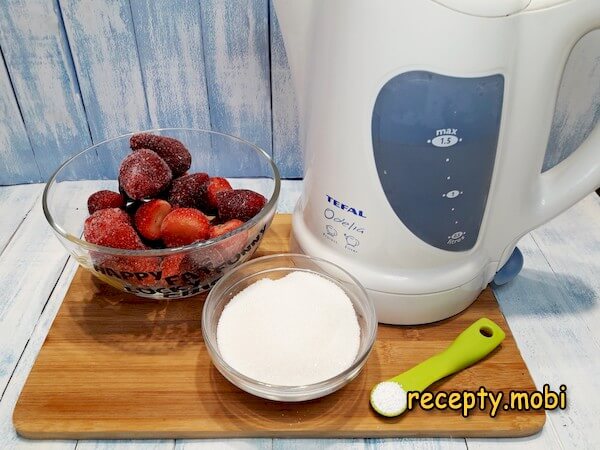
I prepare the ingredients for the compote from frozen strawberries. There is no need to take the strawberries out of the freezer in advance – the berries should stay frozen and firm right up to the moment they go into the boiling water. The citric acid can be replaced with a tablespoon of freshly squeezed lime or lemon juice.
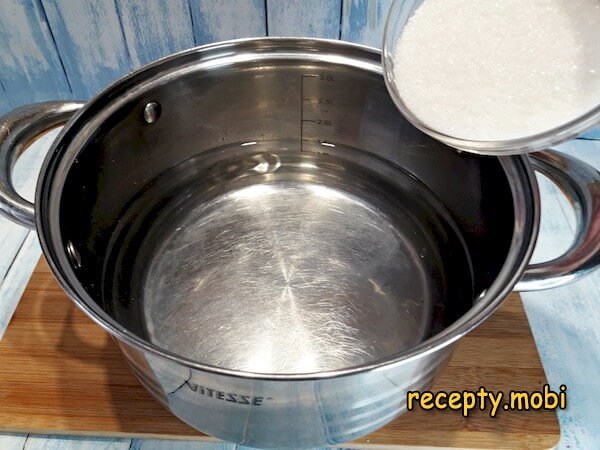
I pour water into the pot – there should be room left to the rim (about 5 centimetres). I add the sugar and stir – the spare room is needed so the compote does not boil over.
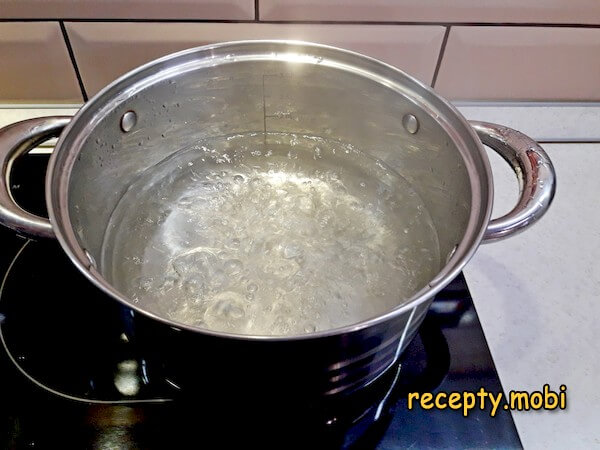
Over medium heat I bring the solution to a boil – medium heat exactly, not high, so the sugar has time to dissolve completely.
After 3 minutes I drop all the strawberries into the boiling water. I cover the pot with a lid. Once it returns to a boil, I let the berries simmer for 4–5 minutes – it is precisely the frozen berries that go into boiling water, so they keep their shape and do not turn to mush.
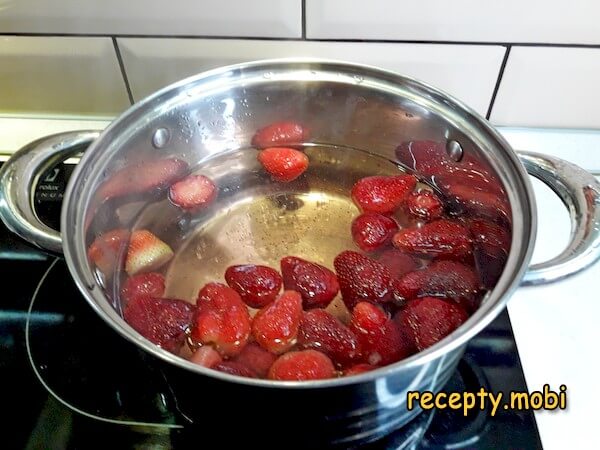
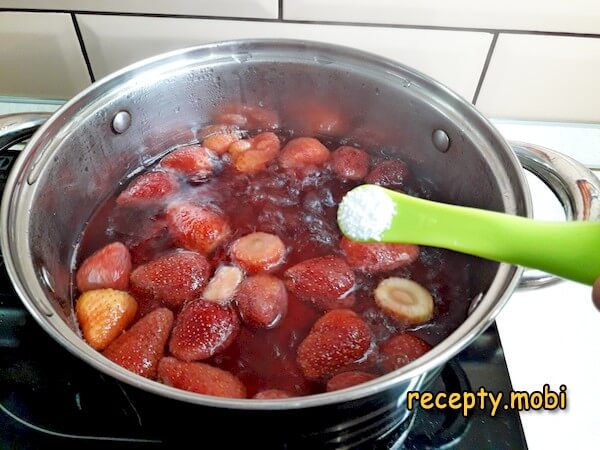
Then I add the citric acid, which not only gives a pleasant tartness but also keeps the colour of the drink bright and stops it from fading. I stir everything in – this is the "secret" to the bright pink-red colour of the compote.
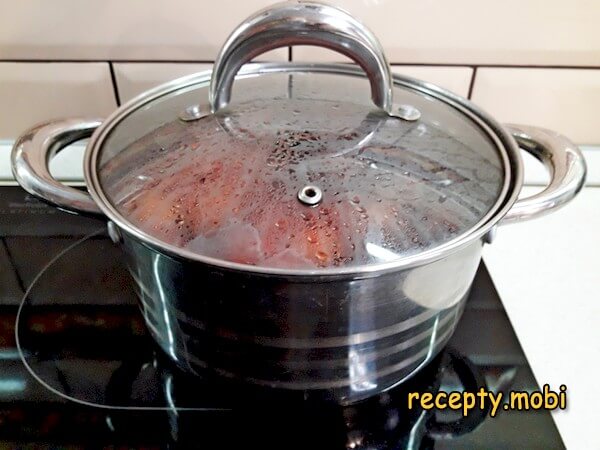
I turn off the stove, cover the compote with a lid and let it stand for 15 minutes. If it is the cold season, I take the pot out onto the balcony so the drink cools to room temperature faster. If it is warm outside, I wait until the temperature of the compote levels with room temperature (removing the lid while it does).
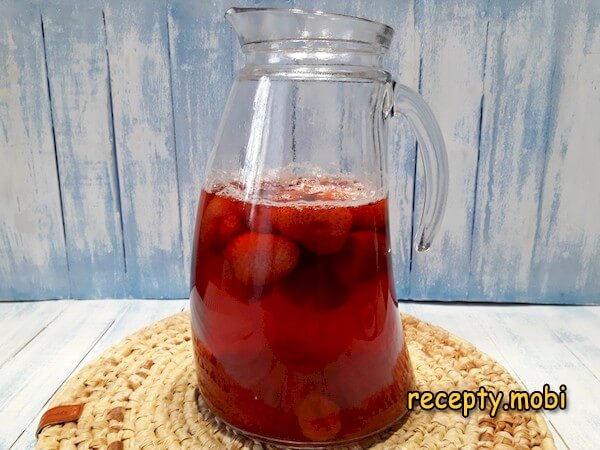
Next I pour the strawberry drink into a jug and put it in the fridge until fully chilled. If you like, the compote can be diluted with boiled water – then its taste will be less rich and sweet.To serve, I pour the chilled compote from frozen strawberries into tall glasses and add a few mint leaves, which give the drink extra freshness. In hot weather a few ice cubes dropped into the glasses add even more coolness. In the same way you can make compote not only from frozen strawberries but from other berries too.


Tips
- 1
FROZEN BERRIES INTO BOILING WATER – the "secret" to the berries' shape. If you put frozen strawberries into cold or warm water and let them thaw before it boils, the berries will cook down to mush during boiling. The sharp change in temperature (frozen → boiling water) seals the berries on the outside, and they keep their shape right to the end of cooking. This is a "secret" from confectioners – the same principle is used in cranberry mors from frozen cranberries.
- 2
CITRIC ACID – the "secret" to the bright colour. Without citric acid the compote loses its rich pink-red colour as it cools and becomes "pale pink", less appetising to look at. Citric acid fixes the natural anthocyanin pigment of strawberries and stops it from oxidising – the colour stays bright and rich even the next day in the fridge.
- 3
STEEPING FOR 15 MINUTES – the "secret" to a rich flavour. Right after boiling the compote is "muted" in taste – the berries have not had time to give all their aroma to the liquid. Fifteen minutes under the lid with the heat off let the berries fully "release" their taste and aroma – the compote becomes rich and bright.
- 4
A UNIVERSAL TECHNIQUE – the "secret" to seasonal variations. The same basic technique works with any frozen berries – cherries, raspberries, blackcurrants, blackberries, cranberries, blueberries. Following the principle of strawberry compote you can make "mixed" versions – two or three different berries for a complex, multi-layered taste. Master the basic technique and vary it by season or mood.
FAQ
Can I replace frozen strawberries with fresh? +
Yes, the method is practically identical. Fresh strawberries go into the boiling water in the same way and cook for 5–7 minutes (1–2 minutes longer, because they are not frozen). In taste, fresh compote will be more "fresh" with a light "green" note, while frozen is more rich and "stewed". From 300 g of fresh strawberries you get roughly the same volume of compote. The advantage of frozen is availability all year round; the drawback is a slightly less "fresh" aroma. You can use either fresh or frozen berries with no significant difference in the result.
How long does home-made compote keep? +
In the fridge in a sealed jug or jar – up to 4 days without losing flavour. On the second day the taste becomes richer – the berries have fully given their aromas to the liquid. After 4 days it may start to ferment – if bubbles and a sour taste appear, it is best to throw it out. You can freeze the finished compote as ice cubes (for cocktails) or in small containers – it keeps for up to 3 months. Defrost in the fridge for 6–8 hours, or use it straight away as "fruit ice" in hot tea.
Can I make compote in a multicooker? +
Yes, it is a very convenient method. I pour water into the multicooker bowl, add the sugar and frozen berries, and set the "Stew" or "Soup" mode for 30–40 minutes. After the programme ends I add the citric acid and leave it on the "Keep Warm" mode for 1–2 hours to steep. The advantage is that the multicooker controls the process itself, so you do not need to watch for the compote boiling over. The drawback is that the colour may be slightly less bright than with classic boiling.
What to serve strawberry compote with? +
It is a versatile home-made drink. For a children's supper: with biscuits, syrniki, oladyi or pancakes. For an adult table: with cake, cheesecake, tiramisu or ice cream. For breakfast: with porridge, granola or toast. For a picnic: in a bottle to take along as an alternative to fizzy drinks. For a festive table: in a pretty carafe with a slice of lemon and a mint leaf. On a hot summer day: with ice and a slice of lime – a refreshing non-alcoholic "home cocktail". It can also be used as a base for summer cocktails with sparkling wine or cider.
- Comment
or post as a guest
Be the first to comment.