avg —
Cherry compote for winter (without sterilization)

Instructions
I prepare the ingredients for cherry compote without sterilization. I rinse the cherries, dry them, and remove any rotten or wormy fruits. I leave the pits in – they give the flavour a characteristic "almond" note.
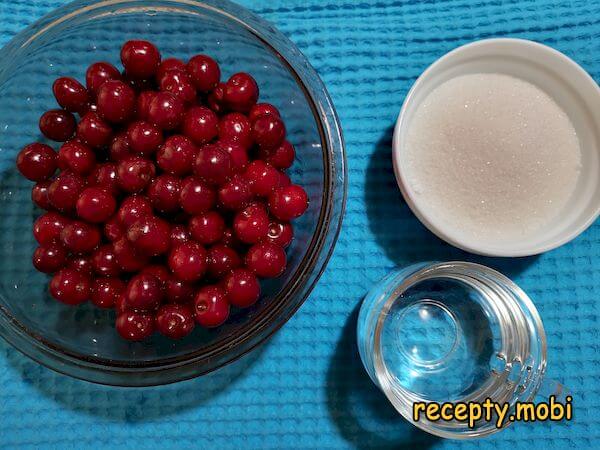
I wash the jars with baking soda and rinse them well. Soda removes grease and residue. I transfer 500 g of cherries into each three-litre jar.
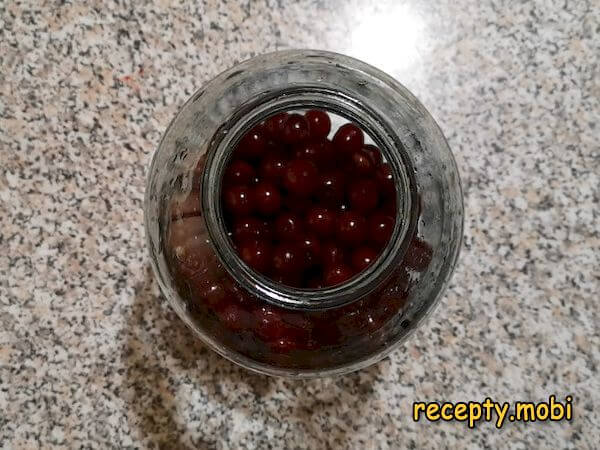
I bring the water to a boil and fill the jars of cherries to the top with it. I cover the neck with a sterilized lid. I leave it to infuse for about 15 minutes – the cherries will release their aroma and colour.
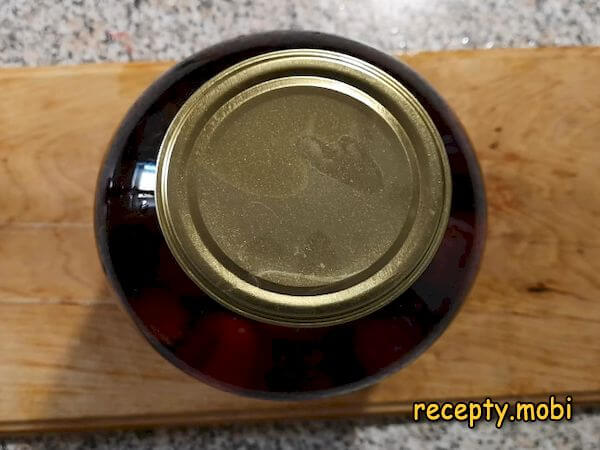
Using a special lid (with holes), I drain the liquid from the jars into a saucepan. If you don't have such a lid, you can strain it through cheesecloth. I cover the jars with sterilized lids.
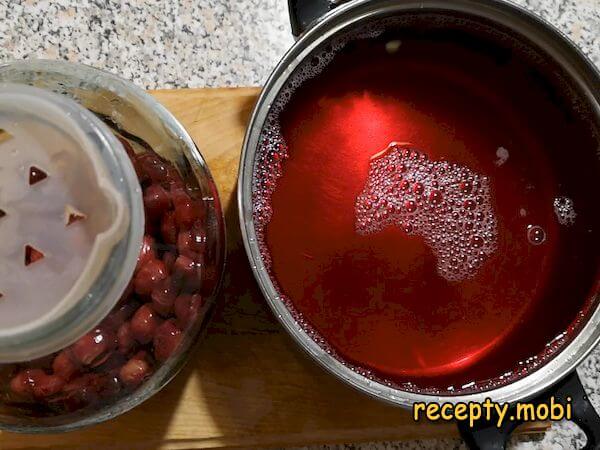
I put the saucepan with the liquid on the heat and bring it to a boil. While the liquid is coming to a boil, I pour 300 g of sugar into each jar of cherries and cover them with lids.
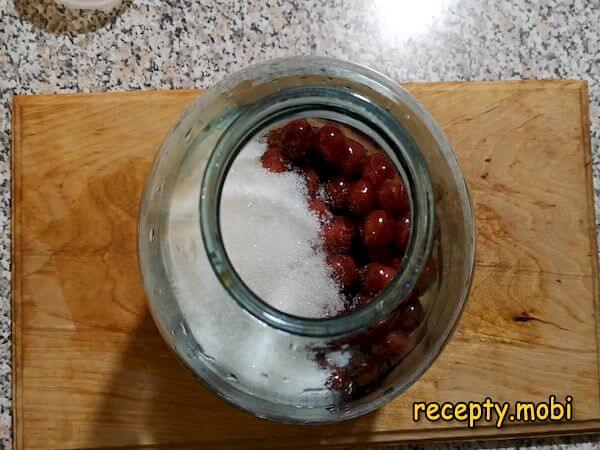
As soon as the liquid comes to a boil, I pour it over the cherries with sugar. This double "pour" acts as a self-sterilization of the contents.
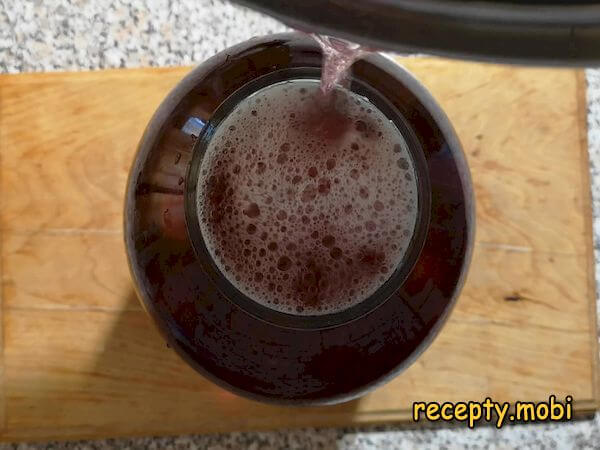
I cover the jars with lids and seal them right away.
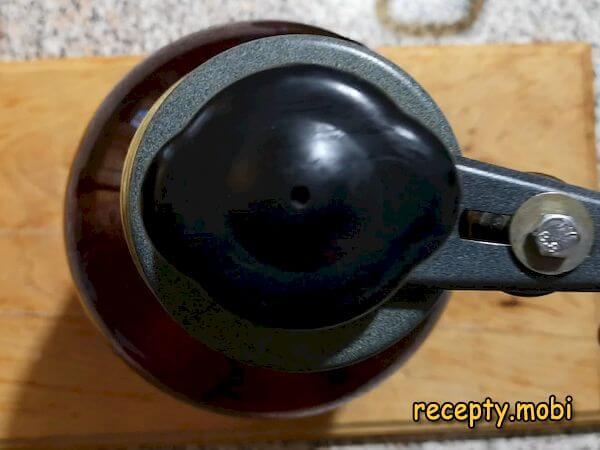
I turn the sealed jars upside down for 12 hours – during this time "heat-curing" takes place and the seal is checked for tightness.
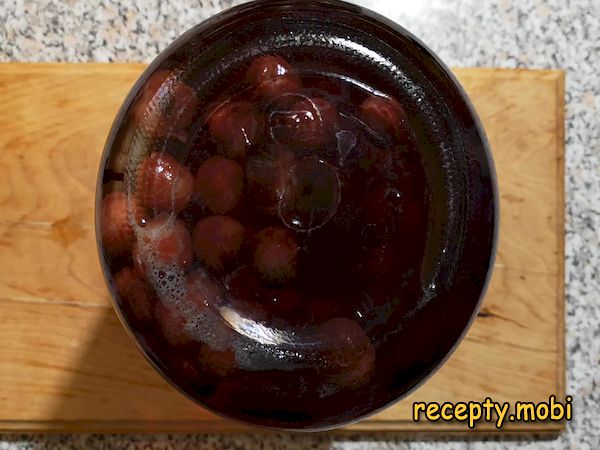
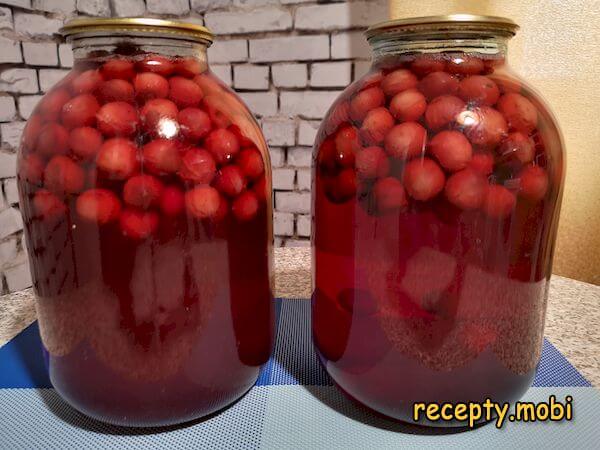
The cherry compote for winter without sterilization is ready. Once it has cooled, I move the jars to the cellar for storage.Cherry compote for winter is one of the simplest, yet at the same time most popular, kinds of preserves.Enjoy your meal!


Tips
- 1
Choose ripe cherries, but not overripe ones – overripe fruit quickly falls apart in the compote. Varieties with firm flesh are best (Vladimirskaya, Lyubskaya, Shubinka).
- 2
You can leave the pits in or remove them. With pits there is an "almond" note to the flavour and it keeps longer. Without pits it is more delicate, but the shelf life is reduced to 6 months (toxins from the pits do not build up).
- 3
The double-pour method is the key to making it "without sterilization". The first pour warms the jars and the cherries, and the second (with sugar) locks in the result.
- 4
Turn the jars upside down for 12 hours – this checks the seal and provides extra sterilization of the lids from the inside with the hot syrup. The principle works for all berry compotes without sterilization.
Video
FAQ
With pits or without – which is better? +
Both options have their pros and cons. With pits: a characteristic "almond" note to the flavour (the pit contains amygdalin, which gives the aroma), it keeps longer (up to 1 year), and it is more convenient to prepare (less work). The downsides: the inside of the pits contains hydrocyanic acid – after a year to a year and a half it begins to "migrate" into the syrup, so compote with pits should not be stored for longer than 1 year. Without pits: a more delicate flavour and the compote is easier to drink, but the shelf life is 6–8 months. For children, only without pits (for safety). For long-term storage, with pits.
How long does the finished compote keep? +
In a cellar or cool pantry (10–15 °C), with pits it keeps up to 1 year and without pits up to 8 months. In a flat at room temperature, 6 and 4 months respectively. Once opened, 3–5 days in the fridge. Signs of spoilage: cloudy syrup, a bulging lid, "hissing" on opening, a sour smell – throw such compote away. With the correct technique the sealed jars cure successfully and only become tastier over time – the sugar dissolves completely and the cherries give all their flavour to the syrup.
Why is citric acid not added? +
Cherries are quite acidic on their own (pH 3.2–3.8), and their own acidity is enough for preserving. Citric acid would be "unnecessary" – the compote would become too sour and more sugar would be needed to balance it. If the cherries are very sweet (cultivated varieties such as "Chocolate" or "Festivalnaya"), you can add 1/4 tsp of citric acid per jar as a safeguard. But this is not essential. The double-pour method by itself provides the necessary sterilization.
Can I use frozen cherries? +
Yes, but the result will be a little different. Frozen cherries release their juice straight away, so a single pour of boiling syrup is enough (instead of a double one). Take 600 g of frozen cherries per jar (more than fresh – they will "shrink down"). It is better to remove the pits before freezing. Add slightly less sugar (250 g) – frozen berries often contain a little "of their own" syrup. The shelf life is shorter, up to 6 months. Use them in the winter season when fresh cherries are not available.
- Comment
or post as a guest
Be the first to comment.