avg —
Darginsky Khinkal

Instructions
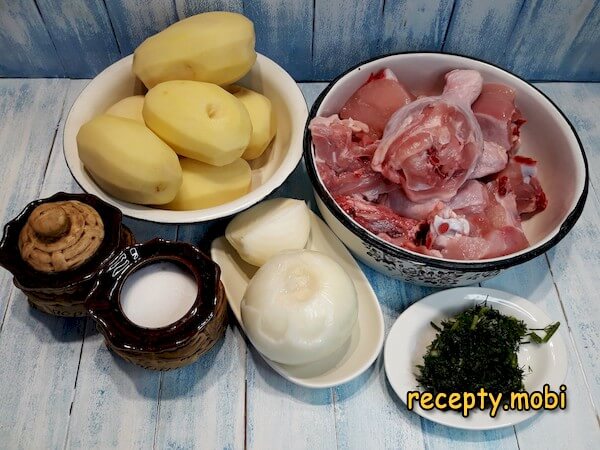
I prepare everything needed for the meat-and-potato base. The chicken parts can be any you like – the main thing is to cut them into large pieces. Large pieces do not overcook and keep their juiciness during cooking.
For the khinkal the water should be warm – about 38 degrees. Dry yeast can be replaced with fresh pressed yeast – you will need 45 grams of it. Warm water is essential for activating the yeast.
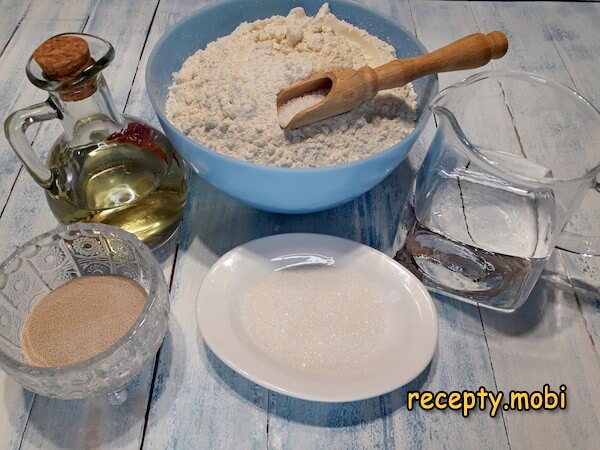
I start with making the dough for the khinkal. First I make the starter. For this I dissolve the yeast together with the sugar in the water (it is best to use a taller container of small diameter, so the starter has room to rise). I cover the mixture with a lid and put it in a warm place for about 15 minutes.
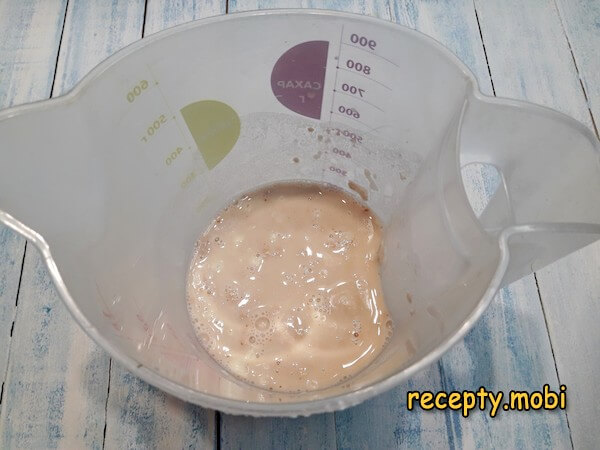
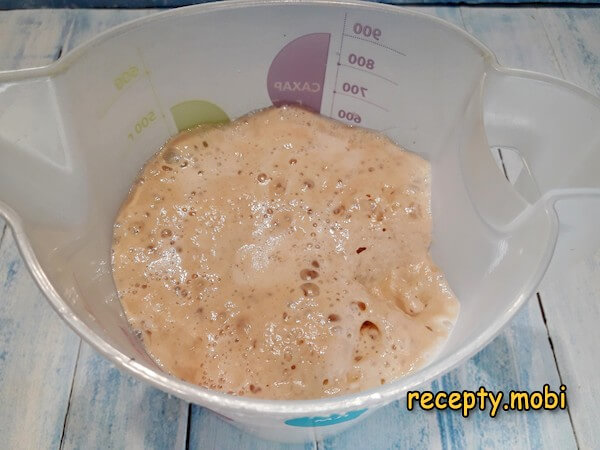
After this time the yeast activates and a vigorous reaction with foaming begins – this means the starter is ready. Without active foam the starter has not "taken off" – the yeast is poor or the water was cold.
Into a deep bowl I sift the flour, add the salt and the oil – sifting enriches the flour with oxygen and gives a more airy dough.
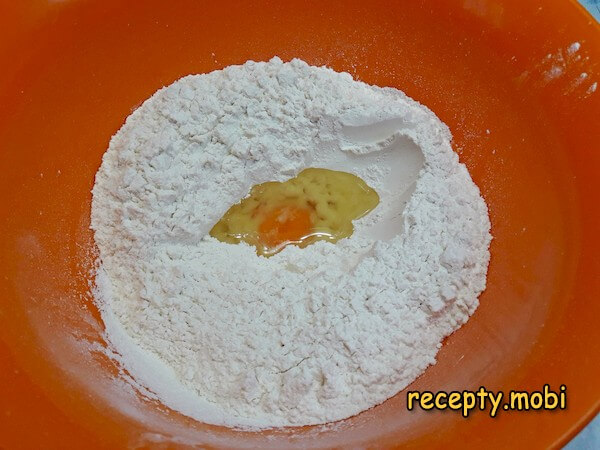
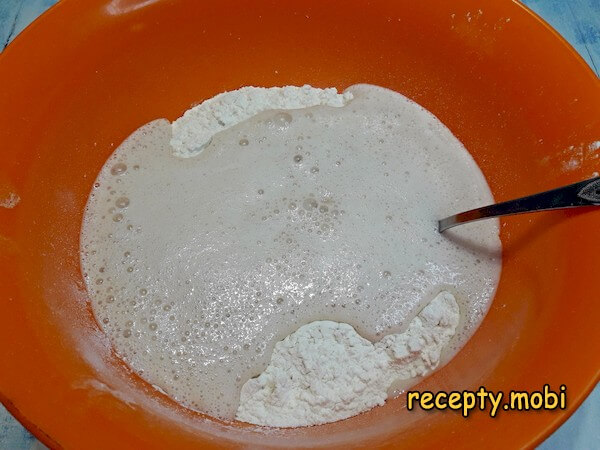
I pour the starter in here as well and mix everything, first with a spoon and then kneading the mixture by hand so that no dry patches remain – hand kneading gives a better distribution of moisture.
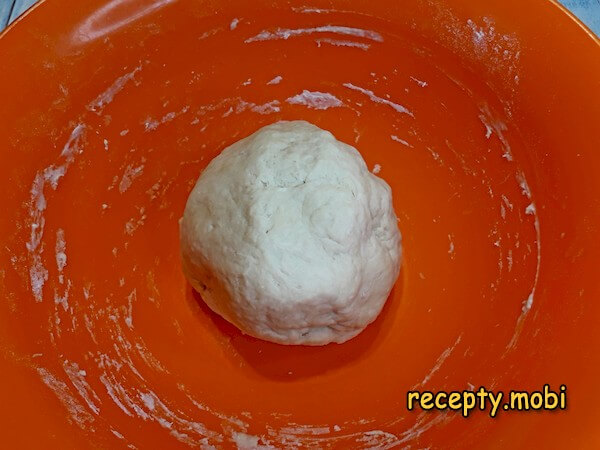
I shape the dough into a ball and cover it with a towel – let it stand for 1 hour in a warm place. In an hour the yeast will raise the dough 2–3 times in size.
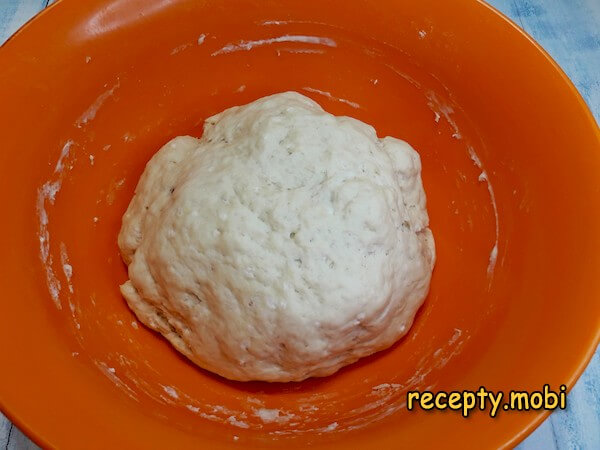
After the allotted time I take out the bowl with the yeast dough – it has grown considerably in height and spread out. The surface is bubbly and elastic.
I turn the dough out onto the table and knead it a little. I separate one-third from the whole. I press it into a flat cake and then roll it out into a thin sheet 2 millimetres thick – it must be thin, not thick.
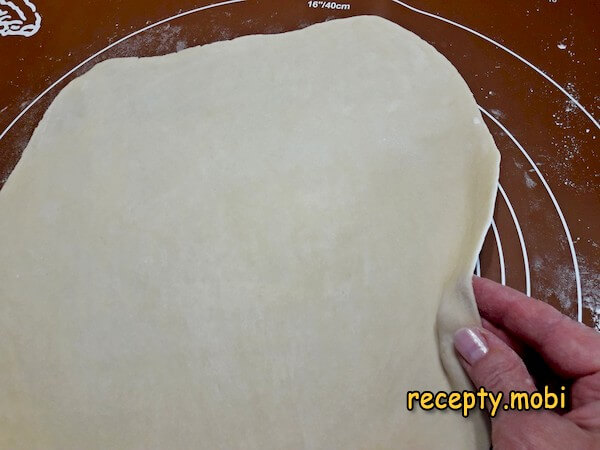
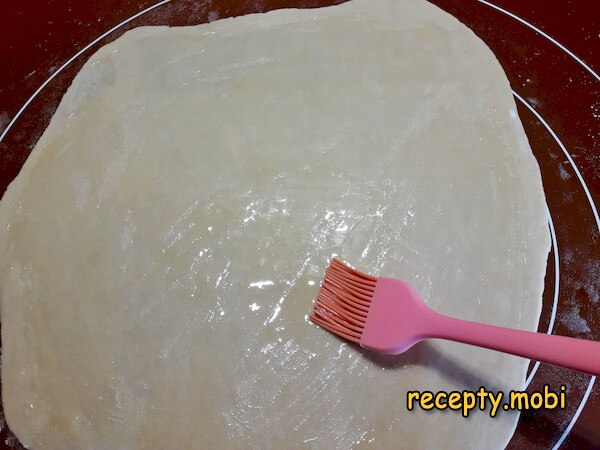
Onto the rolled-out cake I pour a tablespoon of oil and spread it with a brush across the whole surface – this is the "secret" stage that gives the finished khinkal its layered structure.
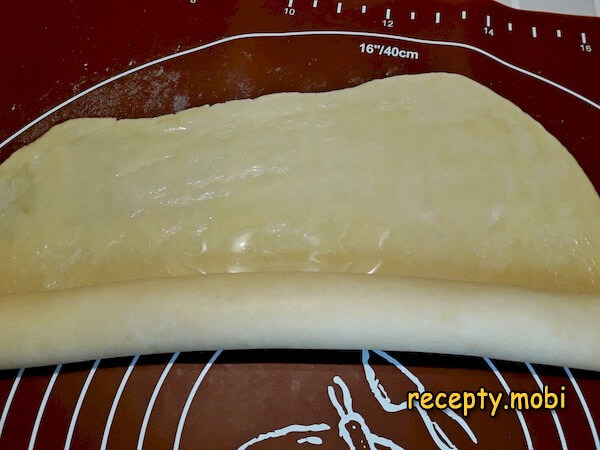
I roll the rolled-out dough into a tight roll – tight indeed, with no air pockets. This is the "secret" to forming the layered rose.
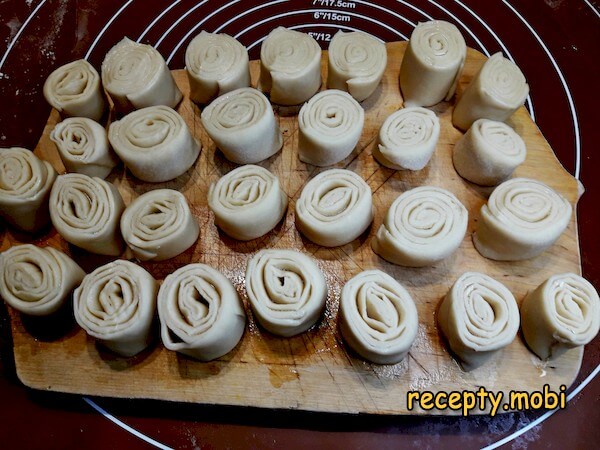
I cut it into discs 3 centimetres thick and lay them on a board – after steaming each disc turns into a layered "rose".
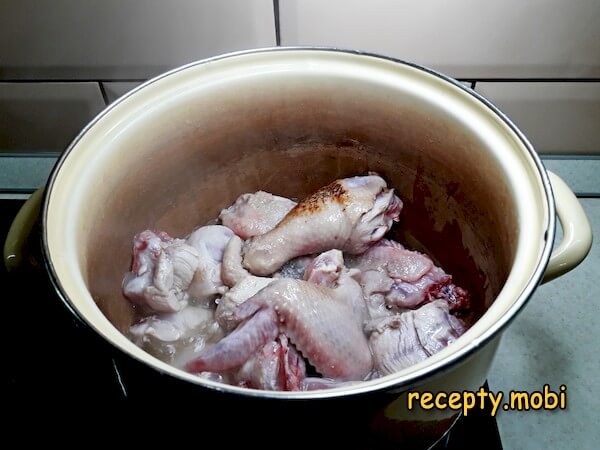
In a deep cauldron or heavy-bottomed pot I heat the vegetable oil. Over high heat I brown the chicken pieces in it – high heat is exactly what seals the meat juices inside.
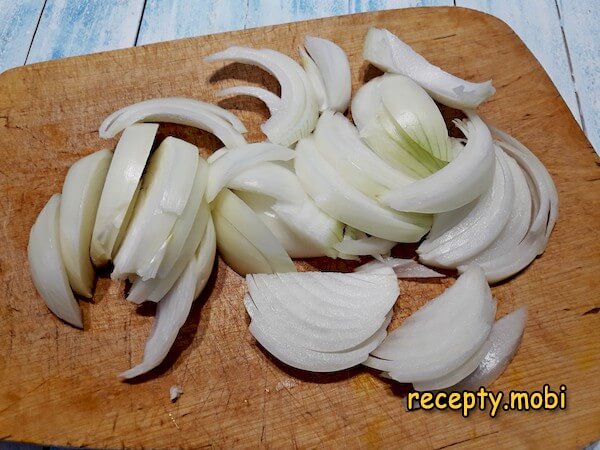
Meanwhile I cut the onion into large half-rings – a coarse cut gives sweetness and texture in the finished base.
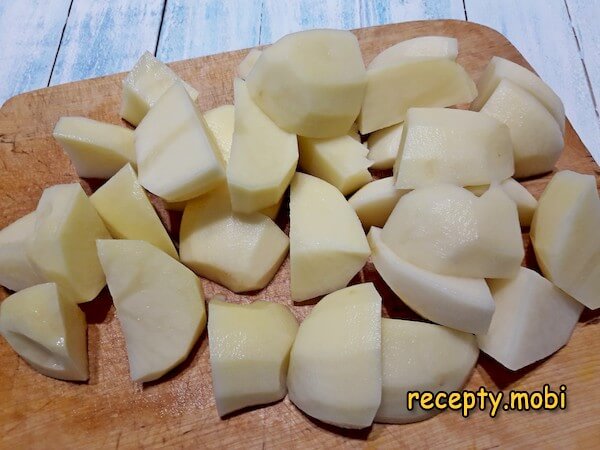
I cut the potatoes just as coarsely – the size should be similar to the onion for a harmonious presentation.
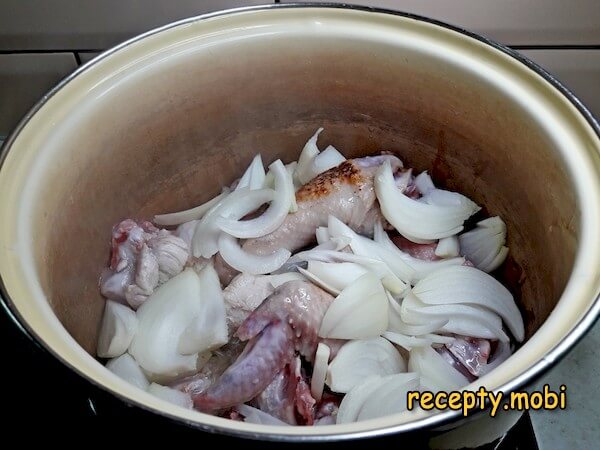
When the meat in the pot releases its juices, I add the onion to it – exactly when the juices appear, so the onion goes into the "broth" for the coming steam bath.
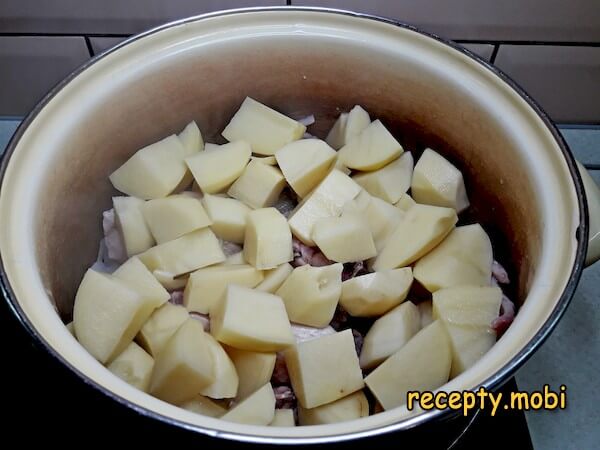
Straight on top of it I lay the potatoes – as the top layer, so they cook mostly by steam.
I salt and pepper everything and season with herbs. If there is too little meat juice, I pour in a little water (up to 100 millilitres) – so that enough steam forms for the steam cooking.
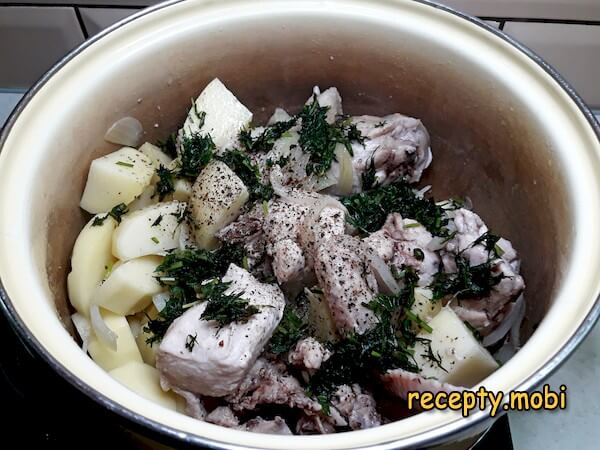
Right at the very top I place the khinkal pieces – they will cook in the steam that forms as the meat and potato stew. This is the Darginsky "trick": the khinkal pieces are not boiled in water but steamed over the meat.
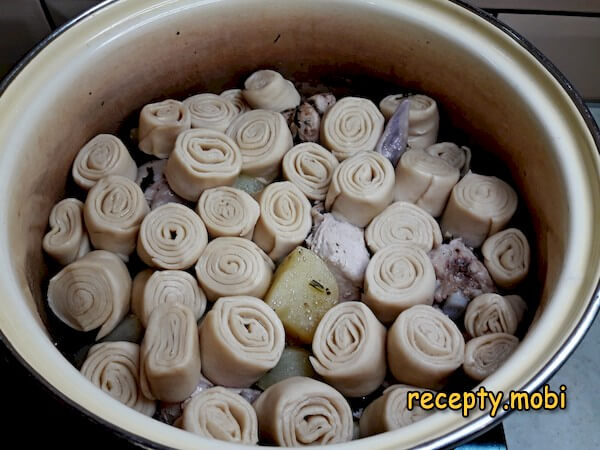
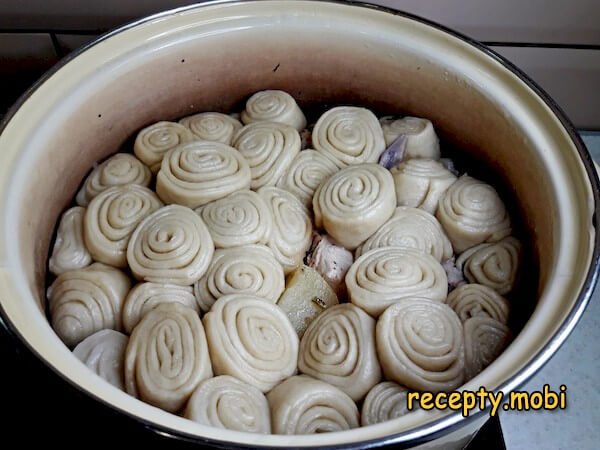
I cover the pot with a lid, reduce the heat to medium and wait 40 minutes, after which the dish will be ready – in a single pot you get a complete meal at once: meat + side dish + bread.The Darginsky khinkal turned out hearty and aromatic. The layers of the yeast rolls did not stick together; the dough came out porous and airy. For a portioned serving, you arrange meat, potato and a few khinkal pieces on a plate. This combination is very harmonious and is often found in Caucasian cooking.


Tips
- 1
OIL ON THE ROLLED SHEET – the "secret" of the layered structure. Without oil on the rolled-out cake, the layers in the finished khinkal stick together into a dense mass. A thin layer of oil brushed between the coils of the roll gives the characteristic "layered rose" when steamed – the dough separates into thin sheets, like a croissant. This is the main "secret" of the Darginsky technique.
- 2
KHINKAL ON STEAM, NOT IN WATER – the "secret" against getting soggy. If you boil khinkal in water, it goes soggy and turns to mush. Steam over the stewing meat and potato gives the perfect conditions for steaming the yeast dough: an airy texture without excess water. This is the "secret" of the "all in one" pot. A similar "layered" technique is found in khychiny with cheese and potato.
- 3
THE YEAST DOUGH SETS DARGINSKY APART FROM THE REST – the "secret" of authenticity. Unlike Georgian khinkali (dumplings) or Avarian khinkal (unleavened dumplings), the Darginsky one is the only kind with yeast dough. This is its "signature feature". An alternative "dumpling" technique is shown in khinkali at home – the Georgian relative.
- 4
BROWNING THE CHICKEN IN THE SAME POT – the "secret" of the "one cauldron". The Darginsky approach is to cook everything in a single pot from the very start. No separate frying pans, no separate pots for the side dish. First the meat is browned over high heat, then the vegetables are layered on, and at the end the khinkal pieces go on top. This saves time and dishes, and the juices and aromas blend into one multi-layered flavour.
FAQ
How does Darginsky khinkal differ from the others? +
The main difference is the yeast dough and the "layered rose" shape. Georgian khinkali are large dumplings with a meat filling, boiled in boiling water. Avarian khinkal are unleavened dumplings in the shape of small squares, also boiled in water. Kumyk are squares of stiff unleavened dough. Lak are diamonds. Darginsky, however, is the only kind with yeast dough, the only one where the "bread" is steamed over the meat, and the only one with the characteristic "rosette" shape. It is the most "bread-like" version of khinkal in the Caucasus.
Can the chicken be replaced with another meat? +
Yes, lamb is also used authentically (most often in Dagestani mountain villages). Alternatives: beef (a richer flavour), lamb with fat-tail fat (for the fattiest authentic version), turkey (a leaner option), a 1:1 mix of chicken and beef (a compromise). Pork is not suitable – for religious reasons in Dagestan. The main rule is that meat on the bone gives more juice, which is needed for steam to form. Pure fillet may be too dry – you would need to add water to the pot.
How long does Darginsky khinkal keep? +
In the refrigerator in a sealed container – up to 3 days. Before serving I reheat it in the oven at 150 °C under foil for 10–15 minutes, or in a frying pan with a couple of spoons of water to restore the steam. The khinkal pieces (rolls) can be dried in the oven on both sides for 5 minutes – then they become "crisp outside, soft inside". I do not recommend freezing – the yeast rolls become "rubbery" after thawing and lose their layered texture. It is better to cook 1–2 days ahead.
What to serve with Darginsky khinkal? +
The authentic Darginsky serving is on a large plate: pieces of meat, potato and a few khinkal pieces side by side. It is generously sprinkled with fresh herbs (cilantro, parsley). To the table: garlic sauce (crushed garlic + sour cream + salt), and fermented-milk drinks – ayran, tan, matsoni. For starters: pickled vegetables, fresh cucumbers and tomatoes, a bunch of fresh herbs. For a large Caucasian table: Darginsky khinkal as part of an assortment with other Caucasian dishes – chudu, chebureki, shashlik. For drinks: hot black tea, homemade red wine.
- Comment
or post as a guest
Be the first to comment.