avg —
Pizza on Yeast Dough in the Oven

Instructions
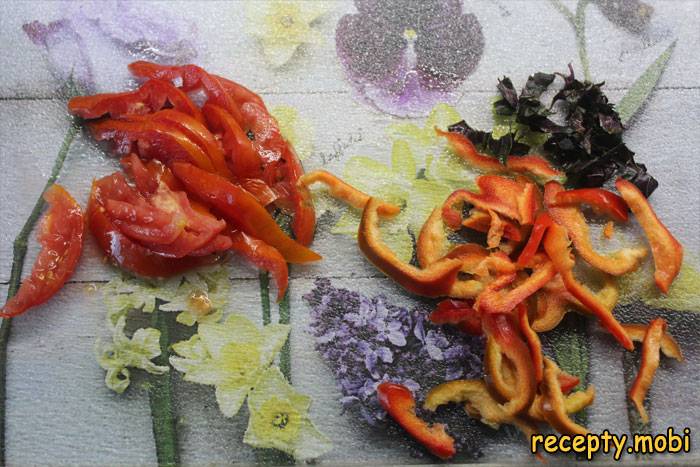
I chop the bell pepper and tomatoes into thin half-rings of 5–7 mm. Thin slices bake faster and do not release much liquid. I shred fresh basil – the aroma of basil only opens up when it is cut right before use.
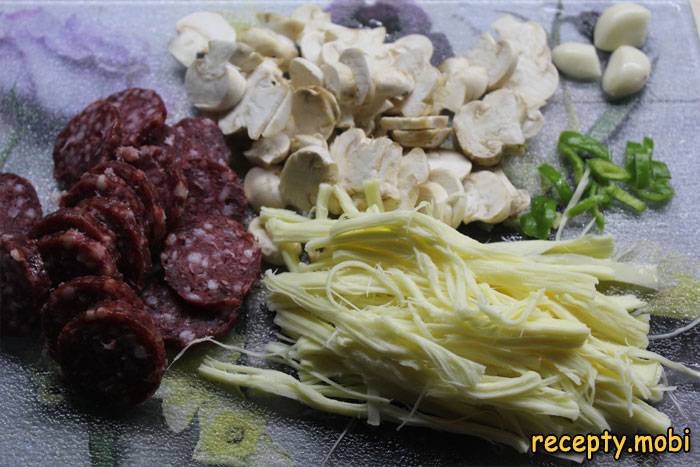
I chop the chilli pepper (deseeded for a milder taste) and the garlic cloves. I cut the salami into rings 2–3 mm thick and slice the champignons into thin pieces. I tear the suluguni into fibres or cut it into circles – the fibres give beautiful cheesy "strings" when melted.
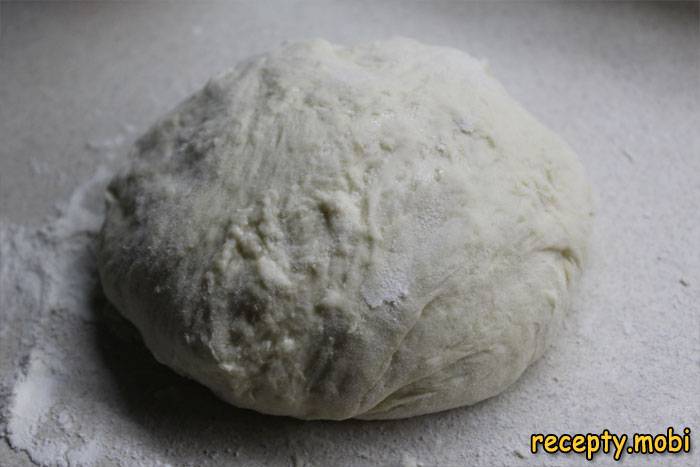
I prepare the yeast dough. If the dough is from the fridge, let it come up to room temperature for 30 minutes, otherwise it will roll out poorly. Shop-bought dough is also suitable, but homemade gives a more "Italian" character.
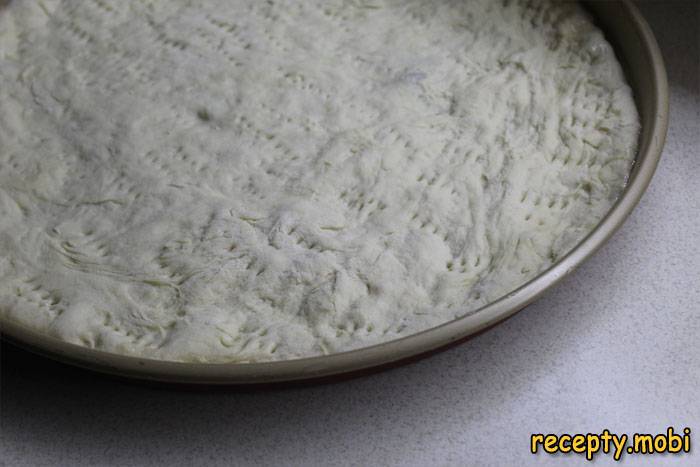
I roll out the dough to the diameter of the baking dish. In my case it is 35×35 cm with a layer thickness of 5–7 mm. I thoroughly prick the base all over with a fork so that the dough does not puff up into bubbles while baking. Without the holes, the central part can rise into a dome.
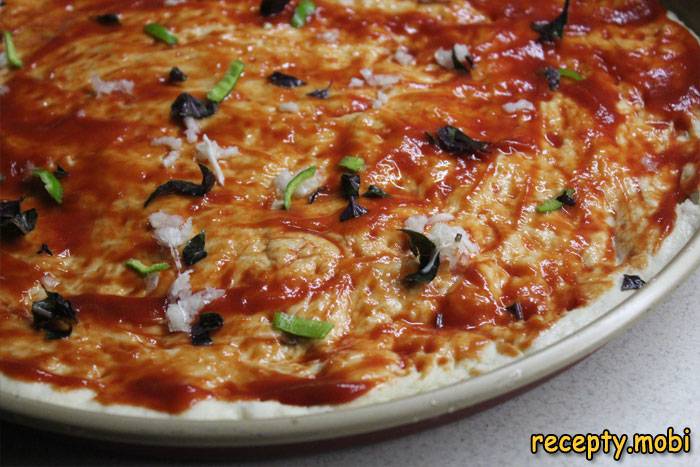
I spread the base with tomato sauce in a thin, even layer. I use homemade or shop-bought ketchup. I sprinkle the base with chopped fresh basil, chilli and garlic – they lay the aroma right into the base.
I lay slices of bell pepper, tomatoes and champignons on the pizza in an even layer. I put the vegetables down first so that they release their juice into the filling rather than onto the dough.
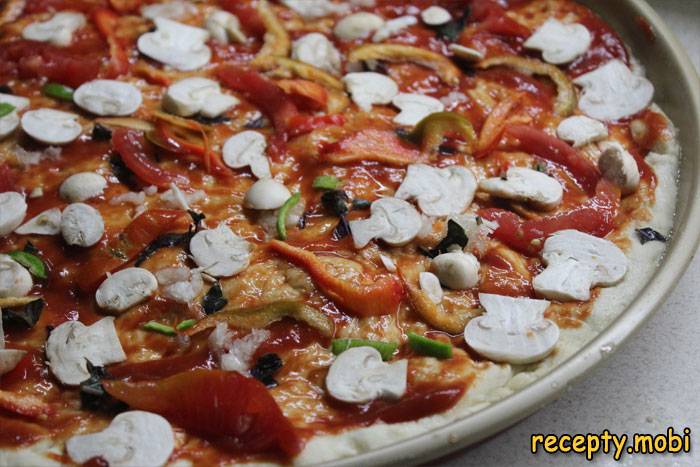
I add the salami sausage and chopped pineapple. Be sure to drain the pineapple in a colander for at least 10 minutes – otherwise its liquid will soak the dough and the pizza will turn out "wet" in the middle.
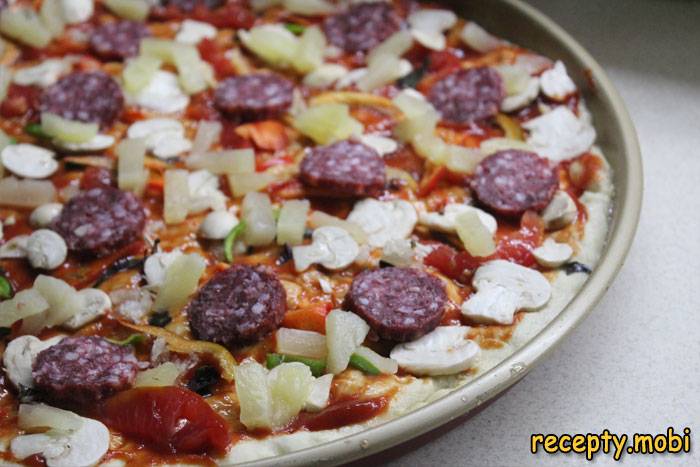
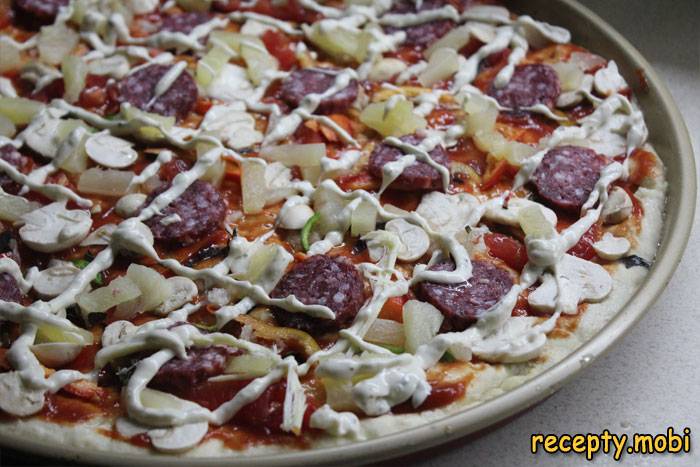
I cover the pizza with sour cream sauce, tartar sauce or mayonnaise in a thin lattice layer. The creamy note nicely sets off the saltiness of the salami and the sweetness of the pineapple.
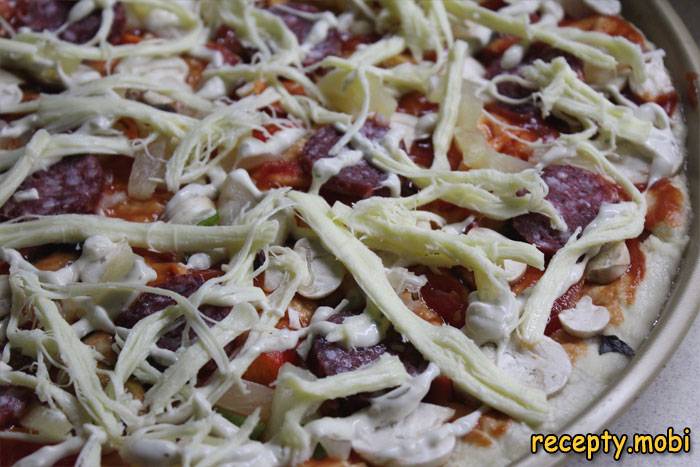
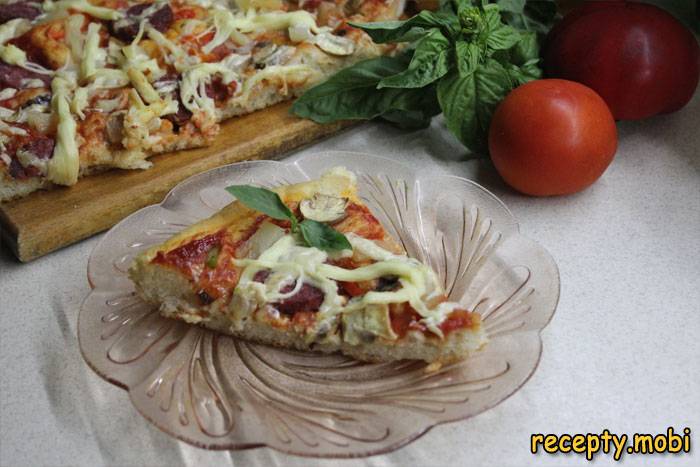
I sprinkle the pizza with suluguni fibres or grated mozzarella. I put it into the oven for 15 minutes at 220 °C. I bake until fully done – with ruddy golden edges and melted cheese with light caramel spots.
I take out the pizza and let it rest for 3–5 minutes – it is hard to cut a freshly baked one neatly. I cut it into pieces with a special pizza wheel and serve it hot.


Tips
- 1
Prick the dough all over with a fork – without this the pizza will puff up into bubbles and take on an uneven look.
- 2
Drain the pineapple in a colander for at least 10 minutes – its liquid will soak the dough and make the pizza "wet" in the centre.
- 3
Suluguni can be replaced with mozzarella – it gives the characteristic stretchy "pizzeria" crust. A similar principle works in pizza margherita.
- 4
Experiment with the toppings – any smoked sausages, ham, bacon, brisket, seafood, mushrooms and seasonal vegetables are suitable.
FAQ
What temperature is best for baking pizza? +
The optimum is 200–220 °C – until the edges are golden and the cheese is melted. Baking time is 12–15 minutes depending on the power of the oven and the thickness of the dough. Professional pizzerias use wood-fired ovens at 350–400 °C, but such a setting is not available in a home oven. For a thin base 12 minutes is enough, for a fluffy one 15–18. Turn on the top heat for the last 2–3 minutes for a more ruddy crust. Readiness is judged by the golden edges and the bubbling cheese.
Can I use ready-made dough from the shop? +
Yes, shop-bought yeast dough works very well and will save 1.5–2 hours on cooking. Let the dough come up to room temperature for 30–40 minutes before rolling – cold dough will tear and stretch poorly. The quality varies between manufacturers: look for dough without palm oil and a lot of preservatives. Homemade dough is still tastier – it has that characteristic "pizzeria" taste and aroma.
What can replace salami in the filling? +
Any smoked sausage will do – cervelat, chorizo, pepperoni, hunter's sausages, Krakow sausage, sliced hunter's sausage. Ham, bacon, prosciutto and brisket also work well – they give the pizza a different character. For a spicy pizza, take a spicy smoked sausage or add more chilli. So that the salami does not dry out while baking, place it under a layer of cheese – then it will heat through but stay juicy.
- Comment
or post as a guest
Be the first to comment.