avg —
Flammekueche

Instructions
I prepare the ingredients. The water should be very warm, about 50 degrees. The sour cream should be 20% fat or higher. If using champignons, there is no need to boil them – cut into large pieces, I simply sauté them in vegetable or butter until done.
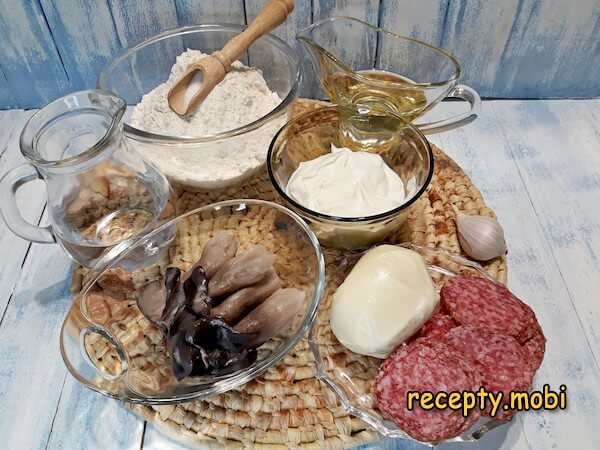
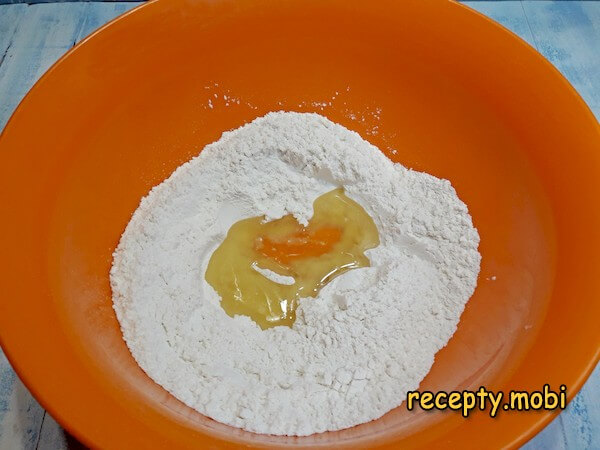
Into a bowl I tip the flour with the salt and pour the sunflower oil into the centre – the classic "well" method, which lets you gradually work the flour into the liquid.
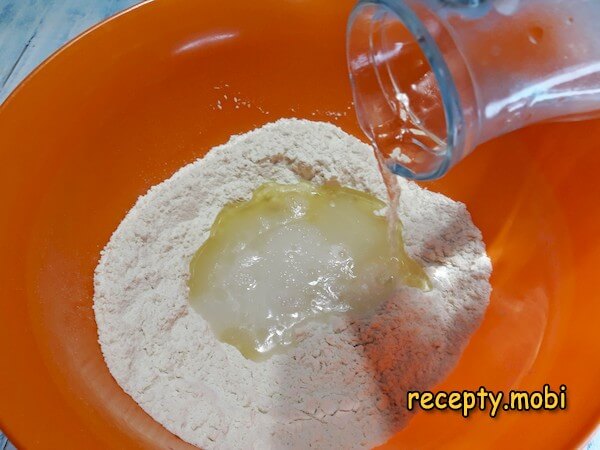
I add the warm water – it is precisely warm water at 50 °C that gives the best gluten activation and makes the dough elastic enough to roll thin.
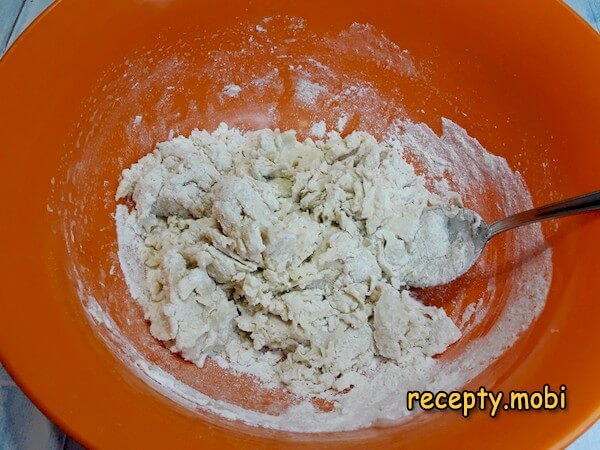
I stir everything with a spoon until it has the consistency of dry flakes – at this stage the dough looks like coarse crumbs.
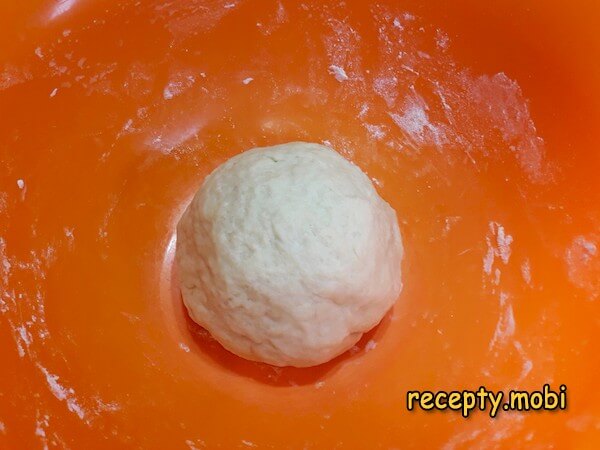
Then I knead the mixture by hand, right in the bowl or on the counter. You should get a uniform ball – soft, warm and not sticky to the hands. I cover it with a towel and leave it to rest for at least 5 minutes.
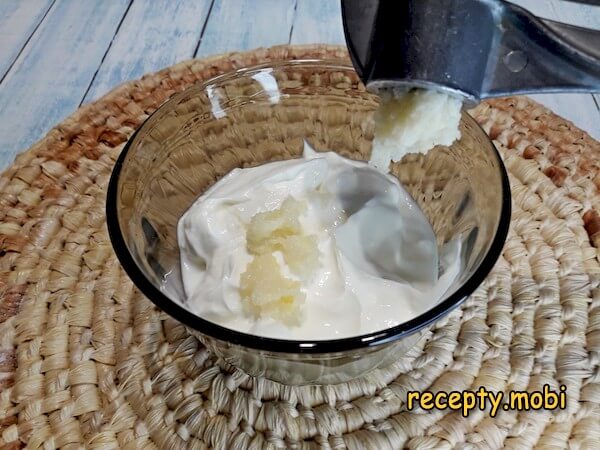
Meanwhile I prepare the sour cream sauce. I press the garlic through a press into a bowl of sour cream – the garlic releases the most aroma on contact with the cold dairy base.
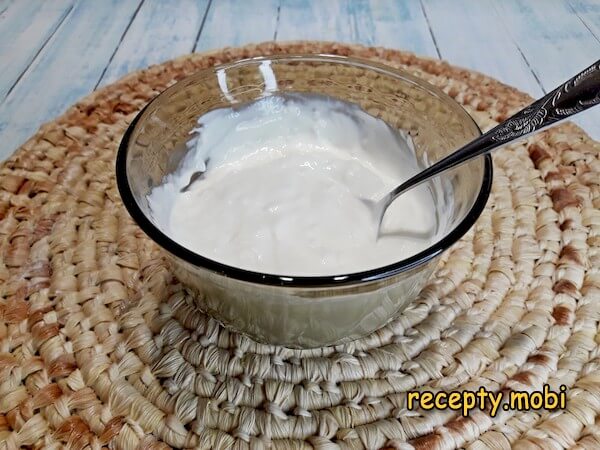
I add a little salt and stir – the salt helps the garlic aroma open up and balances the richness of the sour cream.
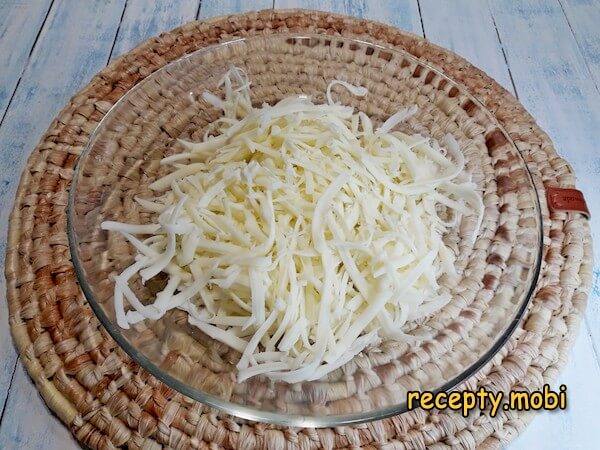
I grate the cheese on a coarse grater – a coarse grater gives "threads" of cheese that melt beautifully into the characteristic "lacy net" during baking.
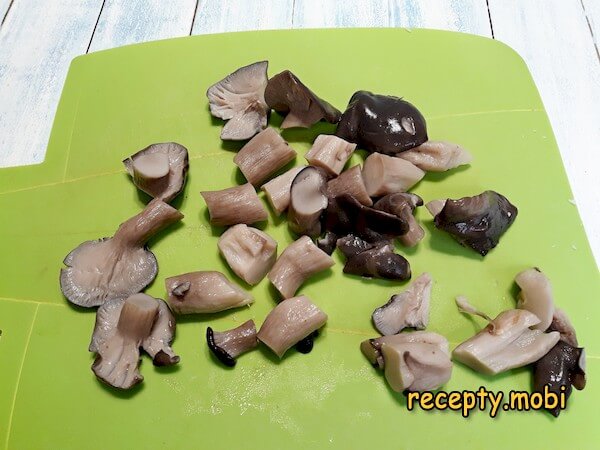
I cut the mushrooms into fairly large pieces – about 1.5×1.5 cm, so they keep a recognisable shape in the finished flammekueche.
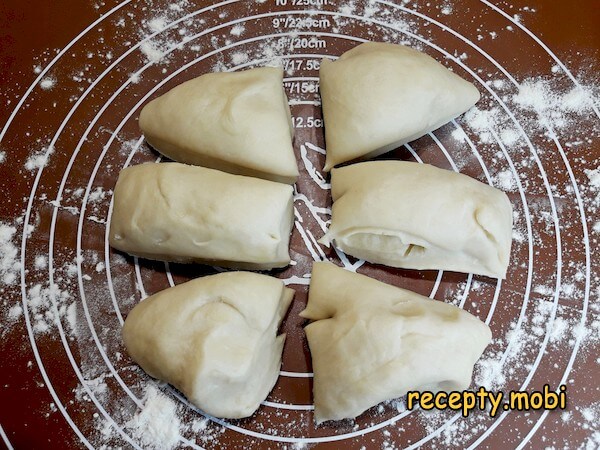
Now I work with the dough. I knead it a little on the counter, gather it back into a ball and divide it into 6 pieces – each piece will give one flatbread 21 cm in diameter.
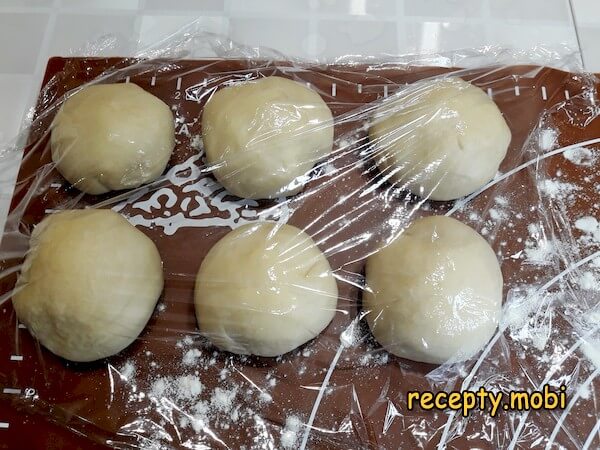
I round all the pieces and cover them with cling film so they do not dry out while they wait their turn – without film the dough quickly forms a crust.
I start rolling out the flatbreads. They should be very thin, so the surface underneath shows through – this is the "secret" of a crispy flammekueche.
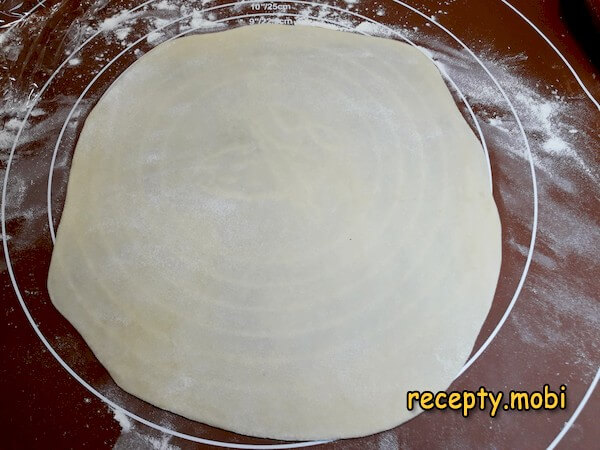
Using a suitable lid or plate as a template, I cut out an even circle. I gather all the trimmings into a lump and tuck them under the film – they can be rolled out into one more flatbread.
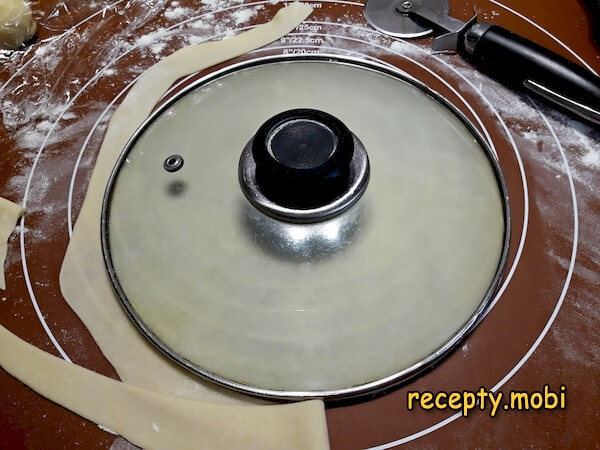
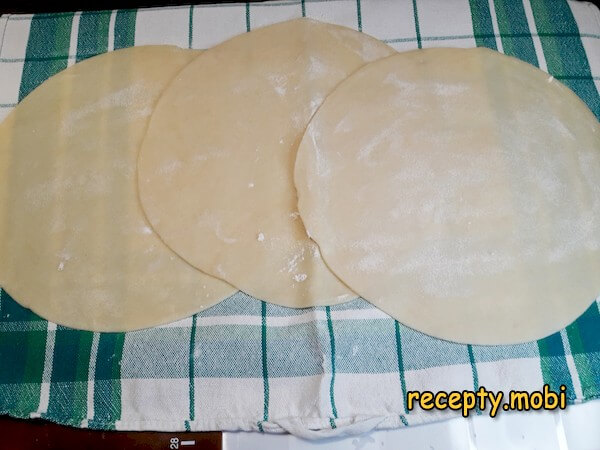
I lay the rolled pieces on a towel, lightly dusting both sides with flour to prevent sticking – important when making several flatbreads in a batch.
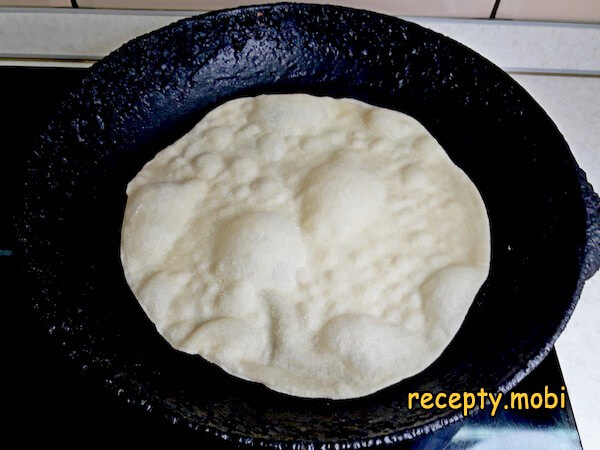
I heat a cast-iron or thick-bottomed skillet well. I place a flatbread in it – it will start to bubble straight away (the largest bubbles can be patted down a little with a spatula so they deflate). I fry the first side for 30-40 seconds (it depends on the thickness of the flatbread and the power of the stove), but the bottom should turn golden.
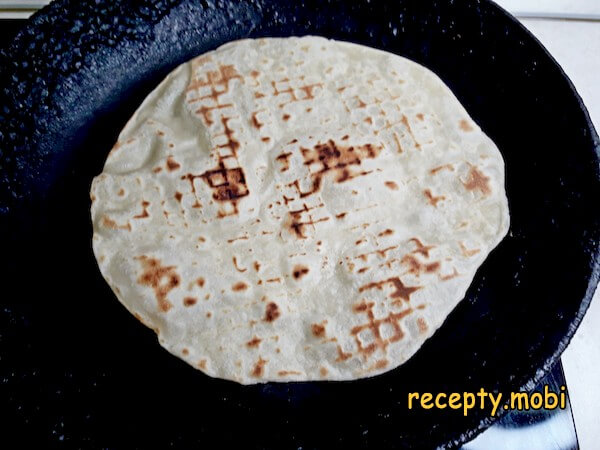
I keep the other side on the skillet for about 30 seconds as well – frying on both sides gives the flatbread the "half-done" state it needs before the final bake with the topping.
I lay the cooked flatbreads on a towel and cover them with the same towel, protecting them from drying out – this "double protection" keeps them pliable until the final bake.
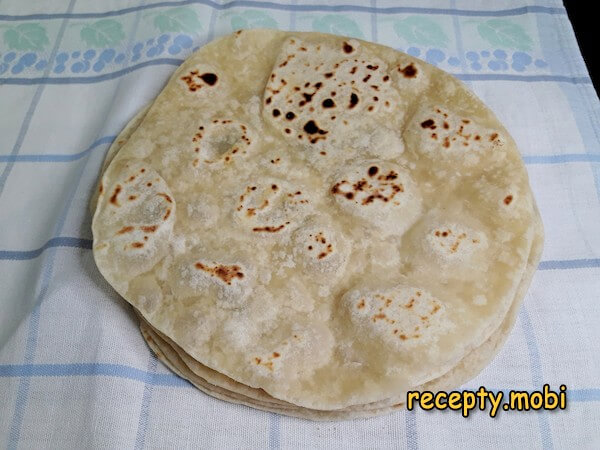
I preheat the oven to 180 degrees. On a baking sheet I lay out as many flatbreads as will fit – usually 2-3 at a time fit on a standard baking sheet.
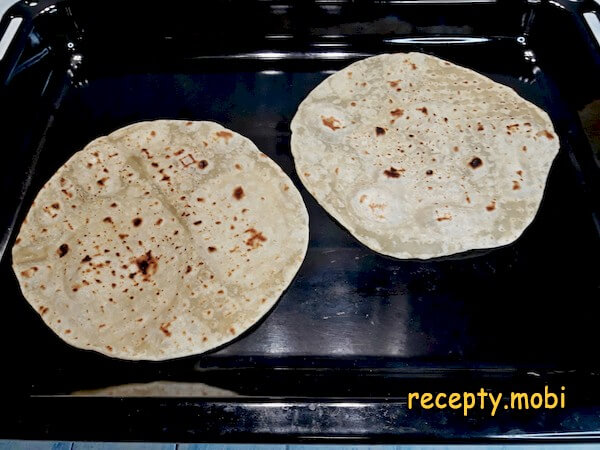
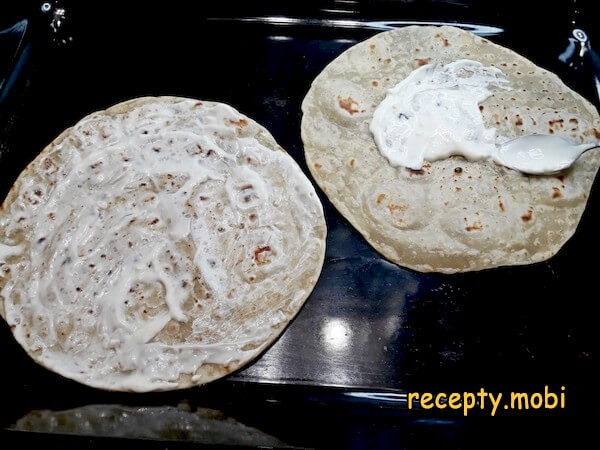
I spread the sour cream sauce on them. You should not put on much sauce – 1 to 1.5 teaspoons is enough, otherwise the flatbread goes soggy and loses its crispy base.
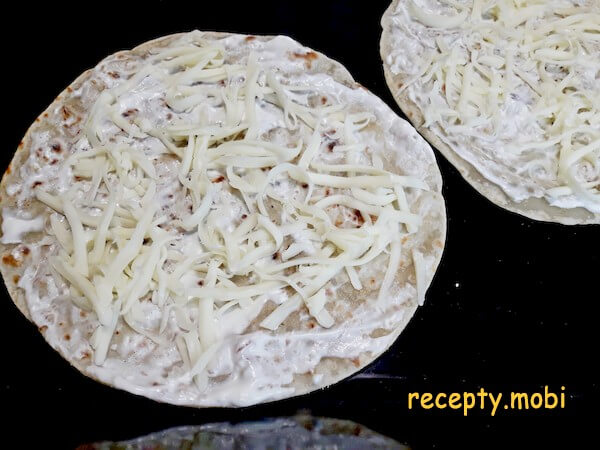
Next I spread a thin layer of cheese – again, you do not need much, because the flatbread has no rim and the melting cheese will simply run over the edge.
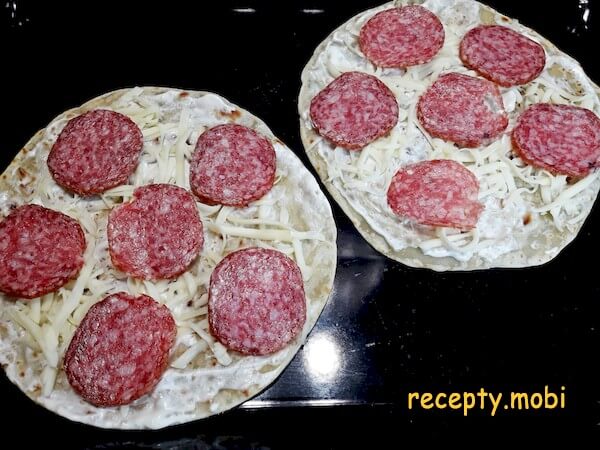
On top I lay the salami – note, not the other way round. The salami over the cheese "pins" it down and stops it running off, and gives a golden crust.
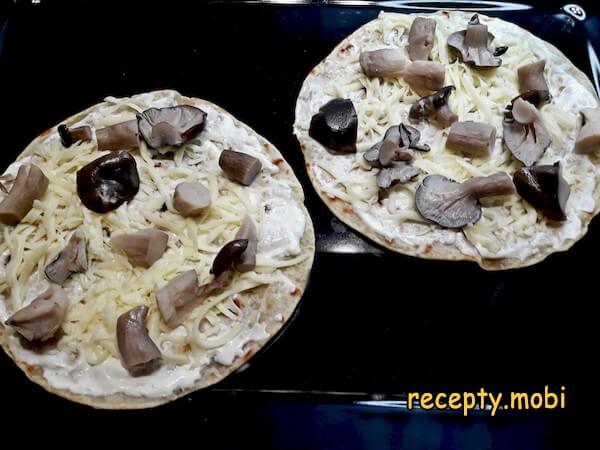
On the other flatbreads, instead of salami I lay the mushrooms – an option for those who like a lighter, meat-free flavour.
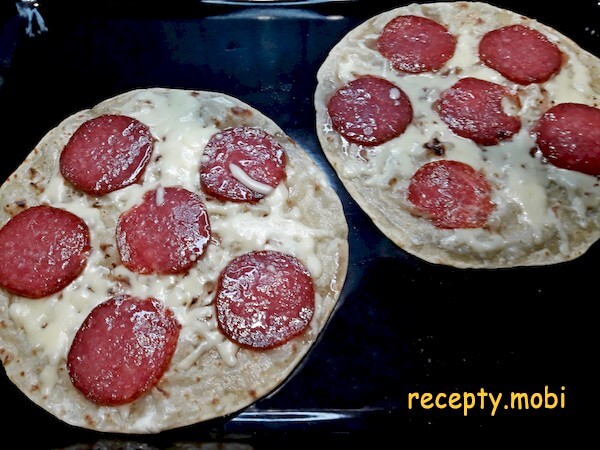
I put the baking sheets into the oven for literally 4 minutes. A pleasant warm garlic aroma will appear, and in that time the cheese melts and the salami takes on an appetising sheen of fat.
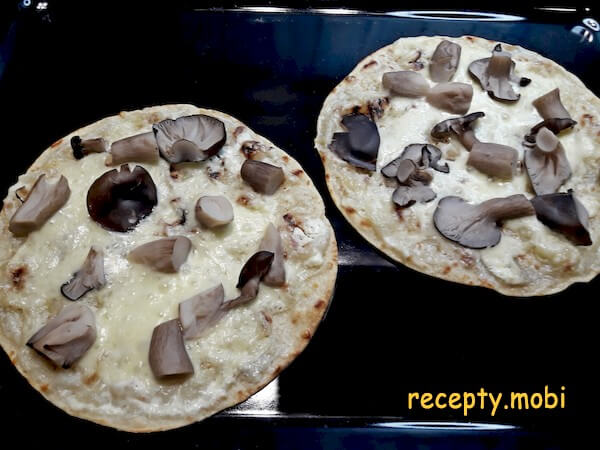
The mushrooms, meanwhile, set into the cheese base and become one with it – the magic that happens in the oven in 4 minutes at 180 degrees.
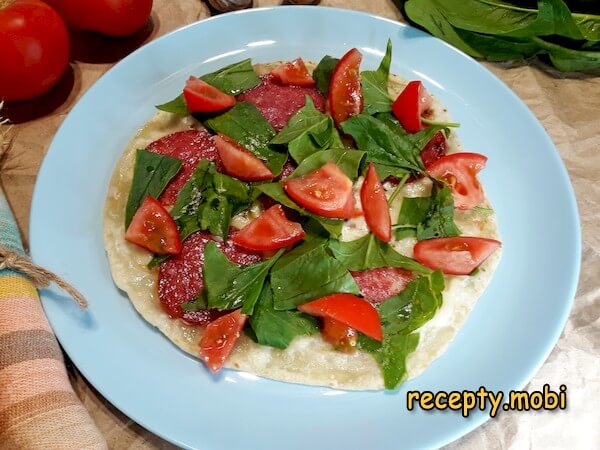
All that is left now is to tear the arugula and spinach leaves by hand and scatter pieces of tomato over them – a fresh green garnish that completes the composition.If the flammekueche is small (18-21 cm in diameter), there is no need to cut it into sectors – this is 1 portion. The flatbread is folded in half (it can even be folded once more) and eaten in this form as a dish in its own right. If you keep a stock of homemade or shop-bought flatbreads – tortillas – it is no trouble to make a flammekueche quickly, all the more so since a wide variety of products work for the topping.


Tips
- 1
THIN FLATBREADS ARE A MUST – the "secret" of a crispy base. Thick flatbreads come out "doughy" and lose the characteristic flammekueche charm. A thin flatbread (1-1.5 mm), translucent against the light, gives a crisp base on which every topping ingredient comes through clearly. I roll with a rolling pin until the dough turns "see-through".
- 2
LITTLE TOPPING – the "secret" against sogginess. A large amount of sauce and cheese seems a logical "improvement", but on a thin flatbread with no rim everything extra simply runs off into the oven. 1 to 1.5 teaspoons of sour cream sauce + a thin layer of cheese + a moderate portion of dry topping is the optimum that gives a perfect flammekueche with no pools of fat on the baking sheet.
- 3
TWO STAGES OF COOKING – the "secret" of crispness. Putting a raw flatbread with topping into the oven for 4 minutes is not the right approach: the dough stays raw and the topping dries out. The two-stage method (first frying in the skillet on both sides, then baking with the topping) gives the perfect balance: a crispy base and perfectly melted topping.
- 4
TOPPING VARIATIONS – the "secret" of endless variety. On the flammekueche base you can make dozens of versions: fruity (pear + gorgonzola + nuts), seafood (trout + onion + dill), meaty (bacon + onion + cheese), vegetarian (a couple of kinds of mushroom + spinach + thyme). You can even make a "closed" version – fold the flatbread in half with the filling inside.
FAQ
What is flammekueche and where is it from? +
Flammekueche (French "flammekueche" or German "Flammkuchen" – "flame cake") is a traditional dish of Alsatian cuisine and of the Belgian cuisine of Wallonia, which appeared in the 17th century. Originally it was made by peasant families as a way to test whether the wood-fired oven was ready: a simple topping (sour cream, onion, bacon) was laid on thin unleavened dough, and the flammekueche baked quickly at maximum temperature. If it came out golden, the oven was ready for baking bread. Over time it became an exquisite dish in its own right in French and Belgian restaurant cuisine.
How is flammekueche different from pizza? +
The main differences: the dough is unleavened, without yeast (pizza dough has yeast), very thin (1-1.5 mm against 5-10 mm for pizza), the base is sour cream (not tomato), and it bakes briefly (4-5 minutes against 10-12 minutes for pizza). Flammekueche is crispier and more delicate in texture, while pizza is more "filling" and dense. In terms of serving, flammekueche is often folded in half and eaten by hand, like a sandwich – whereas pizza is traditionally cut into sectors and eaten with a knife and fork, or held by the triangle.
Can mozzarella be replaced with another cheese? +
Yes, flammekueche works well with various cheeses. Alternatives to mozzarella: gruyère (the classic for the Alsatian version), gouda, emmental, cheddar, Russian or Dutch cheese. For a more pronounced flavour – parmesan or gorgonzola (you need less). The Belgian tradition allows soft cheeses: brie, camembert, goat's cheese – they give an unusual flavour note. The main rule: the cheese must melt well. Not suitable: feta (salty and does not melt into a flat layer), ricotta (too moist for a thin flatbread).
What to serve flammekueche with? +
The Belgian and Alsatian tradition calls for serving flammekueche with a dry white wine – riesling, gewürztraminer, sylvaner. For appetisers: olives, pickled vegetables, a light green salad with a mustard dressing. For a family dinner: a set of 3-4 different flammekueches with different toppings, so everyone can choose to their taste. With beer: flammekueche with salami and mushrooms goes well with a Belgian ale or a light lager. On a picnic: flammekueches with a vegetable topping, packed in rolls – a handy field option.
- Comment
or post as a guest
Be the first to comment.