avg —
Viennese Cherry Pie

Instructions
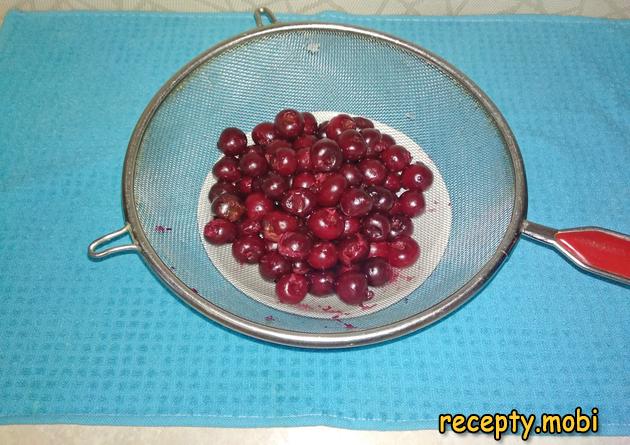
This is a crucial step: prepare the cherries (400 g). Wash fresh cherries well, remove the stems and stones with a pitter or a hairpin. Tip them into a colander and leave for 30 minutes so the excess juice can drain off – this is essential. If the cherries stay wet, the pie will not bake through in the centre and the crumb will be raw, so you can also press the cherries in a piece of muslin for a drier result. Do not throw the cherry juice away – use it for a fruit drink, jelly or ice cream. If you are using frozen berries, spread them in a colander in the fridge for 1–2 hours to thaw and drain, then remove the stones.
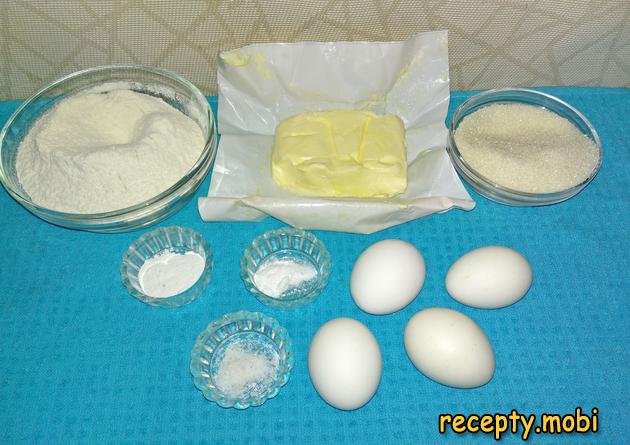
Prepare the ingredients for the dough. Sift the flour (200 g) through a sieve – this enriches it with air and makes the pie light. Take the butter (200 g) out of the fridge 1–2 hours in advance so it is soft and yields easily under your finger, but not melted; cold butter will not blend into the dough. The eggs should also be at room temperature.
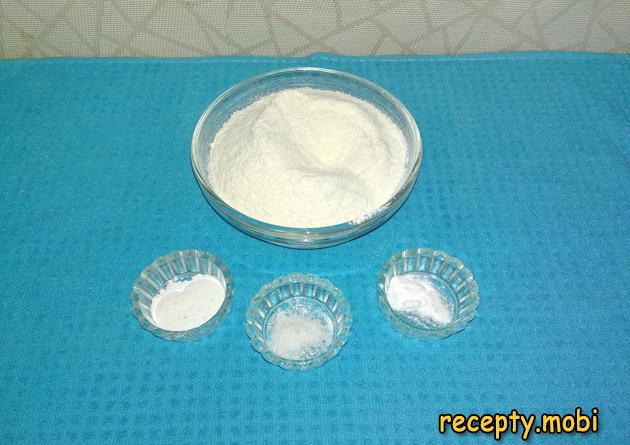
In a large, deep mixing bowl combine all the dry ingredients: the flour (200 g), baking powder (1 tsp), vanillin (½ tsp) and a pinch of salt. Whisk thoroughly until evenly distributed – it is important that the baking powder is spread through all the flour. Set aside.
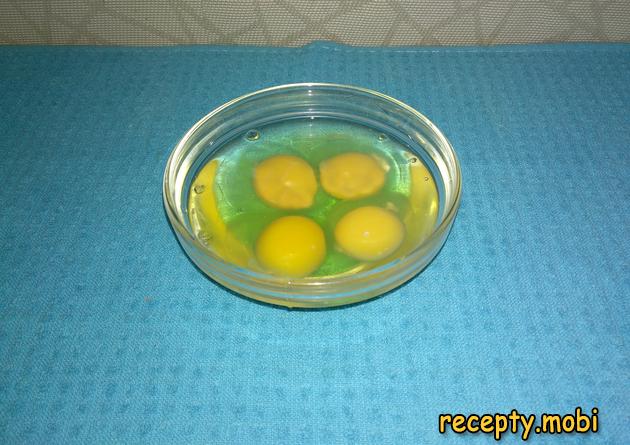
Crack the 4 eggs into a small separate bowl. Set them aside for now – we will add them to the butter mixture one at a time. Before adding each egg, check it for freshness in a separate little dish, as one bad egg would spoil the whole batch of dough. Fresh eggs have a firm yolk and a thick, clear white, with no unpleasant smell.
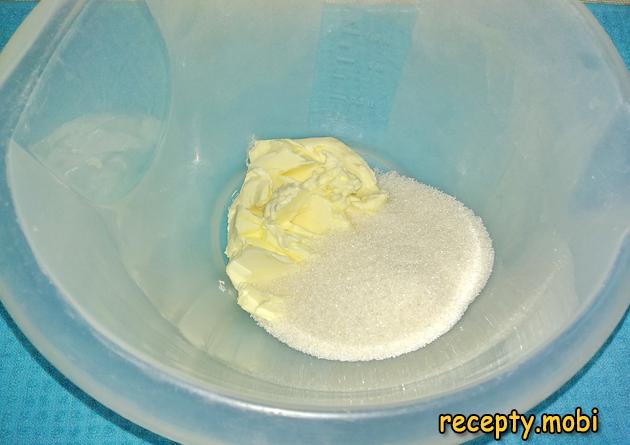
In another large mixing bowl put the soft butter (200 g) and all the sugar (150 g).
Beat with an electric mixer on medium speed for 3–5 minutes until you have a smooth, light, fluffy mass. The sugar will partly dissolve in the butter and the colour will turn creamy white.
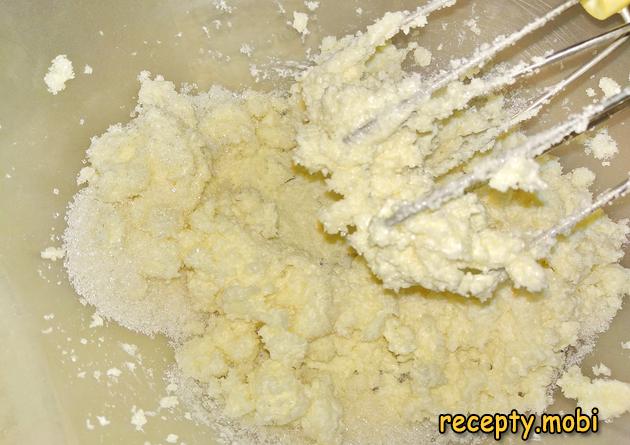
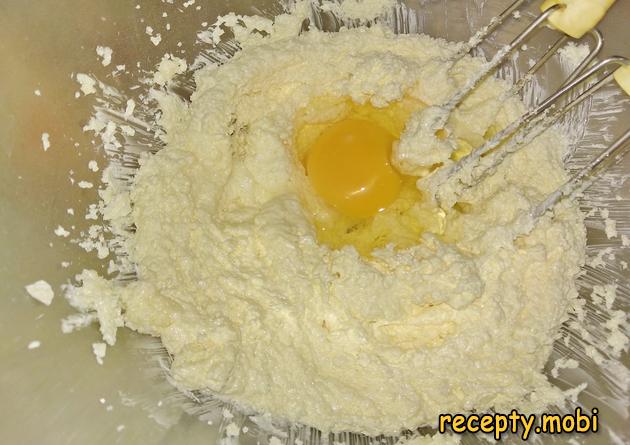
This is a crucial step: without stopping the mixer, add the eggs to the butter mixture one at a time. After each egg, beat thoroughly for 1 minute until completely smooth. Adding the eggs gradually prevents the mixture from splitting and gives the dough an airy, aerated structure.
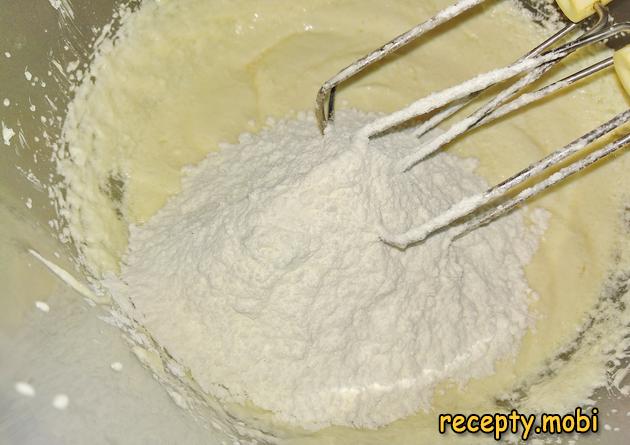
Once all 4 eggs are mixed in, add the sifted dry ingredients to the egg-and-butter mixture in 2–3 stages. After each addition, fold gently with a silicone spatula, working from the bottom up, until smooth, with no flour left on the spatula. Do not work it for long with the mixer, or the dough will be overworked with flour and turn dense.
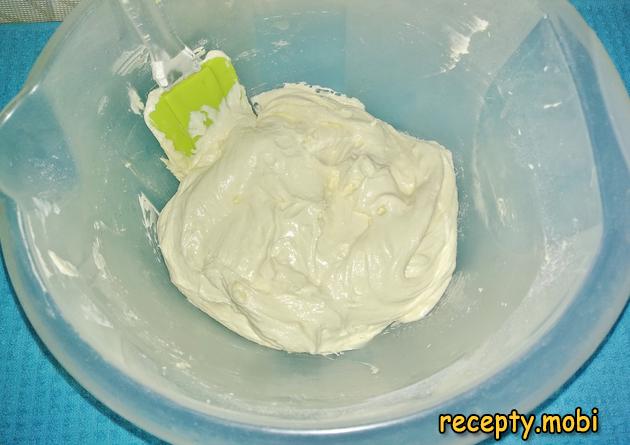
The finished dough should be smooth, without lumps, with the consistency of thick sour cream. It should not pour like pancake batter, nor crumble like shortcrust. This is a sponge-style butter dough for a light, tender pie.
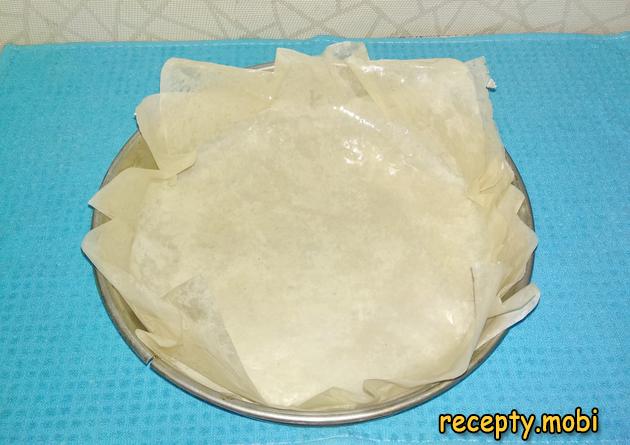
Prepare the baking dish. A ceramic or glass dish, or a springform tin for sponges, 22–24 cm in diameter, will work well. As the dough is fairly liquid, you must line the tin with baking parchment so the pie does not stick to the sides. For neat edges, line it with folds. Lightly grease the paper with vegetable oil.
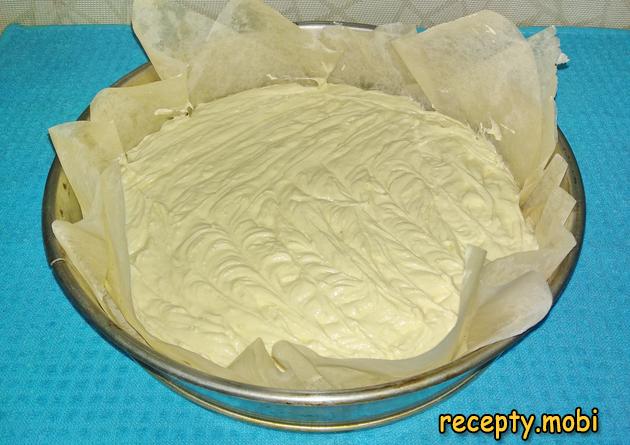
Carefully pour the dough into the prepared tin and level it with a silicone spatula. An important trick to settle the dough: rotate the tin with circular movements and tap it gently against the work surface 2–3 times so the air bubbles come out and the dough spreads evenly. Run a wooden skewer over the whole surface of the dough with deeper movements to release any air bubbles trapped down below.
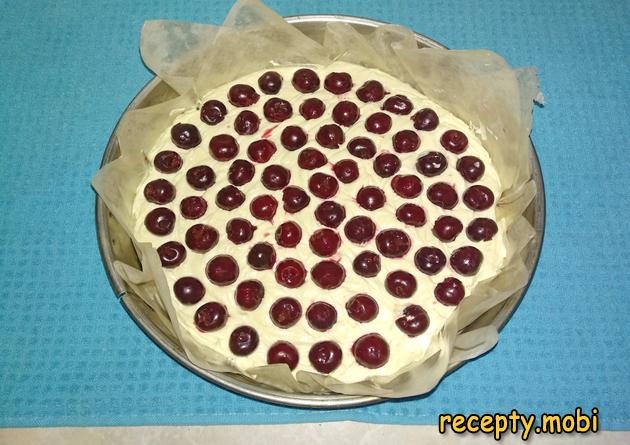
By this time the liquid from the cherries will have drained off. Carefully arrange the berries on the surface of the dough in a single layer, so they do not sink to the bottom. Spread them evenly over the whole surface. A 22 cm pie takes 350–400 g of drained cherries.
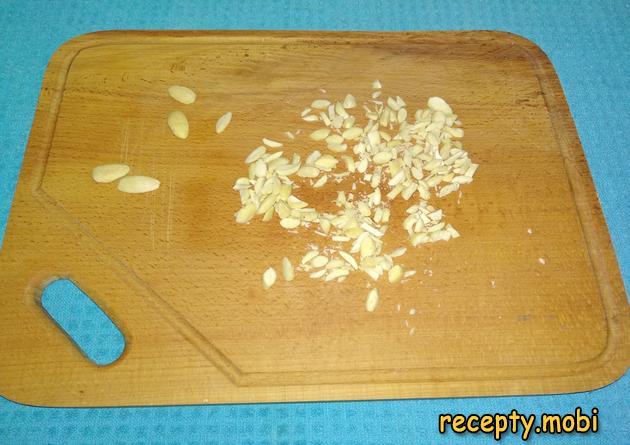
For the look and for Austrian elegance, sprinkle the cherries with almond flakes (a handful = 30 g) or chopped walnuts. Nuts are a classic of Viennese baking. If you have no nuts, you can leave them out – it is not essential.
Preheat the oven to 180°C, top-and-bottom heat. Place the tin in the centre of the oven and bake for 35–40 minutes until fully cooked and golden on top. Check by inserting a wooden toothpick – it should come out dry from the centre of the pie. Do not open the door for the first 25 minutes, or the dough will sink. Then take the Viennese pie out of the oven.
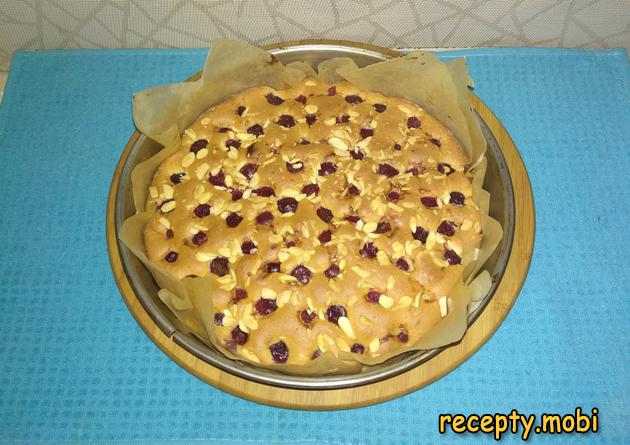
Leave the pie to cool in the tin for 15–20 minutes – it will then come out more easily, without breaking. Take the pie out of the tin, carefully remove the parchment paper and transfer it to a serving dish.
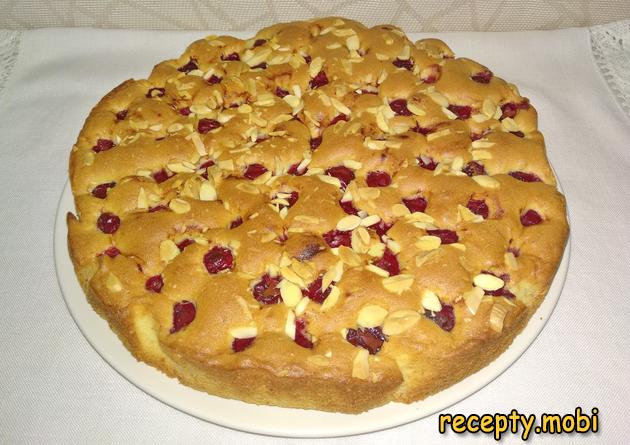
Dust the fully cooled pie with icing sugar through a sieve (30 g) for an attractive Austrian presentation. If you like, you can drizzle it with a thin layer of chocolate glaze or top it with whipped cream.
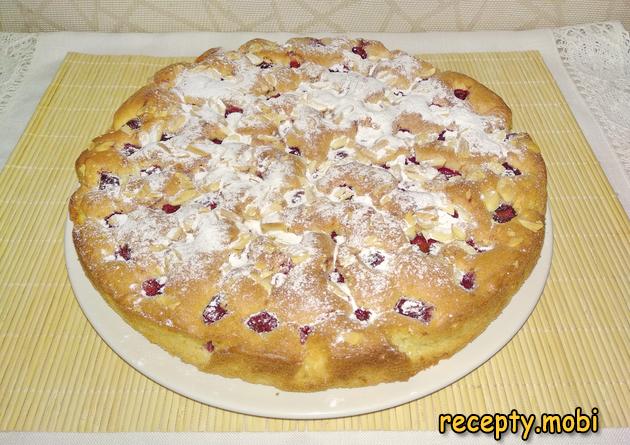
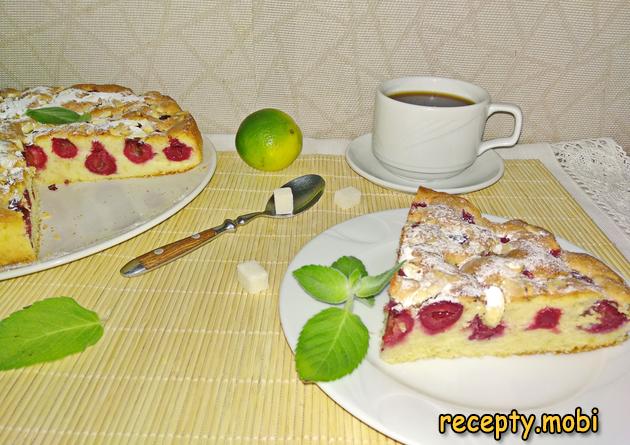
The Viennese cherry pie is ready. Serve it with a cup of hot coffee or tea, and cut it into individual slices at the table. Look at the lovely crumb the pie has produced!Using this versatile base, you can bake other versions simply by changing the fruit – peaches, pears, sweet cherries or apples all pair well with this dough.


Tips
- 1
Be sure to drain the cherries of their juice – wet berries will give a raw crumb in the centre of the pie.
- 2
All the ingredients should be at room temperature – cold butter will not blend into the dough.
- 3
Rotate the tin with the dough and tap it on the table 2–3 times so the air bubbles come out and the dough is even. I bake my charlotte with apples on a similar principle.
- 4
Do not open the oven door for the first 25 minutes – the dough will sink and the pie will turn out flat.
FAQ
What can I use instead of cherries in a Viennese pie? +
The method is universal for different fruits and berries. You can use: fresh or tinned peaches, diced (a more summery option); diced nectarines; halved apricots; pears, diced into 1 cm pieces (the classic autumn choice); sweet cherries (a sweeter substitute for sour cherries); blackcurrants (for a more Russian character); raspberries (a more delicate option); halved strawberries; apples diced into 1 cm pieces with cinnamon (a Russian-Austrian charlotte); or a 50/50 mix of summer berries (cherry and raspberry, or strawberry and blueberry). Each fruit gives the pie its own character. The main thing is to drain it of juice before laying it on the dough. Cherries are the classic of the Austrian version, thanks to their bright sweet-and-sour note.
Can I bake a Viennese pie without baking powder? +
Yes, there are several alternatives. Bicarbonate of soda + lemon juice: slake ½ tsp of soda with 1 tsp of fresh lemon juice (bubbles will appear) and add it to the dough straight away. Soda + kefir: mix ½ tsp of soda with 100 ml of kefir and use it to replace part of the liquid in the dough. Dried yeast: dissolve 7 g in 100 ml of warm milk, add 1 tsp of sugar, leave to rise for 15 minutes, then add to the dough (the result will have a more yeasty, bread-like flavour). With no raising agent at all: add 1 extra egg and beat for 7–10 minutes with a mixer until light and airy – this gives a more sponge-like version of the pie. Each substitution gives its own character.
How long does a Viennese pie keep? +
The finished pie keeps at room temperature in an airtight container or under a dome for up to 3 days. In the fridge it keeps for up to 5 days under cling film – before serving, warm it in the oven for 5 minutes at 150°C under foil to bring back its softness. You can freeze it whole or in portions for 1 month, sealed in cling film – before serving, thaw it completely at room temperature for 2–3 hours. Dust on the icing sugar just before serving, as it will melt on a warm pie. It is ideal served on the day it is made, though on the second or third day the flavour is even better.
What should I serve a Viennese pie with? +
It is ideal with Viennese-style hot drinks: espresso, cappuccino with milk foam (a classic of Viennese cafés), cocoa with milk, or hot chocolate with whipped cream. With tea, try black tea with lemon or green tea with jasmine, or an Austrian herbal tea. For a grown-up dessert, serve it with a white semi-sweet wine (Moscato), sweet liqueurs (Baileys, Amaretto) or Kirsch cherry liqueur to bring out the cherry flavour. For a children's birthday, serve it with a milkshake or a cherry fruit drink. On the plate, add a scoop of vanilla ice cream and a mint leaf for an attractive presentation.
- Comment
or post as a guest
Be the first to comment.