avg —
Turkey and Cabbage Pie

Instructions
I start with the filling, as it needs time to cool – hot filling must not be placed on yeast dough. Peel two medium onions (about 200 g in total) and cut them into small cubes around 5 mm. Heat a deep frying pan or sauté pan with 50 ml of vegetable oil over medium heat.
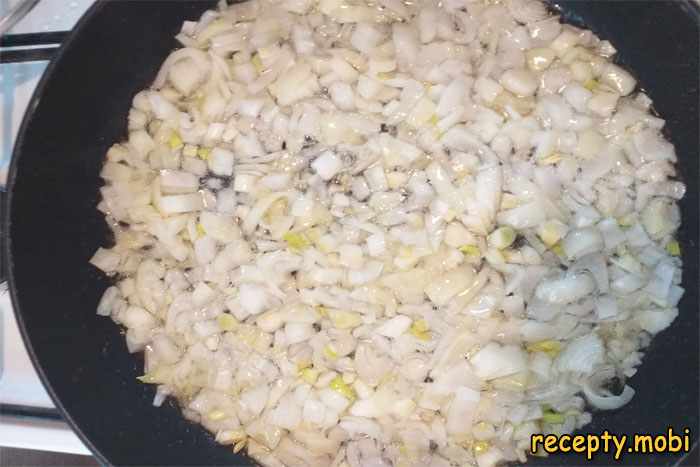
Put the chopped onion into the heated pan and fry it for 5–7 minutes over medium heat, stirring constantly with a wooden spatula. The onion should turn soft and slightly golden – a sign that the sugars are caramelising, which gives the filling a pleasant sweetness and depth of flavour. Do not fry the onion until brown, or it will taste bitter.
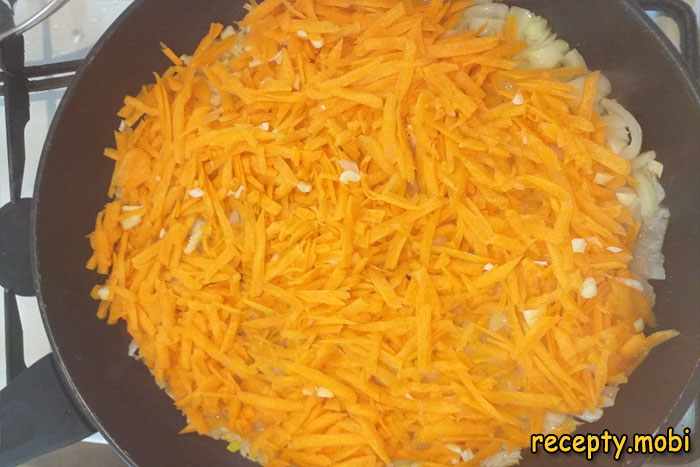
While the onion is frying, peel two medium carrots (about 200 g) and grate them on a coarse grater. Also finely chop 2–3 cloves of garlic – it will add piquancy and aroma to the filling. Add the carrot and garlic to the onion and continue to sauté the vegetables together for another 5–7 minutes until soft.
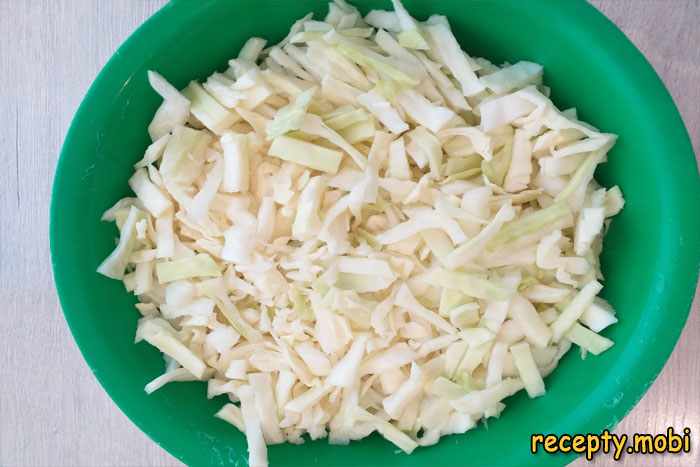
While the vegetables are softening, prepare the cabbage: remove the damaged outer leaves, cut the head into quarters and cut out the stalk. Shred the cabbage into thin strips with a sharp knife or a special shredder – about 3–4 mm thick. From 700–800 g of cabbage you get a full, deep bowl.
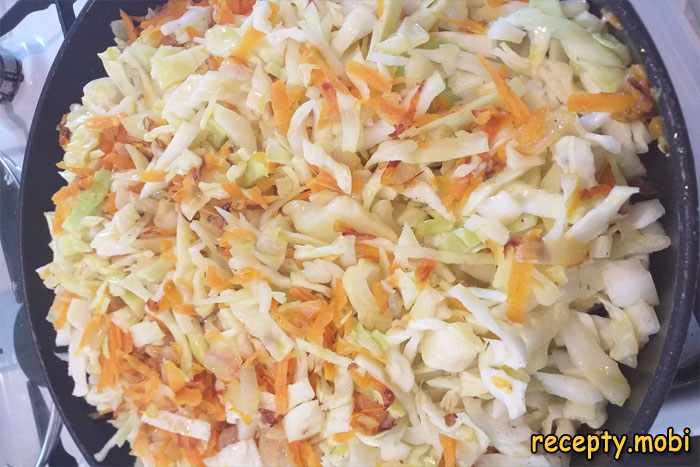
Add the shredded cabbage to the sautéed vegetables, season with salt to taste (about 1/2 tsp) and ground black pepper (1/4 tsp). Mix the contents of the pan thoroughly, cover with a lid and braise over medium heat for about 20 minutes, stirring every 5 minutes – the cabbage should become soft and reduce in volume by two to three times.
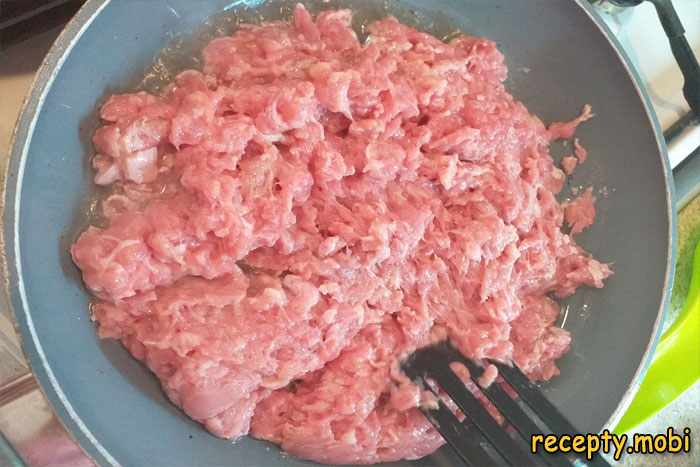
At the same time, prepare the meat part of the filling in another pan: heat 30 ml of vegetable oil and add 500 g of minced turkey. Break the mince up into small pieces with a spatula and fry over medium heat for about 10–12 minutes, stirring constantly. Season with salt (1/2 tsp) and pepper to taste. The mince should be fully cooked through and crumbly.
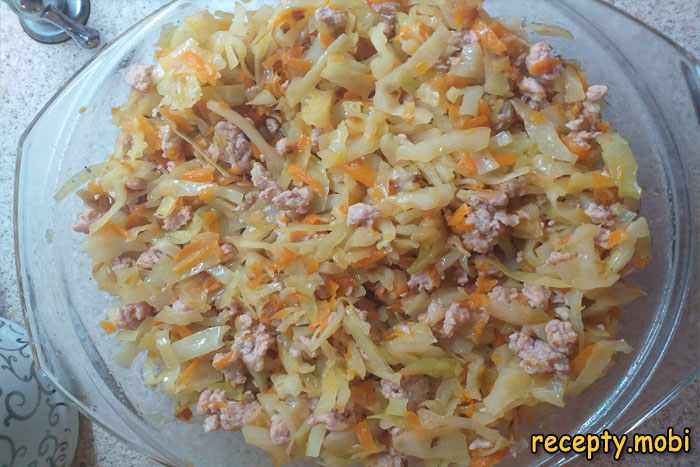
Combine the braised cabbage and vegetables with the fried turkey mince in one large bowl. Mix thoroughly, taste for salt and add more if needed. Stir in finely chopped fresh herbs (dill, parsley) or 1 tbsp of dried herbs. Leave the finished filling to cool to room temperature – this will take about 30–40 minutes.
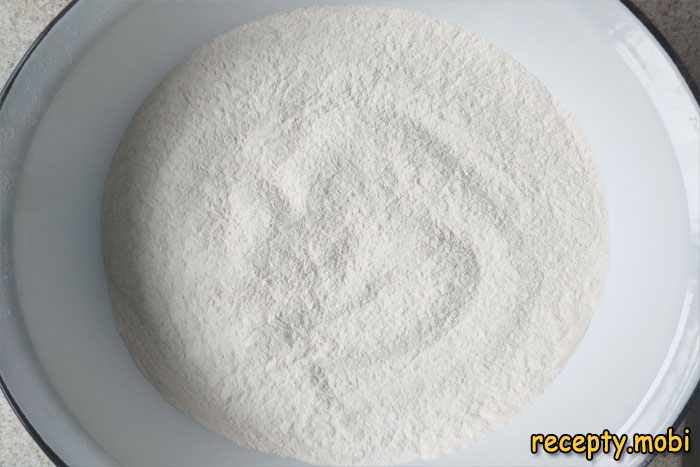
While the filling is cooling, prepare the yeast dough. Sift 650 g of premium wheat flour (keep 50 g back for dusting) into a large, deep bowl of at least 3 litres – sifting aerates the flour and makes the dough fluffier.
Add 8 g of instant dry yeast, 1/3 tsp of salt and 3 tbsp of sugar to the flour. The sugar is needed to feed the yeast and to give the dough a pleasant flavour. Stir the dry ingredients with a whisk until evenly combined – the yeast should be distributed evenly through the flour.
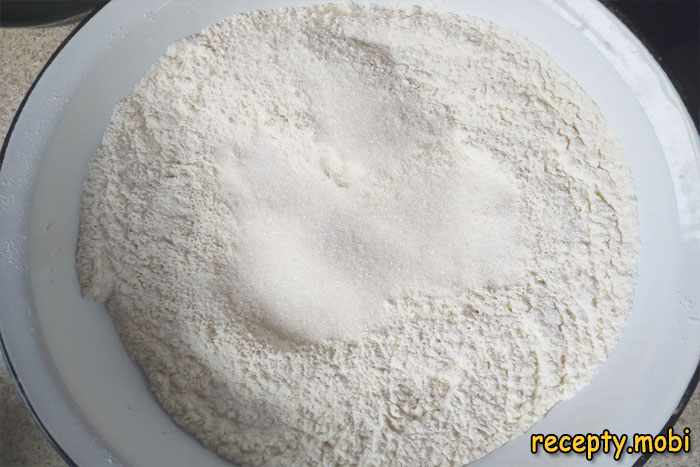
Heat 600 ml of water to 35–40 °C – the water should feel pleasantly warm to the touch, but not hot. This is critically important: above 45 °C the yeast dies and the dough will not rise. Pour the warm water and 70 ml of vegetable oil into the flour mixture and begin to knead the dough.
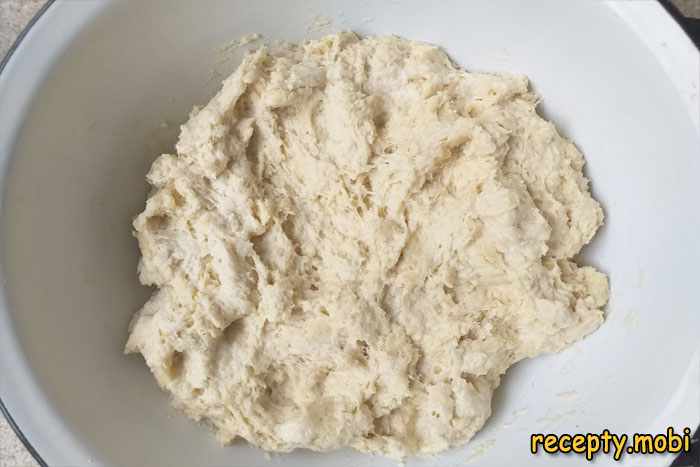
Knead the dough first with a spoon in the bowl, then turn it out onto a floured surface and continue kneading by hand for 7–10 minutes. The dough should be soft, elastic and not stick to your hands – if needed, add a little of the reserved 50 g of flour. Shape it into a ball and return it to the bowl.
Cover the bowl of dough with a clean kitchen towel and put it in a warm place away from draughts to rise. The ideal temperature is 28–30 °C (you can place it in a slightly warmed, switched-off oven). After 30–40 minutes the dough should double in volume – a sign that the yeast is working properly.
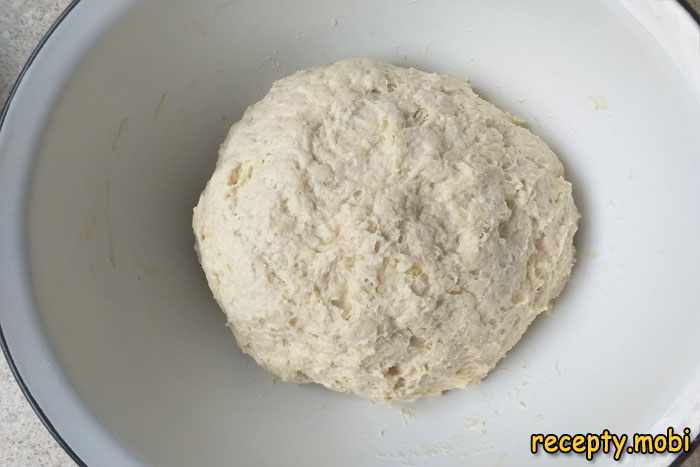
Punch the risen dough down with your fist to release the carbon dioxide, and knead it for 1–2 minutes on the work surface. Shape it into a ball again, return it to the bowl, cover with the towel and leave it for a second rise in a warm place for 15–20 minutes. The double proof makes the dough airier and more pliable.
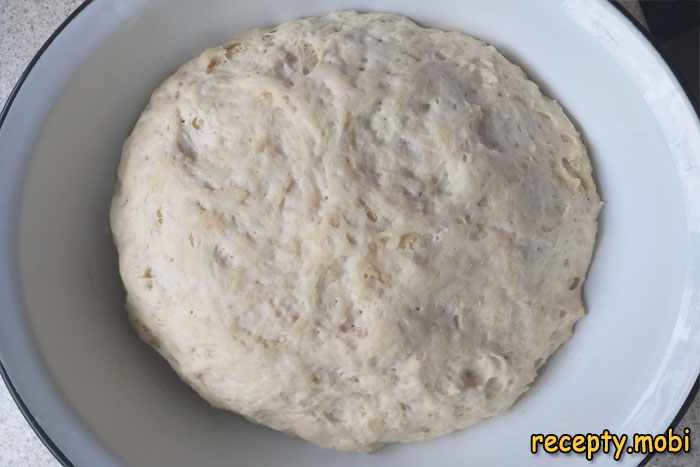
Divide the finished dough into two equal parts – one for each pie. Work with one part and cover the other with a towel so it does not dry out. From the working portion, pinch off about 2/3 for the base of the pie (the bottom and sides) and 1/3 for the top lid. Shape the larger part into a ball and roll it out with a rolling pin into a circle 5–6 cm wider than the baking form, about 5–7 mm thick. The dough should be of even thickness all over – spots that are too thin may tear from the filling juices, and spots that are too thick will not bake through.
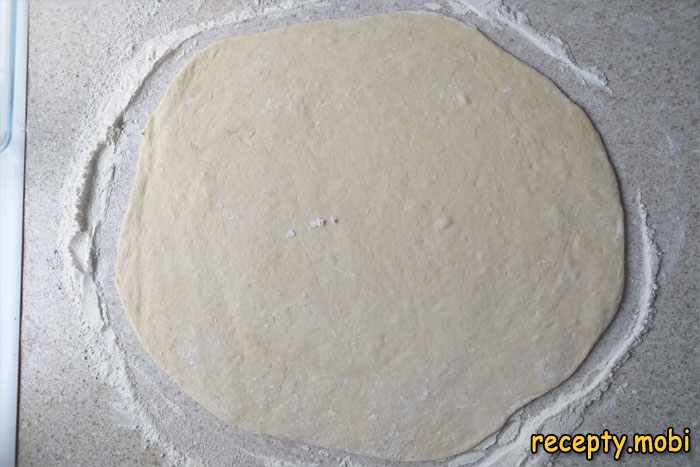
Grease a round baking form 24–26 cm in diameter with vegetable oil and carefully transfer the rolled-out sheet of dough into it. Spread the dough over the bottom and sides of the form, pressing it lightly so there are no air pockets. The edges of the dough should overhang the sides by about 1–2 cm.
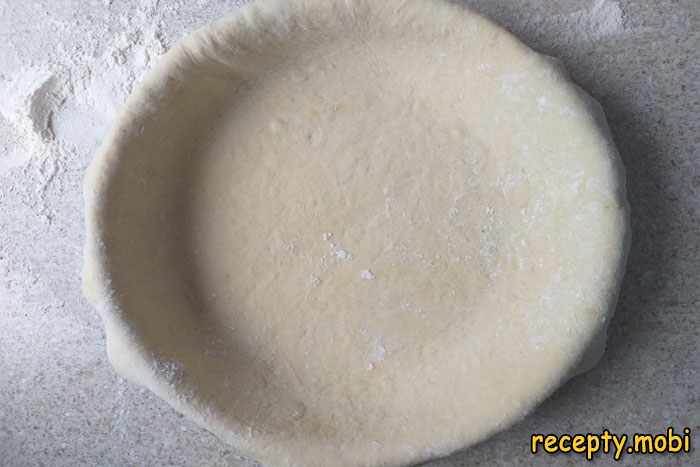
Spread half of the cooled filling (for one pie) in an even layer over the dough in the form, leaving 1–2 cm clear of the edges. The filling must be completely cold – warm filling will make the dough soggy from the inside and the pie will not bake through. Sprinkle the filling with fresh or dried herbs.
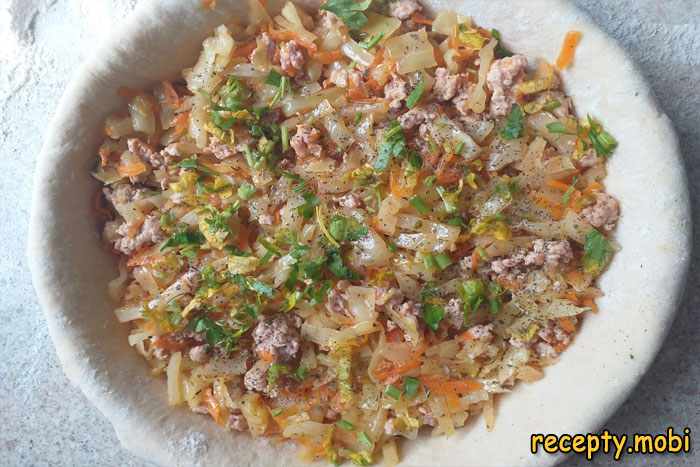
With a rolling pin or knife, trim the excess dough along the rim of the form – the trimmings can be added to the smaller portion for the top. Lightly moisten the edges of the base with water – this gives a better seal with the top sheet.
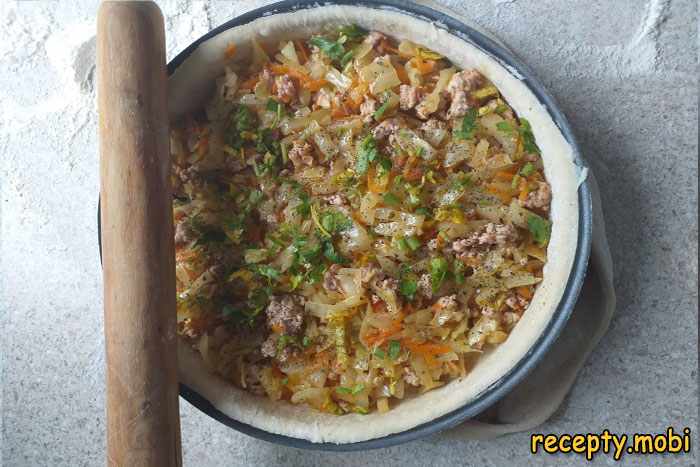
Roll the smaller part of the dough into a circle the size of the form, about 5 mm thick. This sheet will be the lid of the pie. Try to roll it out evenly – a top that is too thin will tear during baking, and one that is too thick will not bake through in the centre.
Cover the filling with the top sheet of dough. Carefully join and crimp the edges of the top and bottom layers, forming a neat rim – you can make a braid or simply press it with a fork. Be sure to make a small hole in the centre of the lid with a knife – steam will escape through it so the pie does not become soggy from the inside.
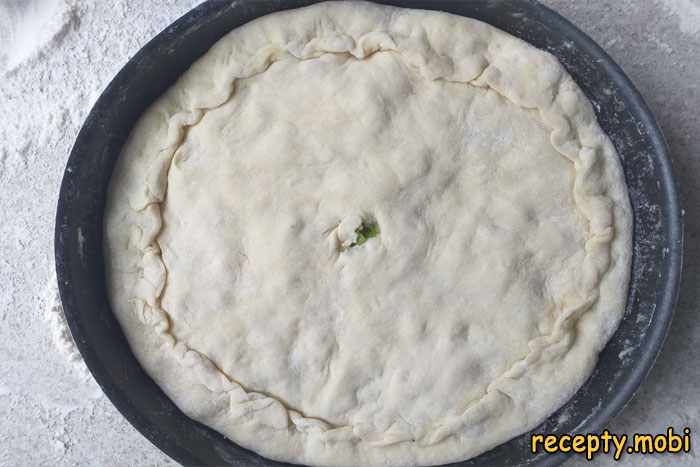
Preheat the oven to 180 °C using the top-and-bottom heat setting. Lightly beat 1 egg with a fork and brush the entire surface of the pie with a silicone brush – the egg wash gives a beautiful golden gloss and an appetising crust. Brush a thin, even layer, including the sides.
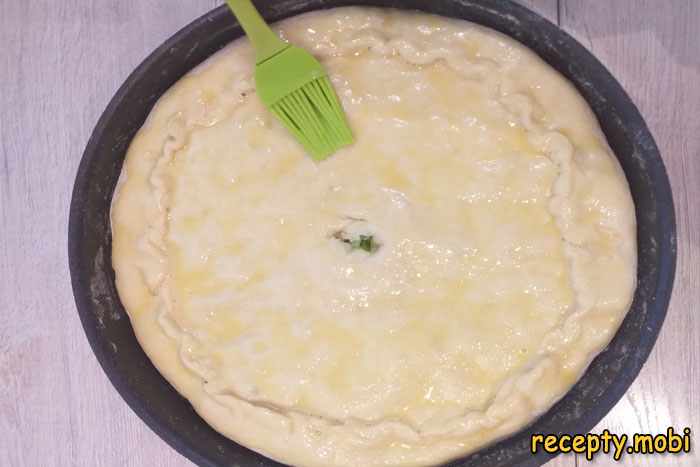
Place the pie in the centre of the preheated oven and bake for 25–30 minutes until golden brown. Check for doneness with a toothpick – it should come out of the dough dry. Do not open the oven during the first 15 minutes of baking – a sudden change in temperature can cause the dough to collapse.
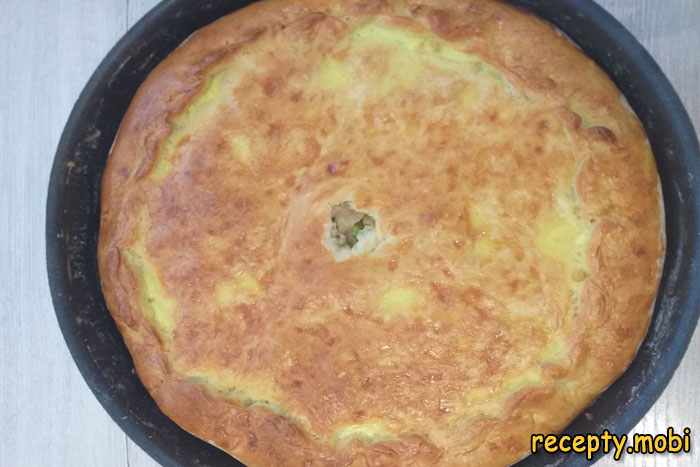
Take the finished pie out of the oven and cover it first with a sheet of foil (shiny side in), then with a clean kitchen towel. Leave it to rest for 5–10 minutes – during this time the crust becomes softer and more tender, and the flavours of the filling open up. The turkey and cabbage pie is ready! Cut it into portions and serve warm.



Tips
- 1
Braise the cabbage until completely soft – tough, under-cooked cabbage will spoil the texture of the filling and crunch in the finished pie. The braising time depends on the variety of cabbage: young cabbage is ready in 15 minutes, while winter cabbage may need 25–30 minutes.
- 2
The filling must cool completely before it is placed on the dough – warm filling will steam the dough from the inside and make it raw and gummy. You can speed up the cooling by spreading the filling in a thin layer on a baking tray.
- 3
For a more tender, richer dough, add 1 egg to the recipe and reduce the amount of water by 50 ml. Such dough will be richer in flavour, but it will no longer be lean.
- 4
The pie becomes noticeably tastier the next day, once all the flavours have had time to come together – reheat it in the oven at 150 °C for 10 minutes, or in the microwave for 1–2 minutes.
FAQ
What can replace the turkey mince in the pie? +
Chicken mince works very well – it is almost identical in flavour and texture. You can also use pork or beef: increase the frying time for pork mince to 15 minutes, and for beef to 12–15 minutes. For a lean version, replace the meat with mushrooms (300 g).
Can the finished pie be frozen? +
Yes, the finished, cooled pie freezes very well for up to 2 months in airtight packaging. Defrost it at room temperature for 3–4 hours and reheat in the oven at 150 °C for 15–20 minutes – the crust will become crisp again.
Why didn't the dough rise, or why does it rise poorly? +
The main reasons are: the yeast was out of date or stored incorrectly; the water was too hot (above 45 °C) and killed the yeast; the dough was left in a cold place or in a draught. The water temperature should be 35–40 °C, and the place for proving should be warm (about 30 °C).
How do I make a lean version of the pie? +
This dough recipe is already lean (without eggs or butter). For a fully lean pie, replace the turkey mince with fried mushrooms (button or wild) or add more vegetables. Replace the egg wash with strong tea – it also gives a golden crust.
- Comment
or post as a guest
Be the first to comment.