avg —
Oven-Baked Pirozhki with Mushrooms

Instructions
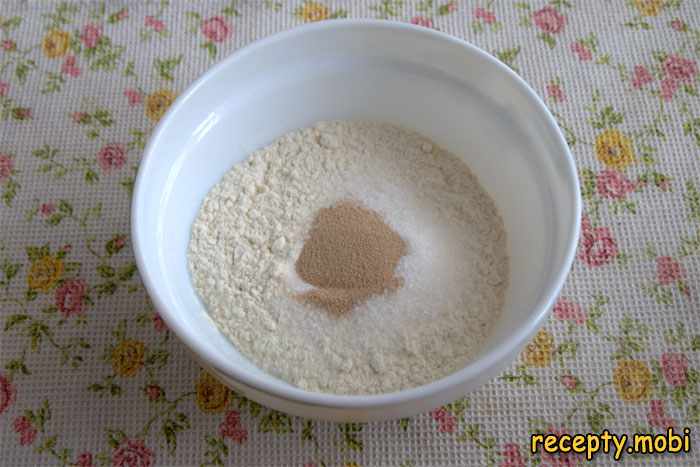
Into a deep bowl of at least 2 litres, I sift the flour through a fine sieve – this saturates it with oxygen and makes the dough more airy. I add the sugar (1.5 tablespoons is ideal – the dough will be slightly sweet, but not cloying), salt and instant yeast. I mix the dry ingredients thoroughly with a whisk or fork so that the yeast is evenly distributed through the flour. This is important for an even rise – lumps of yeast give an uneven texture.
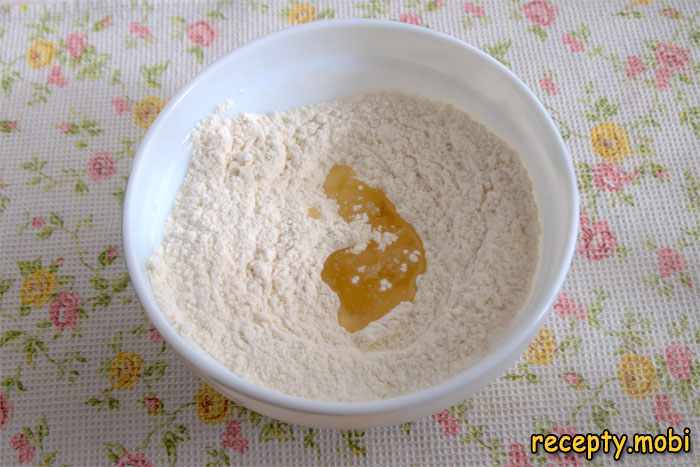
I pour in 2 tablespoons of odourless vegetable oil – refined sunflower oil works perfectly. The oil makes the dough more elastic, prevents sticking and keeps the finished pies soft even the next day. I mix the oil lightly into the flour mixture – there is no need to work it in fully yet, as it will combine when the milk is added.
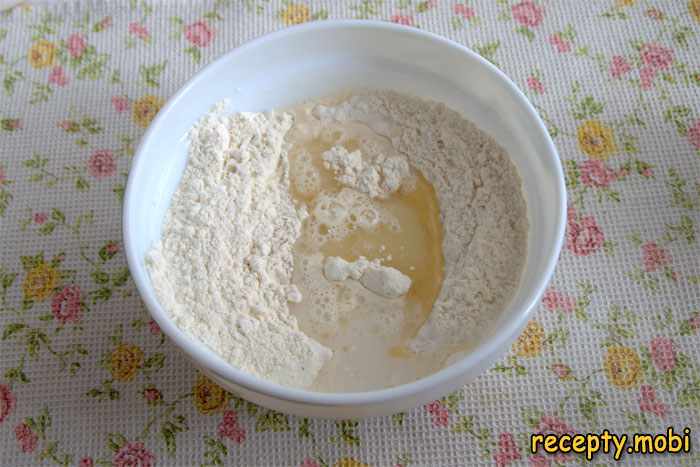
I warm the milk to 38–40 °C – this is the optimal temperature for activating the yeast. I check it with a finger: the milk should be warm but not scalding. Hot milk (above 45 °C) will kill the yeast and the dough will not rise. I pour the warm milk into the dry mixture and start kneading the dough, first with a spoon, then by hand. The dough should be soft and slightly sticky, but not stick to your hands. If needed, I add another 2–3 tablespoons of flour.
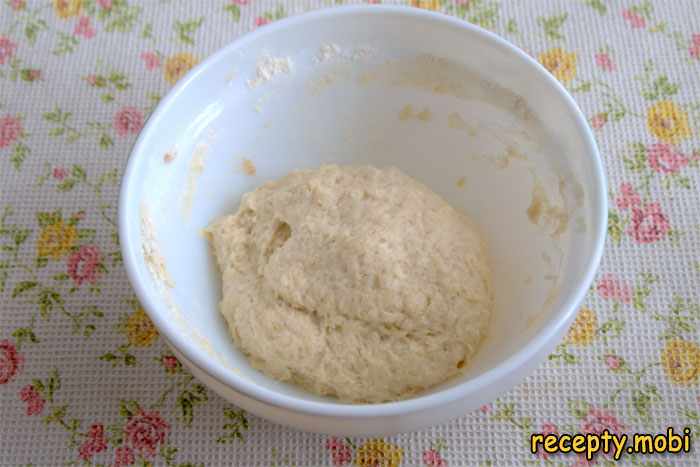
I knead the dough by hand for 7–10 minutes on a lightly floured surface – during this time the gluten develops and the dough becomes smooth and elastic. Properly kneaded dough comes away from your hands and, when stretched, forms a thin translucent film without tearing. I roll the dough into a ball and return it to the bowl. I grease the surface of the dough with a drop of oil so that no crust forms.
I cover the bowl with a cotton towel or cling film and put it in a warm place (about 28–30 °C) to rise. The ideal spot is a switched-off oven with the light on, or near a working stove. I leave the dough to rise for 35–40 minutes – in that time it should increase in volume by 1.5–2 times. Do not over-prove it – over-fermented dough turns sour and loses its fluffiness.
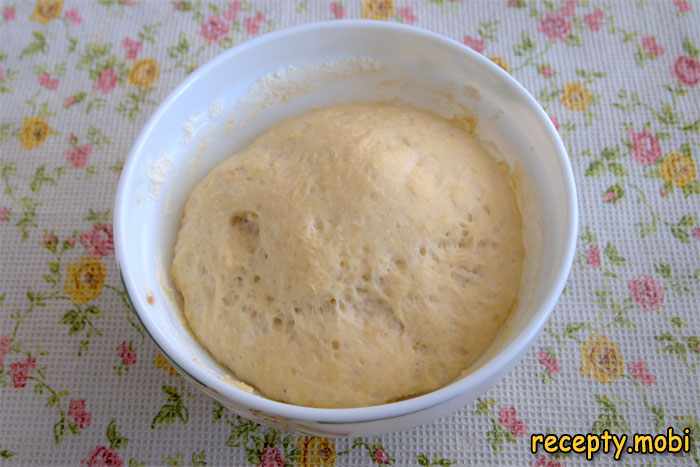
While the dough is rising, I prepare the filling. I clean fresh honey mushrooms thoroughly of forest debris and trim off the lower part of the stems with any remaining soil. I rinse the mushrooms in several changes of water until the water runs clear. Large mushrooms I cut into 2–4 pieces, small ones I leave whole. I cover the mushrooms with cold water, bring to the boil and cook for 20–25 minutes over medium heat, skimming off the foam. I drain them in a colander and let the water run off for 10 minutes. Frozen honey mushrooms do not need boiling – go straight to frying.
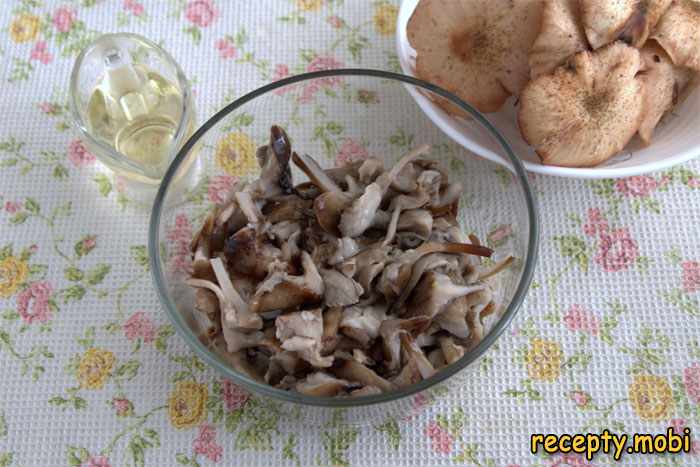
I heat a frying pan with 2 tablespoons of vegetable oil over medium heat. I add the boiled mushrooms and fry them for 10–12 minutes, stirring every 2–3 minutes, until all the liquid has evaporated and the mushrooms take on a creamy-golden colour. Fried mushrooms have a richer flavour and will not make the pie dough soggy. Three minutes before they are done, I season with salt and pepper to taste.
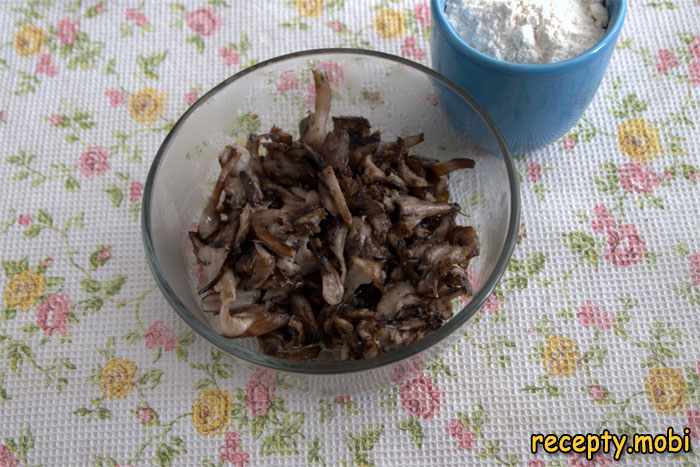
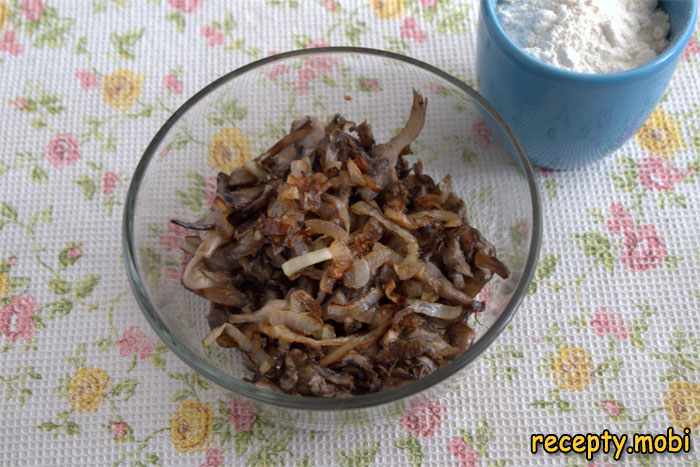
I peel the onion and cut it into small cubes 4–5 mm in size. In a separate pan (or after the mushrooms) I fry the onion in 1 tablespoon of oil for 5–6 minutes until soft and lightly golden. I mix the fried onion with the mushrooms, taste for salt and pepper and adjust to taste. I let the filling cool completely to room temperature before shaping the pies – hot filling speeds up the fermentation of the dough and the pies may burst in the oven.
I knock back the risen dough with my fist to release the excess carbon dioxide and turn it out onto a lightly floured surface. I divide the dough into 6–7 equal pieces of about 70–80 g each. I roll each piece into a ball and roll it out with a rolling pin into a round 12–14 cm in diameter and about 5 mm thick – the edges can be left a little thinner and the centre thicker so that the bottom of the pie does not tear. In the middle of each round I place 2–3 tablespoons of the cooled filling.
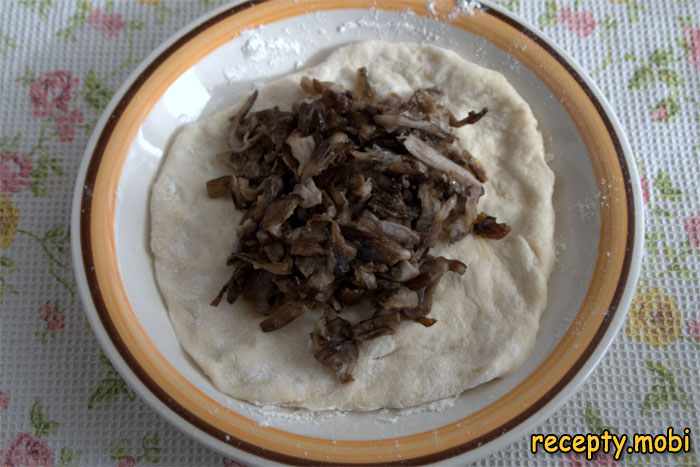
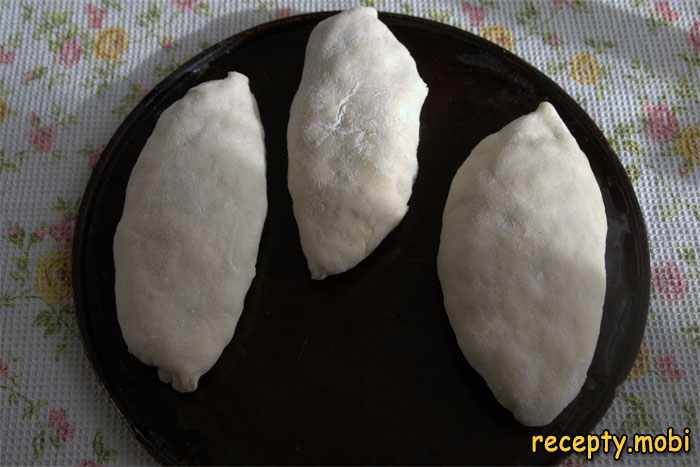
I pinch the edges of the round together, sealing them firmly in the middle and along the sides – the seams must be secure so the filling does not leak out during baking. I turn the pies seam-side down and place them on a baking sheet lined with parchment, 3–4 cm apart – they will grow during proving and baking. I cover the pies with a towel and leave them for 30–35 minutes for the final proving – they should increase by half again. Fifteen minutes before baking, I heat the oven to 180 °C.
I beat one egg yolk with 1 tablespoon of milk and gently brush the surface of each pie with a silicone brush – this gives a beautiful golden crust. I bake the pies at 180 °C on the middle shelf of the oven for 25–30 minutes until golden-brown. I check for doneness by tapping the bottom – a baked pie gives a hollow sound. I take out the baking sheet and cover the pies with a clean towel for 10–15 minutes – the crust softens and the pies “rest” and become even tastier.


FAQ
Can I use active dry yeast instead of instant yeast? +
Yes, but active dry yeast needs to be activated first: dissolve it in warm milk (38–40 °C) with 1 teaspoon of sugar and leave for 10–15 minutes until a fluffy foamy cap appears. Only then add it to the flour.
How long do the finished pies keep? +
Baked pies keep at room temperature under a towel for up to 2 days, and in the fridge for up to 4 days. Before serving, reheat them in the oven at 150 °C for 10 minutes, or in the microwave for 30–40 seconds at medium power.
Can the pies be frozen? +
Yes, freeze fully cooled baked pies in an airtight container or bag – they keep their flavour for up to 3 months. Before serving, thaw at room temperature for 30 minutes and reheat in the oven at 180 °C for 15–20 minutes until the crust is crisp.
Why is the dough not rising? +
The main reasons are: milk that is too hot (above 45 °C kills the yeast), expired yeast, or too cold a place for proving. The optimal temperature for the dough to rise is 28–32 °C.
Can the pies be cooked in a frying pan? +
Yes, fry the pies in a deep-sided pan in 1 cm of vegetable oil over medium heat for 4–5 minutes on each side until golden. The calorie count will increase, but the crust will be crisper.
- Comment
or post as a guest
Be the first to comment.