avg —
Karelian Karelian pies made from rye flour with potatoes

Instructions
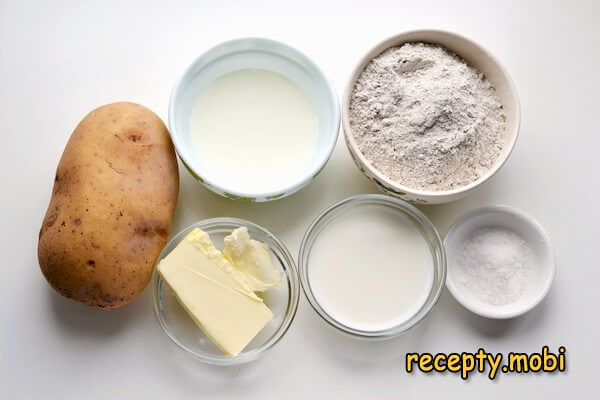
Prepare the ingredients you need.
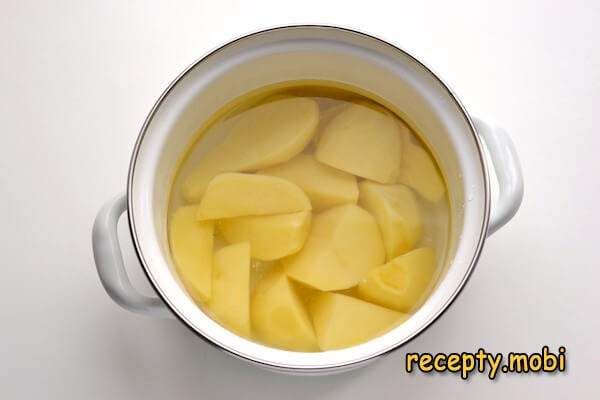
First wash the potatoes, peel them and rinse under running water. Cut the peeled tubers into large pieces, cover with cold water and put on the heat. Boil the potatoes until soft, about 20 minutes. Add salt 5 minutes before they are done.
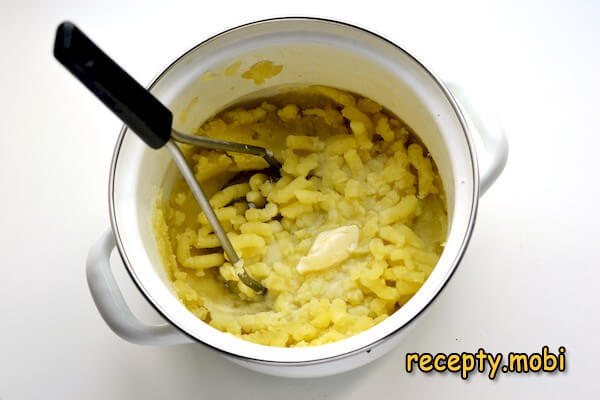
Drain the water from the cooked potatoes. Add the butter to the hot potato straight away and mash it lightly with a potato masher. As you mash, pour in the hot milk. Keep the purée fairly loose so it is easy to spread out in an even layer on the dough rounds. Then let the purée cool to room temperature.
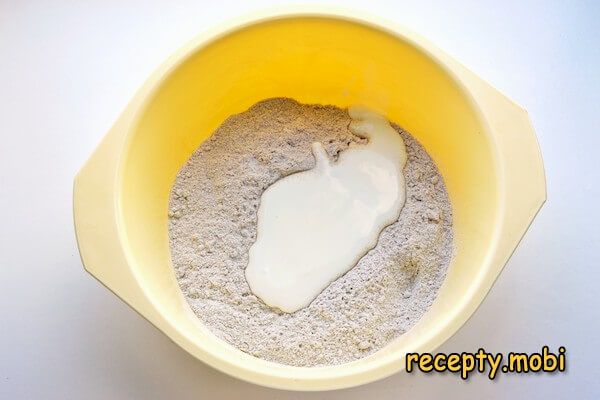
Once the purée has cooled completely, get on with the dough. Rye dough dries out quickly, so it needs to be kneaded right before making the pies. Put the flour into a bowl. Don't tip in all the flour at once – you will mix in a little more later. Add the salt to the bowl of flour, pour in the kefir and knead the dough.
Don't knead the dough for long – it is enough for it to become pliable and stop sticking to your hands. Cover the bowl of dough with a towel.
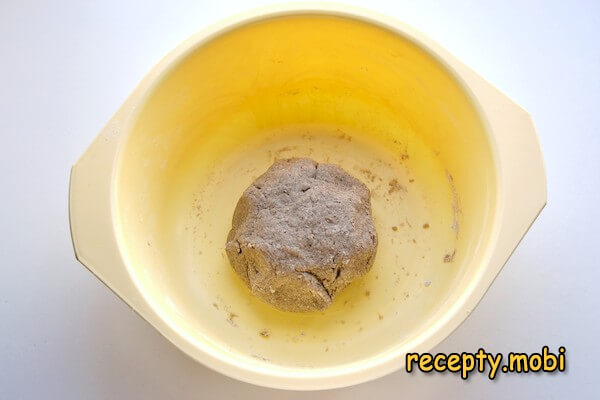
Divide the dough into 4 parts and roll each part into a ball. Take one ball to work with; the rest stay in the bowl under the towel. On a table dusted with flour, roll the ball out into an oval sheet 2–3 mm thick. The dough rolls out very easily.
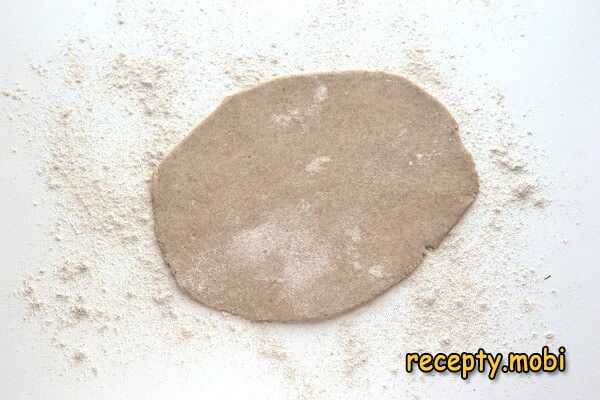
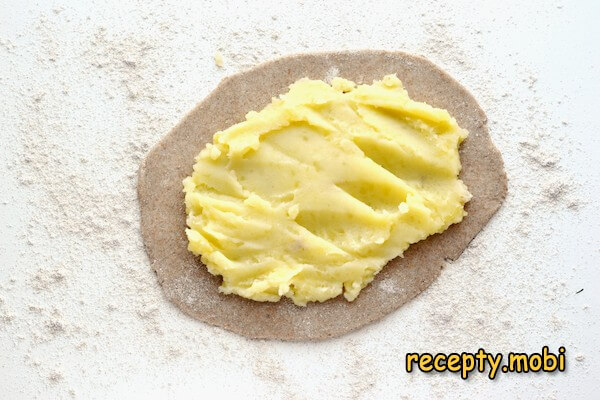
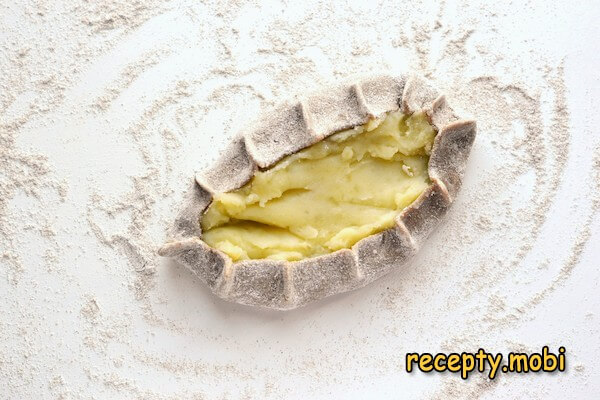
Place about 1.5 tablespoons of potato purée on the rolled-out round. Spread the potato out so that 1 cm of free space is left around the edges.
Lift the free edges of the dough up all around the perimeter.
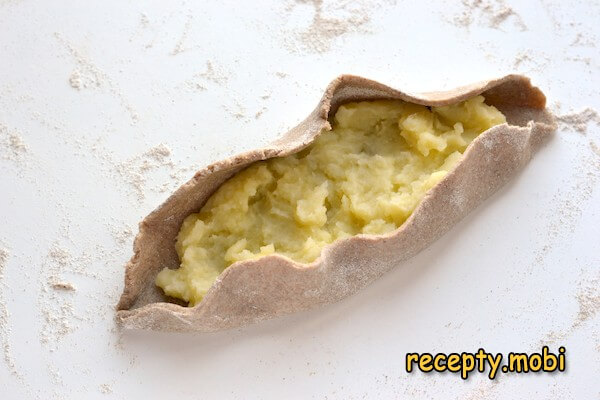
Form a flat little ellipse, pinching the rim with two fingers in several places. Shape all the rounds the same way.
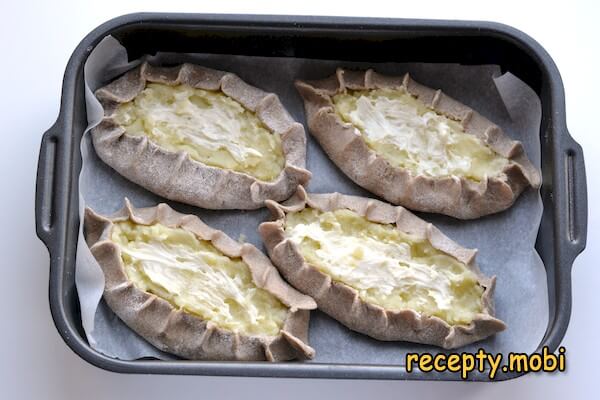
Line a baking sheet with parchment paper and arrange all the shaped pies on it. Brush the potato on top of the pies with softened butter.
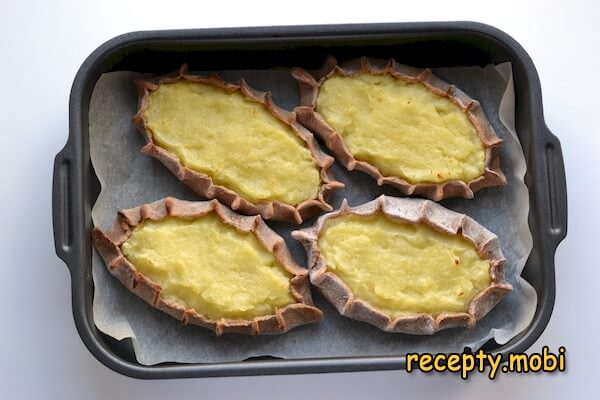
Preheat the oven to 200 degrees, top-and-bottom mode. Bake the kalitki for about 20 minutes. In that time they should turn lightly golden on top.
While the kalitki bake, melt the butter. Take the finished kalitki out of the oven and pour the melted butter over the potato on top.
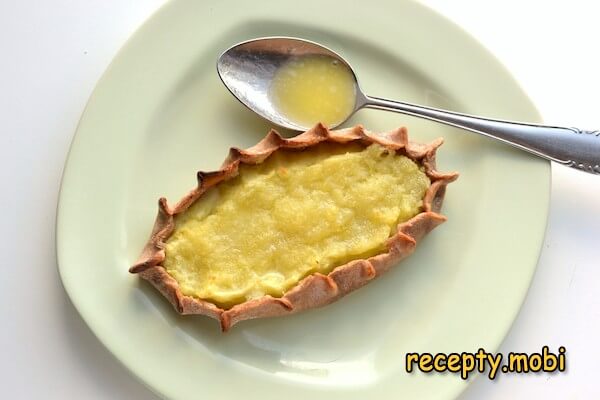
Mix the remaining butter with the warm milk. One by one, dip the sides of the hot kalitki into the dish with the milk-and-butter mixture and brush them with this mixture using a pastry brush.
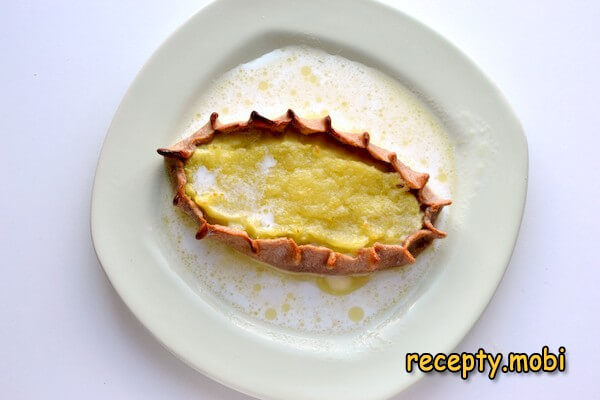
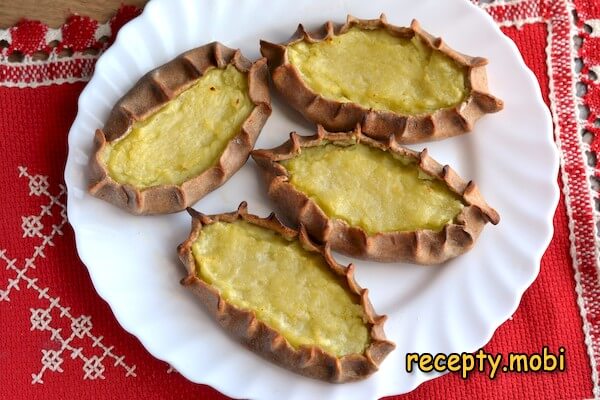
The Karelian kalitki made from rye flour are ready.Bon appétit!


Tips
- 1
KNEAD THE DOUGH BEFORE BAKING – rye flour dries out quickly. Don't leave it for later, or the dough will crack.
- 2
COOL THE PURÉE TO ROOM TEMPERATURE – this is essential. A hot filling will "melt" the dough and the rounds will tear.
- 3
THE MILK-AND-BUTTER BRUSH is the "Karelian secret". The finished kalitki turn soft and glossy and don't dry out.
- 4
DOUGH THICKNESS 2–3 MM – strictly. Thicker and it will be "coarse"; thinner and it will tear. The same principle works for other kinds of rye baking.
FAQ
Which rye flour should I choose? +
Ideally sifted or coarse-ground rye flour (the classic choice for kalitki). Alternatives: wholegrain rye flour (coarser, healthier) or a 70/30 mix of rye and wheat flour (softer). Check the freshness by smell – the flour should not have a musty note. Sift it through a sieve once or twice. Don't use flour past its date, or the dough will turn out "raw" and bitter. Without rye flour, wheat flour is not a substitute (the flavour and texture will change). The ratio of flour to kefir is strict (120–150 g to 100 g); adjust it by the consistency of the dough.
Which fillings can I use? +
The classic is mashed potato (as in our recipe). Authentic alternatives: millet porridge cooked in milk (the grandmother's version), barley porridge, crumbly buckwheat, or boiled rice with butter. Salted or sweet curd cheese with egg is a popular filling. Pureed boiled carrot is slightly sweet. Mushrooms stewed with onion give a "forest" note. Don't use: fresh vegetables (they leak) or meat (too heavy for the delicate dough). The amount of filling, 1.5 tablespoons per kalitka, is the optimum. Too much and the rim won't close.
How long do the kalitki keep? +
In the refrigerator in a container with a lid, 3 days. Reheating in the oven for 5–7 minutes at 150 °C will bring back their "fresh" look. In the microwave, 20–30 seconds (under a damp towel). In the freezer, up to 1 month (wrap each one in film). Defrost in the refrigerator for 4–6 hours, or reheat straight away. Fresh kalitki are at their best in the first 2–3 hours after baking. Before serving, brush them with butter again to bring back the shine. Don't leave them at room temperature longer than a day – the potato spoils. For a "lunch to take with you", wrap them in foil; they are easy to carry.
What to serve the kalitki with? +
The Karelian classics: with baked milk, with butter, or with thick sour cream. With fish soup – the authentic serving. With soured milk or fermented baked milk. With herbal tea with mint or thyme. With cold kvass – a summer option. They make an all-round snack for family meals and an ethnic spread.
- Comment
or post as a guest
Be the first to comment.