avg —
Clafoutis with Apples

Instructions
To make clafoutis with apples, I first get all the ingredients ready. They should not be cold, so I take them out of the fridge in advance. You can use apples of different varieties to taste — even a mix of sweet and tart will give an interesting, layered flavour.
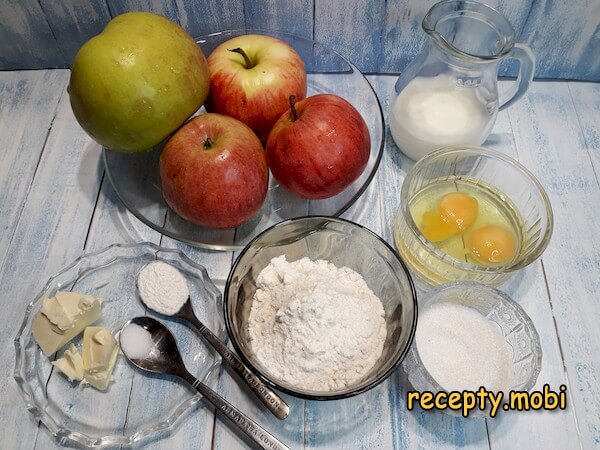
I put the eggs, salt, and sugar into the mixing bowl — in exactly that order, so that the salt and sugar dissolve evenly into the egg mixture as it is beaten.
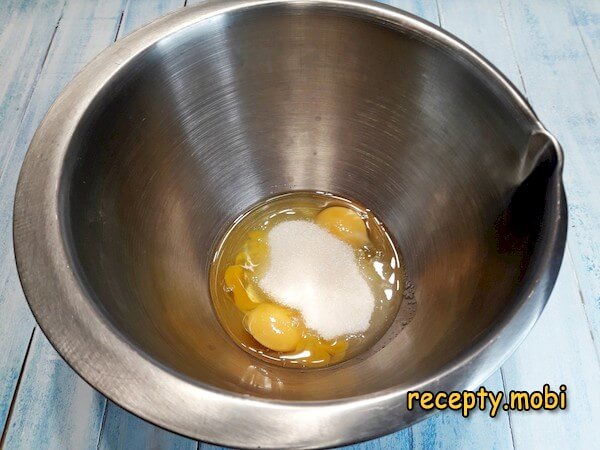
I beat this mixture with a mixer until it forms a fluffy foam — the air worked into the eggs gives the finished clafoutis its tenderness and structure.
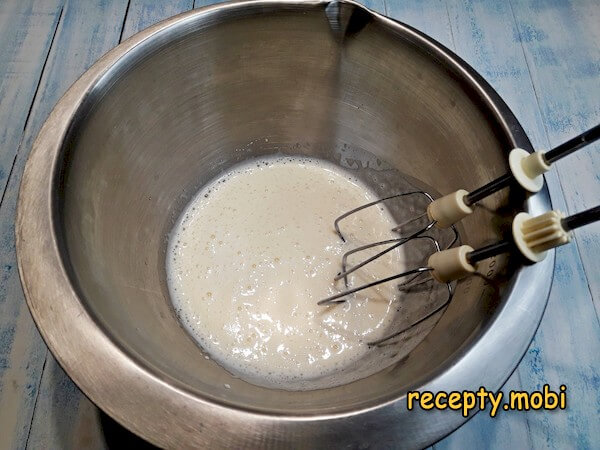
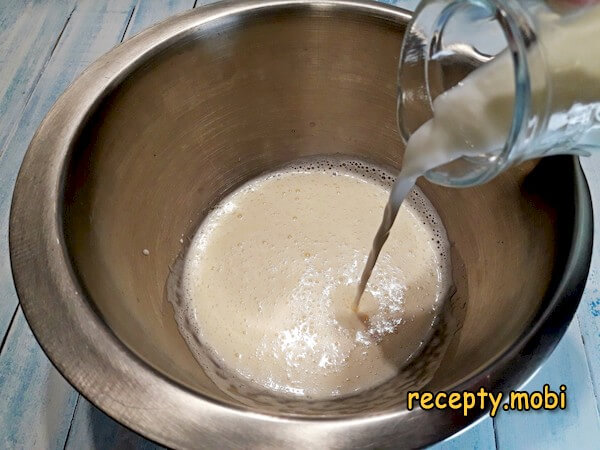
Next I add all the milk at once and stir — the milk goes in in a single pour so the batter does not separate.
I sift in the flour in two additions, stirring the mixture with a whisk after each one — sifting aerates the flour, and adding it in two stages prevents lumps from forming.
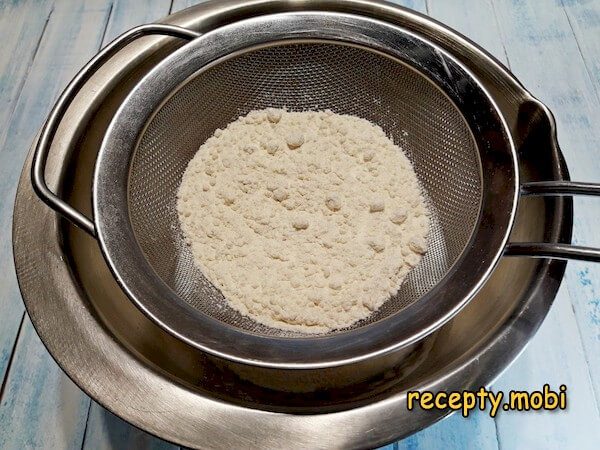
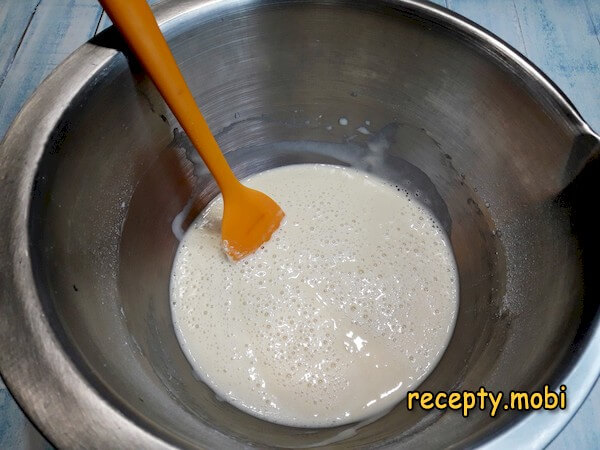
The result is a batter as runny as pancake batter. I set it aside for now — the baking powder will be added later, just before baking, to keep the floury custard as airy as possible.
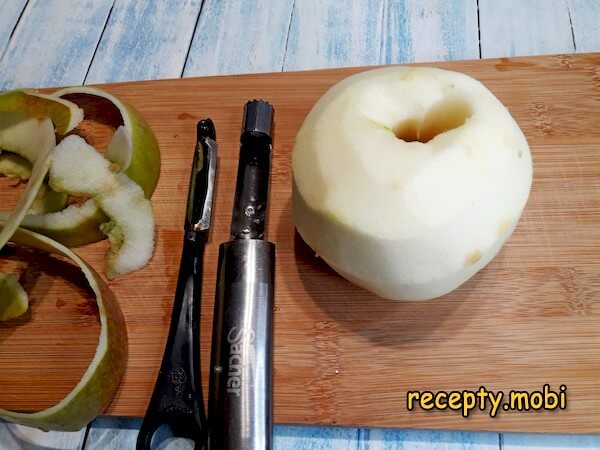
You can switch the oven on now to preheat to 180 degrees. I peel the apples and remove the cores — peeled apples give a more tender texture in the finished clafoutis.
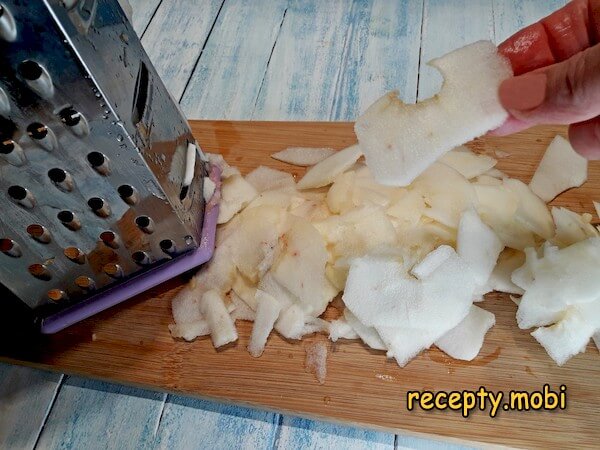
Now they need to be sliced as thinly as possible. You can do this with an ordinary knife, but it is much easier on the side of a grater with the long, elongated slot — every grater has one. You should end up with thin, almost translucent slices that will dissolve into the batter as it bakes.
I transfer the sliced apples into a wide bowl and pour the liquid batter over them — a wide bowl specifically, so that every slice is surrounded by batter.
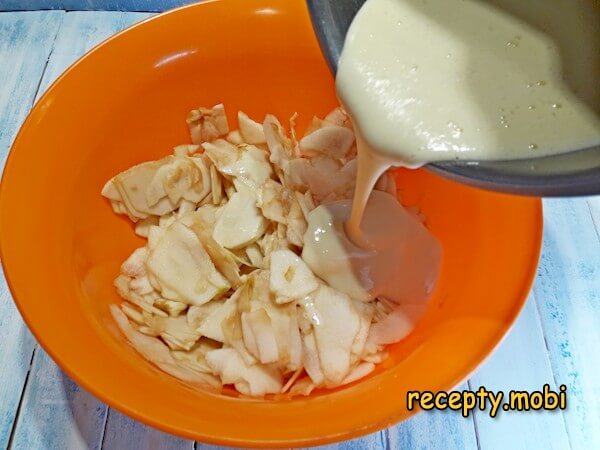
I gently mix everything so that each piece is coated with the floury batter — care is needed so the thin apple slices do not break.
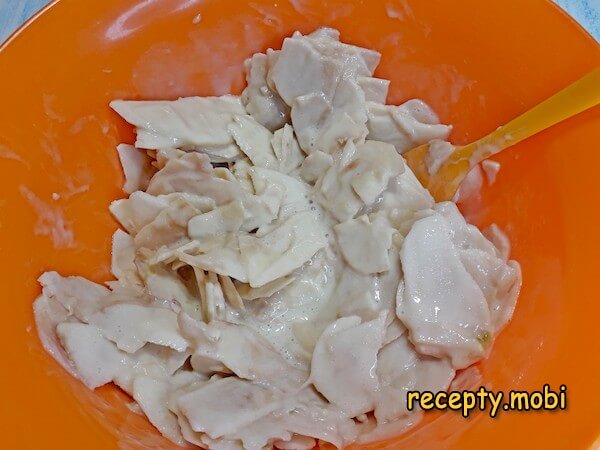
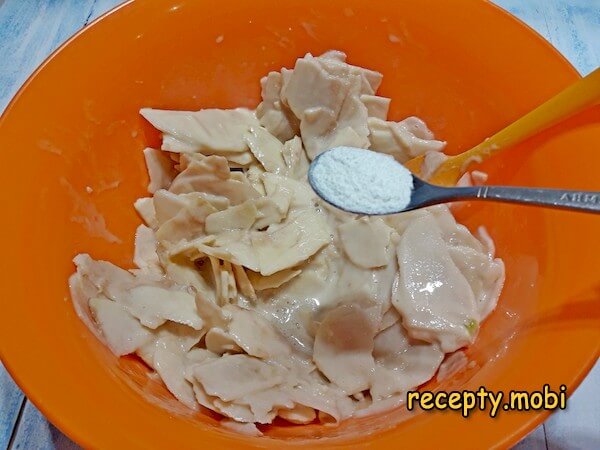
I add the baking powder here and mix everything again. The batter will start to show small bubbles — the baking powder is already working, and now the most important thing is to get it into the oven quickly.
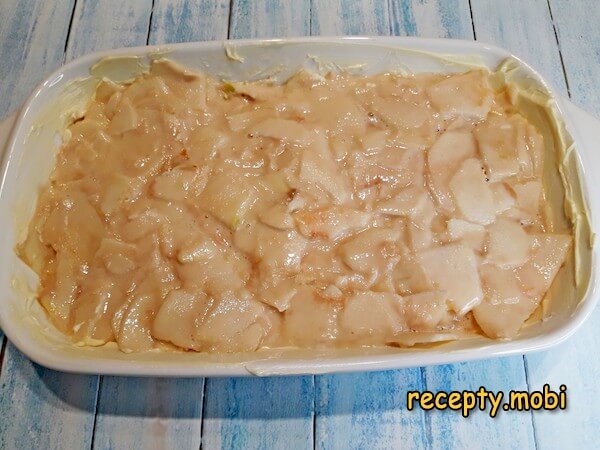
I generously grease the sides and bottom of the dish with butter and spoon in the prepared apple-and-batter mixture. I level it out across the whole surface. I put the dish into the oven without convection, on the middle rack — without convection specifically, so the hot air does not "blow away" the clafoutis.
After 40 minutes the dish will be ready. If the dish is smaller and the clafoutis is therefore taller, it will need a little more baking time — judge by doneness, using a dry skewer in the centre of the bake.
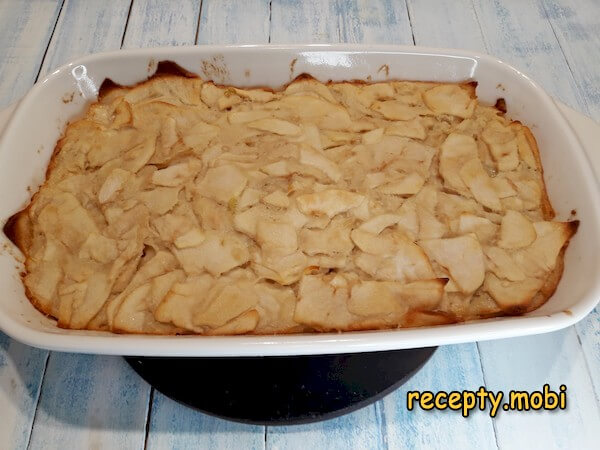
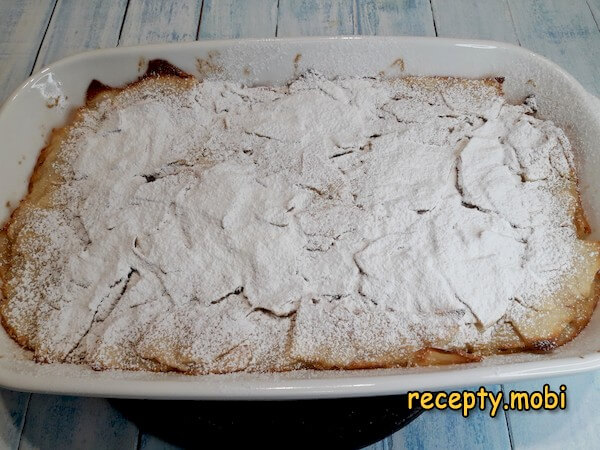
I dust the top with powdered sugar — it creates a decorative "snowy" effect and adds to the sweetness of the finished clafoutis.As it bakes, the apple clafoutis gives off an incredibly pleasant aroma that whets the appetite of the whole household. Cut into individual portions, it reveals its inner structure — beautiful apple-and-batter layers that go perfectly with a cup of hot coffee or tea.


Tips
- 1
BAKING POWDER RIGHT AT THE END — the "secret" to maximum lift. If you add the baking powder while mixing the batter, it starts to "work" already in the bowl, and by the time the dish reaches the oven the effect has weakened, so the clafoutis turns out denser. Adding the baking powder at the very last moment before it goes into the dish gives the finished bake the most lift.
- 2
SLICING THE APPLES THINLY — the "secret" to an even texture. Thick apple slices bake more slowly than the batter — by the time the batter is done they stay firm and spoil the tender composition of the clafoutis. Thin, almost translucent slices (1–2 mm) dissolve into the batter as it bakes and become one with the custard — this is exactly how a classic clafoutis should look.
- 3
A UNIVERSAL BASE — the "secret" to seasonal variations. The same technique works with any seasonal berries and fruit. In summer I use the same method to make a tender clafoutis with raspberries — a bright, berry version of the French dessert. And in season, there is clafoutis with cherries, with or without the pits, a classic rustic version that comes from the French countryside.
- 4
A COLD INGREDIENT — "not for clafoutis". All the ingredients should be at room temperature. Cold milk straight from the fridge will slow down the baking powder, and cold eggs do not beat into a fluffy mass well. I take everything I need out of the fridge 30–60 minutes before I start cooking — this is the "secret" against lost lift and uneven baking.
FAQ
What is clafoutis? +
Clafoutis (French: Clafoutis) is a traditional French dessert from the Limousin region in central France. It is a fruit-and-egg pie baked in a dish, with a consistency somewhere between a pudding and a baked custard — between a pancake and an omelette, but sweet and dessert-like. The classic recipe, "clafoutis aux cerises", is made with whole cherries that still have their pits — according to legend, the pits give the dessert a light almond aroma. Modern versions use any seasonal berries and fruit: cherries, raspberries, pears, apples, plums.
Which apples are best for clafoutis? +
Sweet-and-sour varieties with firm flesh are ideal: Antonovka, Semerenko, Gala, Idared, Golden. They give a balance of flavour and hold their shape when sliced thinly. Very sweet varieties such as Golden Delicious on their own give a cloying taste — it is better to combine them with slightly tart ones. The Antonovka variety is the most aromatic, but it is soft and can fall apart when sliced thinly. You can mix 2–3 different varieties for a more complex flavour profile.
How long does the finished clafoutis keep? +
In the fridge under cling film it keeps up to 3 days without losing its flavour. On the second day many people even consider clafoutis to be tastier still — it "rests" better and the texture becomes creamier. Before serving I warm it gently in the oven at 100 degrees for 5–7 minutes, or in the microwave for 30–40 seconds. I do not recommend freezing finished clafoutis — after thawing the texture becomes watery and loses its tenderness. It is better to make it just before serving, or a day ahead at most.
What do you serve clafoutis with apples with? +
French tradition calls for serving clafoutis warm, dusted with powdered sugar. It goes well with: a scoop of vanilla ice cream (the contrast of warm and cold), powdered sugar and mint leaves, a vanilla or caramel sauce, or whipped cream. For drinks: hot coffee (a classic espresso or cappuccino), black tea with lemon, cocoa with milk, or warm apple cider — an ultra-French pairing. For a dessert spread: alongside other French desserts such as profiteroles, éclairs, or tarte Tatin.
- Comment
or post as a guest
Be the first to comment.