avg —
Chudu in the Dagestani style

Instructions
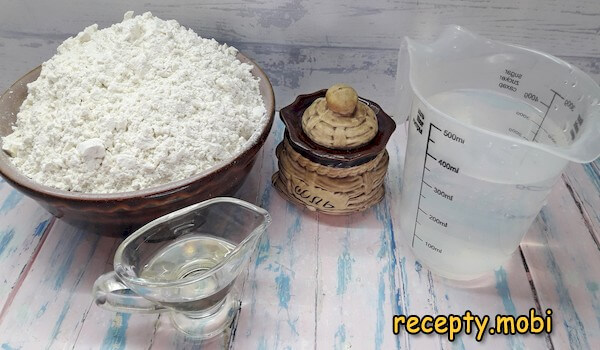
I gather the ingredients for the unleavened dough.
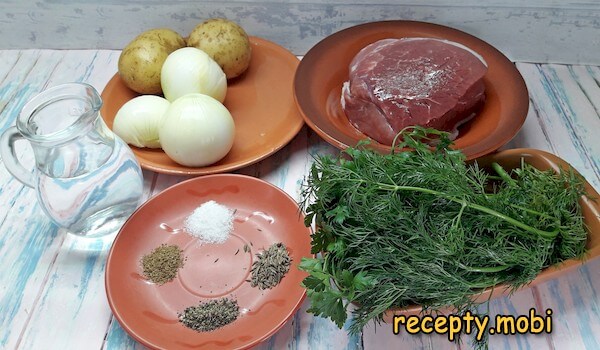
And also for the filling.
Into a roomy bowl, I sift the salted flour, which is essential. I make a well and pour in the water.
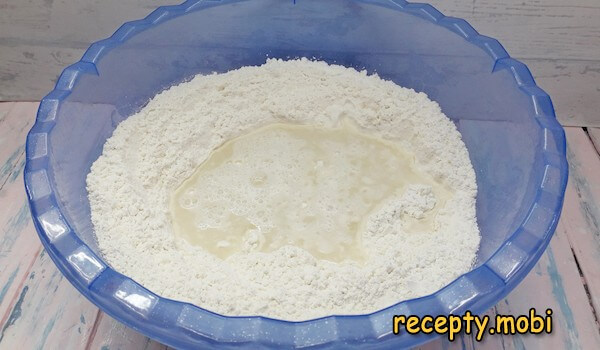
To make the dough more pliable and easier to roll out, I add the oil.
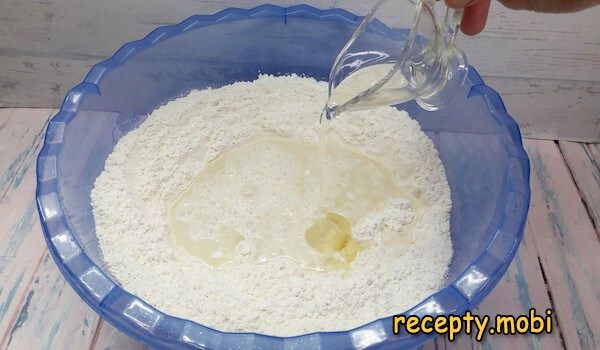
I begin bringing the flour together with the liquid by hand, at first simply gathering it into a ball that holds its shape.
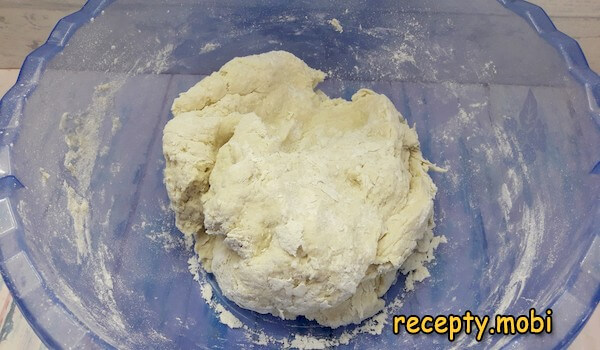
Then I continue kneading on the table, pressing thoroughly all over to form a smooth, non-sticky, uniform dough. I let it rest for about 15 minutes under a towel.
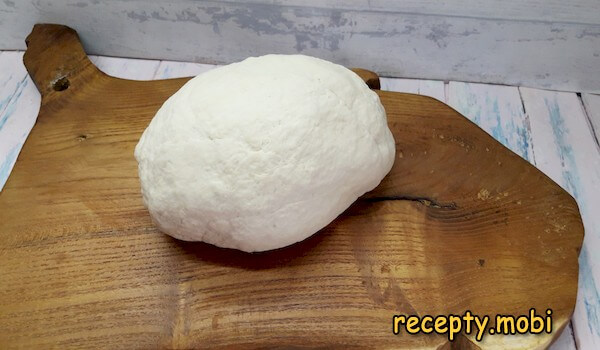
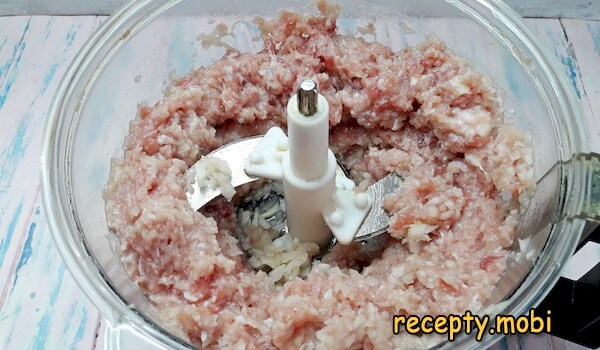
Meanwhile, I deal with the filling. I grind the meat together with the onion straight into mince.
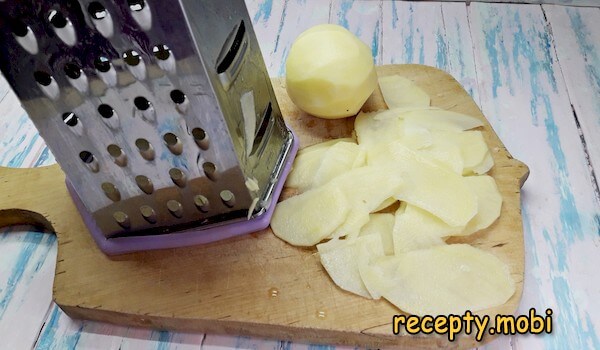
I shave the potatoes into the thinnest slices on a grater meant for the purpose.
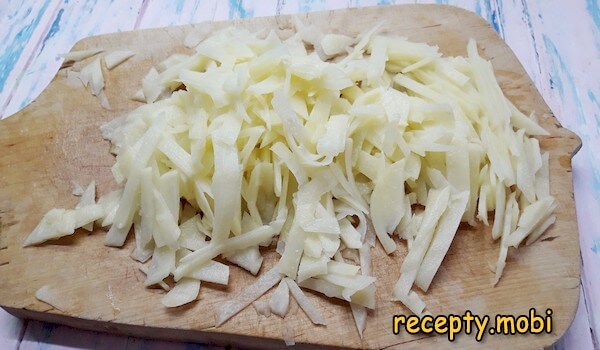
Next I cut these slices into strips. Cut this way, they combine best with the meat mince without weighing it down, and they bake through well.
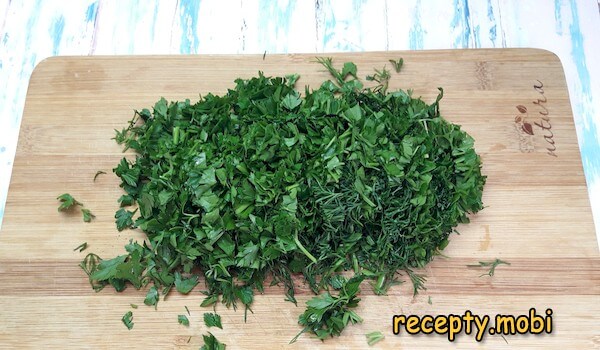
I chop all the fresh herbs with a knife.
I combine the meat, potatoes, and herbs in one bowl.
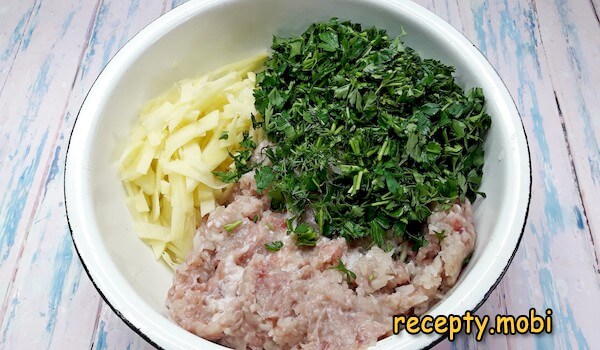
I season with salt and the spices.
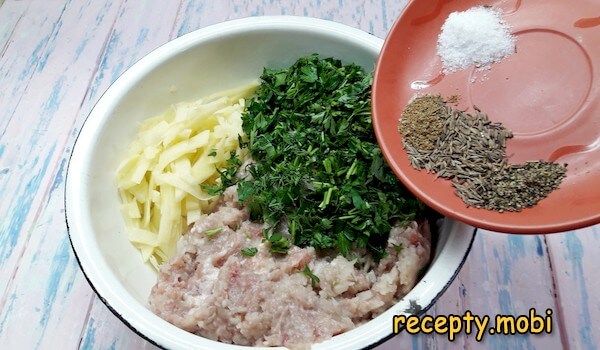
To make the filling juicy, I add water to it.
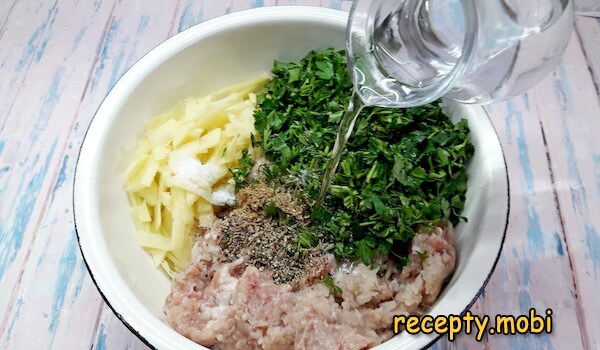
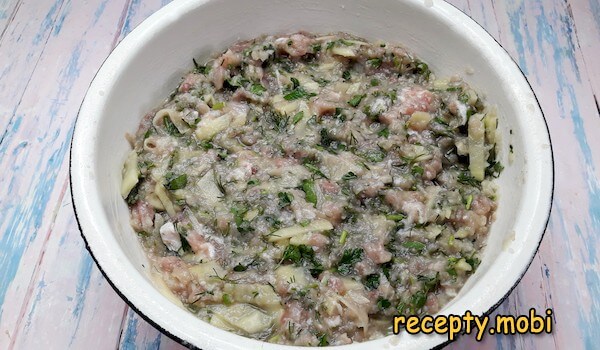
I mix all the components well. The mince will keep releasing juice, so it needs to be stirred again before each use. At this point you can start heating the oven to 200 degrees.
The dough has rested and become more pliable and elastic. It needs to be divided into 3 pies, whose bottom layer is a little larger than the top one. So I split the batch into 3 large balls of 185 g and 3 smaller balls of 150 g. I cover them with film.
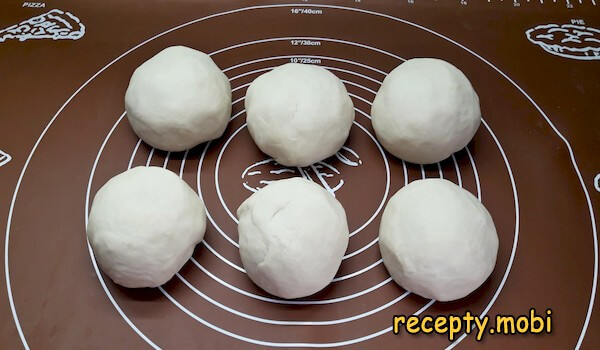
I dust the work surface lightly with flour. I roll out a large ball to a diameter that will fit the baking sheet.
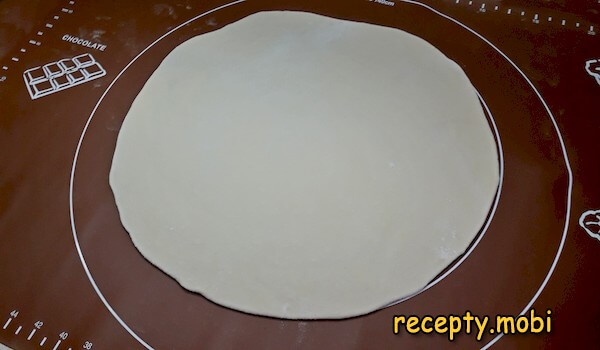
The sheet should be thin, no more than 3 millimetres.
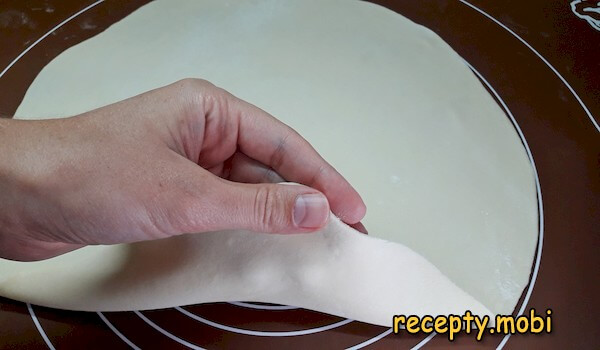
I transfer it onto the lined baking sheet. I spread a third of the filling on top and stretch it across the whole diameter with the back of a spoon, leaving a small gap near the edges.
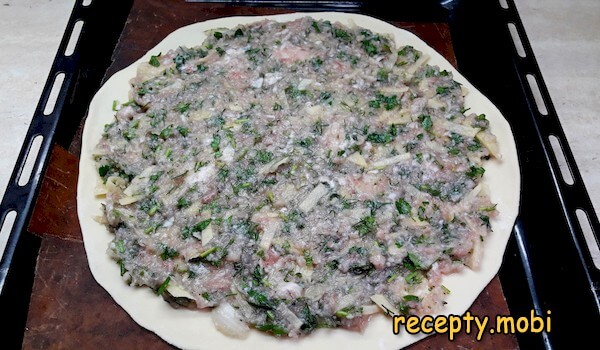
I cover it all with the smaller rolled-out ball.
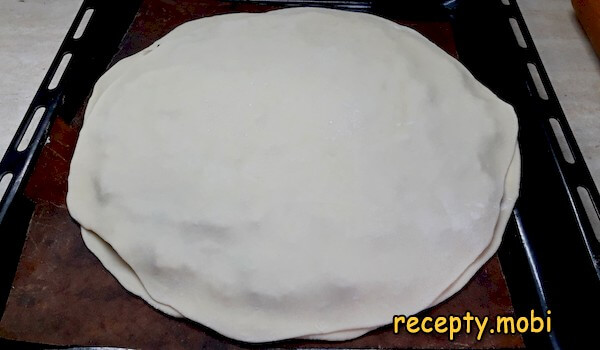
I pinch the edges upward, twisting them into a rope.
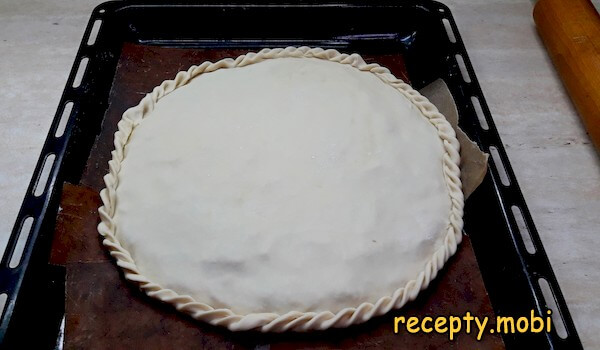
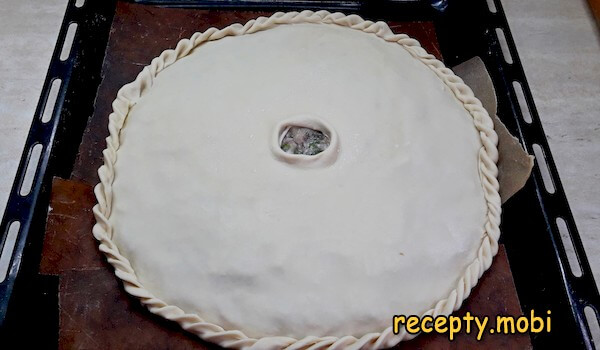
In the centre I make a hole for steam to escape.
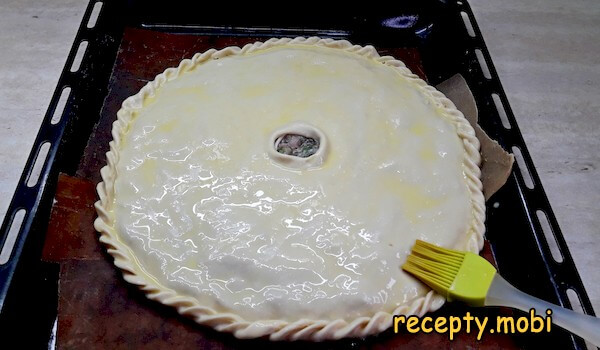
I thin the yolk with a few drops of water or milk and brush it over the top of the chudu.
I put the baking sheet on the middle rack of the oven for about half an hour. In that time the pie bakes through well and takes on a beautiful colour.
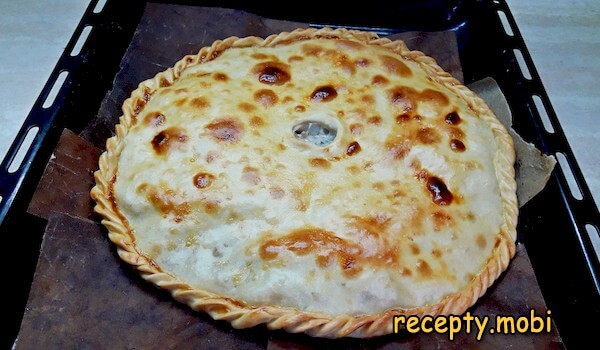
As soon as the pie is taken out of the oven, I immediately moisten it with plain water – this softens the top crust.
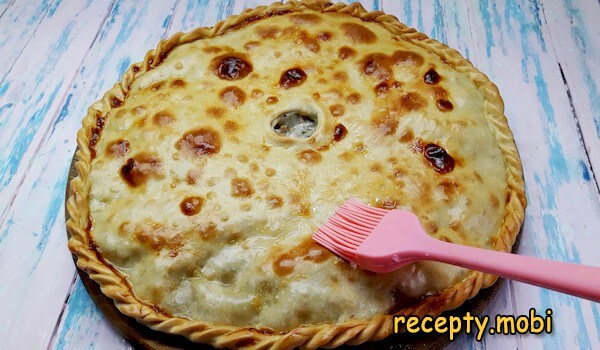
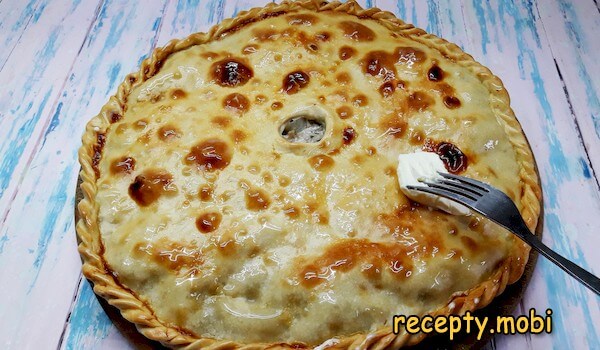
Then, to give a creamy flavour, I brush the top with butter. I cover the pie with film, then with a towel. This way, under its own heat, the chudu will soften. I treat each freshly baked one the same way and stack them on top of one another. The chudu in the Dagestani style is ready.This is a completely standalone dish that needs no additions, except perhaps herbs and fresh vegetables in any amount. To serve, the whole stack of pies (right down to the very bottom one) is cut into portions at once. The thin dough and the generous amount of very juicy, aromatic filling will leave no one hungry.


Tips
- 1
Thin 3 mm dough is the "secret" of authenticity. Thick dough turns chudu into an ordinary pie. Only parchment thickness will do.
- 2
Water in the mince is the "secret" of juiciness. The 200 ml of water makes the filling not dry but juicy, with broth inside.
- 3
Potato strips are the "secret" against mush. Grated potato turns to purée. Thin strips keep their structure.
- 4
Water and butter after baking are the "secret" of tenderness. Water softens the crust, butter gives a creamy flavour. The same principle works in other kinds of Caucasian pies.
FAQ
Which meat should I choose? +
Ideal is fresh boneless beef (tenderloin or rump) – 620 g, more aromatic and filling. Alternatives: lamb (620 g, the classic of the Caucasus, more pronounced), pork with some fat (620 g, richer and juicier), chicken (620 g, lighter), or a 50/50 mix of beef and lamb (620 g). Fresh chilled meat is the best option. Do not use shop-bought mince of poor quality or sinewy meat. For the Dagestani classic, lamb is the way to go.
What can replace cumin? +
Alternatives: ordinary caraway (3 g, less authentic), coriander and caraway at 1.5 g each, curry (3 g, an Indian touch), or khmeli-suneli (3 g, a Georgian note). Fresh spices are the best option. Do not use salted blends or sweet seasonings. For the Dagestani classic, cumin together with coriander is essential. Replace cumin with caraway only as a last resort – the flavour is noticeably different.
How long does chudu keep? +
In the fridge under film – 2 days. At room temperature under a towel – 1 day. Any longer and the dough goes stale and the filling loses its juiciness. Before serving, reheat in the oven for 5–7 minutes at 170 °C, or in the microwave for 30 seconds. In the freezer, in portions, it keeps up to 1 month. Thaw in the fridge for 6–8 hours, or reheat straight away in the oven. Fresh chudu is at its best in the first 30–60 minutes after baking. On the second day the flavour settles and is more pronounced. Do not leave it at room temperature longer than 24 hours, as the meat filling spoils.
What to serve chudu with? +
The Dagestani classic: with fresh herbs (parsley, cilantro, tarragon). With ayran, a Caucasian fermented-milk drink. With a cup of Turkish coffee. With adjika or tkemali for a spicy serving. With a garlic sauce. With suluguni or brynza as a starter. With a fresh vegetable salad. With a cup of meat broth as a starter. With sweet tea. With garlic yogurt. For a family lunch, with salad and broth. A universal pie for a large gathering.
- Comment
or post as a guest
Be the first to comment.