avg —
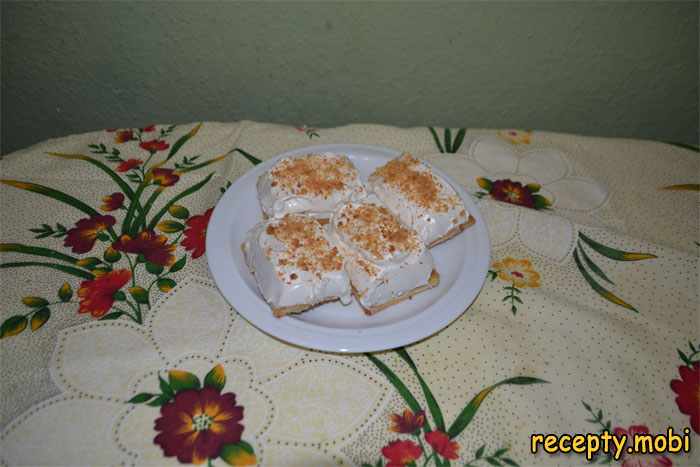
Lemon pastries with meringue cream

Instructions
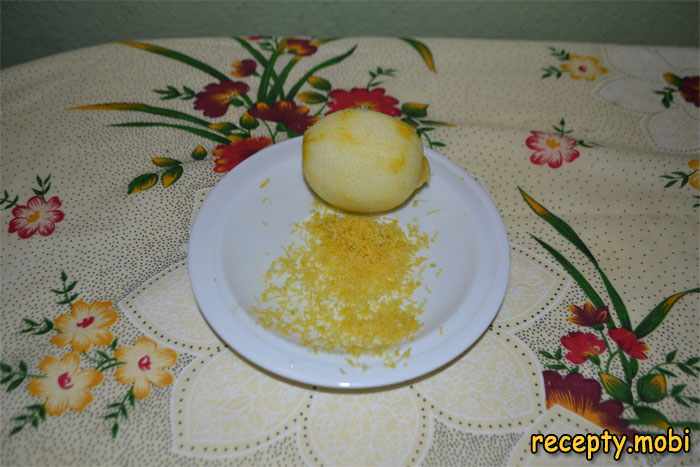
First, I remove the zest from the lemon using a fine grater or a special zester. I wash the lemon thoroughly under hot water beforehand. Important: I take off only the yellow part of the peel and leave the white part alone – it gives a bitterness that would spoil the taste of the pastries.
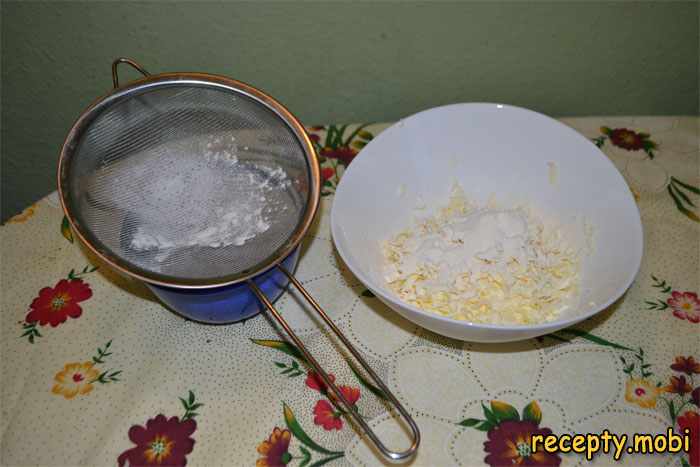
I grate the cold butter (straight from the refrigerator) on a coarse grater, gradually working in the sifted flour so that the pieces of butter do not stick together. I rub the butter and flour into a fine crumb with my hands. This buttery crumb becomes the basis of the shortcrust pastry – the finer it is, the more crumbly the pastry turns out.
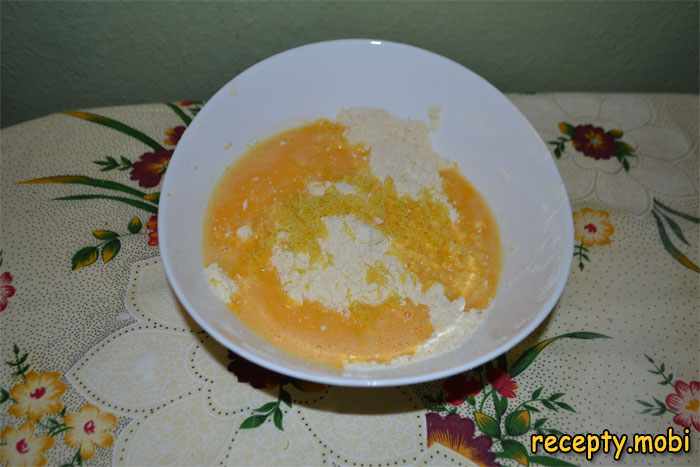
I add the lemon zest, baking powder, 5 raw egg yolks, powdered sugar and vanillin to the buttery crumb. I knead the shortcrust pastry by hand, gathering the crumb into a single mass. The kneading should be quick and brief so that the butter does not start to melt from the warmth of your hands.
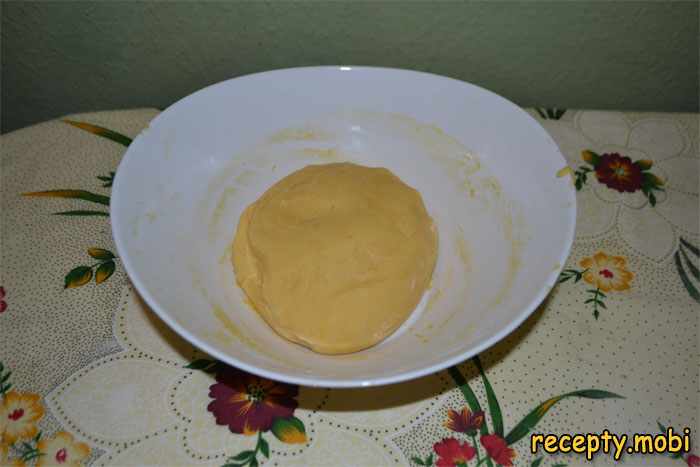
When the dough becomes smooth and elastic, I roll it into a ball, wrap it in cling film and place it in the refrigerator for 20–25 minutes. Chilling is essential – cold dough rolls out more easily and does not stick to the table.
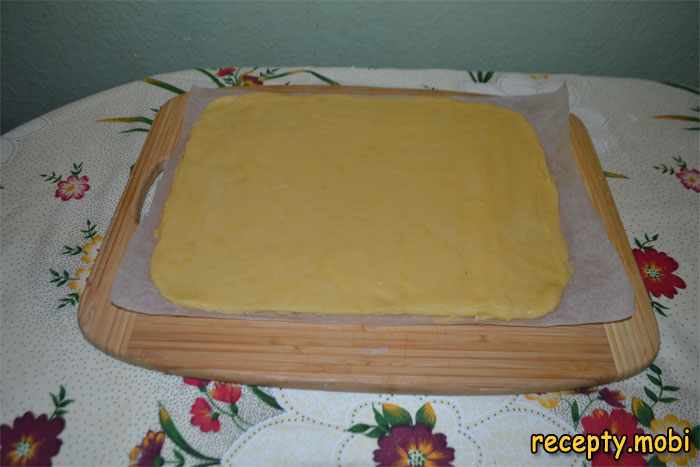
I roll out the chilled dough with a rolling pin on a silicone mat or parchment paper into a thin sheet 3–4 mm thick. So that the pastries come out neat and uniform, I cut a rectangle measuring 25×30 cm from the dough, trimming off the uneven edges with a knife.
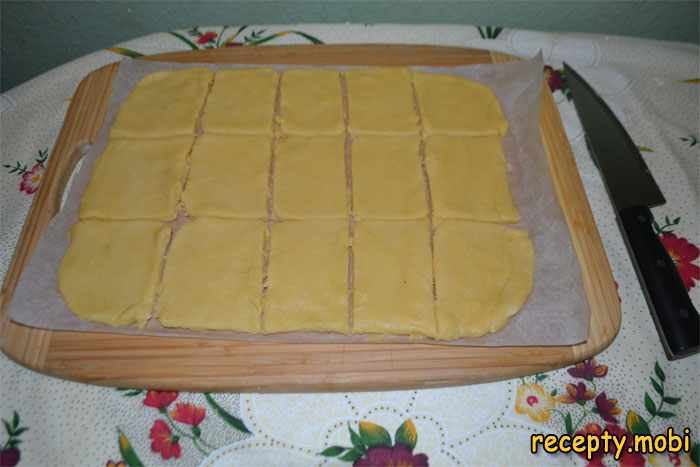
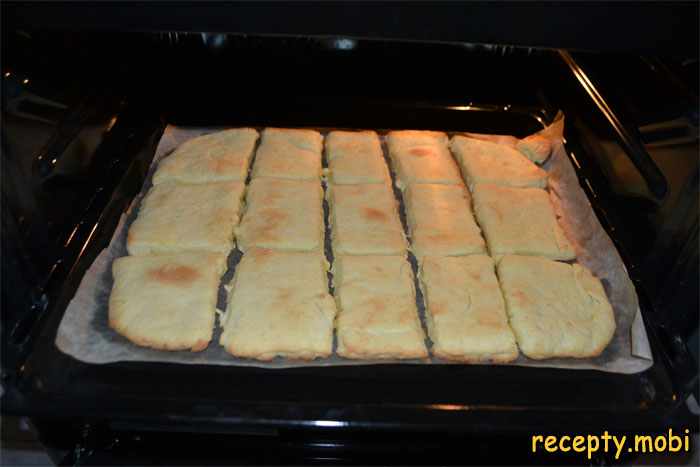
I cut the sheet of dough into 15 equal rectangles (5×6 cm each), lay them on a baking tray lined with parchment and place it in an oven preheated to 200°C. I bake for 11 minutes until lightly golden. I do not overbake – the shortcrust pastry should stay pale and crumbly.
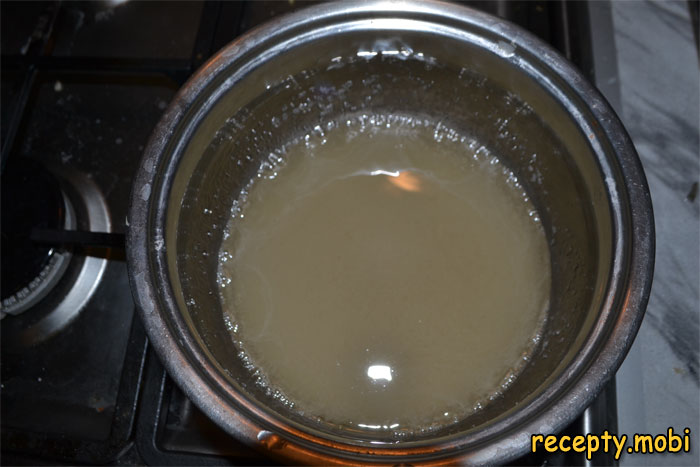
While the bases bake, I make the sugar syrup for the cream. I pour the water into a heavy-bottomed saucepan, add the sugar and set it over medium heat for 8–9 minutes, stirring constantly. The result should be a thick, clear syrup. It is important not to overcook it – if the syrup starts to darken and turn into caramel, I remove it sooner. Into the hot, ready syrup I pour 3 tablespoons of freshly squeezed lemon juice and stir.
While the syrup cooks, I whip 5 egg whites with a mixer in an absolutely dry and clean bowl until stiff peaks form (the whites hold their shape and do not run when the bowl is turned over). For a better result, the bowl can be degreased beforehand by wiping it with lemon juice and drying it thoroughly.
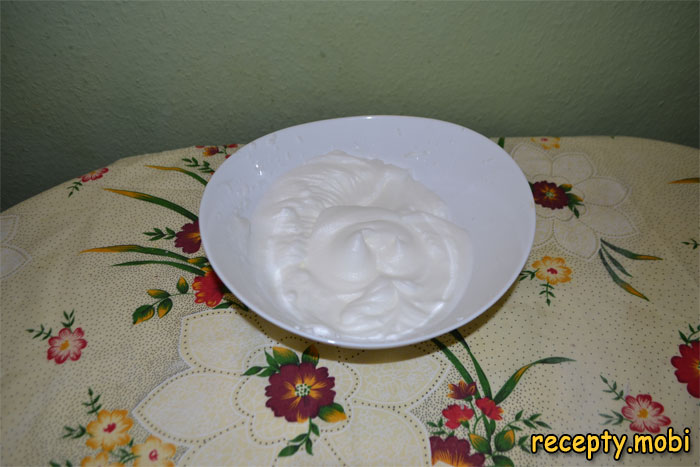
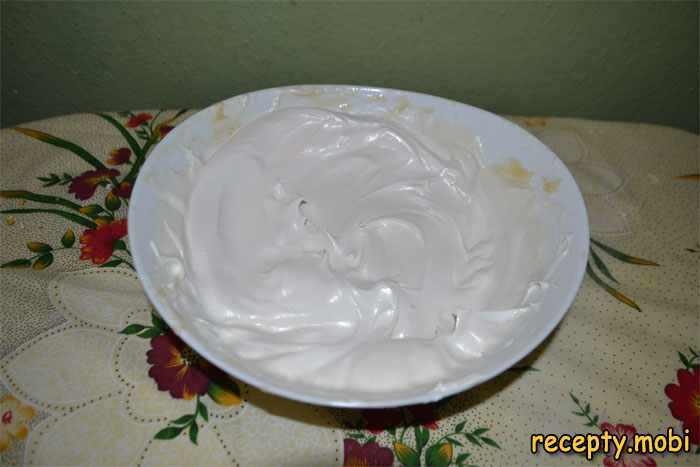
I pour the boiling sugar syrup into the whipped whites in a thin stream without stopping the mixer, whipping at high speed. I keep whipping for at least 12 minutes. During this time the meringue cream (Italian meringue) should become smooth, glossy and thick, and cool slightly to a warm state. If you like, I add another 1 teaspoon of lemon juice to the finished cream for a little tartness.
I take the baked bases out of the oven and, if needed, even up the edges with a sharp knife so that all the rectangles are the same. I collect the crumbs from the trimmings in a bowl – they will come in handy for sprinkling over the pastries.
When the cream has fully cooled to room temperature, I spread it generously over each piece of shortcrust pastry. The layer of cream should be high – at least 4 cm. I apply the cream with a piping bag and nozzle, or simply spoon it on, then carefully smooth the edges with a silicone spatula. On top I sprinkle the pastries with the crumb from the dough trimmings for decoration. I put the finished lemon pastries in the refrigerator for at least 2–3 hours so the cream stabilises.


Tips
- 1
For variety, you can add a thin layer of lemon curd or any citrus jam between the base and the cream – this gives extra tartness and juiciness.
- 2
This dessert can be made not only with lemon but also with other citrus fruits: tangerine, orange, lime or even grapefruit. I simply replace the lemon zest and juice with the zest and juice of another fruit.
- 3
Meringue cream based on Italian meringue (with hot syrup) is more stable and does not collapse, unlike ordinary whites whipped with sugar. That is exactly why the pastries can be kept in the refrigerator for up to 2–3 days without losing their shape.
- 4
I keep the finished pastries in the refrigerator in a closed container for up to 3 days. Before serving, I let them stand at room temperature for 10–15 minutes – this way the shortcrust pastry becomes softer and the cream more delicate.
FAQ
Why won't the meringue cream whip up, or why does it turn out runny? +
The most common causes are: a drop of yolk got into the whites, the bowl was damp or greasy, or the whites were not fresh enough. It is also important to add the syrup correctly – it should be boiling and poured in a thin stream while whipping continuously. You need to whip for at least 12 minutes until it has fully cooled.
Can I replace the Italian meringue with ordinary whites whipped with sugar? +
You can, but ordinary whipped whites are less stable and may collapse or run after a few hours. Italian meringue (with hot syrup) comes out denser, more stable and holds its shape for up to 3 days in the refrigerator.
How long can the finished lemon pastries be kept? +
I keep the finished pastries in the refrigerator in a closed container for up to 2–3 days. Meringue cream based on Italian meringue is stable and does not collapse. The shortcrust pastry may soften a little from the cream, but that is normal.
Can I freeze lemon pastries? +
I do not recommend freezing the finished pastries – after thawing, the meringue cream can become watery and lose its texture. You can freeze only the shortcrust pastry (raw or baked) and make the cream fresh before assembling.
Why did the shortcrust pastry turn out hard or crumbly? +
There can be several reasons: the dough was kneaded too long (the gluten became active), too much flour was added, or it was overbaked. Shortcrust pastry should be kneaded quickly and briefly, and baked until lightly golden, no longer than 11–12 minutes at 200°C.
- Comment
or post as a guest
Be the first to comment.