avg —
Thin pancakes with milk and egg

Instructions
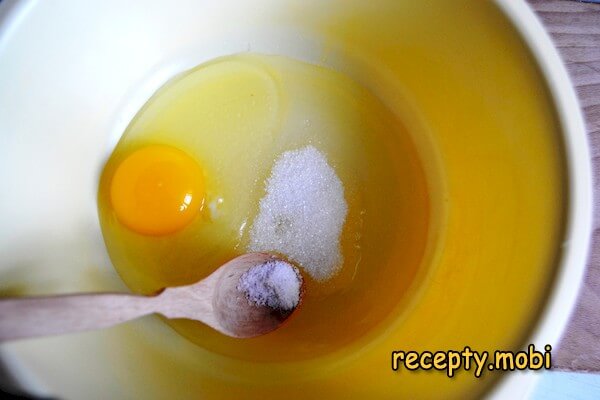
First prepare the products on your work surface. Take the milk (500 ml) out of the fridge 1–2 hours in advance, as it should be at room temperature for a proper batter – cold milk will not give a smooth, lump-free batter. The egg (1) should be at room temperature too. Break the egg into a deep mixing bowl, add the salt (a pinch) and sugar (1 tbsp). Mix with a balloon whisk, an electric mixer, or simply a fork until smooth. There is no need to beat it into a fluffy foam – it is enough to combine the yolk, white and sugar.
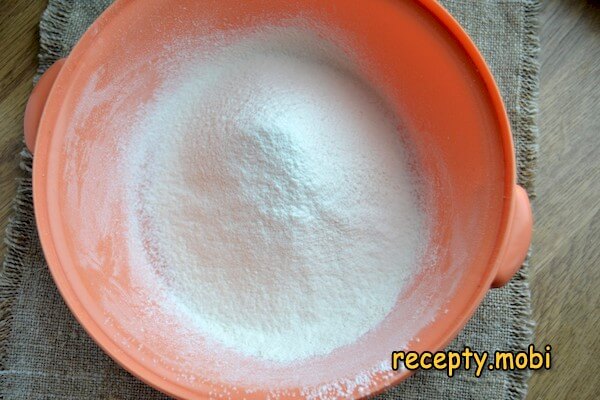
Meanwhile, sift the flour (250 g) through a fine-mesh sieve – this enriches it with air for an airy structure and also removes any small impurities or stray lumps.
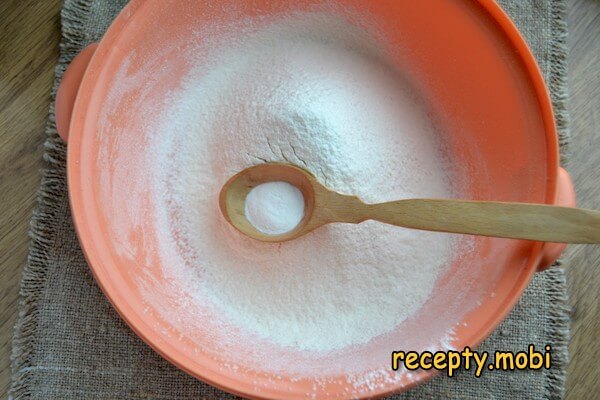
Add the baking powder (½ tsp) to the sifted flour and mix thoroughly with the whisk so it is evenly distributed. If you are using baking soda (¼ tsp instead of baking powder), be sure to slake it with vinegar first: mix the soda with 1 tsp of 9% table vinegar until it bubbles, then pour the mixture into the batter.
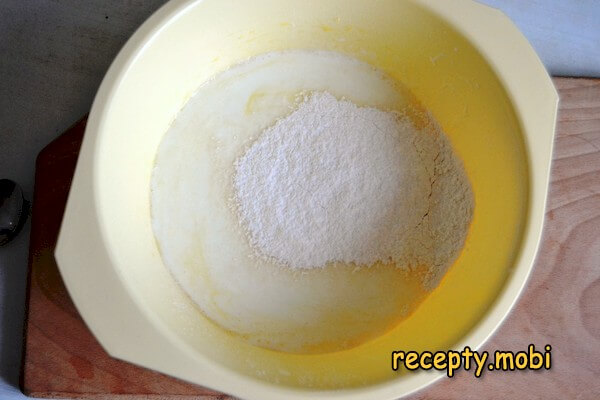
Warm half of the milk (250 ml) to room temperature or a little warmer (30–40°C) – slightly warm milk combines better with the egg. Important: do not boil the milk, or it will curdle against the egg white in the finished batter. Pour the half of warm milk into the egg mixture and stir with the whisk. Start adding the flour gradually, 2–3 tablespoons at a time, whisking thoroughly after each addition so that no lumps of flour form. Adding the flour gradually is the secret of a smooth, lump-free batter. When all the flour is mixed in, pour in the rest of the warm milk (250 ml) and stir again until completely smooth. Check for lumps – if there are any, strain the batter through a sieve or whisk more vigorously.
Leave the finished batter to rest for 15 minutes at room temperature. During this time the gluten in the flour relaxes, the batter becomes uniform and elastic, and the pancakes turn more easily – this step is essential for tender thin pancakes. After 15 minutes, pour the vegetable oil (2 tbsp) into the batter and stir again until smooth. The oil in the batter is the secret that keeps the pancakes from sticking to the pan and gives them their characteristic glossy sheen. Check the consistency – it should run off the ladle in a smooth stream, like heavy cream. If the batter is too thick, add a little milk; if too runny, add a little flour.
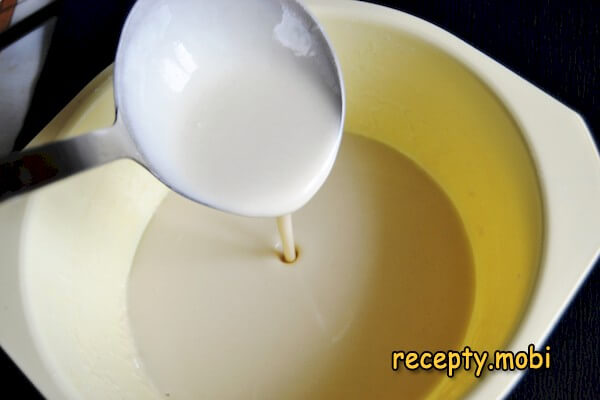
Heat a thin non-stick pancake pan (22–24 cm in diameter) over medium heat for 2–3 minutes. The pan must be well heated – a drop of batter should sizzle at once on contact. Pour in a little vegetable oil (1 tsp) and spread it over the whole base with a brush or a paper towel; wipe off any excess, as you need only a very thin film. Pour a portion of batter (about 80–100 ml) into the centre of the pan with a ladle and at the same time quickly tilt and rotate the pan in a circular motion so the batter spreads across the whole base in a thin, even layer. A thin pancake fries very quickly – 30–60 seconds on the first side. It is ready to turn when the edges are golden and begin to lift away from the pan and the top has dried and is no longer sticky. Slide a silicone spatula or a wooden stick underneath and flip it. Fry the second side even faster – 30–40 seconds to a golden colour – watching that it does not burn. Before scooping each new portion, always stir the batter in the bowl with the ladle, as the flour settles to the bottom. For the following pancakes there is no need to grease the pan again, since the batter contains enough oil of its own.
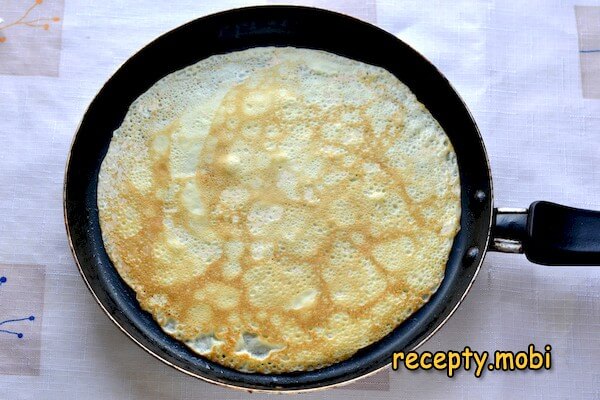
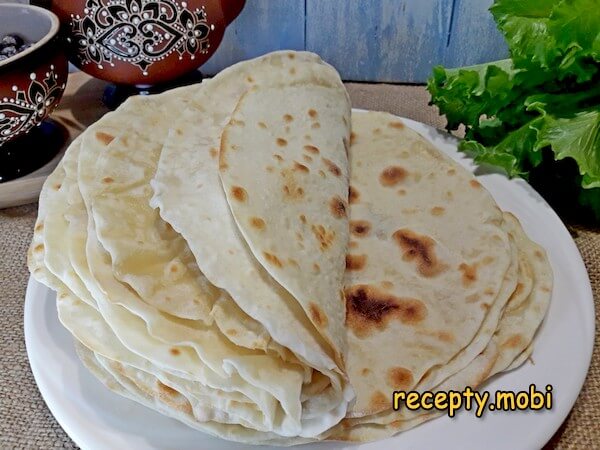
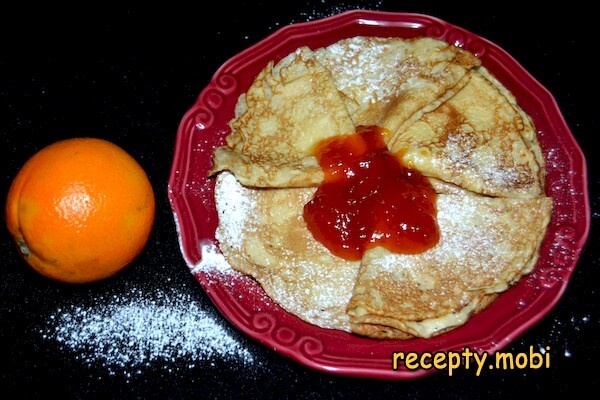
Stack the cooked pancakes on a plate and cover with a lid to protect them from drying out. If you like buttery pancakes, brush each one generously with butter before stacking, using a silicone brush or a piece of cold butter (20 g for the whole stack). The thin pancakes with milk and egg are ready. Serve them with sour cream, honey, jam or condensed milk.Bon appétit!


Tips
- 1
The batter should be the consistency of heavy cream – running off the ladle in a smooth stream. Adjust it with flour or milk.
- 2
Let the batter rest for 15 minutes – the gluten relaxes, so the pancakes are more tender and turn more easily.
- 3
The pan must be well heated – a drop of batter should sizzle. On the same principle I make pancakes with kefir.
- 4
Stir the batter with the ladle before each new portion – the flour settles to the bottom, otherwise the pancakes come out uneven.
FAQ
What can replace the milk in pancake batter? +
Good options include: kefir (for fluffier pancakes with a slight tang), soured milk (a more "Russian" classic), whey (a lighter, lower-calorie version), a 50/50 mix of milk and water (more economical, and the pancakes come out lacier), 10% cream diluted 50/50 with water (for tender pancakes), and almond or soy milk (for a vegan version). For ryazhenka pancakes, use a 50/50 mix of ryazhenka and kefir (a gentle baked-milk flavour). Each substitute gives the pancakes its own character. Milk is the classic choice for thin, lacy pancakes with a delicate creamy taste.
Why do the pancakes come out fragile and tear? +
The main causes are: 1) The batter is too runny – add 2–3 tbsp of flour and stir. 2) The pan is not hot enough – a cold pan gives "boiled", torn pancakes, so heat it for 3–5 minutes over medium heat. 3) No egg or no baking powder – the egg binds the batter, and without it the pancakes tear. 4) The wrong flour – you used grade-1 flour (weak gluten) instead of top-grade. 5) You turned them too early – wait until the top surface of the pancake has dried. 6) No oil in the batter – add 1–2 tbsp of vegetable oil.
How long do the cooked pancakes keep? +
Fresh pancakes are best eaten on the day they are made – they are tastiest warm. In the fridge they keep for up to 3 days in an airtight bag or container; before serving, reheat them in a dry pan for 30 seconds on each side, or in the microwave for 20 seconds under a cover. You can freeze them for up to 1 month in airtight bags with parchment between the pancakes; before serving, thaw them completely at room temperature for 30 minutes and warm them through. Frozen pancakes are ideal as a quick stand-by for breakfast or for filling.
What goes with thin pancakes? +
This is a versatile dish with many serving options. The classic Russian way: 20% sour cream with jam (strawberry, raspberry, cherry), condensed milk, honey or butter. With a filling: cottage cheese with raisins and vanilla, boiled condensed milk with nuts, apples baked with cinnamon, or mushrooms with onions. For Maslenitsa the classics are lightly salted salmon, red caviar, and herring with onion – a "Russian" breakfast. For an adult table: with rum and honey, or with brandy and nuts. For drinks – black or green tea, coffee with milk, cocoa, compote or kvass. For a Sunday family breakfast – with fresh fruit and yoghurt.
- Comment
or post as a guest
Be the first to comment.