avg —
Pancakes on Drinking Yogurt (+Cooking Video)

Instructions
I prepare the listed ingredients.
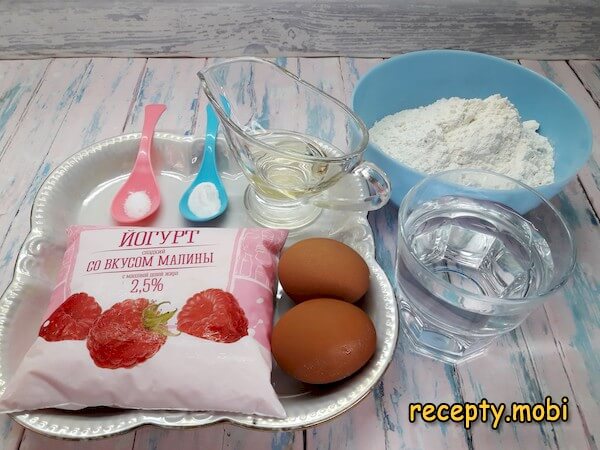
Pour the yogurt into a large bowl and add the salt. Beat in the eggs.
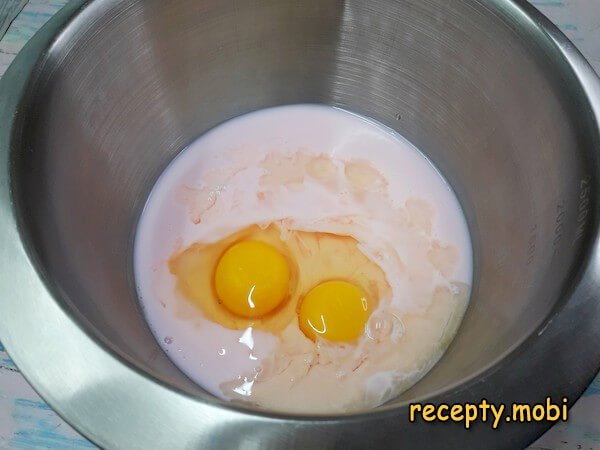
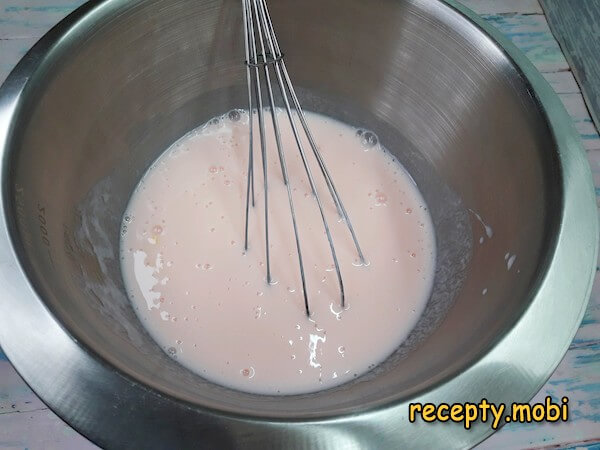
Whisk everything together.
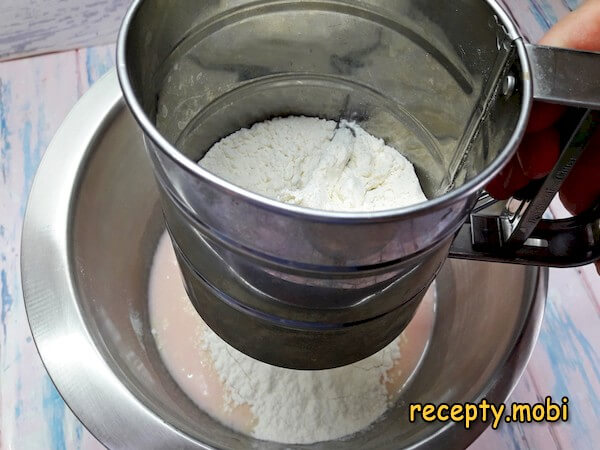
Add the flour to the same mixture, passing it through a sieve.
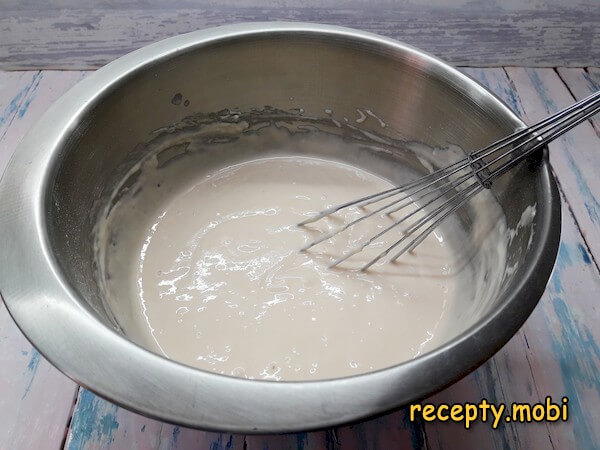
Stir the thick batter with a hand whisk. With this sequence, the batter (later diluted with boiling water) has no lumps at all and is easy to mix.
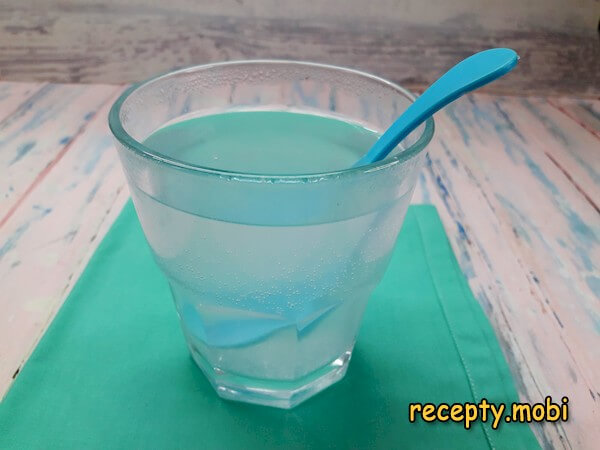
Boil the water. Add the baking soda to the glass and stir.
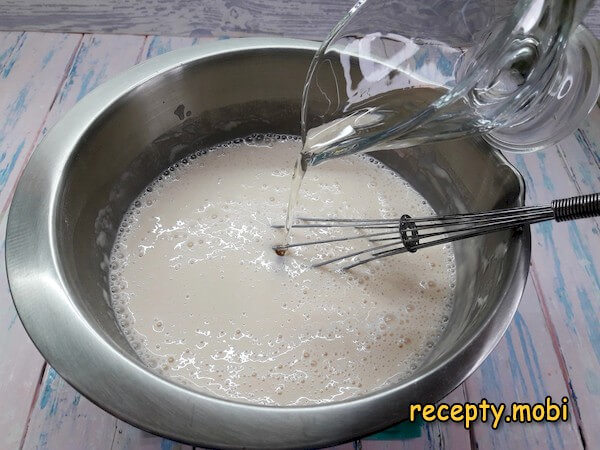
Pour the hot soda solution into the bowl with the batter – it bubbles up immediately as you mix. Add the oil here too.
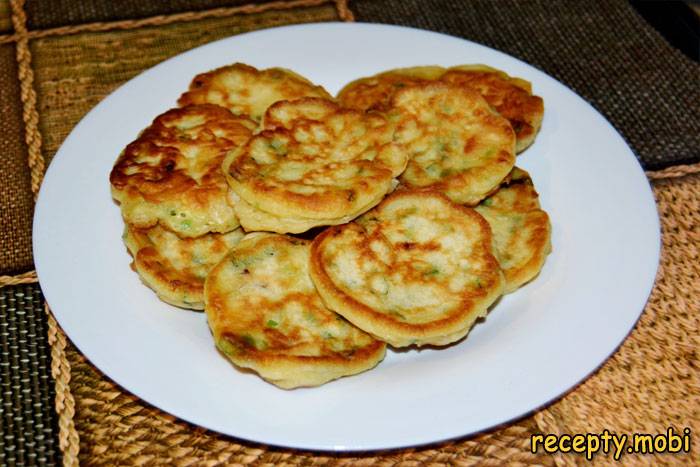
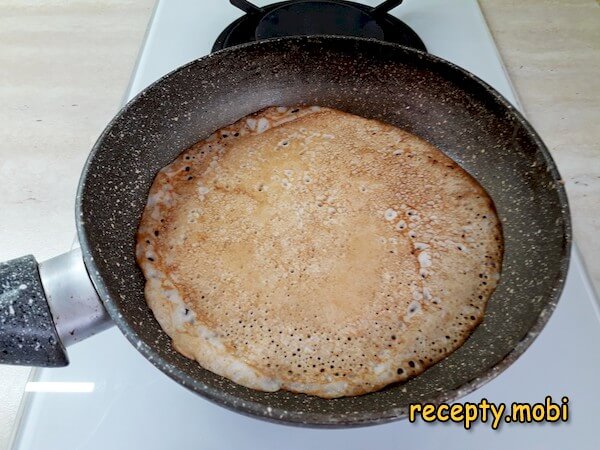
Heat the frying pan well before you start baking – this is the main rule for keeping the first pancake from turning out lumpy. A non-stick pan needs no greasing. Pour in a portion of batter and wait for the edges to brown and the surface of the pancake to turn matte – that's the signal to flip it.
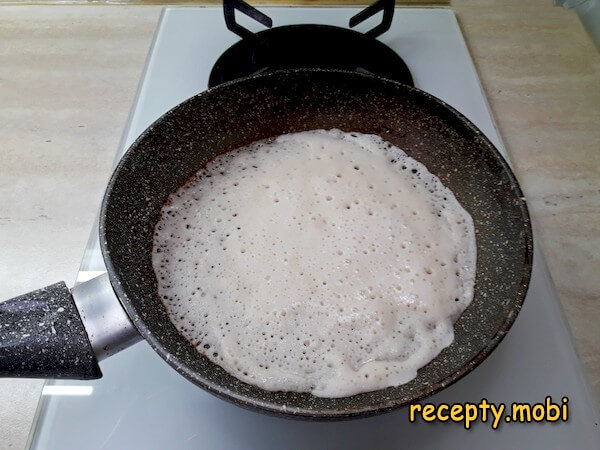
Lightly brown the other side.
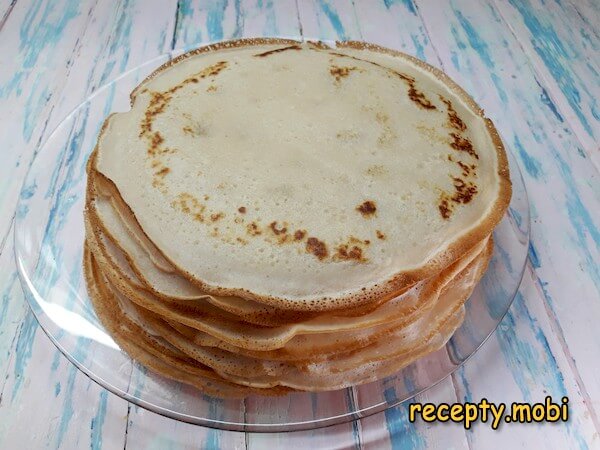
Stack the cooked pancakes on top of each other. Hot pancakes on drinking yogurt give off a pleasant aroma and keep a fairly expressive berry taste. They can also be made with natural yogurt as the base, without any fruit-and-berry flavouring – in that case you can add sugar to taste if you like. The pancakes turn out porous and thin, tender, and simply melt in the mouth. I serve them with honey, sour cream, or fresh berries. Do give them a try!


Tips
- 1
The boiling-water-and-soda "custard" – the secret to the lacy texture. Boiling water with baking soda gives a bubbling batter and the lacy little holes in the pancakes.
- 2
Flour through a sieve – the secret against lumps. Sifted flour mixes in without lumps, so the batter comes out smooth.
- 3
Heat the pan well – the secret against sticking. A cold pan means a lumpy first pancake; use it only when hot.
- 4
Flavoured yogurt – the secret to the taste. Raspberry, strawberry, peach – change it each time for variety.
Video
FAQ
Which yogurt should I choose? +
Ideally, a drinking yogurt of medium fat content, 2–2.5% (classic or with fruit). Alternatives are drinking Activia, drinking Chudo, or Imunele – reliable brands. A fresh yogurt is the premium choice. Raspberry, strawberry, or peach will give the pancakes a fruity note. Do not use: thick Greek yogurt (the batter will be too dense), set (thermostatic) yogurt (it won't mix evenly), or anything past its date. For lighter, diet-style pancakes, use fat-free 0.5%; for a premium version, farmhouse natural yogurt (without sugar); for children, one with raspberry or strawberry. Shop brands such as Prostokvashino, Activia, and Ermigurt are dependable.
What can I use instead of baking soda? +
Alternatives include baking powder (1 tsp – milder, with no soda aftertaste) or a leavening blend (1 tsp – a fair compromise); you can also go without any leavener (though the pancakes will be denser), or use a little kefir starter in place of some of the yogurt (for a more "yeasty" result). Baking soda is the classic option. Do not use: vinegar with soda (it changes the flavour) or dry yeast (you'll get different pancakes). For a diet version, use a substitute based on soda and tartaric acid; for a premium version, fresh Dr. Oetker baking powder. Half a teaspoon of soda is optimal for 1 cup of yogurt. Without soda, the batter will be heavy.
How long do the pancakes keep? +
In the fridge, in a bag or container, 2–3 days. In the freezer, stacked with parchment between them, 1 month. Before serving them chilled, reheat in a dry pan for 30 seconds on each side, or in the microwave for 20–30 seconds. Defrost in the fridge for 4–6 hours, or straight in the pan. Fresh pancakes are at their best in the first 30 minutes. On the second day the flavour "settles", but the texture is worse. Do not leave them at room temperature for longer than 6 hours – the yogurt will turn sour. Cover the stack with a towel to keep it warm.
What do I serve them with? +
A classic with tea: honey, jam, or condensed milk. With thick sour cream for a Russian-style serving. With fresh berries (raspberry, strawberry, blueberry) and whipped cream. With cottage cheese and raisins as a filling. With red caviar and butter for a premium touch. With a chocolate or berry sauce. With hot milk and honey for a children's version. With a cup of cappuccino or cocoa. With a glass of cognac or cherry liqueur as an evening dessert. For a family breakfast, with butter and honey. For Maslenitsa, the Russian classic. With a fruit salad. With green tea for a Japanese-style dessert. These are versatile pancakes for breakfasts and desserts alike.
- Comment
or post as a guest
Be the first to comment.