avg —
Fluffy pancakes with yeast and kefir

Instructions
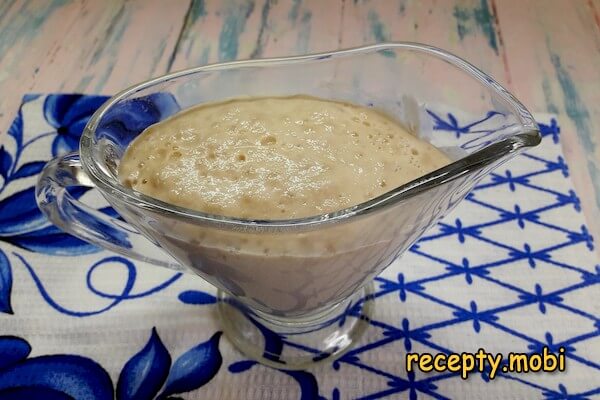
It is easier to activate the yeast in plain water, as it starts working faster, whereas in an acidic environment (in kefir) the process slows down somewhat. So first I make a sponge in warm, slightly sweetened water and wait 3–4 minutes for the reaction to begin and for foam to form on the surface.
In a roomy bowl, beat the egg with the sugar.
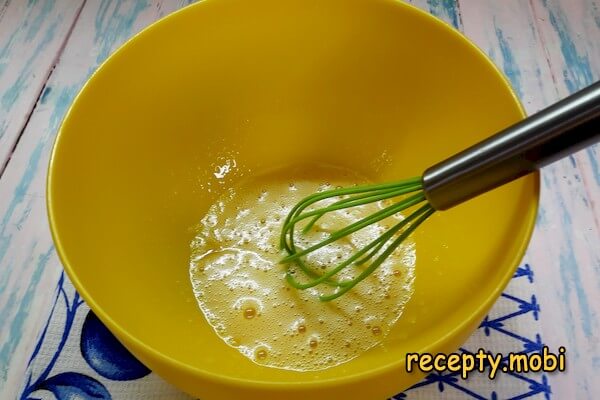
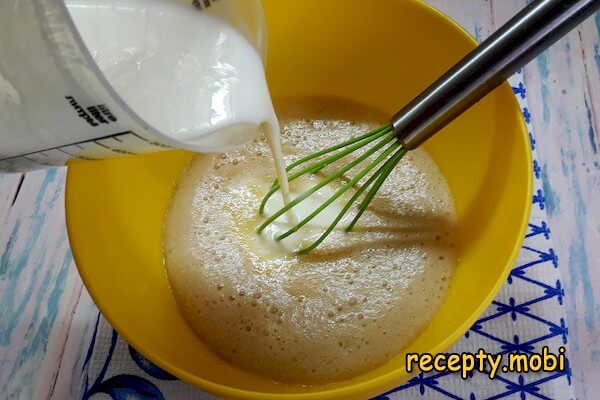
Add the prepared sponge to it. Warm the kefir gently in the microwave, checking the temperature every 30 seconds – it should be only slightly warm (if you overdo it here, the kefir will separate into whey and curds). Now the warm fermented-milk product can be added to the overall yeast mixture.
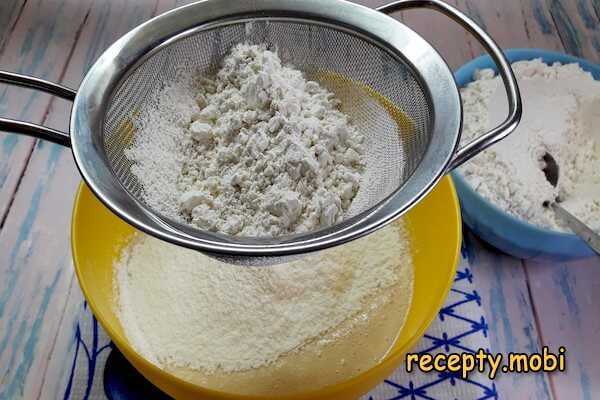
Sift in the flour in several additions, mixing the mixture first with a whisk and, as it thickens, with a spoon. And it is not enough simply to stir it until smooth – beyond that you also need to work the dough with the same spoon for a few minutes, so that gluten develops in the mix.
The right consistency for yeast pancake batter is stretchy. The continuous ribbon of the resulting mix should slide off the spoon, but not drop, break off, or pour. If it is too runny, the pancakes will quickly collapse and go flat once they cool.
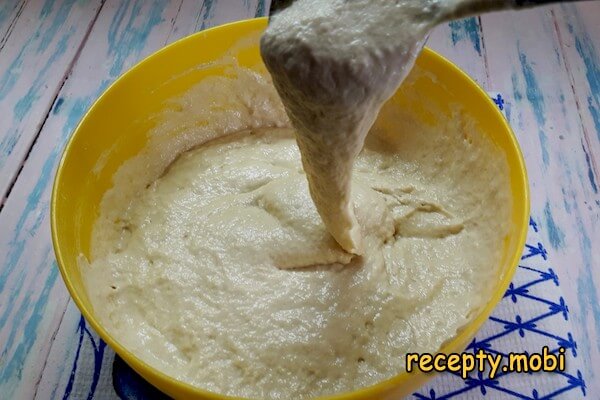
After working it, the dough gathers itself into a soft, semi-liquid lump and only then spreads across the bottom. I scrape the clinging bits off the sides of the bowl, cover the dish with film, and leave it to rise.
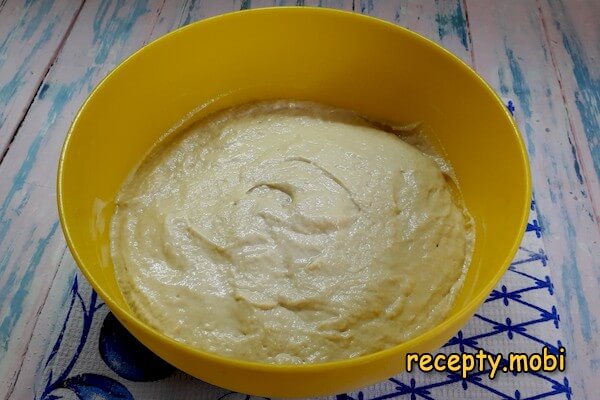
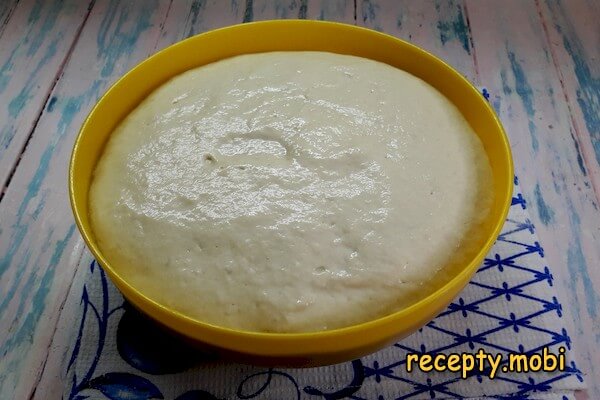
After about 40 minutes the dough will have expanded in volume by around 2 to 2.5 times. But there is no need to rush and start frying the pancakes straight away. You should knock the dough back and let it rise a little again – this will take 10–15 minutes.
I heat enough refined oil in the pan to cover the bottom. I set the heat below medium, so the pancakes don't burn and bake through well. Helping myself with two spoons, I drop small portions of the yeast dough into the pan at some distance from one another. I cover the pan with a lid.
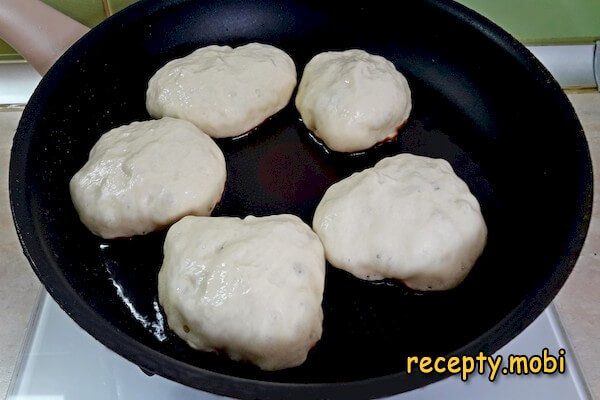
After about 3 minutes I carefully lift the lid, so that the condensation formed on it doesn't get into the oil. I turn the pancakes over to the other side and cover with the lid again for 2–3 minutes.
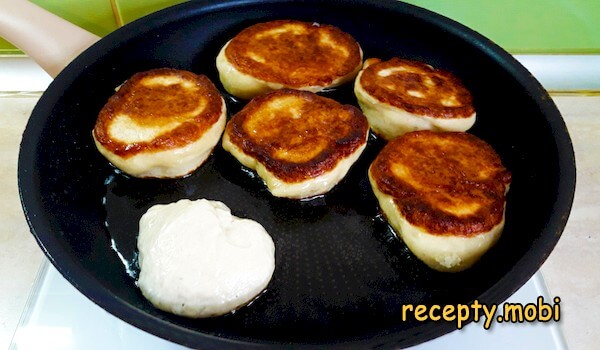
I transfer the finished pancakes straight onto a napkin, so that it soaks up the excess oil.
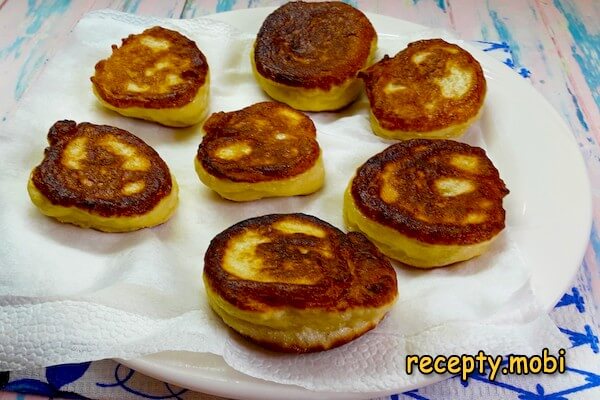
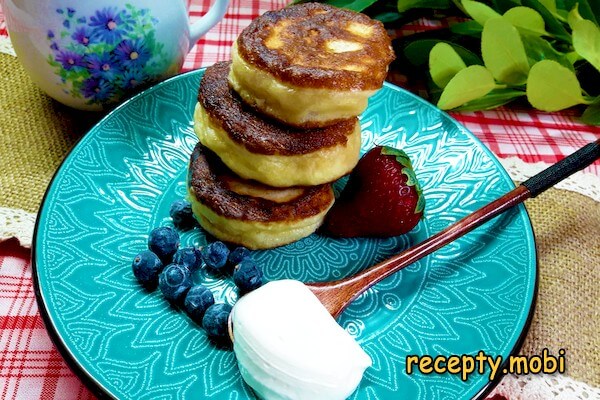
While the fluffy yeast and kefir pancakes are still hot, I lay them out in a single row so they don't press against one another. You can serve them with sour cream or with honey, dandelion jam, rose-petal jam, or seasonal berries.Give it a try, and enjoy your meal!


Tips
- 1
The sponge goes in water, not in kefir – the "secret" to activating the yeast. An acidic environment slows the yeast down, while in water it "comes to life" faster.
- 2
The kefir should be only warm – not hot. When overheated, kefir separates into whey and curds, and the dough turns out lumpy.
- 3
Two rises – the "secret" to fluffiness. After the first, knock the dough back and let it rise again for 10–15 minutes. With a single rise, the pancakes will collapse.
- 4
Under a lid and on low heat – the "secret" to even baking. Without a lid the middle won't bake through; on high heat they will scorch. The same principle works for other kinds of fluffy yeast pancakes.
FAQ
Which kefir should I choose? +
Ideally, fresh kefir with a fat content of 2.5–3.2% (the classic choice). Alternatives: 1% (lighter, but less rich), 3.2% (richer, for a more tender dough), or thermostatic kefir (thick, for "premium" pancakes). Don't use kefir that is about to reach its use-by date – it is already too sour; ideally it should be 2–3 days from the production date. Village soured milk is a "premium" option. Not suitable: milk, ryazhenka (different acidity), or sweet yogurt. For a lighter version, use low-fat kefir with 1 tablespoon of cottage cheese. Before using, shake the bottle so that separated kefir comes back together.
Which yeast is better? +
Ideally, fast-acting dry yeast. Alternatives: active dry yeast (which needs to be activated in water) or fresh pressed yeast (21 g instead of 7 g of dry, as the author recommends). Out-of-date yeast won't do – the dough won't rise. To check freshness, drop half a teaspoon of sugar plus the yeast into warm water: foam within 5 minutes means it is alive. Pressed yeast should be greyish-white, without any slime, and with a pleasant "yeasty" smell. Storage: dry yeast keeps in an airtight jar for up to 6 months, pressed yeast in the fridge for up to 2 weeks. For a "premium" result, use fresh pressed yeast.
How long do the pancakes keep? +
In the fridge, wrapped in film or in a container, 1–2 days. Any longer and they will "settle" and lose their fluffiness. Reheat them in the microwave for 15–20 seconds under a damp towel, or in a pan with 1 teaspoon of oil for 30 seconds on each side. In the freezer they keep for up to a month, layered with parchment. Thaw at room temperature for 30 minutes, or warm them through in a pan. Fresh pancakes are at their best in the first 2–3 hours after frying; by the second day they are no longer as fluffy. Don't leave them at room temperature for longer than a day, or the dough will dry out. Straight from the pan they are the tastiest.
What to serve the pancakes with? +
The Soviet-style classic: with sour cream (thick) and sugar, with honey, or with jam of various kinds. With chocolate spread or condensed milk. With fresh berries and cream. Alongside a cup of coffee with milk, or cocoa. With black tea and lemon. With dried-fruit compote. For a children's breakfast, with fruit purée. With a glass of milk – the "grandmother's" way to serve them. With cottage cheese and raisins on top, for something more filling. With cold kvass, as a summer option. With butter and salt, for something unusual. It is a versatile dish for breakfasts and afternoon snacks.
- Comment
or post as a guest
Be the first to comment.