avg —
Custard Pancakes with Kefir and Boiling Water (+Cooking Video)

Instructions
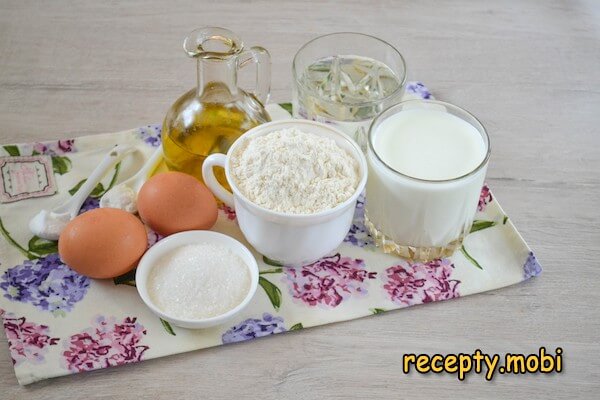
Prepare all the necessary ingredients. You can use kefir of any fat content – mine is 1%.
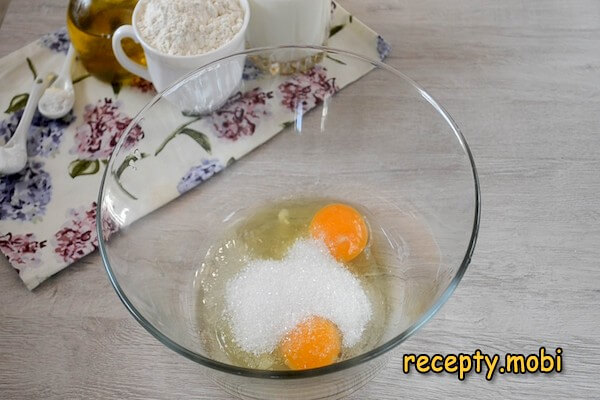
In a bowl, mix 2 eggs with 2 tbsp of sugar. If you like sweeter pancakes, add more sugar.
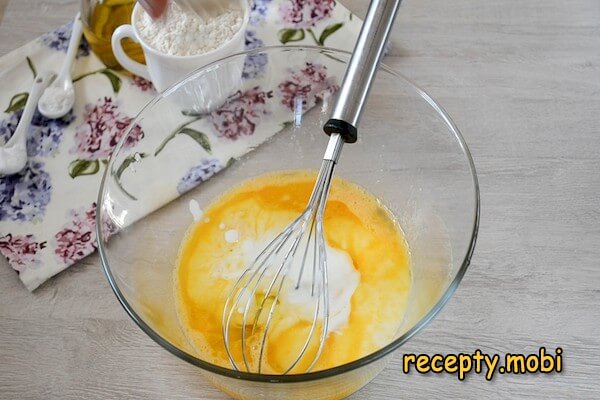
Pour in about 40 ml of vegetable oil (reserve 10 ml for greasing the pan) and the kefir. Add the salt and baking soda and mix well with a whisk.
Sift in 1 cup of flour and mix the batter well until smooth. There should not be a single lump.
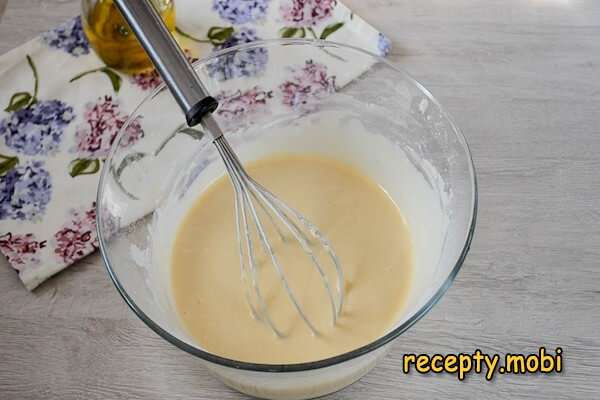
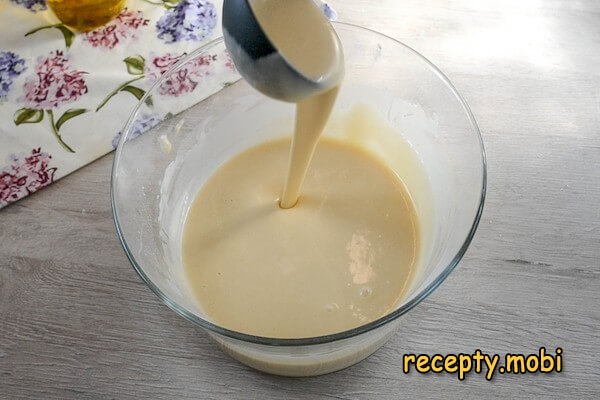
When the batter is completely smooth and even, but fairly thick, gradually pour in the boiling water and stir. The batter will immediately start to change structure, becoming more viscous and tender. Don't pour all the water in at once, so the batter doesn't get too runny. In consistency it should be like kefir, only more viscous. Leave the finished batter to rest for 15 minutes – the pancakes will fry better.
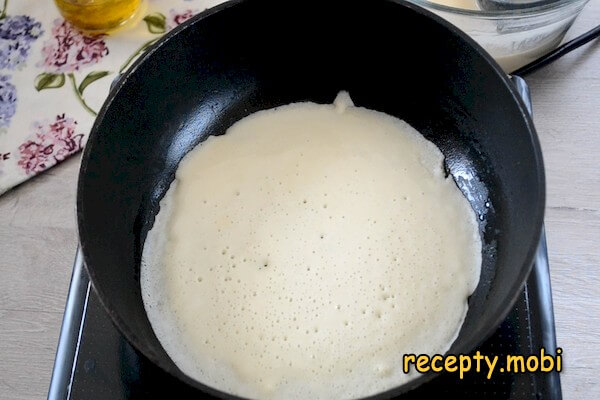
Before frying the first pancake, grease the pan with vegetable oil. Pour in about 70 ml of batter, spread it across the surface and fry over medium heat for literally a minute, then flip and hold for no more than half a minute.
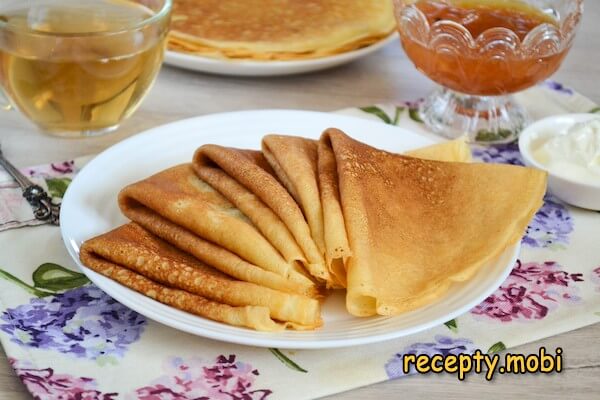
The custard pancakes fry very quickly and come out tender and soft. I serve them with honey, sour cream, rose-petal jam, condensed milk, syrup or orange jam.Enjoy your tea time!


Tips
- 1
Add the boiling water gradually – not all at once. The batter should be "like kefir, only viscous". All at once means it gets too runny.
- 2
The 15-minute rest after mixing is a crucial step. In that time the flour "matures" and the pancakes become more pliable.
- 3
Oil in the batter means you won't have to grease the pan again later. 40 ml goes into the batter and 10 ml for the first pancake – after that you can fry "dry".
- 4
Flip the pancake when the top has "set" – don't rush. The same principle works for other kinds of pancakes.
Video
FAQ
Which kefir should I choose? +
Fresh kefir with 1–3.2% fat is ideal. Brands like Prostokvashino, Domik v Derevne, Activia and Ehrmann are reliable. For "diet" pancakes use 1%; for "hearty" ones use 3.2%. The use-by date should not have passed. Don't use sweet "fruit" kefir – it will spoil the flavour. Alternatives: soured milk (prostokvasha), ryazhenka (a richer flavour), ayran (salty, for savoury pancakes) or whey (lighter pancakes). Older kefir (close to its date) is even better, as the soda is more "active". For vegans, soy or coconut kefir works. A cultured-milk base plus soda gives fluffy pancakes without yeast.
What can I use as a filling? +
Sweet: curd cheese + sour cream + sugar, jam, honey + nuts, banana + chocolate spread, berries + cream. Savoury: stewed mushrooms + cheese, ham + cheese, red or black caviar (premium), lightly salted salmon + cream cheese, sautéed chicken liver + onion, minced meat with onion (stewed). For a "children's version", curd cheese with sugar + raisins. For an "adult" presentation, caviar + sour cream. For Easter, pancakes with boiled egg + onion + mayonnaise. For a "diet" version, a filling of 5% curd cheese + berries without sugar.
How long do the pancakes keep? +
In the fridge, in cling film or a container, 2 days. Reheating on a dry pan for 30 seconds a side restores their softness. In the microwave, 15–20 seconds (in a stack). In the freezer, up to 1 month, layered with parchment for easy separation. Thaw at room temperature for 30 minutes or warm them in a pan. For a "lunch to go", wrap them in foil. Fresh pancakes are the "stars" – they taste best on the day they're made. On the second day you can make a "pancake cake" – layer them with cream and bake.
What do you serve pancakes with? +
Sweet: with sour cream, honey, jam, condensed milk, cream, berries, fruit. With tea, coffee, cocoa or milk. Savoury: with caviar, lightly salted fish, mushrooms, meat, cheese, vegetables. With beer, wine or vodka. The Maslenitsa classic: with butter, sour cream, honey and caviar – a "broad Maslenitsa". For an Easter presentation, pancakes with curd cheese and raisins. For a picnic, with various fillings in foil. At a buffet, mini-pancakes (5–7 cm across) with caviar and sour cream. For a Russian tea ceremony, with a samovar and bagel rings. For breakfast, pancakes with condensed milk and coffee with milk.
- Comment
or post as a guest
Be the first to comment.